 Pin it
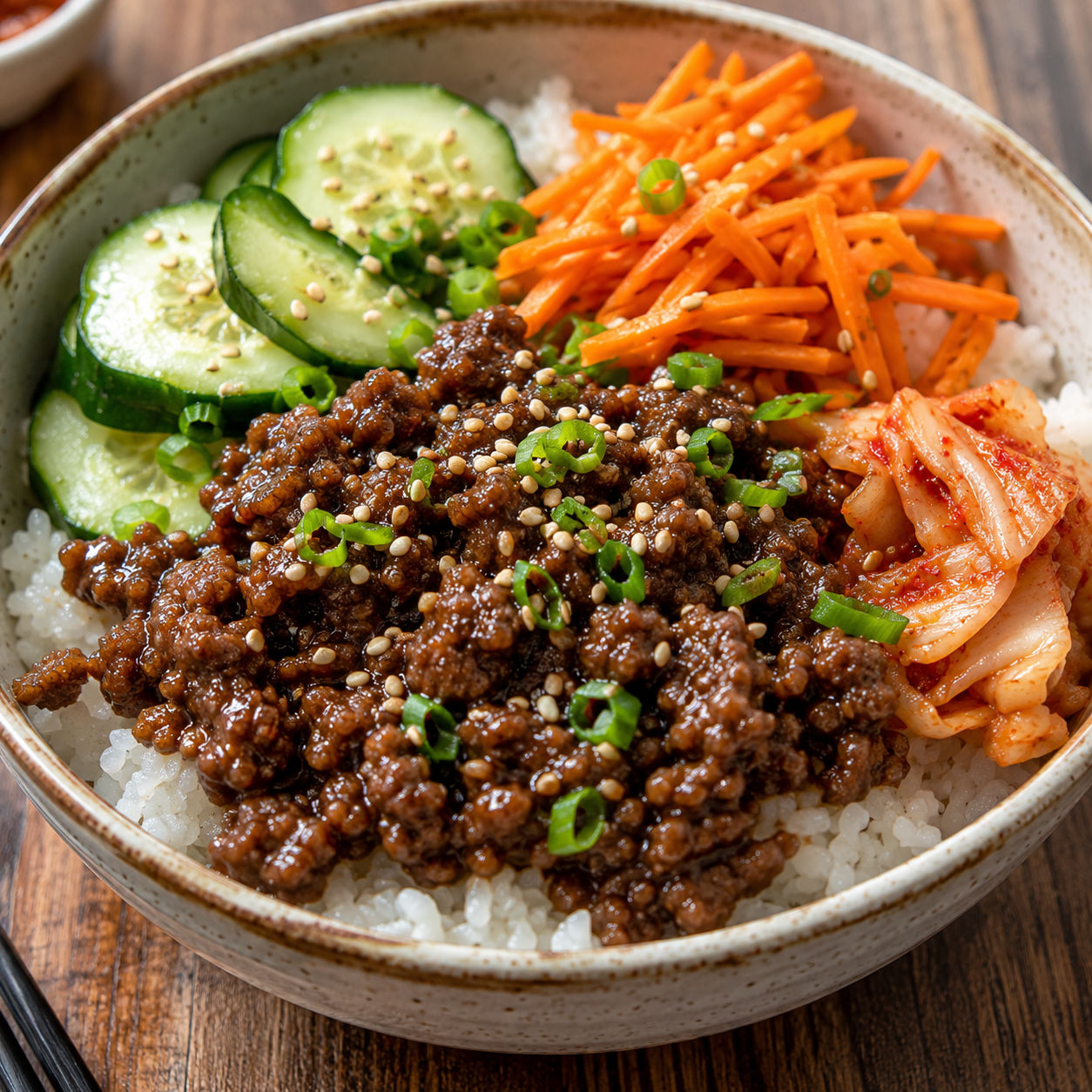
This quick and easy Korean ground beef bowl with rice is the kind of dinner that saves a weeknight without tasting rushed. The beef gets glossy and deeply savory in a few minutes, while the rice catches every bit of sauce.
I like it with cold cucumber, shredded carrot, scallions, and sesame seeds. That small crunch matters. It keeps the sweet soy beef from feeling too rich and makes the bowl feel complete.
Fast Bowl Staples
The sauce is built from pantry ingredients, so the beef cooks quickly and still tastes layered. Choose lean ground beef, low-sodium soy sauce, and fresh ginger if you can because there are not many places for weak ingredients to hide.
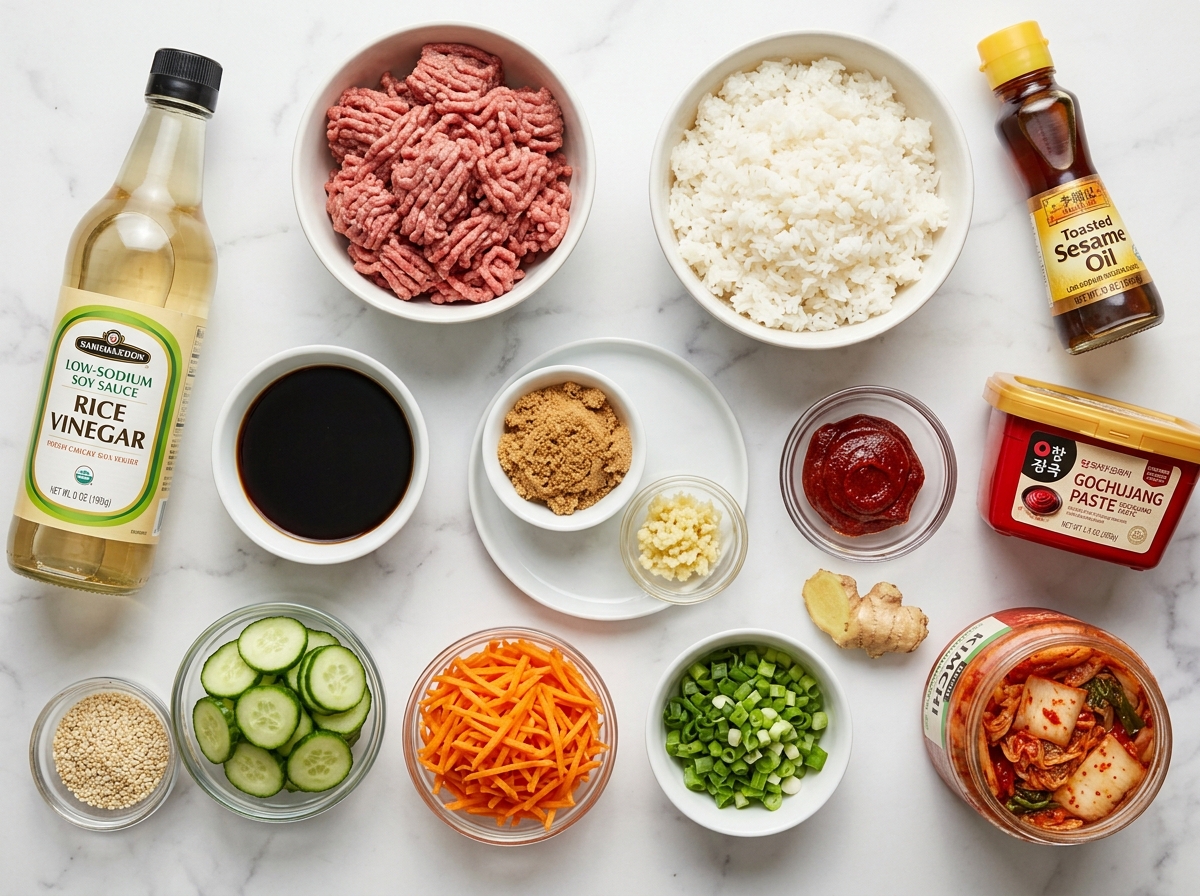
- Ground beef. Lean beef browns fast and gives the bowl a rich, savory base without a long marinade.
- Cooked rice. Warm rice catches the sauce and makes the bowl filling enough for dinner.
- Soy sauce. This seasons the beef and gives the sauce its salty backbone.
- Brown sugar. A small amount helps the beef turn glossy and balances the soy sauce.
- Gochujang. Korean chili paste adds gentle heat and fermented depth. Use more if you like a spicy bowl.
- Garlic and ginger. These two make the quick sauce taste cooked and aromatic instead of flat.
- Sesame oil. Add it near the end for a nutty finish that smells warm and toasty.
- Cucumber, carrot, and scallions. Fresh toppings add crunch, color, and relief from the saucy beef.
Build The Beef Bowl
- Mix the sauce. Stir soy sauce, brown sugar, rice vinegar, gochujang, sesame oil, garlic, ginger, and a little water in a bowl so it is ready before the beef finishes.
- Brown the beef. Cook the beef in a hot skillet, breaking it into small crumbles. Let it sit for short stretches so it browns instead of steaming.
- Drain if needed. If there is more than a spoonful of fat in the pan, drain it off. A little fat tastes good, but too much makes the sauce slide away.
- Simmer with sauce. Pour in the sauce and cook for 2-3 minutes, stirring often, until the beef looks shiny and the liquid has tightened around the crumbles.
- Assemble the bowls. Spoon the beef over hot rice. Finish with cucumber, carrot, scallions, sesame seeds, and kimchi if you like it tangy.
Quick Sauce That Clings
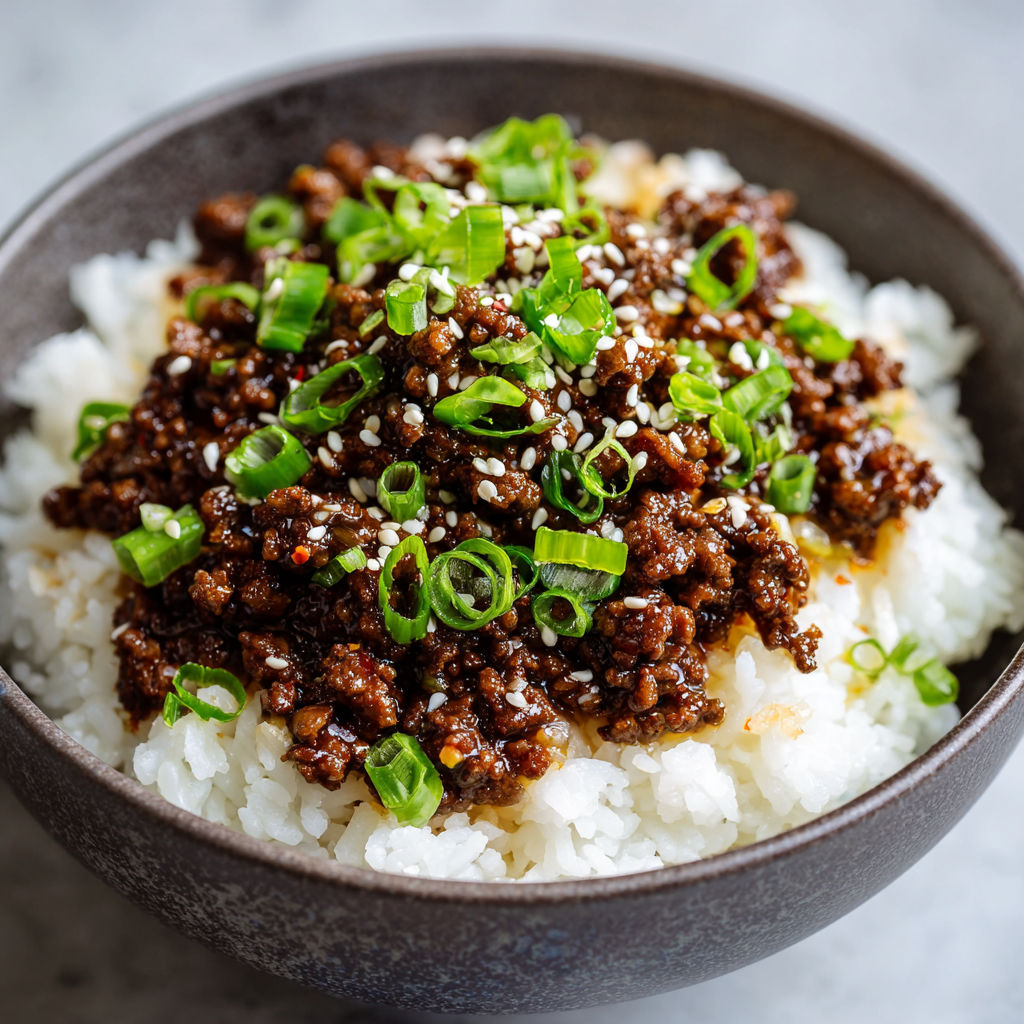
The trick is not a long simmer. It is using just enough sugar and heat to make the sauce reduce around the beef. If you add the sauce before the beef browns, the meat steams and turns soft. Brown first, then sauce.
Gochujang gives the bowl a deeper flavor than hot sauce alone. It is salty, a little sweet, and fermented, so start with one tablespoon and taste before adding more. For another fast Korean-inspired dinner, try Quick Easy Korean Ground Beef or the saucier Korean BBQ beef rice stack.
Keep The Rice Hot
Cold rice is fine for fried rice, but this bowl is better with warm, fluffy rice. The heat loosens the sauce and helps the beef settle into the grains. If you are using leftover rice, sprinkle it with a teaspoon or two of water and microwave it covered until steamy.
For meal prep, pack rice and beef together if you plan to reheat them. Keep cucumber, carrot, scallions, and kimchi in a separate container. That keeps the toppings crisp. If rice bowls are regular dinner territory in your kitchen, the Quick Korean egg rice is another good pantry option.
Swaps That Cook Cleanly
Ground turkey, ground chicken, or ground pork can stand in for beef. Turkey and chicken need a touch more fat, so finish with an extra drizzle of sesame oil. For a lower-carb bowl, serve the beef over cauliflower rice and add extra cucumber or sauteed cabbage.
Tamari works in place of soy sauce if you need a gluten-free version, but check the gochujang label too. Some brands include wheat. The USDA notes that ground beef should be cooked to 160 F for food safety, and their ground beef safety guide is a good reference if you cook by temperature.
Serving Ideas That Fit
This bowl is simple, so the sides can stay simple too. Kimchi is the first thing I reach for because the acidity cuts through the beef. A soft fried egg makes it richer. Steamed broccoli or snap peas make it feel more like a full plate.
If you want more vegetables in the same style, make the Quick Ground Beef and Broccoli Stir Fry. If you want a mild rice dinner for kids, the 30-Minute Ground Beef and Rice Skillet keeps the same easy pace with a softer flavor profile.
Store It For Lunch
The beef reheats better than most quick skillet dinners. Let it cool, then refrigerate it in a sealed container for 3-4 days. Reheat in a skillet or microwave with a small splash of water to loosen the sauce.
Freeze only the cooked beef, not the assembled bowl. Rice can get dry in the freezer unless it is packed carefully, and fresh toppings lose their snap. A frozen bag of the beef mixture thaws quickly and turns plain rice into lunch with almost no work.
Summary
Keep the beef lean, simmer the sauce briefly, and add fresh toppings right before serving. The bowl is fast enough for a weeknight and sturdy enough for meal prep.
FAQs
- Can I make this Korean ground beef bowl without gochujang?
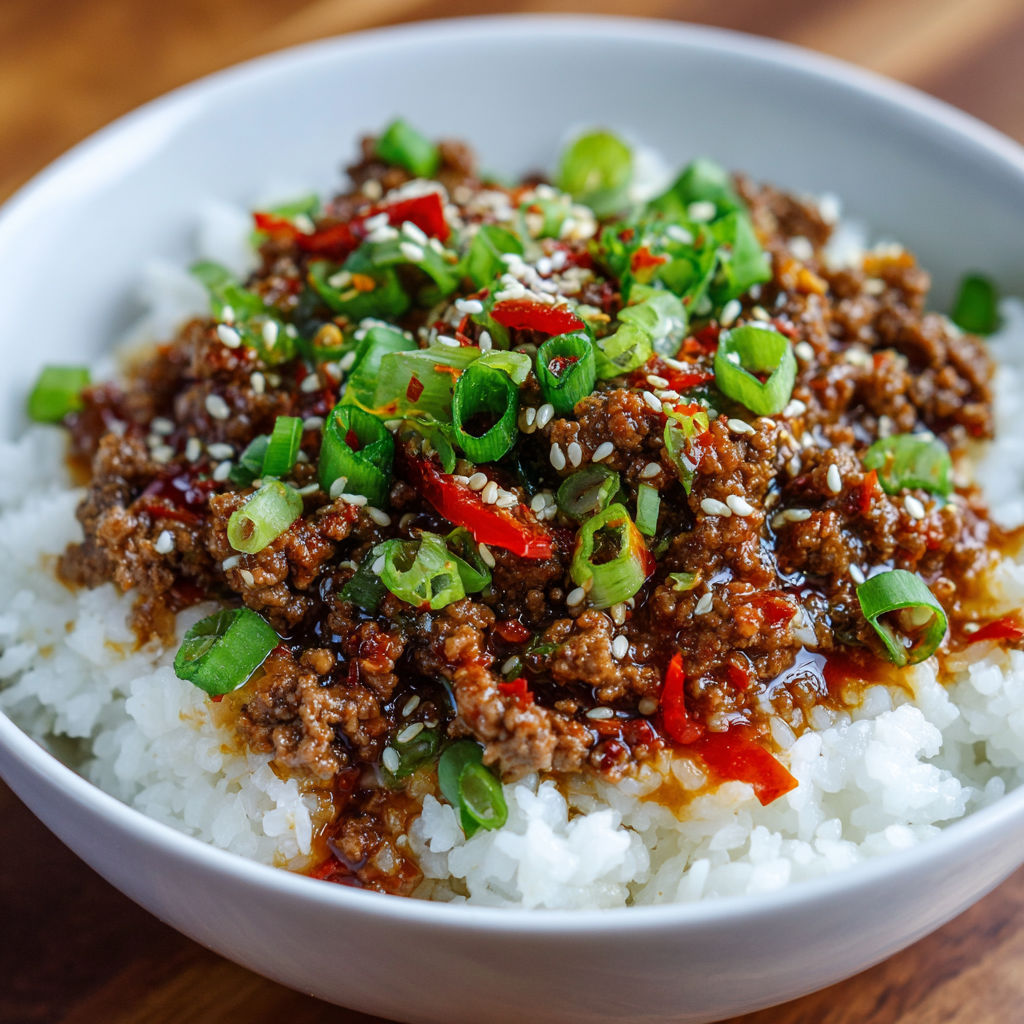
Yes. Leave it out and add a pinch of red pepper flakes if you still want heat. The bowl will taste more like a sweet soy bulgogi-style beef than a spicy beef bowl.
- What rice works best for the bowl?
Jasmine rice, short-grain white rice, or brown rice all work. Use warm rice if you can because it softens the sauce and makes the beef settle into the bowl instead of sitting on top.
- Can I use ground turkey or chicken instead of beef?
Yes. Ground turkey or chicken will be lighter, so add an extra teaspoon of sesame oil at the end if the mixture tastes flat. Cook poultry until it is fully done and no longer pink.
- How do I keep the beef from getting greasy?
Use 90% lean ground beef if you can. If you use 80% lean beef, drain off most of the rendered fat before adding the sauce so the finished bowl tastes glossy rather than oily.
- How long do leftovers keep?
The cooked beef keeps well in an airtight container in the fridge for 3-4 days. Store rice and fresh toppings separately when possible, then reheat the beef with a splash of water.
- Is this recipe gluten free?
It is not gluten free if made with regular soy sauce. Use tamari or a certified gluten-free soy sauce, and check the gochujang label because some brands contain wheat.
