 Pin it
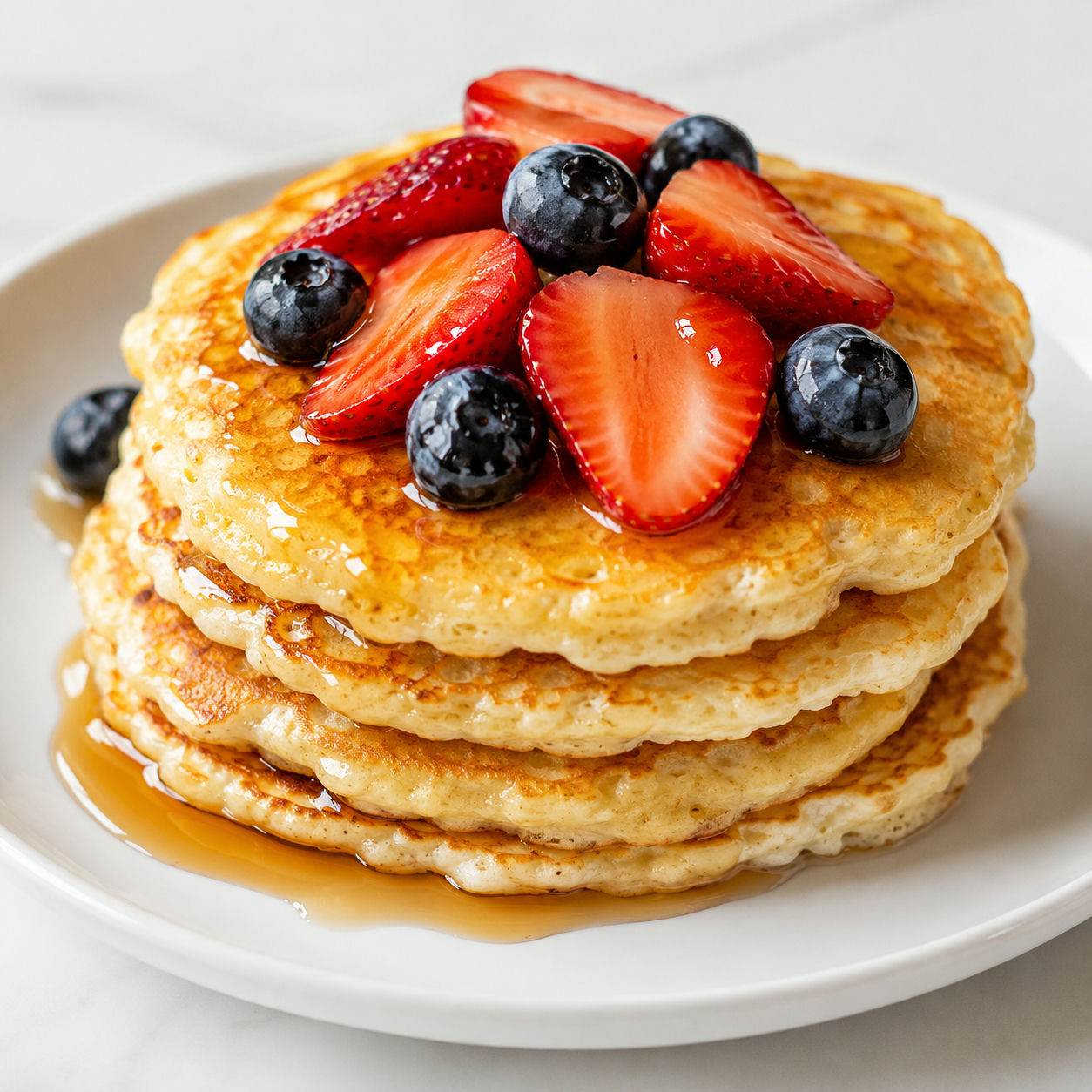
Flourless Cottage Cheese Pancakes are the pancakes I make when I want breakfast to feel cozy without pulling out a bag of flour. The blender does the mixing, the oats give the batter structure, and the cottage cheese keeps the middle soft instead of dry.
They taste mild and lightly creamy, not like a bowl of cottage cheese. The trick is to let the batter sit for a few minutes so the oats thicken it before it hits the skillet.
The Batter Basics
Use a cottage cheese you like eating plain, because its flavor still matters. Old-fashioned oats give the best balance of softness and structure, while quick oats make a smoother but slightly denser pancake.
- Cottage cheese. Adds protein, moisture, and a gentle dairy richness without making the pancakes taste heavy.
- Old-fashioned oats. Replace flour and help the batter set as it rests.
- Eggs. Bind the batter and give the pancakes lift as they cook.
- Baking powder. Adds a little extra puff so the pancakes are not flat.
- Vanilla extract. Softens the tang of the cottage cheese and makes the batter smell like breakfast.
- Cinnamon. Adds warmth without making the pancakes too sweet.
- Fine salt. Sharpens the flavor and keeps the pancakes from tasting bland.
- Butter or oil. Greases the skillet and helps the edges brown.
Blend, Rest, Then Griddle
- Blend the batter. Add the cottage cheese, oats, eggs, baking powder, vanilla, cinnamon, and salt to a blender. Blend until mostly smooth with tiny oat flecks remaining.
- Let it thicken. Rest the batter for 10 minutes. The oats absorb moisture and the pancakes flip more cleanly.
- Heat the pan. Warm a nonstick skillet or griddle over medium-low heat. Add a thin coat of butter or oil.
- Cook small pancakes. Spoon about 3 tablespoons of batter per pancake into the skillet. Cook until the edges look set and the bottoms are golden, about 2-3 minutes.
- Flip gently. Turn with a thin spatula and cook 1-2 minutes more, until the centers feel set and springy.
- Serve warm. Stack the pancakes with berries, maple syrup, yogurt, or nut butter.
Why The Rest Matters
The batter looks ready right after blending, but it cooks better after a short rest. Oats need a few minutes to drink up liquid from the eggs and cottage cheese. That small pause makes the batter thicker, so the pancakes spread less and flip without tearing.
If you skip the rest, the first batch may look thin and soft in the middle. It will still taste good, but the texture will be more delicate. I usually blend the batter, heat the skillet, set out toppings, and then start cooking. By then the batter has settled into the right spoonable thickness.
Getting Golden Edges
Medium-low heat is better than a hot pan here. A high flame browns the outside before the egg and oats have time to set. You want a steady sizzle, not fast frying. Butter gives the best flavor and color, but a neutral oil is easier if your skillet tends to run hot.
Cook the first side until the edge changes from shiny to matte. A few small bubbles may appear, but these pancakes do not bubble as dramatically as regular flour pancakes. Slide a thin spatula fully under the pancake before you flip. If it resists, give it another 30 seconds.
Toppings That Fit
These pancakes are mild, so toppings can go sweet or hearty. Fresh berries and maple syrup are the obvious choice. Greek yogurt, honey, and toasted walnuts make them feel closer to a protein bowl. For more cottage cheese breakfast ideas, try cottage cheese and fig toast or protein bagels with cottage cheese.
If you want to keep the pancakes less sweet, add sliced banana while the first side cooks or finish them with warm berries instead of syrup. The dairy group includes cottage cheese as a useful protein and calcium source, and you can read more from MyPlate dairy guidance.
Easy Flavor Changes
Vanilla and cinnamon make these breakfast-friendly, but the base can move in a few directions. Add lemon zest for a brighter pancake. Stir in mini chocolate chips after blending if you want something more kid-friendly. A tablespoon of maple syrup in the batter adds sweetness without changing the texture much.
For a savory version, skip the vanilla and cinnamon. Add black pepper, chopped chives, and a spoonful of grated parmesan. Serve with avocado or a soft egg. If you like this style of higher-protein breakfast, easy cottage cheese egg bake is another good make-ahead option.
Storage And Reheating
Let leftover pancakes cool before storing so steam does not make them damp. Refrigerate them in a sealed container with parchment between layers. Reheat in a toaster oven or dry skillet for the best edges. The microwave works too, but the pancakes will be softer.
To freeze, place cooled pancakes on a parchment-lined sheet pan until solid. Move them to a freezer bag and press out extra air. Reheat from frozen in a toaster or low oven until hot through. Since these contain eggs, cook them until set and follow safe egg handling guidance from FoodSafety.gov.
Summary
These pancakes are best served warm with berries, yogurt, maple syrup, or nut butter. They also reheat well, which makes them useful for busy mornings.
FAQs
- Are flourless cottage cheese pancakes actually flourless?
Yes. This version uses old-fashioned oats instead of wheat flour. The oats blend into the batter and help the pancakes hold together while keeping the texture tender.
- Can I make these pancakes gluten-free?
Yes, use certified gluten-free oats and a gluten-free baking powder. Oats are naturally gluten-free, but they are often processed near wheat, so the certification matters if you are cooking for someone with celiac disease or a strong sensitivity.
- Can I use low-fat cottage cheese?
Low-fat cottage cheese works, but full-fat cottage cheese makes a softer pancake with better browning. If your cottage cheese is very watery, spoon off extra liquid before blending.
- Why are my cottage cheese pancakes falling apart?
The batter may need more rest time, or the pancakes may be too large. Let the batter sit for 10 minutes and cook small 3-inch pancakes. Wait until the edges look set before flipping.
- Can I make the batter ahead?
You can blend the batter the night before and refrigerate it. It will thicken as the oats absorb moisture, so stir in 1-2 tablespoons of milk or water in the morning if it looks too stiff.
- How should I store leftover pancakes?
Refrigerate cooled pancakes in an airtight container for up to 4 days. For longer storage, freeze them in a single layer, then move them to a freezer bag for up to 2 months.
