 Pin it
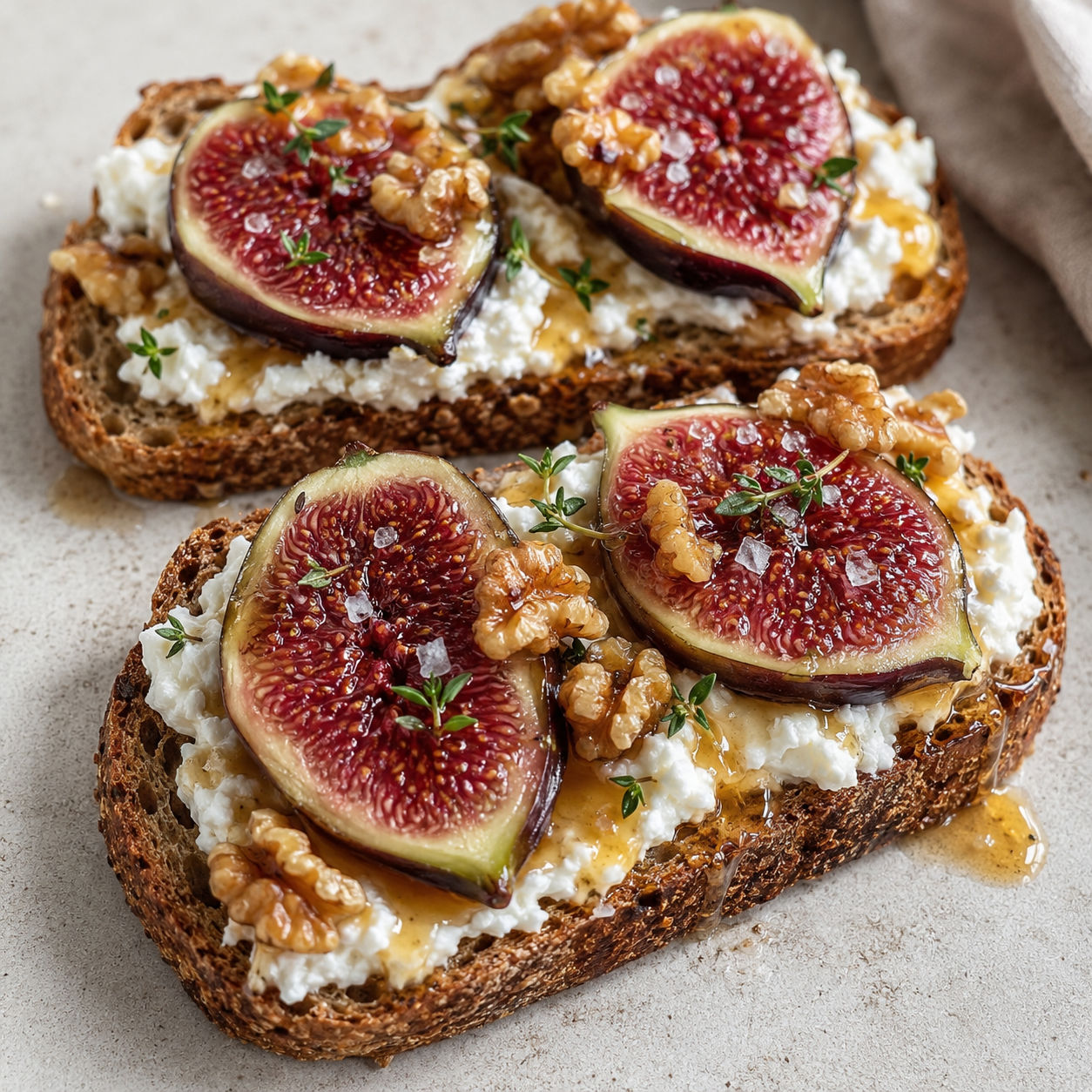
Cottage Cheese and Fig Toast with Walnuts and Honey is one of those breakfasts that feels nicer than the effort it takes. The bread gets crisp, the cottage cheese turns cool and creamy against it, and the figs bring a jammy sweetness without needing a stove.
I like this most when the figs are soft and heavy for their size. Toast the walnuts for a minute or two if you can. That tiny step makes the whole slice taste deeper and less like something you assembled half-awake.
The Creamy Fig Lineup
Use ripe figs that give slightly when pressed and bread that feels sturdy in your hand. Whole-milk cottage cheese gives the richest texture, but low-fat works if that is what you keep in the fridge.
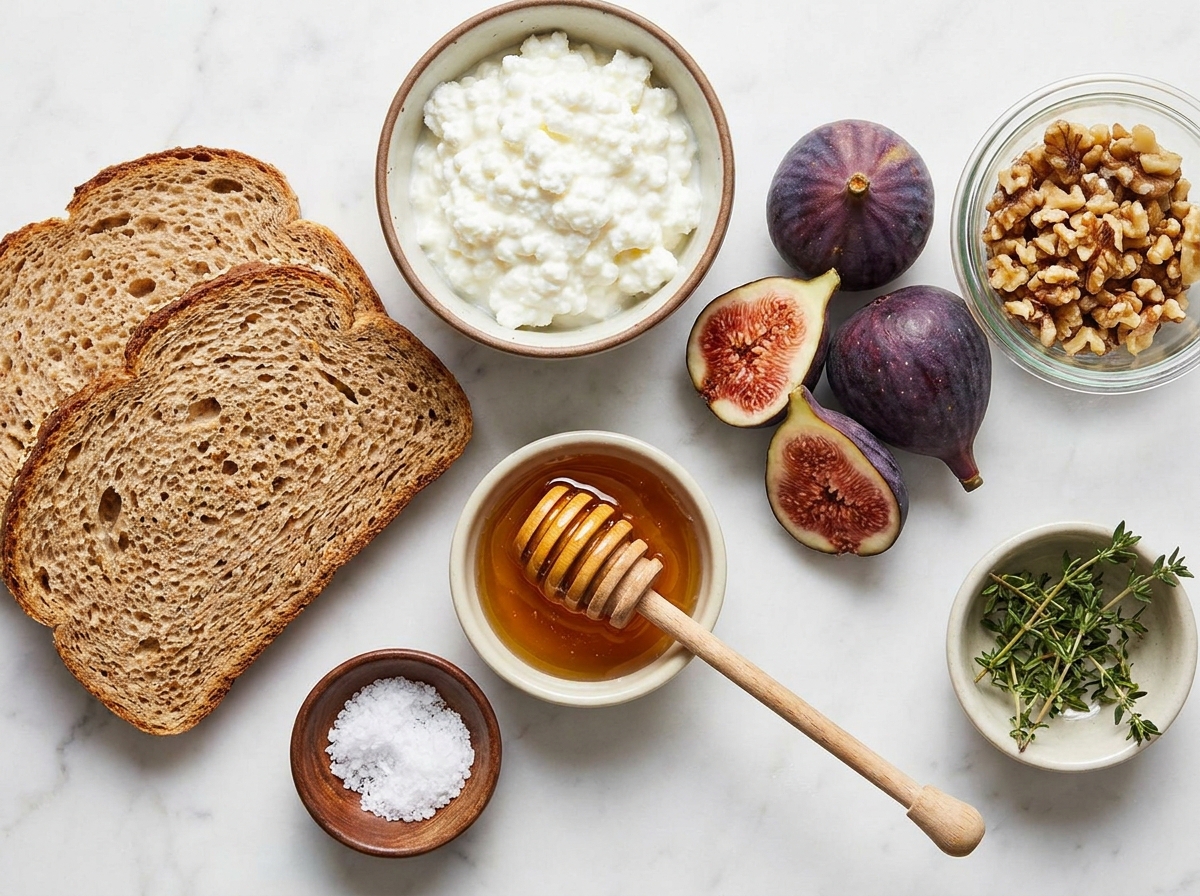
- Whole grain bread. Gives the toast a nutty base and enough strength to hold the toppings.
- Cottage cheese. Adds cool creaminess, gentle tang, and a useful protein boost.
- Fresh figs. Bring soft, jammy sweetness and a little chew in every bite.
- Walnuts. Add earthy crunch that keeps the toast from tasting too soft.
- Honey. Glazes the figs and ties the cheese, fruit, and nuts together.
- Flaky salt. Makes the honey taste brighter and keeps the sweetness in check.
- Fresh thyme or mint. Adds a small fresh note if you want the toast to feel more brunch-ready.
Build The Toast Right
- Toast the bread well. Toast the slices until the edges are crisp and the center feels firm. Pale toast turns soft too quickly under cottage cheese.
- Toast the walnuts. Warm the walnuts in a dry skillet for 2-3 minutes until fragrant, then chop them roughly. Let them cool so they stay crisp.
- Prep the cheese. Stir the cottage cheese until creamy. If it looks watery, drain it briefly so the toast stays crisp.
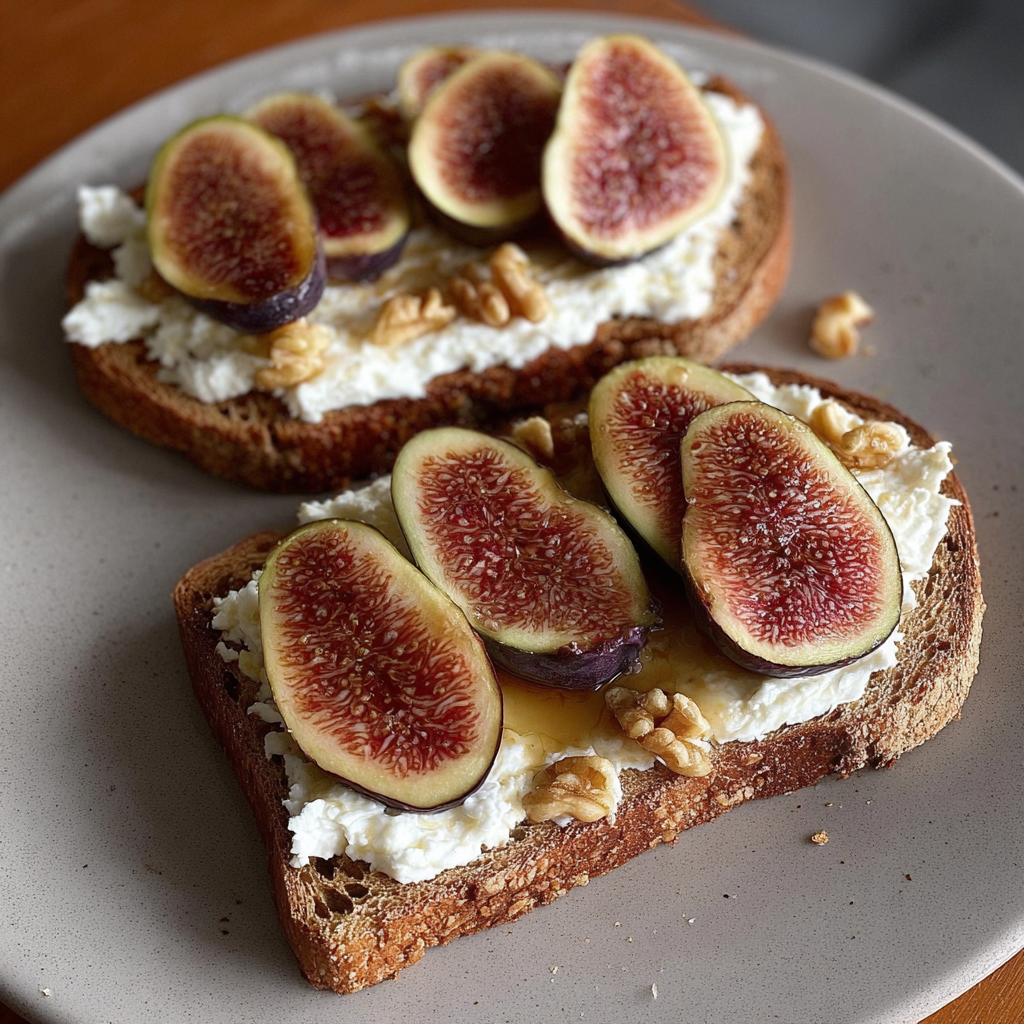
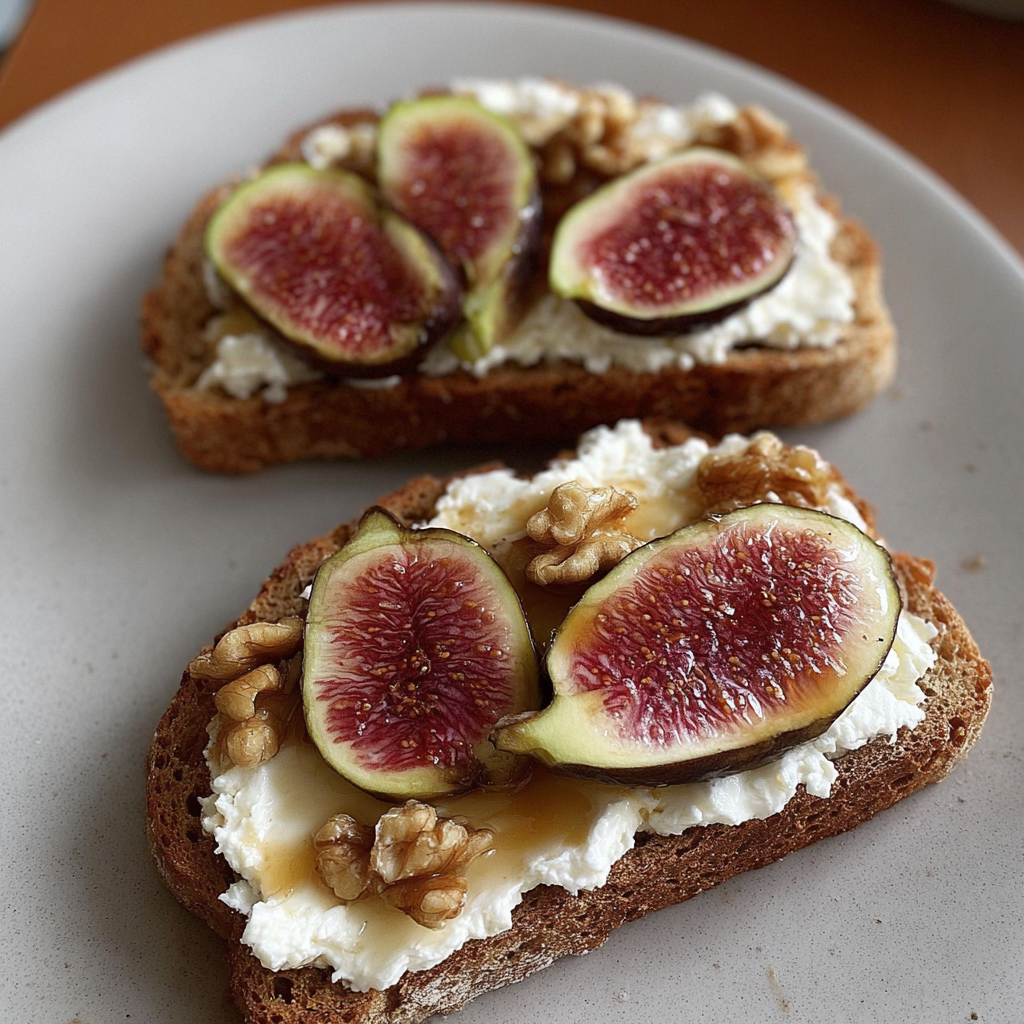
- Layer the figs. Spread the cottage cheese over the toast, then overlap thin fig slices across the top so every bite gets fruit.
- Finish and serve. Scatter on walnuts, drizzle with honey, add flaky salt, and finish with thyme or mint if using. Eat right away.
Why Toasting Walnuts Matters
Raw walnuts can taste a little flat next to fresh figs. A quick toast wakes up their oils and gives them a warmer flavor. You do not need much heat. Keep the skillet at medium and shake it often. When they smell nutty, they are done.
Let the walnuts cool before they touch the cottage cheese. Warm nuts can make the cheese loosen and slide. If you like walnut-heavy breakfasts, the same earthy crunch works nicely in apple and walnut charoset and honeyed fig baked brie.
Choosing Figs That Work
Fresh figs should feel tender, not mushy. A small split near the stem is fine. It often means the fruit is ripe. Avoid figs that smell sour or leak heavily in the container.
If fresh figs are out of season, fig jam is the easiest backup. Spread a thin layer over the cottage cheese, then add walnuts and honey with a lighter hand. Sliced pears or strawberries also work when you want a similar breakfast. For more fruit-forward ideas, the USDA has a simple guide to fruit choices at MyPlate.
Make It More Filling
Two slices are enough for a light breakfast. For a bigger meal, add a boiled egg or serve the toast with Greek yogurt. You can also use a higher-protein bread or make one thick slice with extra cottage cheese.
If you already like cottage cheese breakfasts, try this alongside protein bagels with cottage cheese or a spoonable berry cottage cheese salad. The flavors stay in the same creamy, fresh lane without feeling repetitive.
Easy Swaps And Variations
Ricotta makes the toast smoother and milder. Greek yogurt makes it tangier. Pecans, pistachios, or almonds can replace walnuts. Maple syrup can stand in for honey, though honey has a floral finish that suits figs especially well.
For a savory version, use less honey and add black pepper, thyme, and a few drops of balsamic glaze. For a sweeter brunch plate, add cinnamon and a few extra fig slices. Walnut storage matters too. The walnut growers at California Walnuts recommend keeping walnuts cold for fresher flavor.
Serving And Storage Notes
This toast is at its best within minutes of assembly. The bread will keep softening as the cottage cheese sits. If you are serving brunch, set out the toppings and let people build their own slices.
Leftover sliced figs keep for about one day in the fridge. Toasted walnuts keep well in a sealed jar for several days. Honey is not safe for babies under 12 months, and the CDC explains why in its botulism safety information.
Summary
This toast is best served fresh, while the bread is crisp and the honey is still glossy over the figs.
FAQs
- Can I use dried figs instead of fresh figs?
Yes, but the toast will taste sweeter and chewier. Slice dried figs thinly and warm them for a few seconds with a tiny splash of water if they feel tough.
- What bread works best for fig cottage cheese toast?
Use sturdy bread that can hold wet toppings without sagging. Whole grain, sourdough, seeded bread, or a thick slice of country loaf all work well.
- Can I make this toast ahead of time?
Do not assemble it far ahead because the cottage cheese softens the toast. You can slice the figs, toast the walnuts, and portion the cottage cheese in advance, then build it right before eating.
- How do I keep the toast from getting soggy?
Toast the bread until it is deeply golden, not just warm. If your cottage cheese is very wet, spoon it into a small sieve for a minute before spreading.
- Can I make it gluten-free?
Yes. Use your favorite gluten-free bread and toast it well so it has enough structure for the toppings. Check that the bread is certified gluten-free if you are cooking for someone with celiac disease.
- What can I use instead of walnuts?
Pecans, pistachios, almonds, or pumpkin seeds all work. Toast whichever one you choose so the crunch stands up to the creamy cottage cheese.
- Is this better sweet or savory?
It leans sweet because of the figs and honey, but a pinch of flaky salt keeps it balanced. For a savory edge, add thyme, black pepper, or a few drops of balsamic glaze.
