 Pin it
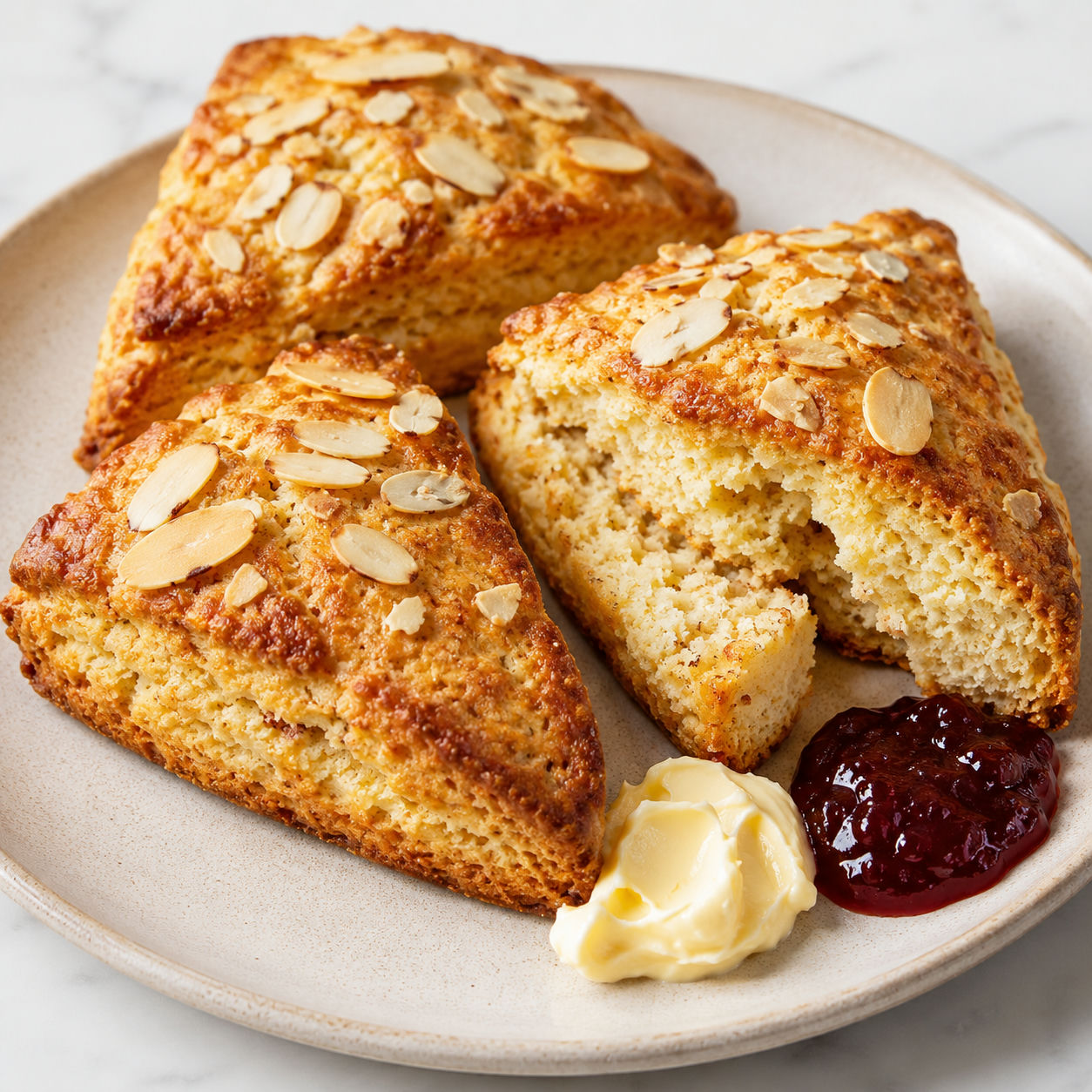
Almond Flour Scones are the kind of bake I like for a slow morning when I still want something simple. They are nutty, gently sweet, and sturdy enough to split open for jam without turning dry.
The trick is treating almond flour differently than wheat flour. It needs help from eggs, a little coconut flour, and a short chill so the scones hold their shape in the oven.
What makes them tender
Choose fine blanched almond flour for the softest crumb. Cold butter gives the edges a little lift, while eggs and a spoonful of coconut flour keep the dough from crumbling apart.
- Fine blanched almond flour. Gives the scones their nutty flavor and tender gluten-free base.
- Coconut flour. Absorbs just enough moisture to help the dough hold its wedge shape.
- Baking powder. Adds lift, so the scones do not bake up dense.
- Cold unsalted butter. Creates crisp edges and a richer crumb.
- Eggs. Bind the almond flour and help the centers set.
- Heavy cream. Adds moisture and helps the tops brown.
- Vanilla and almond extracts. Bring out the sweet bakery-style almond flavor.
- Lemon zest. Keeps the flavor bright instead of flat.
- Sliced almonds. Toast on top for crunch.
Bake almond flour scones right
- Heat the oven. Set the oven to 350 F and line a baking sheet with parchment so the tender dough releases cleanly.
- Mix the dry ingredients. Whisk the almond flour, coconut flour, sugar, baking powder, salt, and lemon zest until no lumps remain.
- Cut in the butter. Rub in the cold butter with your fingertips until the mixture looks like coarse crumbs with a few pea-size bits.
- Add the wet ingredients. Whisk the eggs, cream, vanilla, and almond extract, then stir them into the flour mixture until a soft dough forms.
- Shape and chill. Pat the dough into a 7-inch round, brush with cream, scatter sliced almonds on top, and chill for 15 minutes.
- Cut and bake. Slice into 8 wedges, space them apart, and bake for 18-22 minutes until the edges are golden and the centers feel set.
Almond flour acts differently
Almond flour has no gluten, so it will never stretch or spring the way wheat dough does. That is good for tenderness, but it means the dough needs binders and a careful hand. Eggs set the crumb, coconut flour handles extra moisture, and a short rest lets everything hydrate before baking. If you bake gluten-free often, the ingredient lists from the Celiac Disease Foundation are useful for checking pantry staples. For another almond flour breakfast idea, try the cinnamon apple protein rollups.
Cold butter matters here
Warm butter melts into almond flour before the scones hit the oven, which makes them spread. Cube the butter, keep it cold, and stop rubbing it in while you can still see small bits. Those pockets make the edges taste buttery and lightly crisp. A lot of classic scone methods follow this same idea, and the baking lessons at King Arthur Baking are helpful if you like the science behind it. For a wheat-flour version with a bolder spice profile, see these homemade pumpkin scones.
Flavor swaps worth trying
This base takes small add-ins well, but keep them modest. Stir in 1/3 cup blueberries, chopped dried cherries, mini chocolate chips, or diced toasted pecans. Too much fruit adds moisture and can make the centers soft. Orange zest can replace lemon zest, and a pinch of cardamom gives the dough a warmer flavor. If you want a sweeter almond brunch spread, pair these with raspberry almond oat breakfast cookies or the fruitier cherry almond maple crisp.
Serving them warm
Give the scones 10 minutes on the pan before serving. They finish setting as they cool, and moving them too early can break the tips. I like them warm with salted butter and raspberry jam. Lemon curd is excellent too, especially with the almond extract in the dough. For a less sweet plate, serve a wedge with scrambled eggs, fresh berries, and coffee. The texture is tender rather than flaky, so they also work well split and toasted the next morning.
Keep leftovers crisp
Almond flour holds moisture, so do not seal hot scones in a container. Cool them completely first. Store them loosely covered at room temperature for one day, or refrigerate for up to four days. To reheat, skip the microwave. A 300 F oven for a few minutes brings back the edges without turning the crumb rubbery. For longer storage, freeze the baked scones in a single layer, then move them to a freezer bag once firm.
Summary
Serve these almond flour scones warm with butter, berry jam, or a spoonful of thick yogurt. They are best the day they are baked, but they reheat well in a low oven.
FAQs
- Can I make almond flour scones without coconut flour?
You can, but the texture will be softer and more delicate. Coconut flour absorbs extra moisture, so it helps the dough hold together without making the scones heavy.
- Why did my almond flour scones spread?
The butter may have been too warm, or the dough may not have chilled long enough. Chill the shaped round for at least 15 minutes before cutting and baking.
- Can I use almond meal instead of blanched almond flour?
Almond meal works in a pinch, but the scones will be darker and more rustic. Fine blanched almond flour gives a lighter crumb and cleaner edges.
- How should I store leftover scones?
Keep them in an airtight container at room temperature for one day or in the fridge for up to four days. Reheat at 300 F for 6-8 minutes to bring back the edges.
- Can I freeze almond flour scones?
Yes. Freeze baked scones once fully cooled, then warm them straight from frozen at 300 F until heated through. You can also freeze shaped unbaked wedges and bake them with a few extra minutes added.
- What can I serve with these scones?
They are good with butter, lemon curd, berry jam, honey, or a spoonful of Greek yogurt. For a brunch plate, add eggs and fresh fruit.
