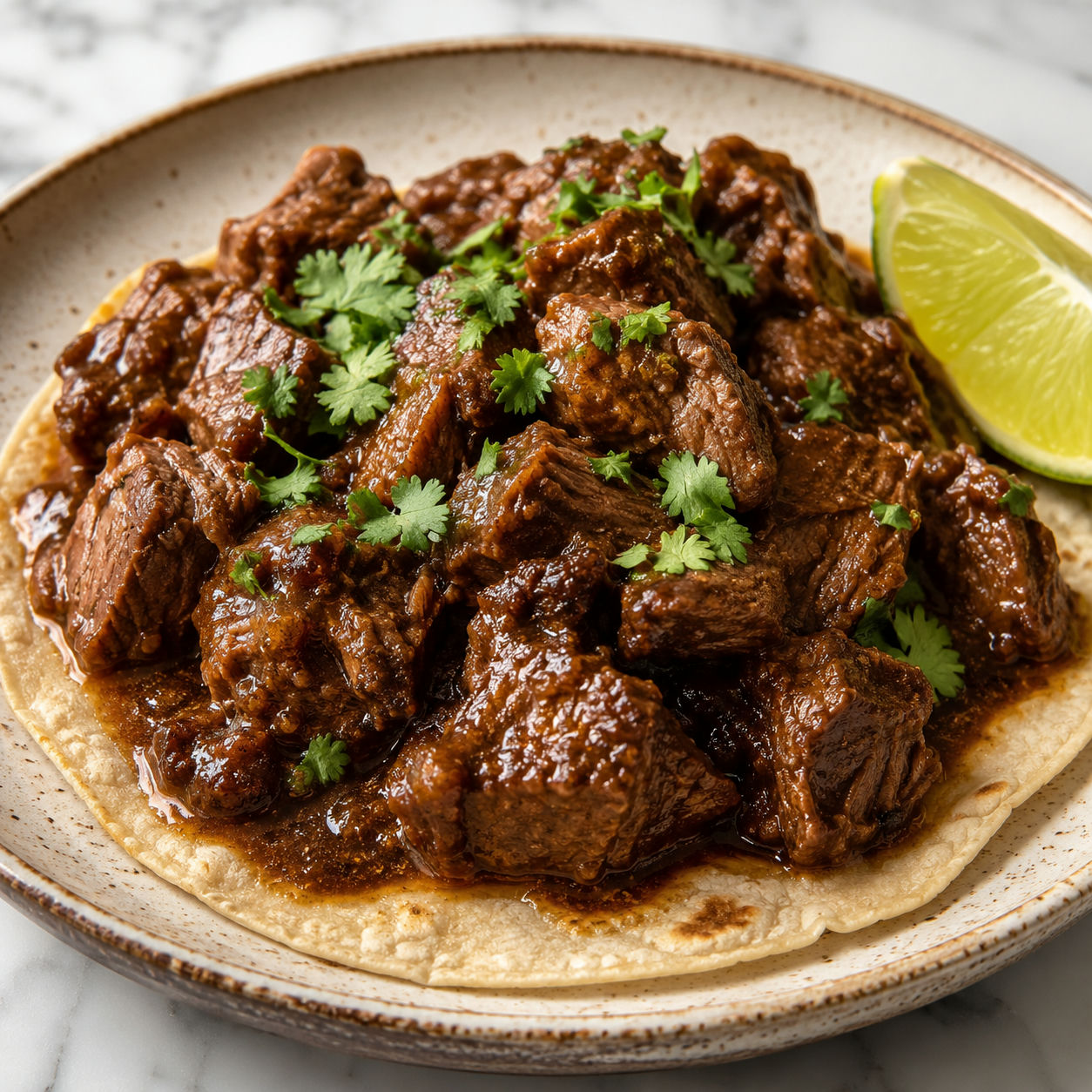
 Pin it
Carne guisada is patient food. The smell of cumin hitting a hot pan, beef browning into a dark crust, and then a long simmer that slowly does what no quick method can. If you grew up with this on the table on a Sunday, you already know exactly what the finished dish tastes like.
This is a Tex-Mex beef stew built on a flour-thickened gravy, spiced with cumin and garlic, and cooked low until the chuck surrenders. The recipe is not complicated. It rewards one good technique above everything else: actually browning the meat before anything else goes in the pot.
Everything after that is stacking simple ingredients and letting time do the work.
Humble Ingredients That Build Real Flavor
Carne guisada rewards simple ingredients used well. Look for chuck stew meat with visible marbling, and use fresh ground cumin rather than old stock sitting in the spice drawer for years. The spice does most of the work, so it needs to have actual flavor.
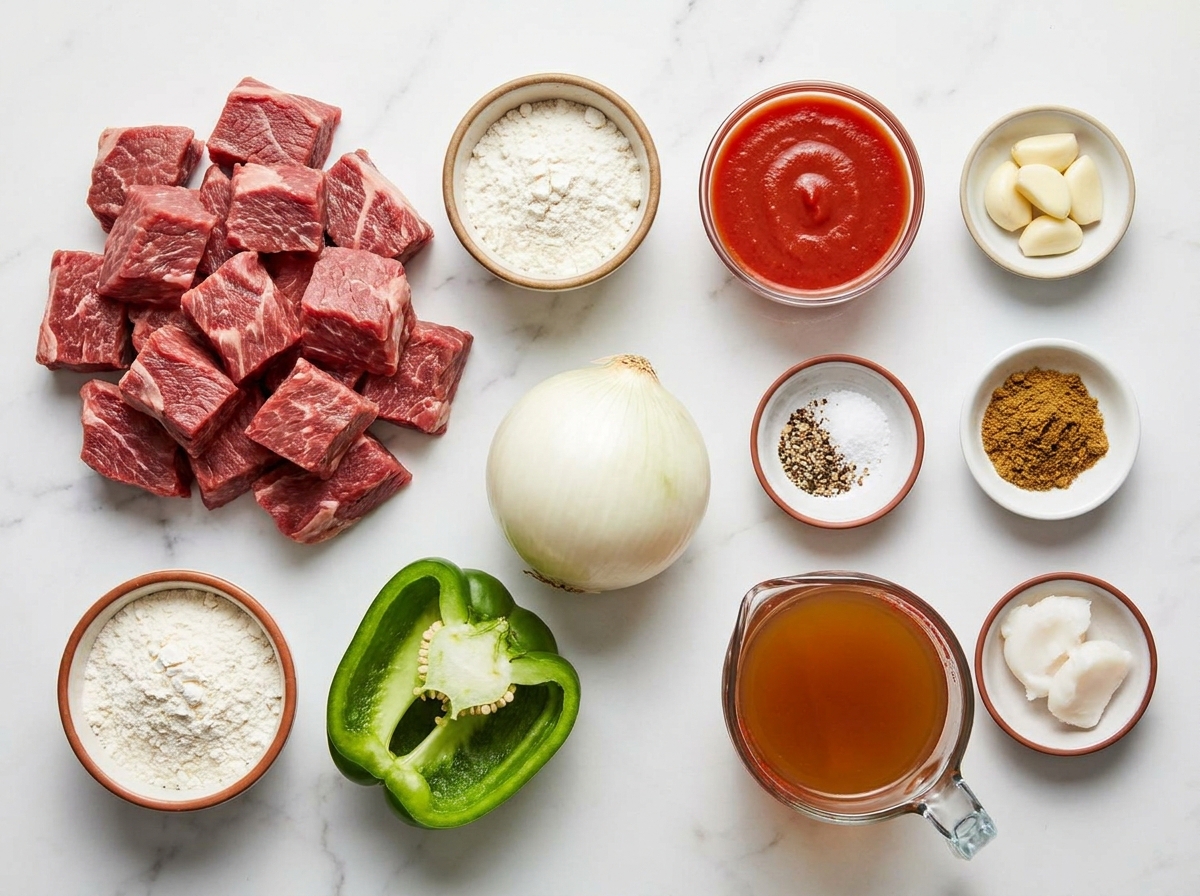
- Chuck stew meat. The fat and connective tissue melt during the braise, making the gravy rich and the beef fork-tender. Do not use a lean cut here.
- Lard or bacon grease. Animal fat adds a subtle depth that vegetable oil does not. Either works, but you will notice the difference.
- White onion. Diced and cooked down with the beef, it becomes sweet and nearly invisible in the finished stew.
- Green bell pepper. Optional, but it softens into the gravy and adds mild sweetness without heat.
- Fresh garlic. Three cloves minced is better than garlic powder here, though either works in a pinch.
- Tomato sauce. Three tablespoons for color and acidity. A diced fresh tomato does the same job.
- Ground cumin. The defining spice. Two teaspoons is the baseline; taste near the end and adjust.
- All-purpose flour. Dusted over the browned beef before any liquid goes in. This thickens the braising liquid into a gravy.
- Chicken or beef stock. The braising liquid. Stock adds more flavor than water, though water works if that is all you have.
Browning First Then Braising the Rest
- Brown the beef. Heat the fat in a large heavy-bottomed pot over high heat. Add stew meat in a single layer and brown for 2 to 3 minutes per side without moving it. Work in batches if needed. Real color on the beef is where the deep flavor comes from.
- Add the aromatics. Add the diced onion and bell pepper to the same pot. Cook over medium-high heat for 3 to 4 minutes, stirring, until the onion softens.
- Build the base. Add the garlic, cumin, salt, black pepper, and tomato sauce. Stir and cook for 1 minute until fragrant.
- Coat with flour. Sprinkle the flour evenly over the meat and stir so every piece is coated. Cook for 1 minute to remove the raw flour taste.
- Add the liquid. Pour in the stock in a slow stream while stirring constantly. Scrape up the browned bits from the bottom. No lumps should remain.
- Braise low and slow. Bring to a boil, cover, reduce heat to low, and cook for 1 hour and 30 minutes, stirring occasionally. The beef should be fork-tender and the gravy thick.
- Taste and finish. Adjust salt and cumin. If the gravy is too thin, simmer uncovered for 10 more minutes. Serve in warm flour tortillas.
Why the Flour Step Makes the Gravy
The flour is what separates carne guisada from a plain braised beef dish. When you dust it over the browned meat and stir it through before any liquid goes in, the starch coats each piece. Once the stock is added, that starch swells during the braise and thickens the liquid into a real gravy rather than a thin broth.
Add the stock slowly while stirring to prevent lumps. If you pour it all in at once over uncooked flour, clumps form. Go slow, stir for the first minute, and you will get a smooth sauce every time. Small lumps that do appear will break up with a few minutes of simmering and steady stirring.
Choosing the Right Beef for This Stew
Chuck is the right call. It has enough fat and connective tissue that a long braise converts them into gelatin, which thickens the gravy and makes the beef genuinely tender. Pre-cut stew meat at the grocery store is almost always chuck and works perfectly.
Brisket cubed up is a solid alternative but needs closer to two hours. Avoid round roast or sirloin. They lack the fat to stay moist during a long cook and turn dry and chewy no matter what you do. If you want to see how well chuck handles low-and-slow cooking another way, the chuck roast tacos plate is a good reference.
This Stew Gets Better Overnight
Make it ahead if you can. Overnight in the fridge, the cumin and garlic settle deeper into the gravy and the beef gets more tender. Cool to room temperature, then refrigerate in a covered container for up to four days.
Reheat on the stovetop over low heat with a splash of water or stock since the gravy thickens considerably in the fridge. For longer storage, freeze in portions for up to three months and thaw overnight before reheating.
Serving It on Tortillas and Beyond
Warm flour tortillas are the classic pairing. If you have time, homemade flour tortillas are worth making for this dish. The soft, slightly chewy texture holds the saucy beef without tearing the way store-bought ones sometimes do.
Beyond tortillas, carne guisada works well over white rice with pinto beans for a full plate. Mashed potatoes are a good match too since the thick gravy acts almost like country gravy over them. Finish with a squeeze of lime and fresh cilantro. For another Tex-Mex braised beef plate, the chile colorado with rice and beans takes a different direction that is worth trying.
Swaps and Variations That Still Work
The bell pepper is genuinely optional. Many versions skip it and the dish is still great. Lard gives a deeper background flavor than neutral oil, but either works. For the liquid, water is the real bottom floor. The beef and cumin will still carry the gravy.
For heat, add a diced serrano or jalapeño with the aromatics. For a gluten-free version, substitute cornstarch for the flour in the same quantity. Per the USDA FSIS safe temperature chart, whole beef cuts should reach 145°F (63°C) internally, though a 90-minute braise exceeds that temperature well before the stew is done.
FAQs
- Can I make carne guisada in a slow cooker?
Yes. Brown the meat and aromatics in a skillet first, then transfer everything to the slow cooker with the flour and liquid. Cook on low for 6 to 8 hours or high for 3 to 4 hours. If the gravy is too thin at the end, stir in one tablespoon cornstarch mixed with two tablespoons cold water and cook uncovered for 20 minutes.
- What cut of beef works best for carne guisada?
Chuck is the right call. The fat and connective tissue break down during the long braise, making the meat tender and the gravy rich. Pre-cut stew meat at the grocery store is typically chuck. Brisket works too but needs closer to two hours. Avoid round or sirloin as they stay tough and dry no matter how long you cook them.
- My gravy came out too thin. How do I fix it?
Remove the lid and simmer uncovered for 10 to 15 minutes to reduce. If it still needs help, mix one tablespoon cornstarch with two tablespoons cold water, stir it into the stew, and cook five more minutes. The prevention is making sure the flour coats the meat evenly before any liquid goes in.
- How long does carne guisada keep?
Refrigerate in a covered container for up to four days. The flavors improve overnight as the gravy settles. Reheat gently on the stovetop with a splash of water or stock since the gravy thickens in the fridge. It freezes well for up to three months. Thaw overnight in the refrigerator before reheating.
- Can I add potatoes to carne guisada?
Yes. Dice two medium potatoes into one-inch cubes and stir them in about 30 minutes before the stew finishes so they cook through without falling apart. They absorb the cumin gravy well. If you enjoy that combination, carne con papas rojo makes the potato the centerpiece.
- What can I serve with carne guisada besides flour tortillas?
White rice and pinto beans are the most traditional sides. Mashed potatoes are a surprisingly good match since the thick beef gravy acts almost like country gravy over them. Corn tortillas work fine too. Finish with fresh cilantro, lime, and avocado for a full plate.
- Can I make this gluten-free?
Yes. Swap the all-purpose flour for cornstarch in the same quantity and make sure your stock is gluten-free. The gravy texture will be similar. Serve with corn tortillas or rice instead of flour tortillas to keep the whole meal gluten-free.
