 Pin it
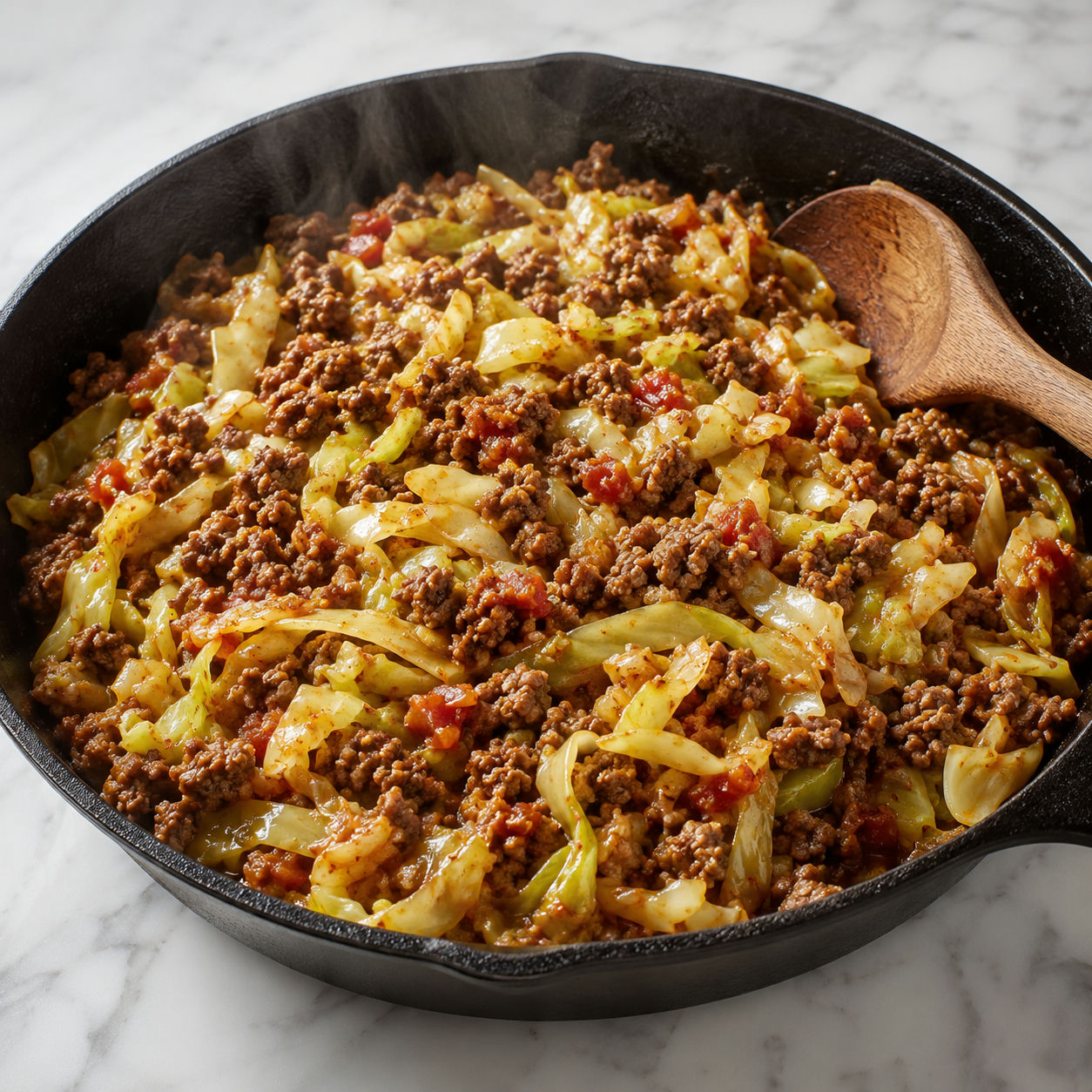
This is the dinner that convinced me cheap ingredients can be genuinely satisfying. A pound of ground beef, half a head of cabbage, a few aromatics, and about twenty-five minutes in one skillet. That's really it.
Cabbage gets a bad reputation, but when you cook it down in beef drippings with garlic and a splash of Worcestershire, it becomes something completely different: tender, a little sweet, and deeply savory. The whole pan smells like something that took much longer to make.
This works fine as a standalone low-carb meal. It also stretches further if you serve it over rice or toss in noodles. It reheats beautifully, a full batch costs almost nothing, and the flavors improve overnight. Hard to ask for more from a weeknight dinner.
The Short List That Does a Lot
Every ingredient in this skillet has a job to do. Green cabbage is the bulk of the dish, and it's worth buying fresh rather than a pre-shredded bag because it holds its texture better through cooking. Look for a firm, heavy head with tightly packed leaves.
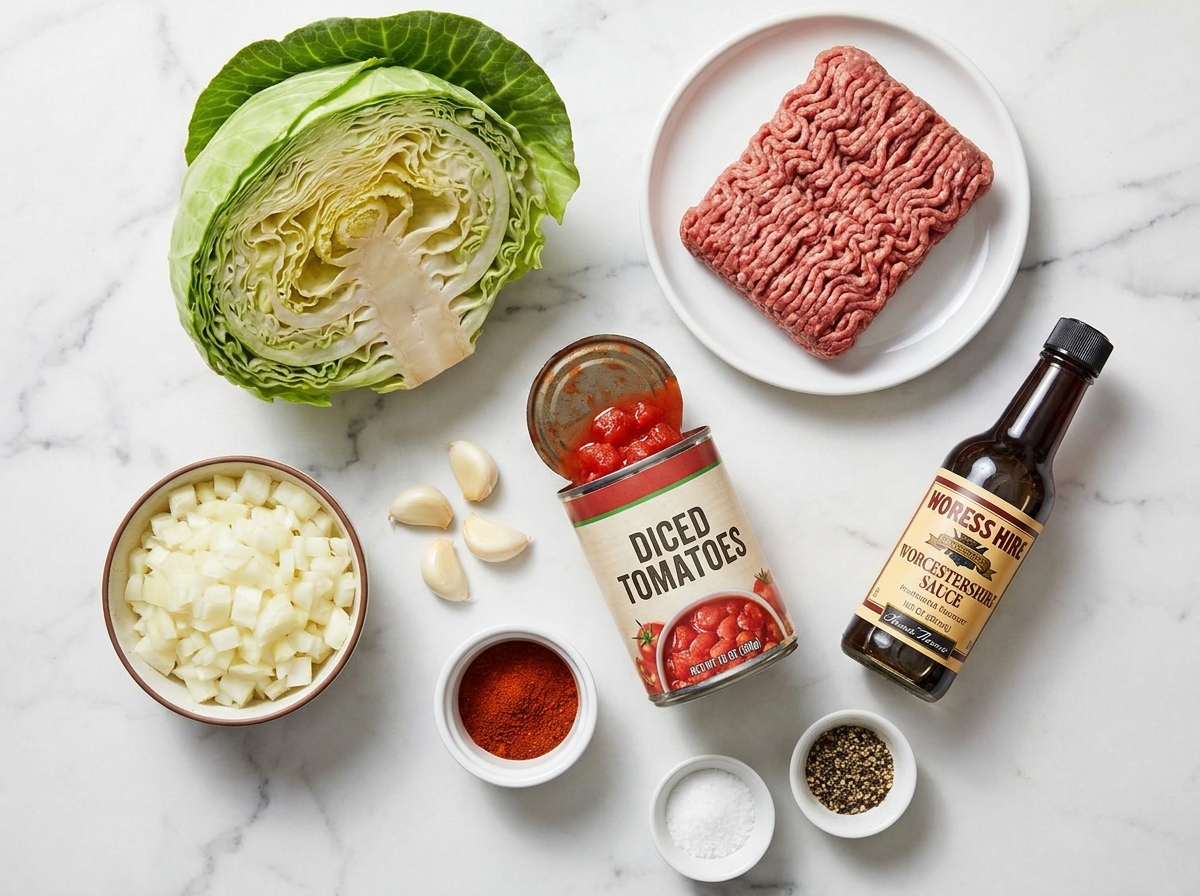
- Ground beef. The fat renders out and becomes the cooking medium for everything else. An 80/20 blend gives the most flavor, but leaner beef works with a drizzle of extra oil.
- Green cabbage. Half a medium head gives about 4 cups shredded, which looks like a lot before it cooks down to a fraction of that volume. Cabbage is also a solid source of vitamin C and fiber, which doesn't hurt for a budget weeknight dinner.
- Yellow onion. Softens into the beef drippings and adds a mild sweetness that rounds out the dish.
- Garlic. Four cloves sounds like a lot and it's exactly right. Fresh minced garlic beats garlic powder here.
- Diced tomatoes. One can with the juices adds body and a gentle acidity that balances the richness of the beef and fat.
- Worcestershire sauce. A small amount creates the deep savory note that makes this taste better than the ingredient list suggests.
- Smoked paprika. Adds color and a faint smokiness that makes the dish feel more complex than it really is.
Building the Skillet Step by Step
- Brown the beef. Heat a large skillet over medium-high heat. Add the ground beef and break it up with a spatula. Let it sit 1 to 2 minutes between stirs so it actually browns rather than steams. Cook until no pink remains, about 5 to 7 minutes. Drain most of the fat, leaving about 1 tablespoon in the pan.
- Cook the aromatics. Add the diced onion to the pan. Cook 3 to 4 minutes, scraping up any browned bits from the bottom, until the onion softens. Add the garlic and stir for 30 to 60 seconds until fragrant but not browned.
- Add the cabbage. Pile in the shredded cabbage. It will fill the pan and look like far too much. Toss it with the beef and onion, then cook, stirring every couple of minutes, for 8 to 10 minutes until the cabbage is fully tender and some edges pick up a little color.
- Season and finish. Pour in the diced tomatoes with their juices, the Worcestershire sauce, smoked paprika, salt, and pepper. Stir well and simmer for 5 minutes until the liquid reduces slightly and everything comes together. Taste and adjust seasoning before serving.
Cook the Cabbage All the Way
The biggest mistake with this dish is pulling it off the heat too soon. Raw or barely-cooked cabbage has a bitter edge and a squeaky texture that most people don't enjoy. Give it the full 8 to 10 minutes in the pan. You want it fully tender with some edges starting to caramelize against the hot surface. Those slightly browned bits are where most of the flavor comes from. Stir occasionally but not constantly so the cabbage has real contact time with the pan.
If you've tried the Chinese ground beef and cabbage stir fry with ginger, the principle is the same. That version runs hotter and faster over higher heat, but here you're going slower to let the natural sweetness of the cabbage develop properly.
Manage the Beef Fat Wisely
After browning the beef, drain most of the fat but leave about a tablespoon behind in the pan. That reserved fat is how you cook the onion and garlic without adding extra oil, and it carries the flavor of the browned beef into every bite of cabbage. Drain everything and the skillet goes dry; the aromatics can scorch. Leave too much behind and the finished dish is greasy. A tablespoon is the right target. Tilt the pan and spoon it out rather than pouring it down the drain, where it solidifies and causes plumbing problems.
On food safety: the USDA recommends cooking ground beef to an internal temperature of 160°F. A quick check with an instant-read thermometer removes all doubt.
Swaps That Actually Work Here
Ground turkey or pork work in place of beef. Turkey is the leaner swap and needs a bit of extra oil since it doesn't render much fat. Pork adds a slightly sweeter note. You can also turn this into a taco-style pan by adding cumin, chili powder, and a squeeze of lime at the end. That's essentially what the one-pan ground beef taco cabbage skillet is, and it's a satisfying direction if you want more heat and brightness.
On the vegetable side, diced bell pepper added with the onion brings sweetness and color. A handful of frozen corn stirred in with the tomatoes adds texture. If you want a full baked version of this flavor profile, the cheesy cabbage beef casserole with rice and tomatoes takes these same base ingredients in a completely different direction.
Turning It into a Full Meal
On its own, this skillet makes a solid low-carb dinner. To stretch it further, serve it over white rice, brown rice, or egg noodles. A scoop of the beef and cabbage mixture over rice feeds two more people from the same batch without any extra work. Mashed potatoes underneath turn it into something that feels almost like a deconstructed stuffed cabbage roll.
Leftovers work well spooned into lettuce cups for a lighter lunch, or stuffed into a warm tortilla for a quick wrap. And if you have more cabbage to use up, a hearty cabbage and ground beef soup with savory broth and vegetables is a natural next step. It uses the same base ingredients with more liquid added for a warming bowl of soup.
Storage and Reheating Done Right
This skillet keeps well in the refrigerator for up to 4 days in a sealed container. The flavors actually improve overnight as the tomatoes, Worcestershire, and beef fat meld together, so a leftover portion the next day is often better than the first serving.
To reheat, add a splash of water to a skillet over medium heat and warm it through for 3 to 4 minutes. The microwave works in a pinch with a covered dish to keep the moisture in. To freeze, portion into freezer bags or containers and freeze flat for up to 3 months. Thaw overnight in the refrigerator before reheating. Cabbage holds its texture better than most vegetables after freezing, which makes this one of the better dishes for batch cooking.
FAQs
- What cut of ground beef is best for this recipe?
80/20 ground beef gives you the best flavor because the fat renders into the pan and seasons the cabbage as it cooks down. Leaner beef (90/10 or 93/7) works too, but you may need to add a drizzle of olive oil since there is less fat to work with. The extra leanness also means the beef dries out faster, so pull it off the heat as soon as it's cooked through.
- Can I use red or savoy cabbage instead of green?
Yes. Green cabbage is the classic choice here because it cooks down quickly and stays mild. Savoy cabbage works just as well and turns a bit silkier. Red cabbage takes a few extra minutes to soften and will tint the whole pan pink from its natural pigment, which doesn't affect flavor. Napa cabbage cooks down fastest of all and has a more delicate, slightly sweet texture.
- Can I substitute another protein?
Ground turkey or ground pork both work well here. Turkey is the leaner swap and needs a tablespoon of olive oil since it has almost no fat to render. Pork adds a slightly sweeter note that pairs nicely with the cabbage. Ground chicken is another option, though it's the driest of the bunch, so watch the heat carefully and don't skip the oil.
- How do I store and reheat leftovers?
Leftovers keep well in an airtight container in the refrigerator for up to 4 days. To reheat, add a splash of water to a skillet over medium heat and warm it through for 3 to 4 minutes, stirring once or twice. The microwave also works in a covered dish for 2 minutes, stirring halfway. The flavors actually improve overnight as everything melds together, so leftover portions are often better than the first serving.
- Can I add rice directly to the skillet?
You can, but it's easier to cook the rice separately and serve the beef and cabbage mixture on top. If you want a true one-pot version, add 1/2 cup of rinsed white rice and 1 cup of water or broth after the tomatoes, cover, and simmer on low for 18 to 20 minutes until the rice is tender. A larger skillet or a wide pot helps here so the rice has room to cook evenly.
- Is this dish gluten-free?
The core ingredients are all naturally gluten-free, but standard Worcestershire sauce often contains malt vinegar, which has gluten. Swap it for a certified gluten-free Worcestershire sauce or use a splash of tamari or coconut aminos for a similar savory depth. With that one swap the whole dish is gluten-free.
- Can I make this ahead for meal prep?
This is one of the better meal-prep dishes around because it reheats so well. Cook a full batch, portion it into containers, and refrigerate for up to 4 days or freeze for up to 3 months. Thaw overnight in the fridge before reheating on the stovetop. The cabbage holds its texture better than most vegetables after freezing, which makes this an excellent candidate for batch cooking.
