 Pin it
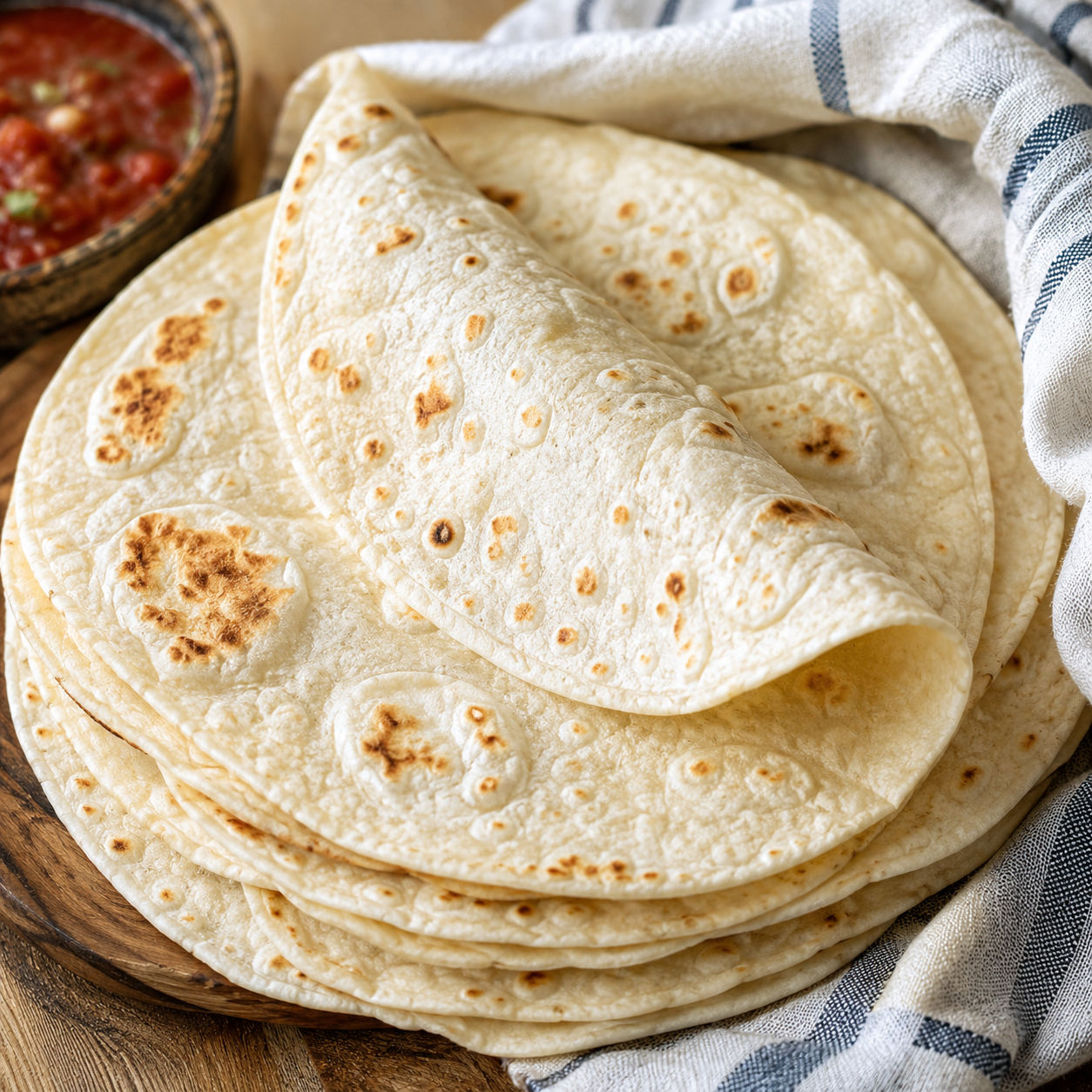
Soft Homemade Flour Tortillas Made From Scratch are worth learning because the dough is simple and the payoff is immediate. You get warm, flexible tortillas with toasted brown spots and a soft chew that packaged tortillas rarely have.
This version uses all-purpose flour, baking powder, salt, neutral oil, and hot water. The hot water helps the flour hydrate quickly, while the rest makes the dough relaxed enough to roll thin without snapping back.
I like these for tacos, breakfast wraps, quesadillas, and quick lunches. They stay tender because each tortilla goes straight from the skillet into a clean towel, where the trapped steam finishes the job.
What Makes Them Soft
The ingredient list is short, so measure the flour with a light hand and use water that feels hot but not boiling. A soft, slightly tacky dough makes a better tortilla than a dry one.
- All-purpose flour. Gives the tortillas enough structure to roll thin while staying tender.
- Baking powder. Adds a gentle puff and keeps the texture light.
- Fine salt. Seasons the dough all the way through.
- Neutral oil. Coats the flour and keeps the tortillas flexible after cooking.
- Hot water. Hydrates the flour quickly and helps the dough become smooth.
- Extra flour. Keeps the counter from sticking, but use only a dusting so the tortillas do not dry out.
Soft Homemade Tortilla Method
- Mix the dry ingredients. Whisk the flour, baking powder, and salt so the leavening is evenly spread through the dough.
- Add oil and hot water. Stir until a shaggy dough forms, then use your hands to pull in any dry flour at the bottom of the bowl.
- Knead briefly. Work the dough for 2-3 minutes until it feels smooth and soft, not stiff.
- Rest the dough. Divide it into 10 balls, cover them, and let them sit for 25-30 minutes so the gluten relaxes.
- Roll thin rounds. Roll each ball into an 8-inch circle on a lightly floured surface, keeping the rest covered.
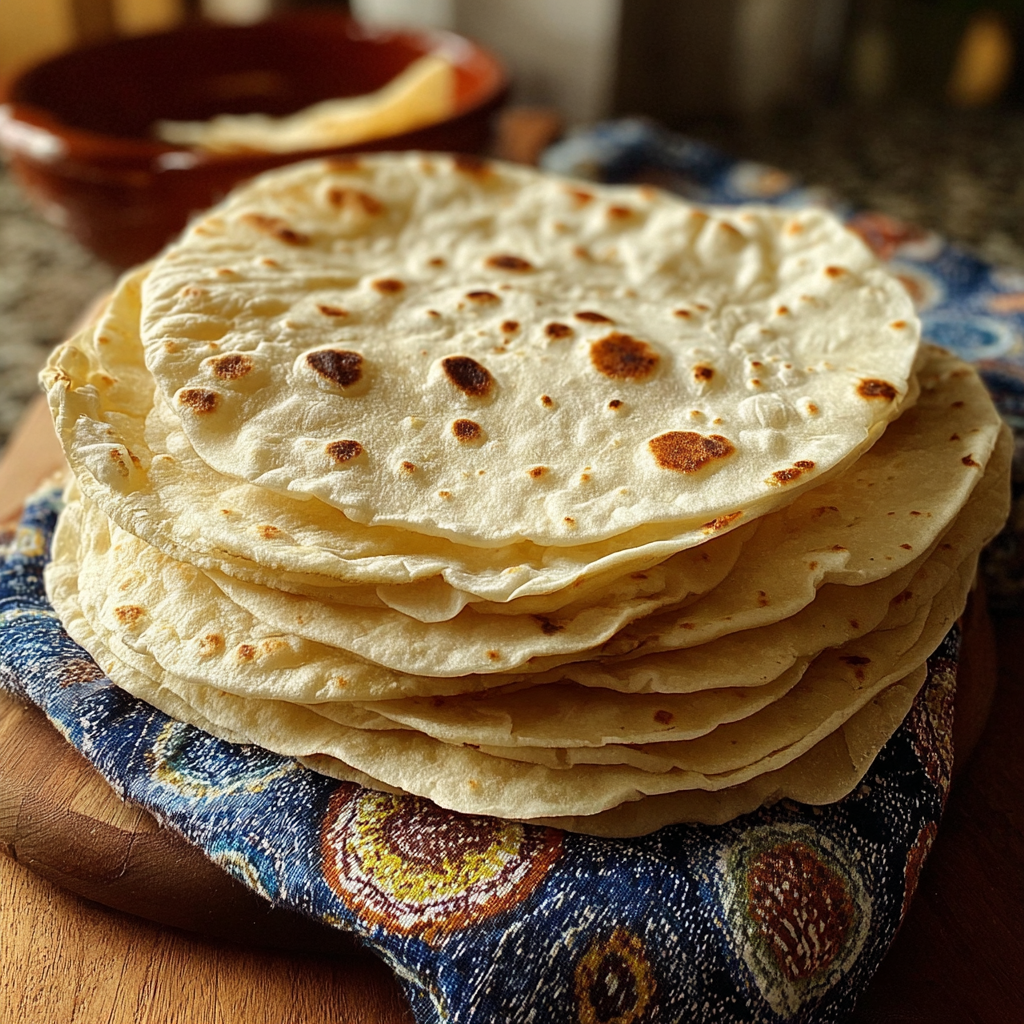
- Cook fast and cover. Cook each tortilla in a hot dry skillet for 30-45 seconds per side, then stack inside a towel to steam and stay pliable.
The Rest Is Not Optional
Resting is the small step that makes rolling easy. Right after kneading, the dough wants to pull back on itself. After 30 minutes under a towel, it rolls wider with less pressure and fewer torn edges. King Arthur Baking notes that resting helps the flour absorb water, which is exactly what you want in a soft tortilla dough. You can read their tortilla notes here: King Arthur Baking simple tortillas.
Rolling Without Tough Tortillas
Use just enough flour to stop sticking. Too much extra flour works into the dough and makes the finished tortillas dusty and dry. Roll from the center outward, turn the dough a quarter turn, and repeat. The circle does not need to be flawless. Thin matters more than round. If a dough ball keeps snapping back, set it aside for 5 minutes and roll another one. For another stovetop bread with a soft, chewy bite, try easy homemade naan bread.
Heat Makes The Spots
The skillet should be hot enough to brown the tortilla quickly without turning it crisp. Medium-high heat works on most stoves. If the first tortilla takes more than a minute per side, turn the heat up. If black spots appear before the tortilla puffs, lower it a little. A cast iron skillet gives great browning, but any heavy pan will work. These tortillas are also a natural base for tender chicken tortillas cheese or a quick weeknight taco plate.
Swaps That Hold Up
Neutral oil keeps this recipe dairy-free and easy. If you want richer flavor, use softened butter. For a more traditional feel, use lard or shortening. You can replace up to half the all-purpose flour with white whole wheat flour, but add an extra tablespoon or two of hot water because whole wheat absorbs more moisture. For a gluten-free option, the site also has keto zucchini tortillas, which behave differently but fill the same wrap-and-fold need.
Storing Them For Later
Let the tortillas cool before sealing them or condensation will make them gummy. Once cool, place them in a zip-top bag and press out the air. Reheat one at a time in a dry skillet for the best texture. A microwave works too. Wrap a small stack in a barely damp towel and heat in short bursts. Since this dough contains raw flour before cooking, use clean hands and surfaces. The FDA food safety section is a good starting point for general kitchen safety.
Ways To Serve Them
Fresh tortillas are at their best while warm. Fold them around scrambled eggs, beans, grilled vegetables, or leftover roast chicken. They also make quick quesadillas because they brown nicely and stay bendable. If you want a familiar starting point, compare this version with Homemade Flour Tortillas My Way and choose the style that fits your table.
Summary
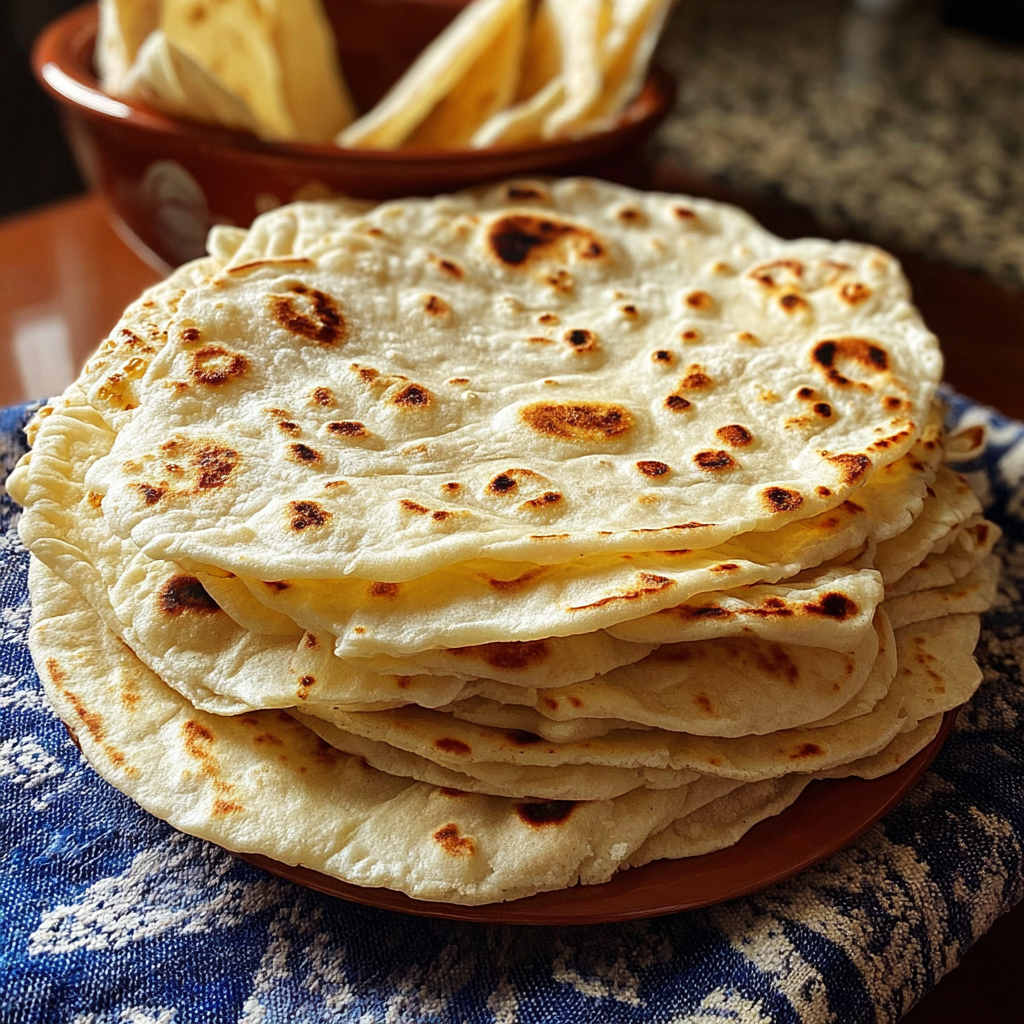
These tortillas are soft, flexible, and cooked on the stovetop in a dry skillet. Use them warm, or store them for quick wraps later in the week.
FAQs
- Why are my homemade flour tortillas not soft?
They may need more rest time, slightly more water, or a shorter cook. Dry tortillas usually come from stiff dough, too much flour during rolling, or cooking them too long until they crisp.
- Can I use butter or lard instead of oil?
Yes. Use the same volume of softened butter, shortening, or lard. Butter gives a richer flavor, while lard makes very tender tortillas with a classic texture.
- Do I need a tortilla press?
No. A rolling pin works better for flour tortillas because the gluten makes them springy. Roll from the center outward and rotate the dough often so the round stays even.
- How do I store homemade flour tortillas?
Let them cool completely, then store them in an airtight bag. Keep them at room temperature for 1 day or refrigerate for up to 5 days. Reheat in a dry skillet or wrapped in a damp towel in the microwave.
- Can I freeze flour tortillas?
Yes. Stack cooled tortillas with small pieces of parchment between them, then freeze in a sealed bag for up to 2 months. Warm them straight from frozen in a skillet over medium-low heat.
- Can I make these without baking powder?
You can leave it out for a thinner, chewier tortilla. Baking powder gives this recipe a little lift and helps the tortillas puff lightly in the skillet.
