 Pin it
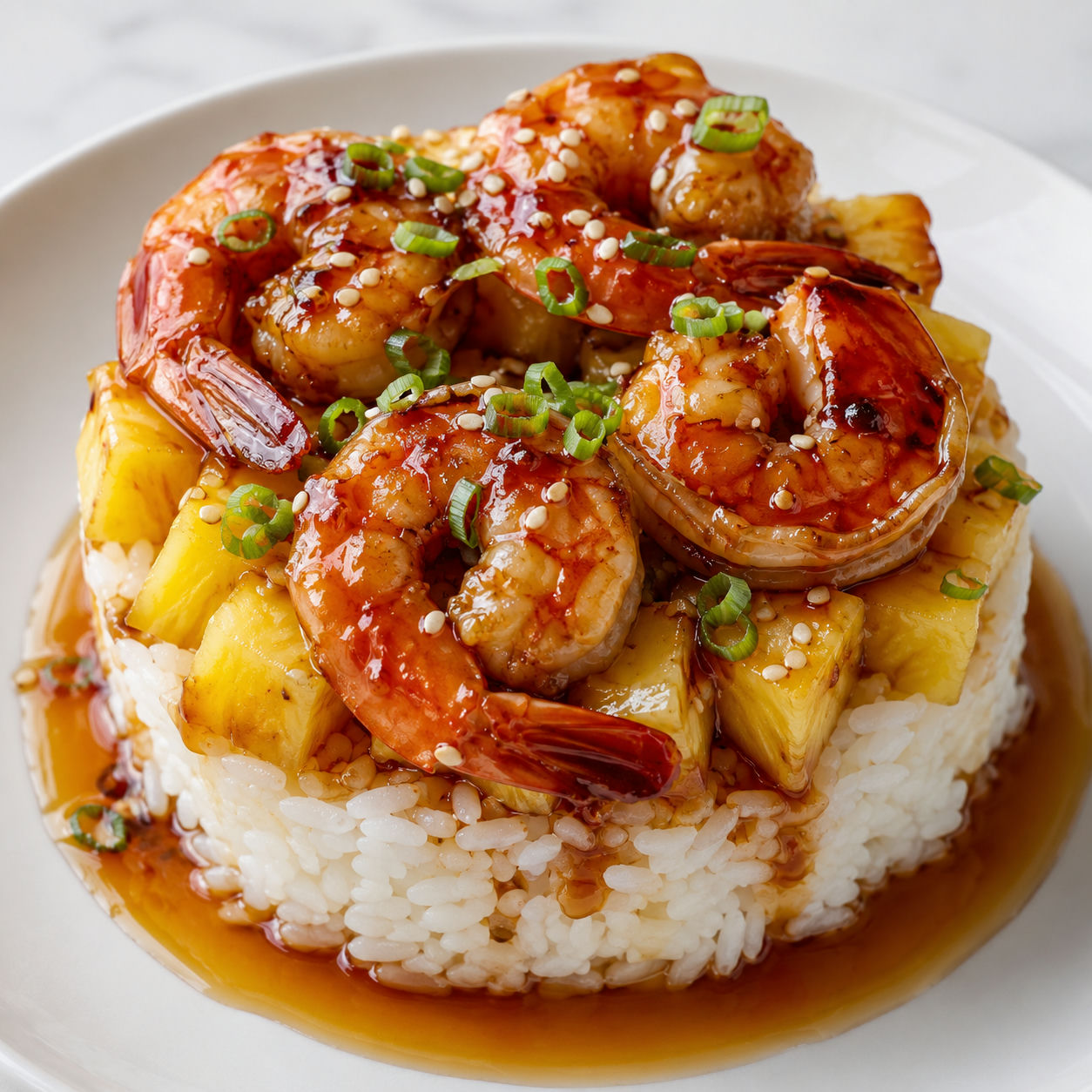
This teriyaki shrimp and pineapple rice stack is the dinner I reach for when I want something that looks impressive but actually comes together in under 30 minutes. The combination of teriyaki-glazed shrimp, savory sesame rice, and juicy pineapple makes sense the first time you taste it and becomes a habit after that.
The stack format is just a small trick with a bowl or ring mold. It turns a simple shrimp-and-rice dinner into something people ask about. You do not need special equipment or any extra time. Warm rice, hot glazed shrimp, cool sweet pineapple. The contrast in textures and temperatures is half of what makes it good.
The recipe below gives you a reliable teriyaki marinade and a sesame-forward rice base. Once you make this once, you will find the rice base showing up under other proteins and the glaze going on chicken or tofu the same week.
The Layer-by-Layer Ingredient Breakdown
The shopping list is short. Fresh shrimp and good teriyaki sauce do most of the work here, so those two are worth choosing well. Everything else is pantry standard.
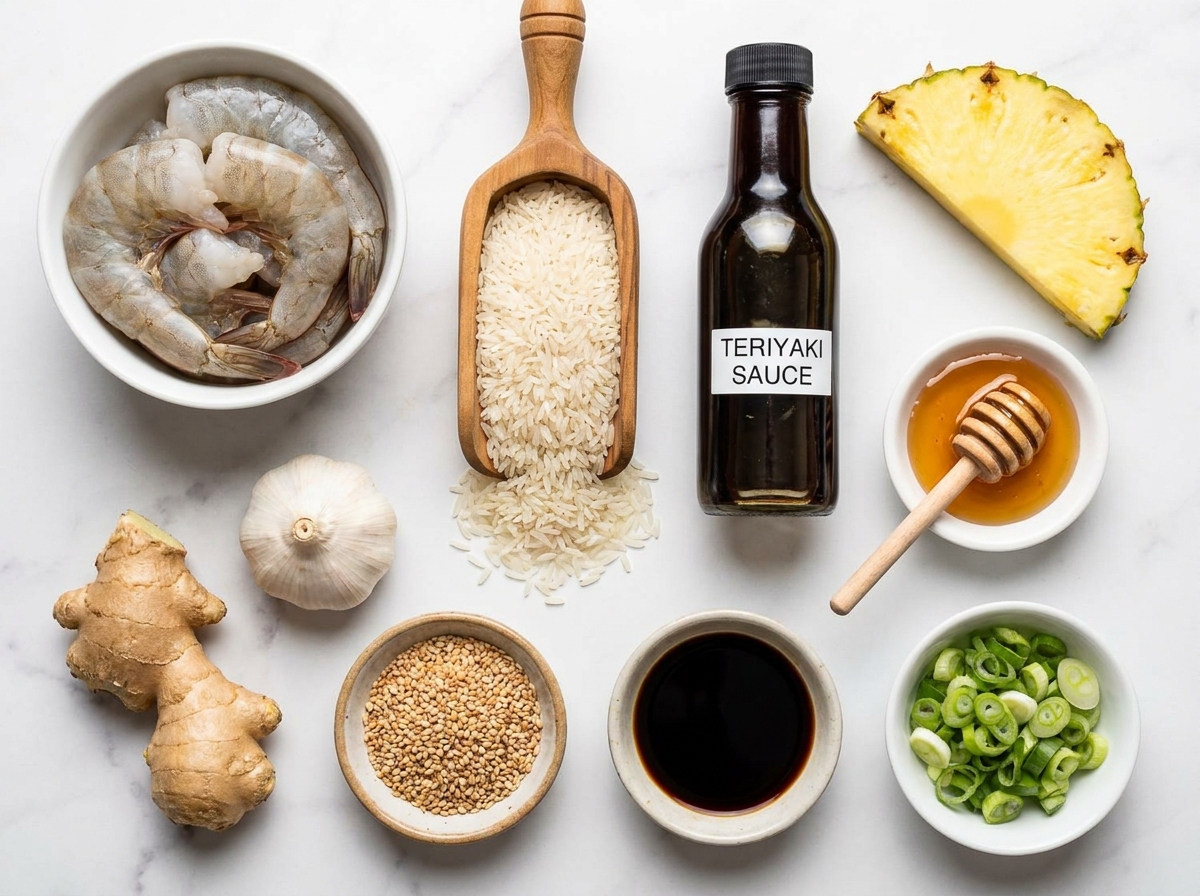
- Large shrimp. The bigger the shrimp, the better they sear without overcooking. Look for 21/25 count or larger. Tail-on looks great in the stack. Tail-off is easier to eat.
- Jasmine rice. Light, fragrant, and slightly sticky when warm, which is exactly what you need to hold the stack shape. Medium-grain sushi rice is even better if you want a very firm, clean mold.
- Teriyaki sauce. A good store-bought version saves time. Look for one where soy sauce is the first ingredient rather than corn syrup. A quick homemade version with soy sauce, mirin, and a little sugar also works well.
- Honey. Adds depth and helps the glaze caramelize on the shrimp. A small amount goes a long way.
- Fresh pineapple. Diced small so it sits neatly in the stack. Fresh has a brightness that canned does not quite match, but either works.
- Sesame oil and soy sauce. Cooked into the rice for a subtle savory base that ties the whole stack together.
- Green onions and sesame seeds. The finishing touch. They add color, crunch, and a mild bite that balances the sweetness of the glaze.
How to Build the Stack, Step by Step
- Cook the sesame rice. Combine jasmine rice, chicken broth, soy sauce, sesame oil, and garlic powder in a medium saucepan. Bring to a boil over medium-high heat. Cover tightly and reduce heat to low. Cook for 15 minutes, then remove from heat and rest, still covered, for 5 minutes. Fluff with a fork.
- Marinate the shrimp. Whisk together teriyaki sauce, honey, grated ginger, and minced garlic in a bowl. Add the shrimp and toss well. Let them sit for 10 to 15 minutes at room temperature. Do not go past 30 minutes or the salt in the sauce starts to soften the texture.
- Sear the shrimp. Shake excess marinade off the shrimp back into the bowl and reserve it. Pat the shrimp lightly dry. Heat oil in a skillet over medium-high until shimmering. Cook shrimp 1 to 2 minutes per side until pink and just opaque. Transfer to a plate so they stop cooking.
- Reduce the glaze. Pour the reserved marinade into the hot pan. Bring it to a simmer for about 60 seconds until slightly thickened and glossy. Toss the shrimp back in to coat. Remove from heat.
- Stack and plate. Pack about 3/4 cup of warm rice firmly into a small bowl or ring mold. Invert onto the center of a plate and tap to release. Spoon diced pineapple on top of the rice. Arrange 4 to 5 glazed shrimp on the pineapple. Finish with green onions and sesame seeds.
Getting the Teriyaki Glaze Just Right
The glaze comes down to two things. Do not marinate too long, and reduce the sauce enough after cooking.
Shrimp marinated for more than 30 minutes start to go soft from the salt in the teriyaki sauce. Stick to 15 minutes and they stay snappy. After you pull the shrimp from the pan, that leftover marinade in the bowl is where the flavor lives. Pour it back into the hot pan, let it bubble for a minute, and toss the shrimp back in for a quick coat. That 60-second reduction turns the sauce from watery to glossy and makes it cling to every shrimp. For the same technique applied to beef, the Teriyaki Beef with Pineapple Rice Stack uses this identical reduction method with beef strips, and it works just as well.
The Ring Mold Trick for a Clean Stack
You do not need a ring mold. A small cereal bowl or ramekin does the same job. The key is warm rice and firm packing. Cold rice is drier and crumbles when unmolded, so build your stacks right after fluffing while the rice is still steaming.
Press the rice in with the back of a spoon and really pack it. When you flip and tap, let gravity do the work rather than shaking it out forcefully. A damp mold (rinse it under water and shake off the excess before filling) helps the rice release cleanly every time. If you enjoy the rice stack format, the Teriyaki Chicken with Avocado and Rice Stack uses the same mold method and adds creamy avocado as a layer, which is a great next step.
Fresh vs. Canned Pineapple for This Stack
Fresh pineapple is worth using when you can find a ripe one. The sharper acidity cuts through the teriyaki glaze better than canned. If you want to take it further, grill the pineapple slices for two minutes per side on a hot grill pan before dicing them. Caramelized pineapple adds a smokier, deeper sweetness that pairs beautifully with the shrimp.
Canned pineapple in juice (not syrup) works in a pinch. Drain it well and pat the pieces dry so the moisture does not make the rice stack soggy. The flavor is a little flatter but still good with the teriyaki glaze. A Fresh Pineapple Salsa with Lime and Cilantro also makes a fantastic topping variation in place of plain chunks if you want a brighter, more textured finish.
The Shrimp Mistake Most People Make
Overcooked shrimp is the most common issue with this dish. Shrimp cook in under two minutes per side at medium-high heat, and they keep cooking for a few seconds after you pull them from the pan. The sign to look for is a shift from gray to pink with a gentle curl. A tight C shape means overcooked. Take them off the moment the center looks just barely opaque.
The FDA recommends cooking shrimp to an internal temperature of 145°F, which corresponds to that pink, just-opaque look in practice. It is worth noting that shrimp are one of the leanest protein sources available according to the USDA FoodData Central, with roughly 20 grams of protein per 3-ounce serving, making this stack a genuinely filling dinner despite the light feel.
Storing Leftovers and Prepping Ahead
Keep the components separate in the fridge for up to three days. Rice in one container, shrimp in another, pineapple in a third. Storing them together turns the rice mushy and the pineapple releases water that soaks everything overnight.
To reheat, splash the rice with a tablespoon of water and microwave it covered. Warm the shrimp in a dry skillet over low heat for 30 to 60 seconds. Reassemble just before serving. Any leftover sesame rice works well the next day in a quick stir-fry. The Easy Shrimp Fried Rice with Vegetables is a great use for leftover rice from this recipe and comes together in under 15 minutes.
FAQs
- Can I use frozen shrimp for this recipe?
Yes. Thaw the shrimp under cold running water for a few minutes, then pat them very dry with paper towels. Dry shrimp sear instead of steam, which is what gives them color and keeps the texture firm. Avoid thawing overnight in the fridge if you are using them the same day, as they can get waterlogged.
- What rice works best for stacking?
Short-grain or medium-grain rice holds a stack shape better than long-grain because it is naturally stickier. Jasmine rice works well if you pack the mold firmly while the rice is still warm. Sushi rice is the most reliable option when you want a very clean, tight stack presentation.
- How do I shape the rice stack without a ring mold?
A small cereal bowl or a ramekin works just as well. Press the warm rice in firmly, hold a plate over the top, then flip it quickly. Tap the bottom of the bowl a couple of times and lift it off. It releases cleanly when the rice is warm and packed tight.
- Can I use canned pineapple instead of fresh?
Canned works fine. Drain and pat the chunks dry so they do not make the rice soggy. Fresh pineapple has a brighter, sharper bite that cuts through the teriyaki glaze better, but canned pineapple in juice (not syrup) is a solid substitute that most people always have on hand.
- How do I make this recipe gluten-free?
Swap regular soy sauce in the teriyaki marinade for tamari or coconut aminos. Most store-bought teriyaki sauces contain wheat-based soy sauce, so check the label or make your own with tamari. The rest of the recipe is naturally gluten-free.
- Can I prep any part of this ahead of time?
The rice can be cooked up to two days ahead and reheated with a small splash of water. The shrimp are best cooked fresh since they take only a few minutes. You can mix the marinade and prep the pineapple and garnishes earlier in the day, which cuts active cooking time to under 15 minutes at dinnertime.
- How do I store and reheat leftovers?
Store the shrimp, rice, and pineapple separately in airtight containers in the fridge for up to three days. Reheat the rice with a splash of water covered in the microwave. Warm the shrimp in a skillet over low heat for 30 to 60 seconds so they do not go rubbery. Re-stack before serving, or just plate it deconstructed.
