 Pin it
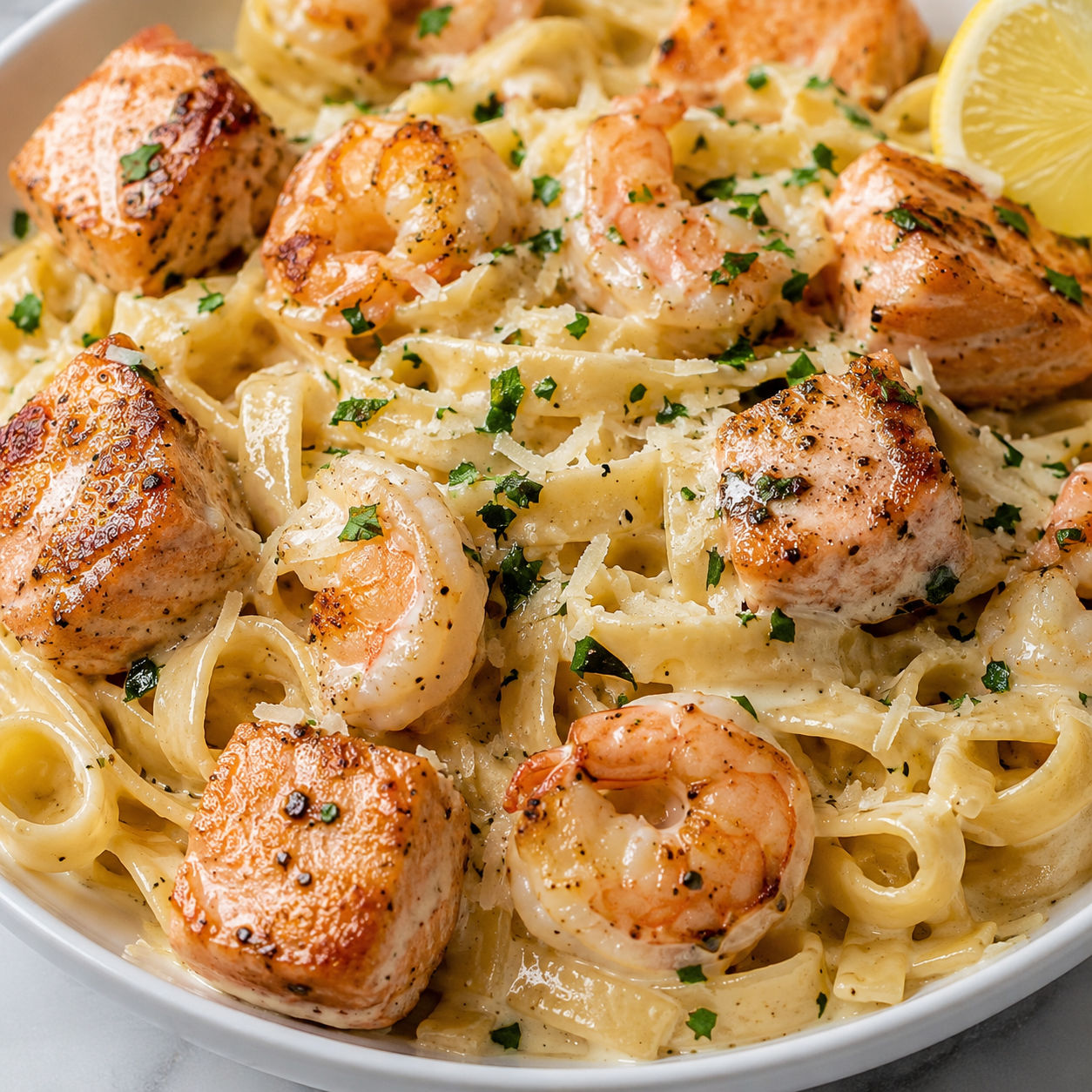
Salmon And Shrimp Alfredo is the kind of seafood pasta that feels restaurant-rich without asking for restaurant timing. The salmon stays flaky, the shrimp stay springy, and the sauce coats every strand of fettuccine.
The trick is not letting the seafood sit in the cream sauce for too long. Sear it first, build the Alfredo in the same pan, then bring everything together right before serving.
Seafood Alfredo Lineup
Use fresh-smelling seafood, real Parmesan, and heavy cream for the smoothest sauce. This is a short ingredient list, so each item has to pull its weight.
- Salmon. Adds buttery flakes and makes the pasta feel hearty enough for dinner.
- Shrimp. Brings sweet, snappy bites that cook fast and pair naturally with cream.
- Fettuccine. Wide ribbons hold the sauce better than thin pasta.
- Heavy cream. Gives the Alfredo body without needing a flour roux.
- Parmesan. Melts into the cream and gives the sauce its salty, nutty backbone.
- Garlic. Warms the sauce and keeps it from tasting flat.
- Lemon. Brightens the seafood and cuts through the richness.
- Parsley. Adds a fresh finish and a little color.
Cook It In Stages
- Boil the pasta. Cook fettuccine in well-salted water until just al dente. Save some pasta water before draining.
- Sear the salmon. Season salmon cubes and brown them in a hot skillet until golden outside and just cooked through. Move them to a plate.
- Cook the shrimp. Add the shrimp to the same pan and cook until pink and opaque. Pull them out before they tighten up.
- Start the sauce. Melt butter, soften the garlic, then pour in the cream and let it simmer gently.
- Melt the cheese. Lower the heat and stir in Parmesan a handful at a time until the sauce is smooth.
- Toss and finish. Add pasta, loosen with pasta water, then gently fold in the salmon, shrimp, lemon, and parsley.
Why Salmon And Shrimp Alfredo Works
The seafood needs different handling than the sauce. Salmon likes a hot pan and a short rest, while shrimp needs only a minute or two per side. If both stay in simmering cream, the shrimp turns firm and the salmon breaks apart. Cooking them first gives you browning in the pan and control over the texture.
The sauce picks up the browned bits left behind, which makes it taste deeper without a long simmer. If you already enjoy creamy seafood pasta, this sits somewhere between Shrimp Alfredo Pasta Creamy and Salmon Fettuccine with Creamy Sauce.
The Sauce Should Look Glossy
A good Alfredo sauce should coat the back of a spoon, not sit like paste on the pasta. Add Parmesan slowly and stir until each handful melts before adding more. The saved pasta water matters here. A few splashes help the cream, butter, and cheese cling to the fettuccine instead of clumping.
If the sauce tightens while you toss, do not add more cream right away. Add pasta water first. It thins the sauce without making it heavy. This same idea works in richer seafood dishes like Creamy Lobster Alfredo Pasta.
Smart Swaps And Add-Ins
You can use linguine instead of fettuccine, or penne if that is what you have. For a little heat, add a pinch of Cajun seasoning or red pepper flakes after the garlic softens. Spinach wilts nicely into the sauce at the end, and broccoli florets are a good choice if you want more vegetables in the bowl.
Do not swap half-and-half for all the cream unless you are comfortable with a thinner sauce. It can work, but it needs gentler heat. For another creamy salmon idea with a different flavor profile, try Creamy Tuscan Salmon Pasta.
Seafood Doneness Matters
Shrimp are done when they curl loosely and turn opaque. Salmon is ready when the thickest pieces flake with gentle pressure. The FDA seafood guide recommends cooking fish and shellfish to 145°F, and you can read more in its seafood safety guide. A thermometer is useful, but your eyes help too. Pull the seafood as soon as it loses that raw shine.
Storing The Leftovers
This pasta is best right after it is made, while the sauce is loose and glossy. Store leftovers in an airtight container for up to two days. Reheat in a skillet over low heat with a splash of milk or water, stirring gently until the sauce relaxes.
The microwave works in a pinch, but use short bursts and stir between them. High heat makes shrimp rubbery and can push the sauce into an oily layer. Add fresh parsley and a squeeze of lemon after reheating to wake it back up.
Summary
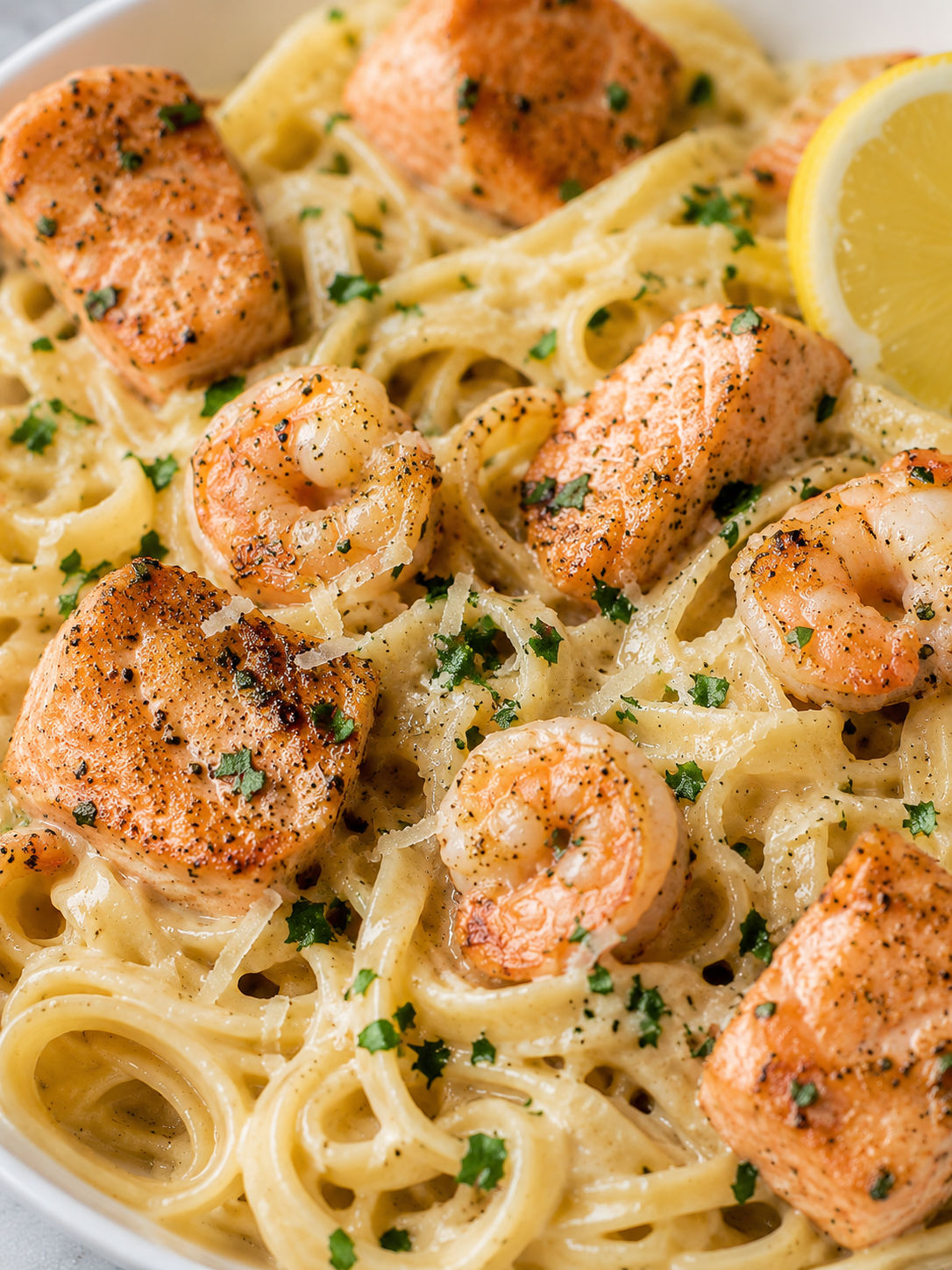
Serve this creamy seafood Alfredo right away with lemon, parsley, and extra Parmesan at the table.

FAQs
- Can I use frozen shrimp for Salmon And Shrimp Alfredo?
Yes. Thaw frozen shrimp in the refrigerator overnight or under cold running water. Pat them very dry before cooking so they sear instead of steaming in the skillet.
- What kind of salmon works best?
Skinless salmon fillets are easiest because they cut neatly into cubes. Atlantic salmon gives a richer bite, while sockeye is leaner and firmer. Either works if you avoid overcooking it.
- Can I make the Alfredo sauce ahead?
You can grate the cheese and mince the garlic ahead, but the sauce is best made fresh. Cream sauces can split when reheated. If you must reheat it, use low heat and loosen it with a splash of milk or pasta water.
- How do I keep the shrimp from getting rubbery?
Cook shrimp just until pink and opaque, usually 1-2 minutes per side. Remove them from the pan before making the sauce. They only need a short warm-up at the end.
- Can I make this gluten-free?
Yes, use your favorite gluten-free fettuccine or linguine. Check the pasta texture early because gluten-free pasta can soften quickly. The sauce and seafood are naturally gluten-free if your Parmesan is plain.
- What should I serve with seafood Alfredo?
A crisp green salad, roasted broccoli, or garlic bread all work well. Lemon wedges help cut the richness. Keep the sides simple because the pasta is already creamy and filling.
