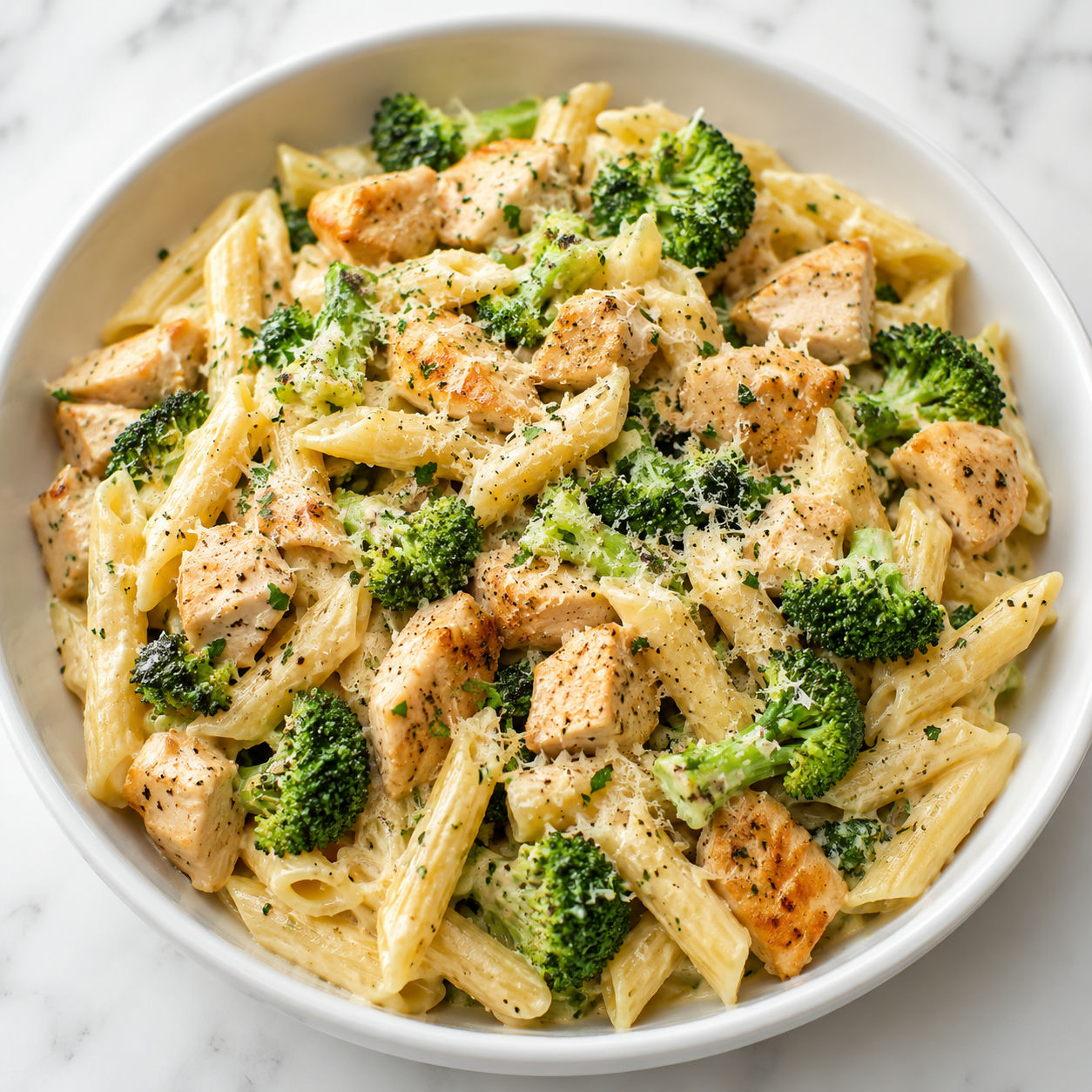
 Pin it
Chicken and broccoli pasta is the kind of dinner that saves a busy night without tasting like a shortcut. The chicken browns in the skillet, the broccoli cooks with the pasta, and the sauce comes together with garlic, parmesan, and a splash of starchy water.
I like this version because it is creamy but not heavy. You get enough sauce to coat the pasta, with broccoli that still has a little bite and chicken that stays juicy.
The Skillet Lineup
Choose firm broccoli with tight green crowns and chicken breasts or thighs that are trimmed into even pieces. Freshly grated parmesan melts much better than pre-shredded cheese and gives the sauce a smoother finish.
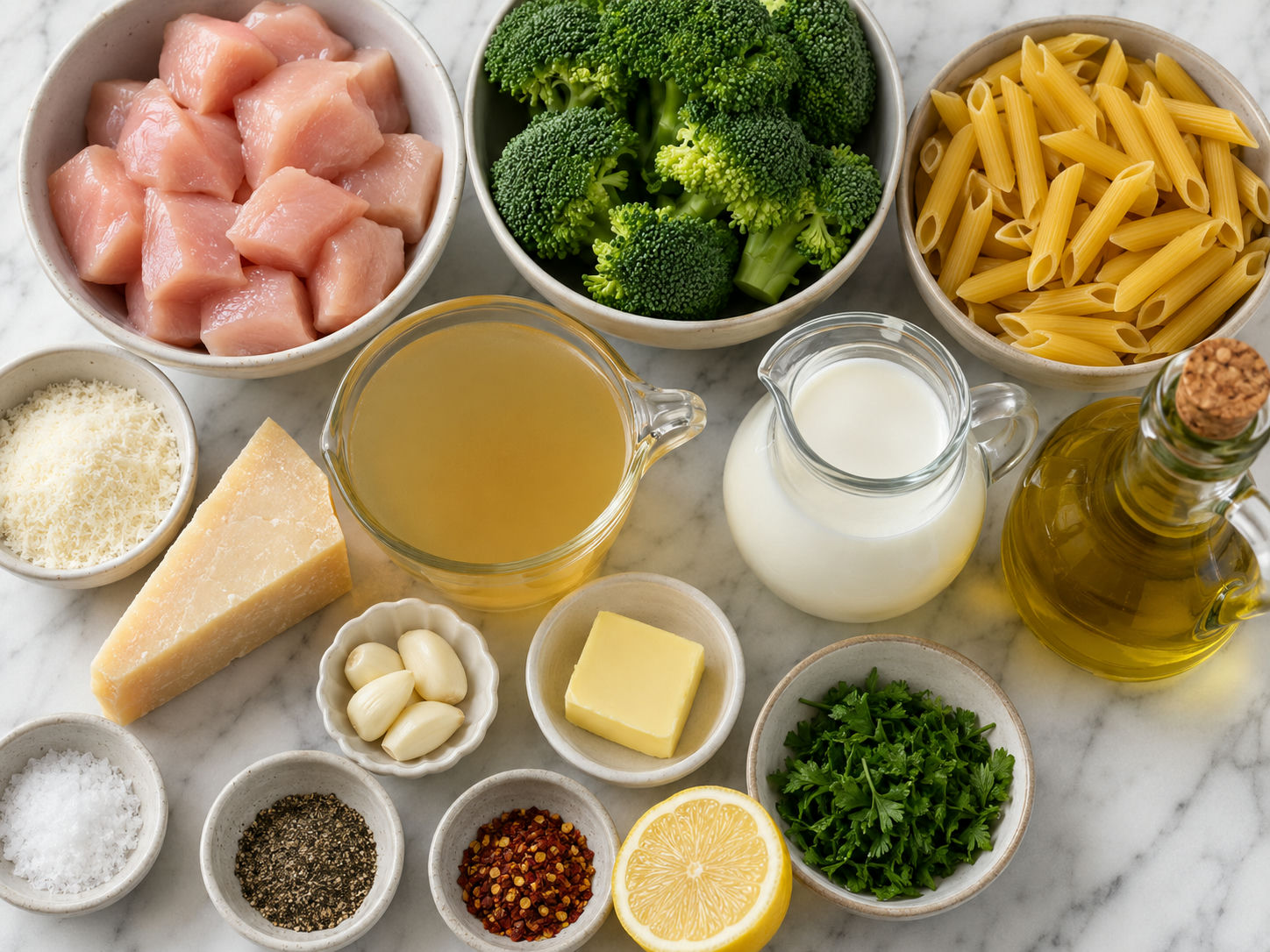
- Chicken breast. Browning it first builds savory flavor and keeps the pasta filling.
- Broccoli florets. They cook with the pasta and bring color, texture, and a mild sweetness.
- Short pasta. Penne or rotini catches the sauce and small bits of garlic.
- Garlic. It flavors the butter and oil before the sauce goes in.
- Butter and olive oil. The mix gives flavor while helping the chicken brown cleanly.
- Milk and chicken broth. They make a lighter sauce that still feels creamy.
- Parmesan cheese. It thickens the sauce and adds salty, nutty depth.
- Pasta water. The starchy splash helps the sauce cling instead of pooling.
- Lemon juice. A small squeeze brightens the rich finish.
Cook It In Layers
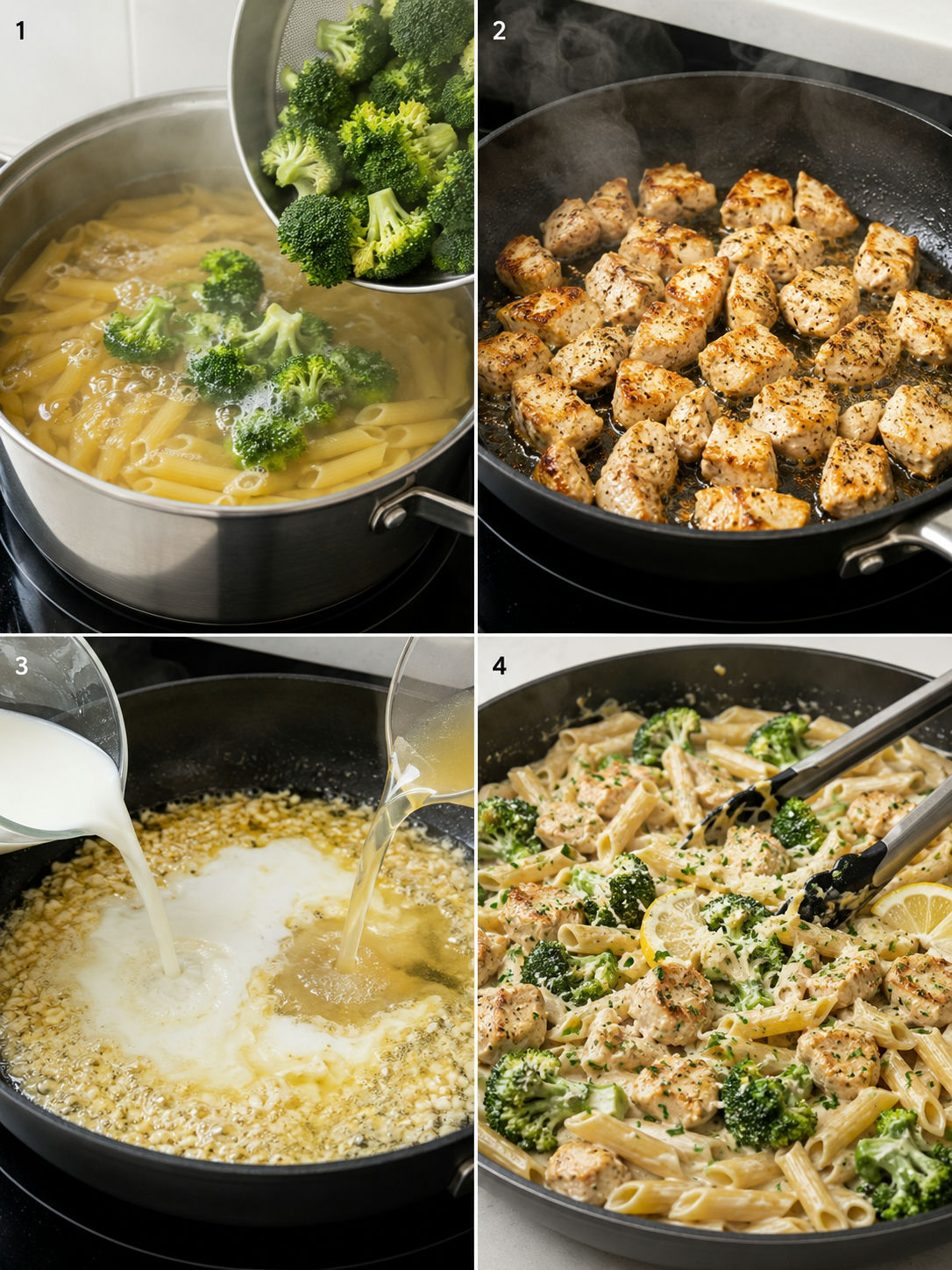
- Boil the pasta. Cook the pasta in well-salted water until almost al dente, then add the broccoli for the last 2 minutes. Reserve 1 cup of pasta water before draining.
- Brown the chicken. Season the chicken with salt, pepper, and Italian seasoning. Sear it in olive oil until golden and cooked through, then move it to a plate.
- Start the sauce. Melt the butter in the same skillet. Add garlic and cook for about 30 seconds, just until fragrant.
- Simmer gently. Stir in broth and milk, scraping up the browned bits. Let it bubble softly for 2-3 minutes so the flavors settle.
- Add the cheese. Lower the heat and stir in parmesan until melted. Keep the heat gentle so the sauce stays smooth.
- Toss and finish. Add the pasta, broccoli, and chicken. Toss with enough reserved pasta water to make the sauce glossy, then finish with lemon juice and parsley.
Why The Sauce Clings
The sauce works because you do not rely on cream alone. Broth loosens the pan drippings, milk gives body, and parmesan melts into the warm liquid. The reserved pasta water is the quiet helper. It carries starch from the pasta and helps the sauce coat each piece instead of sliding to the bottom of the bowl.
Keep the heat low once the cheese goes in. Hard boiling can make parmesan clump or turn grainy. If you like saucy dinners such as creamy broccoli chicken pasta or homemade chicken Alfredo pasta, this method gives that same comfort with a lighter feel.
Chicken That Stays Juicy
Small pieces cook quickly, so the main risk is leaving them in the skillet too long. Cut the chicken evenly and let it sit in the hot pan until the first side browns. Stirring constantly keeps it pale and dry.
For food safety, chicken should reach 165°F according to the USDA safe temperature chart. A thermometer is the cleanest way to know. Once the chicken is done, take it out while you finish the sauce. It will warm back through when tossed with the pasta.
Broccoli Texture Matters
Add the broccoli near the end of the pasta cooking time, not at the beginning. Two minutes in boiling water gives you bright green florets with tender stems. If your pieces are large, cut them smaller so they cook at the same pace as the pasta.
Overcooked broccoli breaks apart and turns the sauce dull. That is not always bad in a rustic pasta, but this dish is better when you can taste the broccoli in clean bites. For a different chicken and broccoli dinner, try the grilled chicken and broccoli bowls when you want less pasta and more vegetables.
Swaps For Busy Nights
Rotisserie chicken works when you are short on time. Skip the browning step, warm the shredded chicken in the sauce, and reduce the salt until you taste it. Chicken thighs also work well and are more forgiving than breast meat.
You can swap broccoli for cauliflower, asparagus, peas, or a handful of spinach. For extra richness, use half-and-half instead of milk. For more heat, add red pepper flakes with the garlic. If you like bolder pasta dinners, Cajun chicken broccoli Alfredo is a good next recipe.
Storing And Reheating
Store leftovers in a shallow airtight container once the pasta has cooled. The USDA notes that leftovers are best refrigerated within 2 hours and used within 3-4 days in its leftovers food safety guide.
Reheat on the stove over low heat with a splash of milk, broth, or water. Stir often and stop as soon as everything is hot. The microwave works in short bursts, but cover the bowl and stir between rounds so the chicken does not dry out.
Summary
Serve this pasta hot from the skillet with extra parmesan and black pepper. Leftovers reheat best with a small splash of milk or water.
FAQs
- Can I use frozen broccoli?
Yes. Add frozen broccoli during the last 2-3 minutes of pasta cooking, just until hot and bright green. Drain it well so extra water does not thin the sauce too much.
- What pasta shape works best?
Penne, rotini, shells, and farfalle all work well because they catch bits of sauce and broccoli. Long pasta can work too, but short shapes make this easier to toss with the chicken.
- Can I make chicken and broccoli pasta ahead?
You can cook the chicken and chop the broccoli a day ahead. For the best texture, boil the pasta and finish the sauce right before serving.
- How do I keep the chicken tender?
Cut the chicken into even bite-size pieces and brown it over medium-high heat without crowding the pan. Pull it from the skillet as soon as it reaches 165°F, then return it at the end.
- Can I make it lighter?
Use whole milk instead of cream and keep the parmesan measured rather than adding by handfuls. You can also add more broccoli or stir in baby spinach at the end.
- How should I store leftovers?
Cool leftovers and refrigerate them in an airtight container for 3-4 days. Reheat gently with a splash of milk or water so the sauce loosens without turning oily.
References
Sources cited in this recipe.
- https://www.simplyrecipes.com/chicken-alfredo-pasta-bake-recipe-11806059
- https://www.fsis.usda.gov/food-safety/safe-food-handling-and-preparation/food-safety-basics/safe-temperature-chart
- https://www.fsis.usda.gov/food-safety/safe-food-handling-and-preparation/food-safety-basics/leftovers-and-food-safety
