 Pin it
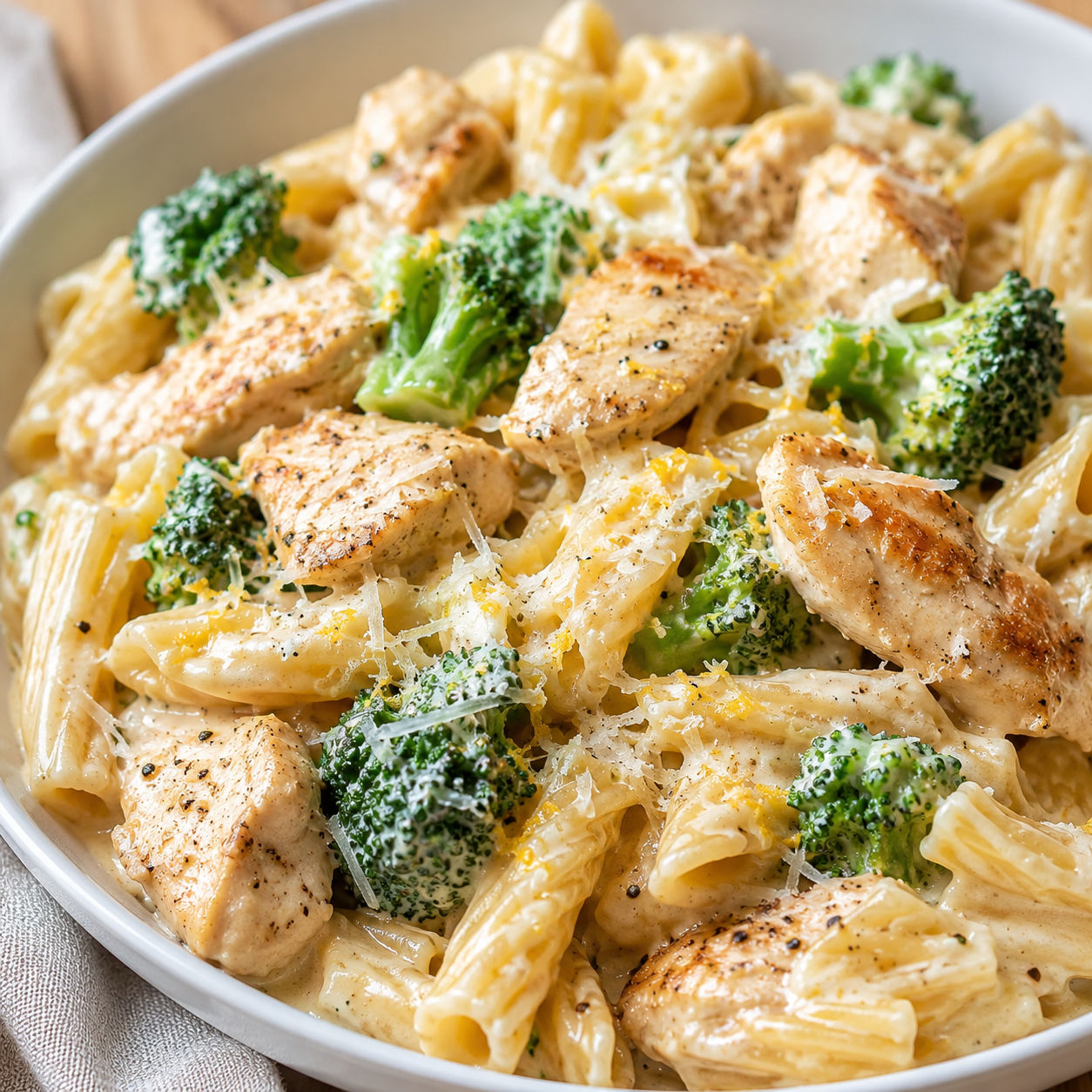
Creamy Broccoli Chicken Pasta with Parmesan and Garlic is the kind of dinner that fixes a cold, busy evening without asking much from you. The chicken browns in the skillet, the broccoli stays green and snappy, and the sauce tastes rich without turning gluey.
I like this with penne or rotini because the sauce hides in the ridges. Use freshly grated Parmesan if you can. It melts smoother and gives the sauce that salty, nutty finish that makes everyone go back for one more forkful.
The Chicken Broccoli Lineup
Use ingredients that can handle a creamy sauce without disappearing into it. Fresh broccoli should look deep green with tight florets, and the Parmesan should be grated from a block for the smoothest melt.
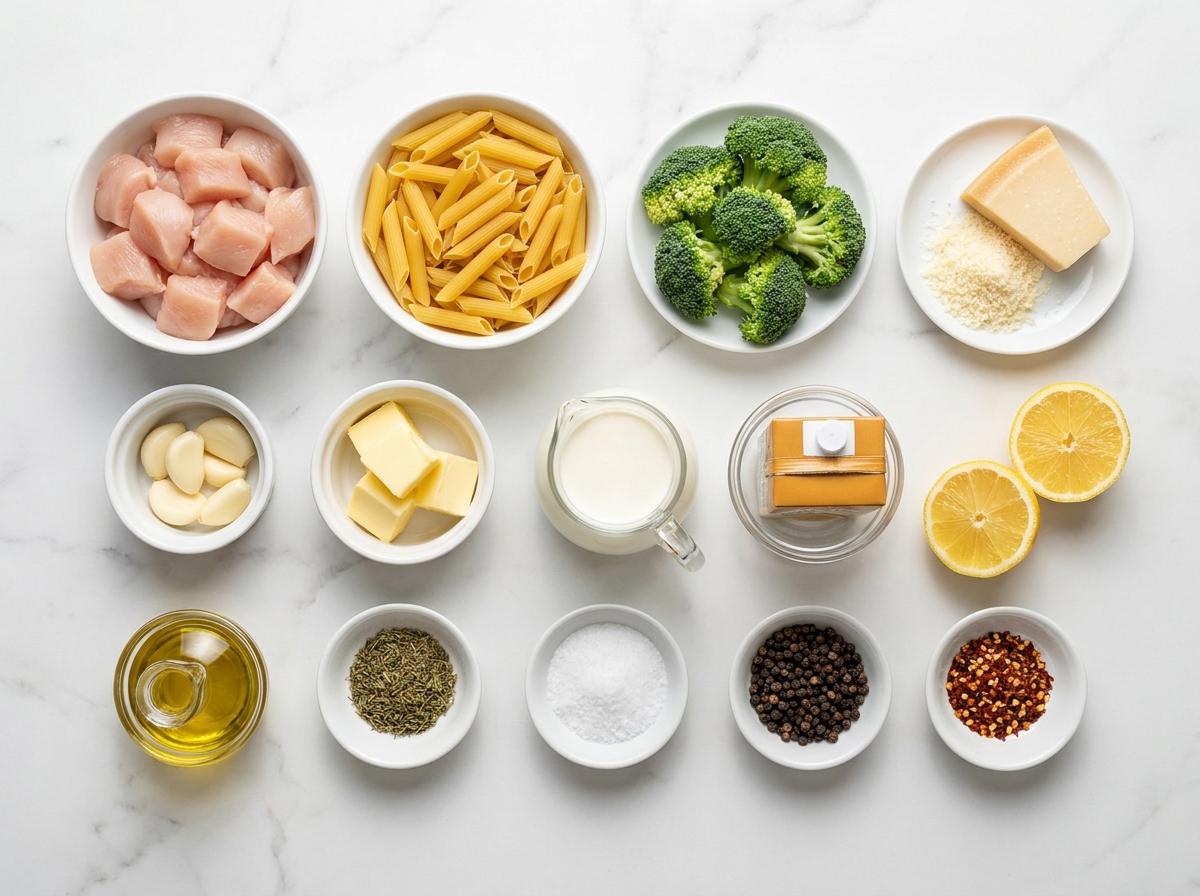
- Chicken thighs or breast. Bite-size pieces brown quickly and give the pasta real dinner heft.
- Broccoli florets. They bring color, bite, and a little sweetness against the cream.
- Penne or rotini. Short pasta catches the sauce in every ridge and hollow.
- Garlic. Fresh minced garlic gives the sauce its warm, savory base.
- Heavy cream. It makes the sauce silky and helps it cling to the pasta.
- Chicken broth. It loosens the cream and adds savory depth without making the dish too rich.
- Parmesan cheese. Freshly grated Parmesan thickens the sauce and adds a salty, nutty finish.
- Lemon juice. A small squeeze wakes up the cream and keeps the dish from tasting flat.
Garlic Parmesan Chicken Pasta Method
- Boil pasta and broccoli. Cook the pasta in well-salted water until just shy of al dente. Add the broccoli during the last 2 minutes, then reserve pasta water before draining.
- Brown the chicken. Season the chicken and sear it in a wide skillet until golden and cooked through. Take it out so it stays juicy while you build the sauce.
- Bloom the garlic. Melt butter in the same skillet and cook the garlic with thyme for about 30 seconds. Stop before the garlic browns.
- Simmer the cream base. Add broth and cream, scraping up the browned bits from the pan. Let it bubble gently until it lightly coats a spoon.
- Melt in Parmesan. Lower the heat and stir in the Parmesan a little at a time until smooth.
- Toss and loosen. Add pasta, broccoli, chicken, lemon juice, and black pepper. Toss with splashes of pasta water until the sauce looks glossy.
Keep The Sauce Silky
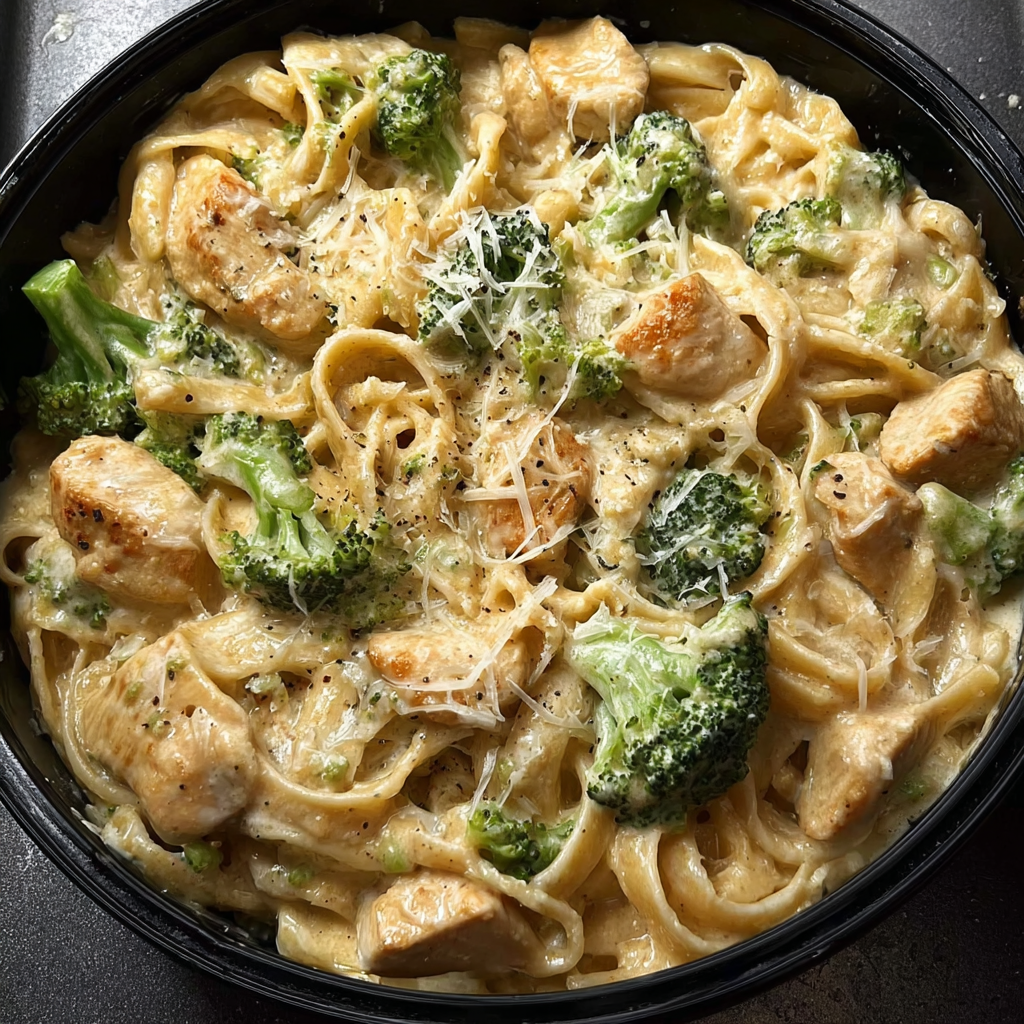
The sauce behaves best when the heat is gentle. Cream can simmer, but it should not boil hard once the Parmesan goes in. Pull the skillet to low heat, add the cheese slowly, and stir until it melts before adding more. That small pause is what keeps the sauce smooth instead of grainy.
Pasta water matters here. The starch helps the cream and cheese cling to the noodles, so do not drain it all away. Start with a quarter cup and toss. Add more only if the skillet looks tight. If you like this style of saucy chicken pasta, the same idea works in creamy garlic herb chicken pasta too.
Cook Broccoli With Intention
Broccoli turns dull when it cooks too long, so treat it like a timed ingredient. Two minutes in the pasta water is usually enough for small florets. They should be bright green and tender at the stem, with a little snap left. If your florets are large, cut them smaller instead of adding extra time.
For a softer, saucier version, simmer the broccoli in the cream for a few minutes after draining. For more bite, blanch it with the pasta and toss it in at the end. The MyPlate vegetable guide is a handy reminder to keep vegetables in regular weeknight meals, and broccoli makes that easy here.
Chicken That Stays Juicy
Chicken pieces should be similar in size so they finish at the same time. Let them sit still in the hot skillet for the first few minutes. Moving them too soon keeps them pale and steals the browned flavor you want in the sauce.
Chicken thighs are forgiving and stay tender in cream sauces. Chicken breast is leaner and works fine, but it needs a little more attention. The USDA food-safety guidance at FSIS food safety recommends cooking poultry to 165 F. If you make creamy chicken dinners often, try the same browning step in chicken with spinach and mushrooms in creamy Parmesan sauce.
Smart Swaps For Busy Nights
This recipe is flexible. Use rotini, shells, rigatoni, or fettuccine. Swap broccoli for asparagus, peas, or spinach, but add spinach at the very end so it only wilts. Half-and-half can replace heavy cream for a lighter sauce, though it should stay over low heat to avoid splitting.
Leftover cooked chicken also works. Add it after the sauce is made and warm it gently. For a baked version with more cheese and a browned top, use the flavor direction from savory baked garlic Parmesan chicken pasta. For a vegetable-heavy side with the same garlic Parmesan mood, creamy garlic Parmesan broccoli bacon fits right beside it.
Store It Without Drying Out
Leftovers keep in an airtight container in the fridge for up to 3 days. Creamy pasta thickens as it chills, so plan on adding liquid when you reheat it. A splash of milk, broth, or plain water loosens the sauce without making it greasy.
Warm it in a skillet over low heat and stir often. The microwave works for a quick lunch, but use half power and pause to stir. Freezing is not my first choice because the cream can separate and the broccoli softens. If you need to prep ahead, cut the chicken, chop the broccoli, grate the Parmesan, and keep everything chilled until dinner.
Summary
This skillet pasta is best served hot, with extra Parmesan and black pepper at the table.
FAQs
- Can I use frozen broccoli?
Yes. Add frozen broccoli straight to the pasta water during the last 2-3 minutes of cooking, then drain well. Pat it dry if it looks watery so it does not thin the sauce too much.
- Can I make this with chicken breast instead of thighs?
Chicken breast works well if you cut it into even pieces and avoid overcooking it. Pull it from the skillet as soon as it reaches 165 F in the center, then let it finish gently when tossed with the sauce.
- What pasta shape works best?
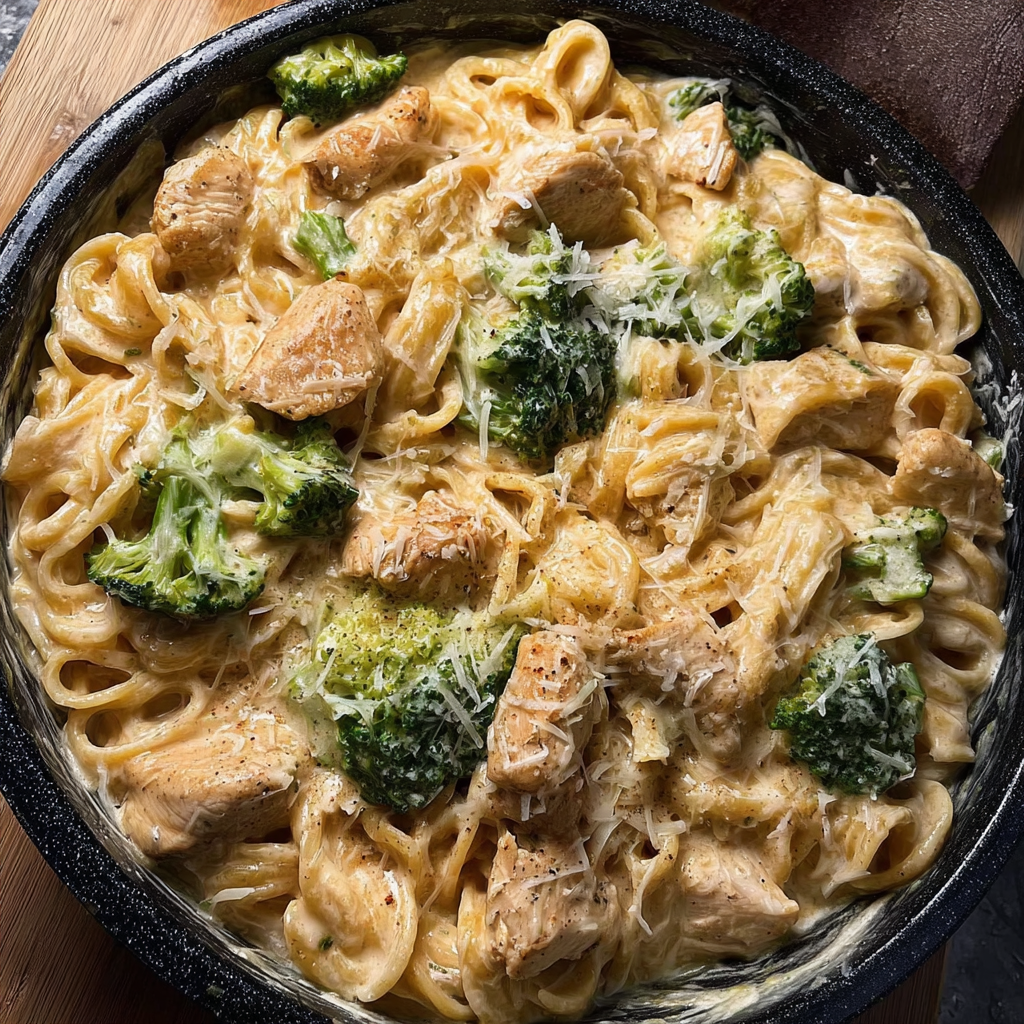
Penne, rotini, rigatoni, and shells all hold the creamy Parmesan sauce nicely. Long pasta also works, but short shapes make it easier to get chicken, broccoli, and sauce in each bite.
- How do I stop the Parmesan sauce from getting grainy?
Lower the heat before adding the cheese and stir it in a handful at a time. Pre-grated Parmesan can be coated with anti-caking starches, so a block of Parmesan usually melts much better.
- Can I make it ahead?
You can cook the chicken and chop the broccoli up to a day ahead. For the best texture, cook the pasta and finish the sauce right before serving because cream sauces tighten as they sit.
- How should I reheat leftovers?
Reheat gently in a skillet with a splash of milk, broth, or water. Stir often over low heat until the sauce loosens and the chicken is warmed through.
- What can I serve with it?
This pasta is filling on its own. If you want a side, serve it with a crisp green salad, roasted vegetables, or garlic bread for scooping up the extra sauce.
