 Pin it
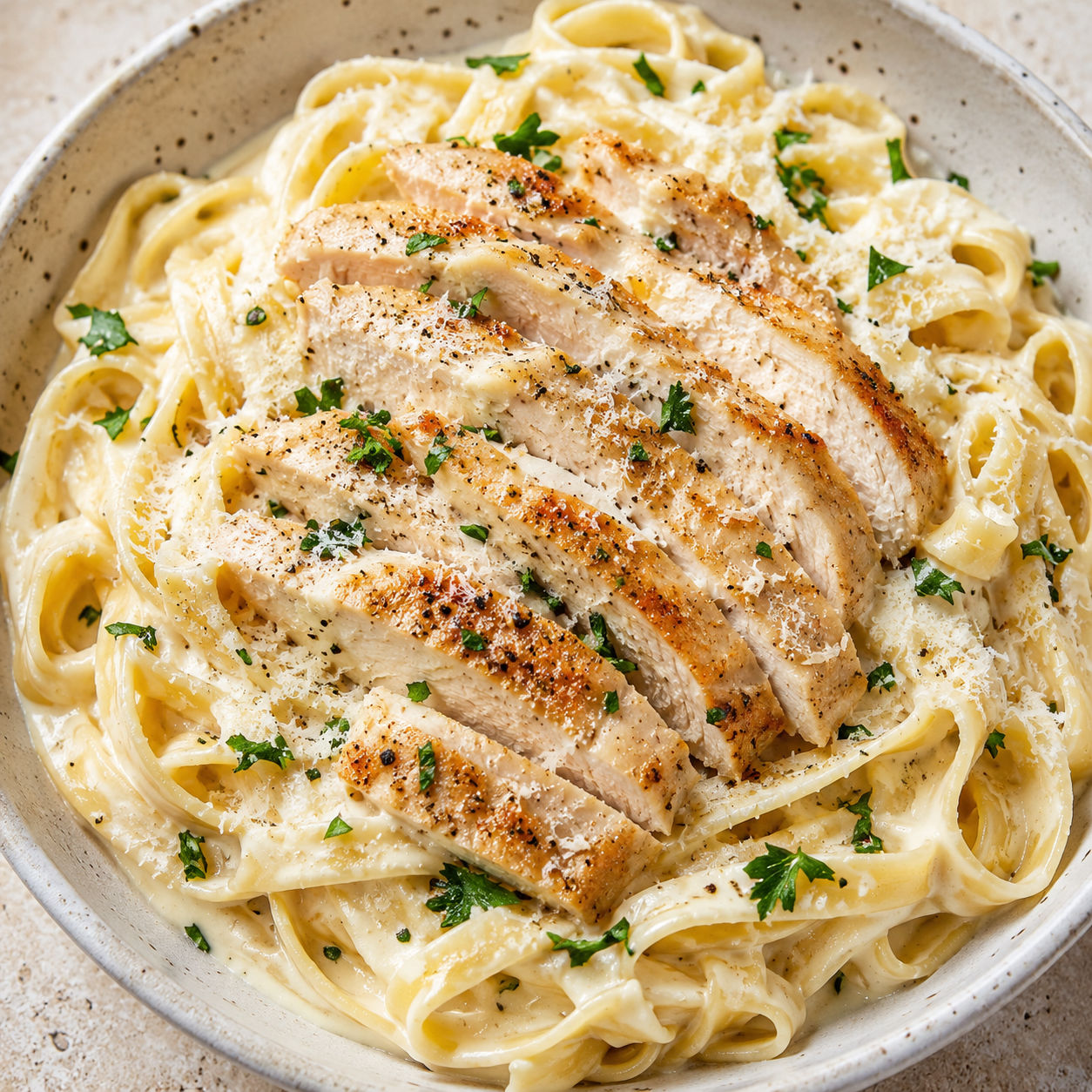
Classic Homemade Chicken Alfredo with Fettuccine and Creamy Parmesan is rich, simple, and very much worth making from scratch. The sauce tastes cleaner than anything from a jar because it leans on butter, cream, garlic, and real Parmesan instead of fillers.
The key is timing. Let the chicken rest while the sauce comes together, keep the heat gentle once the cheese goes in, and save pasta water before draining. Those small moves give you glossy noodles and chicken that stays juicy.
Classic Alfredo Pantry Lineup
This dish works best when the dairy is simple and the cheese is fresh. Buy a wedge of Parmesan and grate it finely so it melts into the cream instead of clumping.
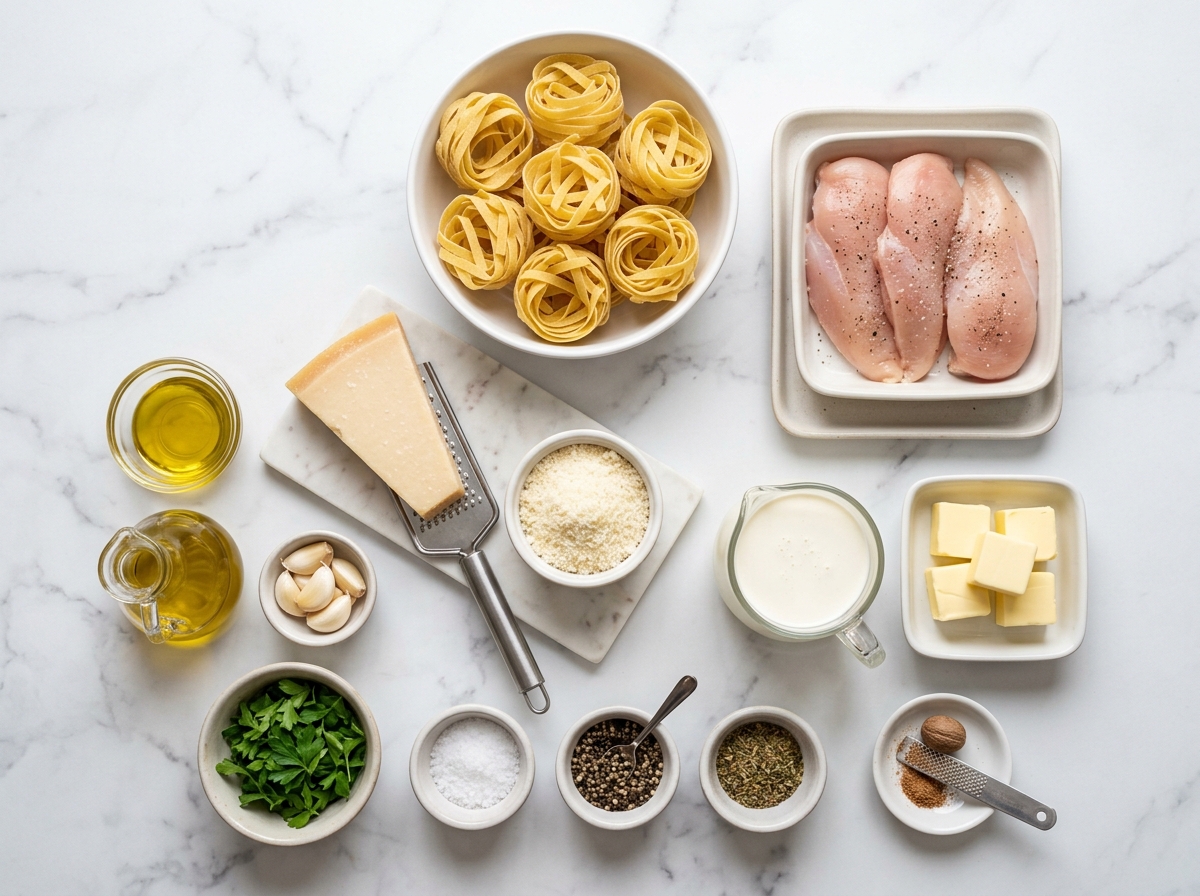
- Fettuccine. Wide ribbons hold the creamy Parmesan sauce and give the dish its classic shape.
- Chicken breasts. They cook quickly and slice neatly over the pasta when rested before cutting.
- Unsalted butter. It gives the sauce body and lets you control the salt.
- Heavy cream. This makes the Alfredo smooth and reliable for home cooking.
- Fresh Parmesan. Finely grated cheese melts into the sauce and brings the salty, nutty flavor.
- Garlic. A short sizzle in butter gives the sauce warmth without taking over.
- Nutmeg. Just a pinch makes the cream taste rounder.
- Parsley and black pepper. They add freshness and a little bite at the end.
Creamy Parmesan Alfredo Method
- Boil the pasta. Cook fettuccine in well-salted water until al dente, then reserve some pasta water before draining.
- Season the chicken. Pat the chicken dry and season both sides with salt, pepper, and a little Italian seasoning.
- Sear until golden. Cook the chicken in a hot skillet until browned and 165°F inside, then rest it before slicing.
- Start the sauce. Lower the heat, melt the butter, and cook the garlic for about 30 seconds until fragrant.
- Add cream and cheese. Simmer the cream briefly, remove from the heat, and whisk in Parmesan until smooth.
- Toss and serve. Add the fettuccine with splashes of pasta water until glossy, then top with sliced chicken, parsley, and pepper.
Classic Sauce, Better Texture
Classic Homemade Chicken Alfredo with Fettuccine and Creamy Parmesan
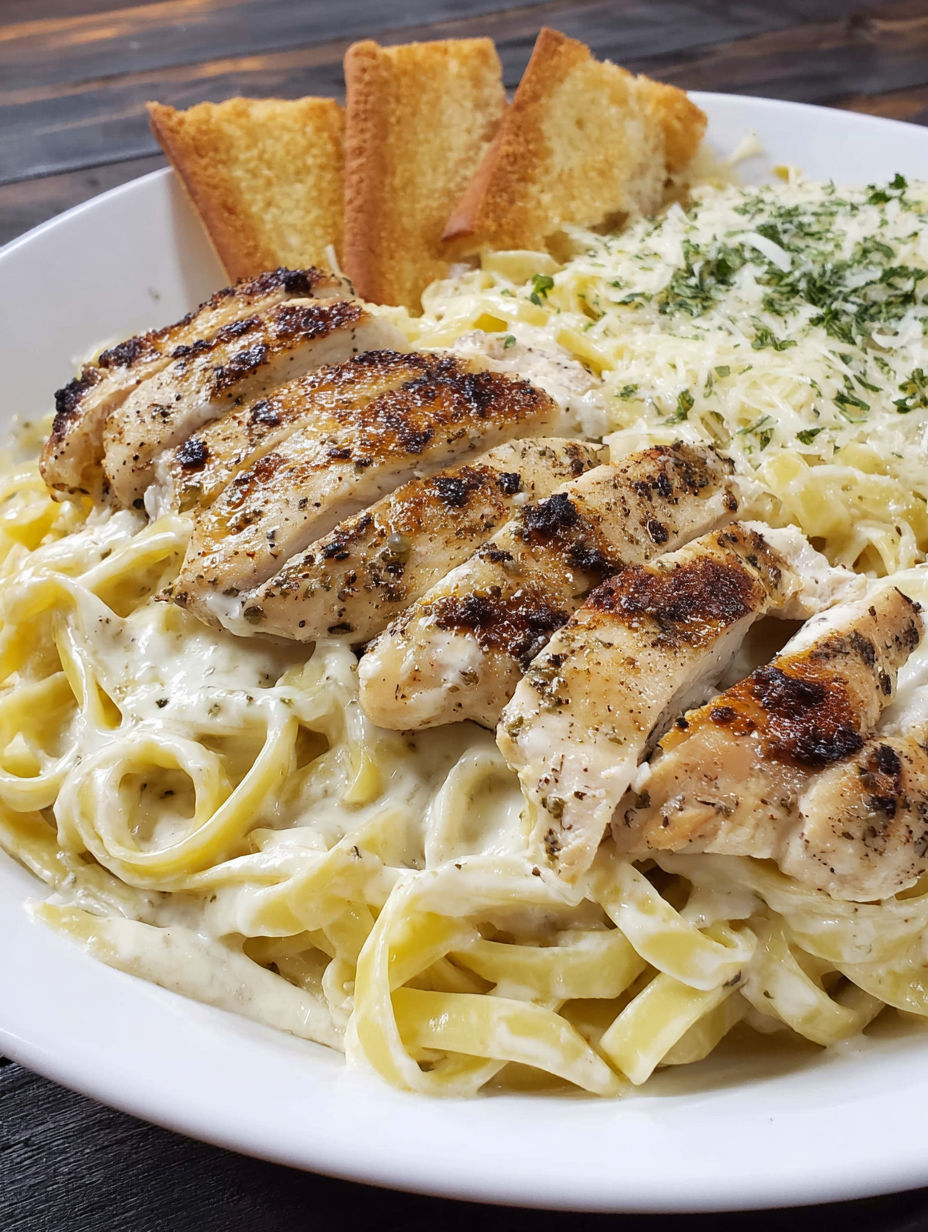
Alfredo sauce needs gentle heat more than it needs extra ingredients. Cream can simmer for a few minutes, but Parmesan should be stirred in after the pan comes off the burner. That keeps the cheese from tightening into tiny grains. A splash of pasta water helps too. The starch loosens the cream and butter into a sauce that coats each strand instead of sliding to the bottom of the bowl. If you like this style of rich pasta, the same creamy base is a good starting point for Creamy Shrimp Alfredo Pasta.
Juicy Chicken Matters
Chicken Alfredo falls flat when the chicken is pale or dry, so give it a real sear. Dry the surface first and let the first side cook without moving it. When the chicken releases from the skillet, it is ready to flip. Resting is just as important as cooking. Slice too early and the juices run out onto the board. For food safety, the USDA lists 165°F as the safe internal temperature for chicken in its safe temperature chart.
Swaps That Still Taste Right
Half-and-half works if you want a lighter sauce, but it needs lower heat and a little more pasta water. Boneless chicken thighs are also good here. They take a few extra minutes and stay tender even if dinner gets delayed. Add broccoli florets during the last few minutes of boiling pasta for a meal closer to Creamy Broccoli Chicken Pasta. For a baked version with the same comfort-food feeling, try Ultimate Chicken Alfredo Lasagna.
Serving Without Heavy Plates
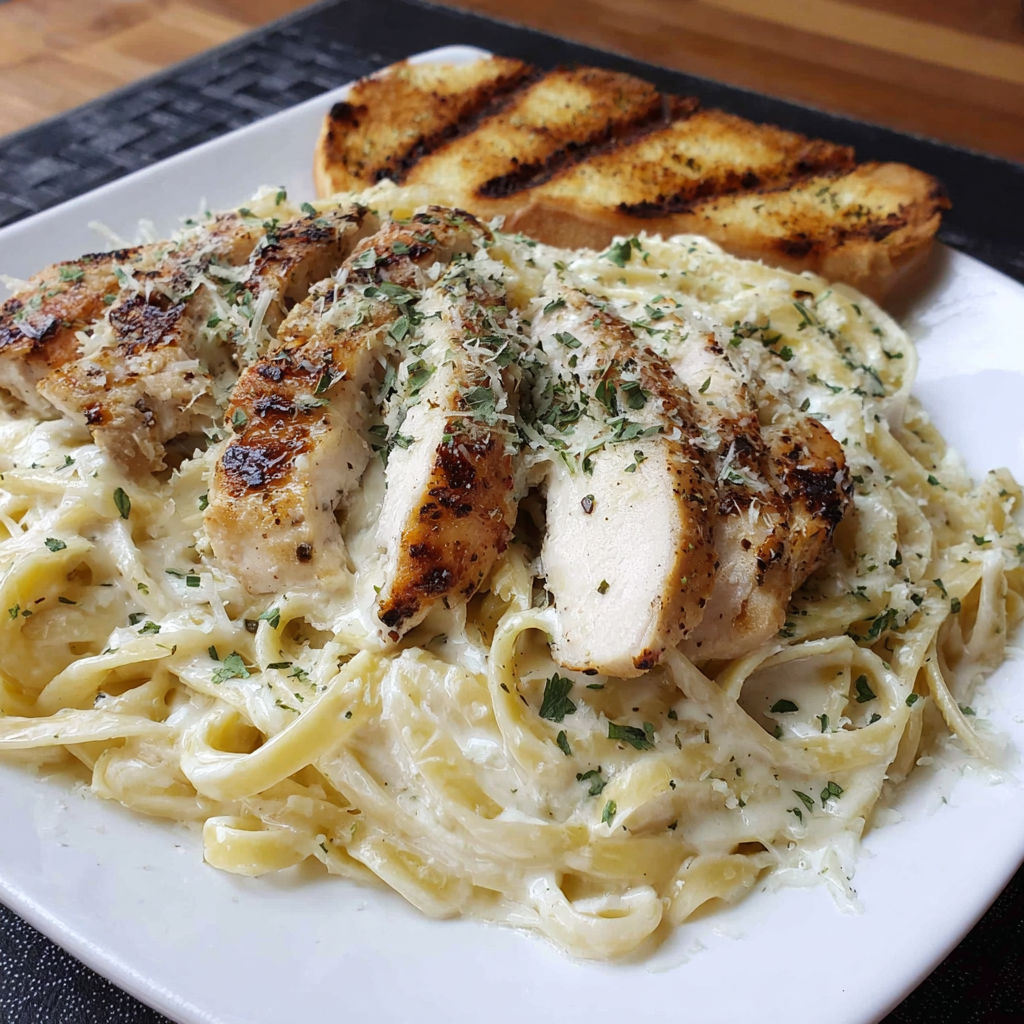
Because Alfredo is rich, the best sides are crisp or green. A lemony salad, roasted broccoli, asparagus, or peas all work well. Garlic bread is welcome, but keep the portions modest because the pasta is already creamy and filling. If you are cooking for a family dinner, set extra Parmesan and black pepper on the table and let everyone finish their own bowl. For another creamy chicken dinner with a stronger savory sauce, Marry Me Chicken with Creamy Parmesan Sauce hits a similar comfort note.
Leftovers Need Gentle Heat
Store leftovers in an airtight container for up to three days. Alfredo thickens in the fridge, so reheat it slowly in a skillet with a splash of milk, cream, or water. Stir often and stop as soon as the sauce loosens. High heat can split the sauce and make the chicken tough. If you know you will have leftovers, keep some sliced chicken separate from the pasta and add it back while reheating.
FAQs
- Can I use milk instead of heavy cream?
You can, but the sauce will be thinner and less stable. For best results, use half-and-half if you want something lighter, then add the Parmesan off the heat so it melts gently.
- Why did my Alfredo sauce turn grainy?
The heat was probably too high or the cheese was pre-grated. Take the pan off the burner before adding Parmesan, use freshly grated cheese, and whisk in a little hot pasta water if the sauce tightens.
- Can I make chicken Alfredo ahead of time?
The chicken can be cooked one day ahead and sliced before serving. The pasta and sauce are best made fresh because Alfredo thickens as it sits.
- What can I substitute for fettuccine?
Linguine, tagliatelle, spaghetti, or penne all work. Long noodles feel classic because they catch the sauce in ribbons, while short pasta is easier for kids to scoop.
- How do I know the chicken is done?
Use an instant-read thermometer and pull the chicken when the thickest part reaches 165°F. Let it rest for a few minutes before slicing so the juices settle.
- What should I serve with chicken Alfredo?
Serve it with a crisp green salad, roasted broccoli, steamed asparagus, or garlic bread. Something fresh or lightly bitter helps balance the creamy sauce.
