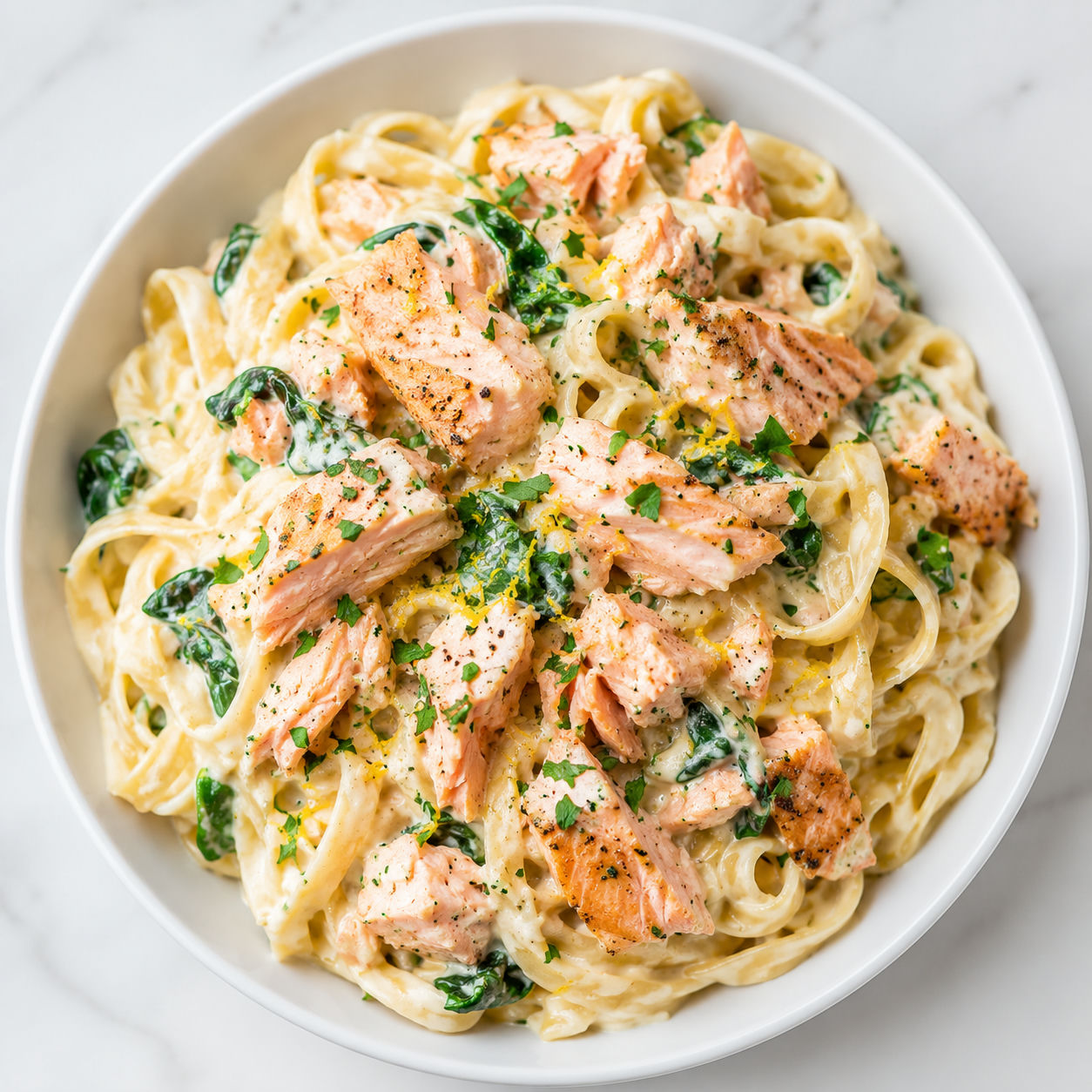
 Pin it
Creamy Garlic Salmon Pasta is rich enough for a Friday night but still simple enough for a tired weeknight. The salmon gets a quick sear, then the same pan turns into a garlic parmesan sauce with a little lemon to keep it from feeling heavy.
I like this with fettuccine or linguine because the long strands catch the sauce. The key is saving some pasta water and adding the salmon at the end so it stays tender instead of breaking into tiny dry bits.
Creamy Garlic Salmon Pasta Lineup
The ingredient list is short, so choose salmon that smells clean and mild. Freshly grated parmesan melts smoother than bagged cheese, and a real lemon makes the cream taste brighter.
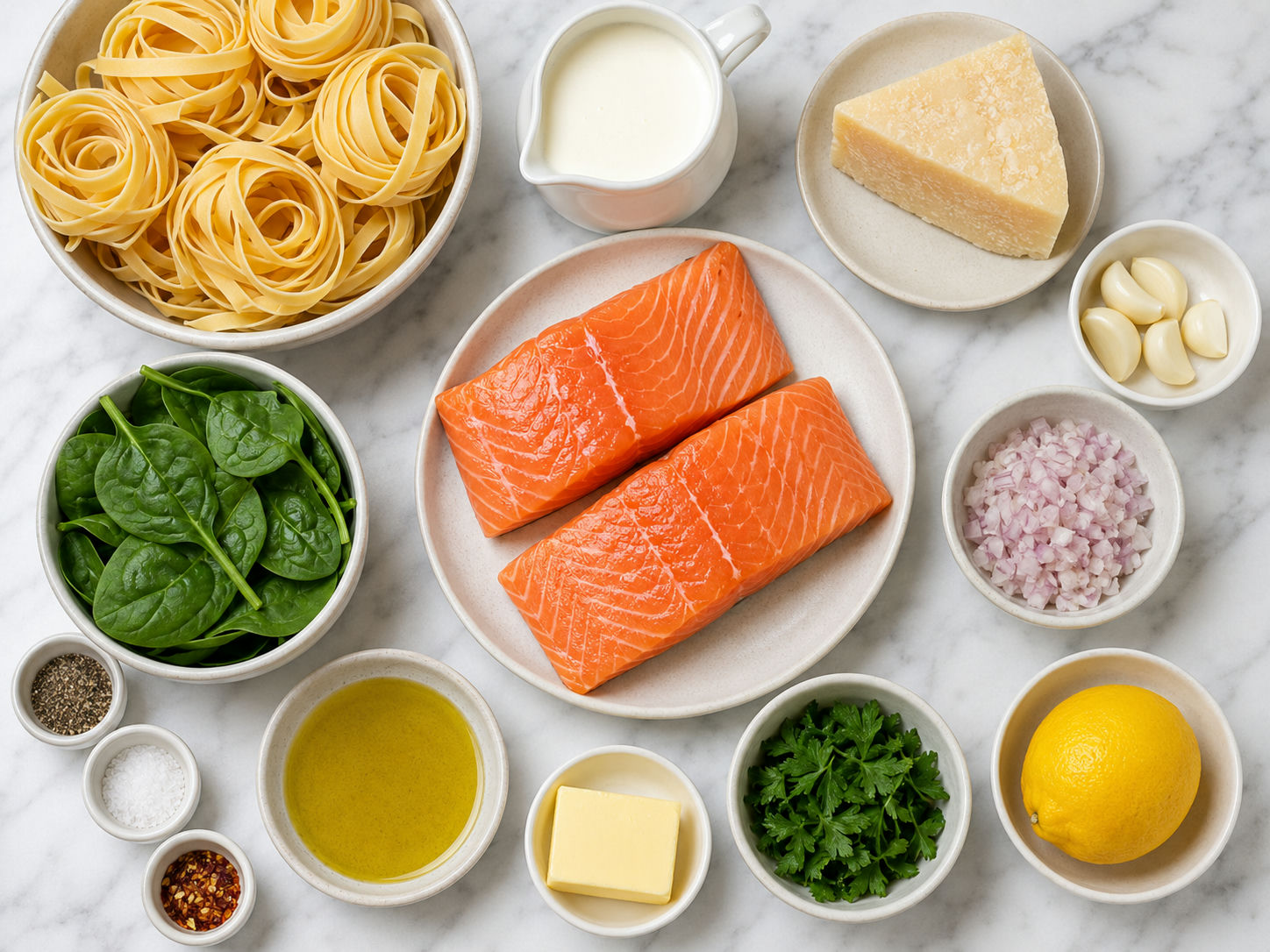
- Salmon fillets. They bring rich flavor and tender flakes that make the pasta feel like a full dinner.
- Fettuccine or linguine. Long pasta catches the garlic cream sauce and gives every bite a little salmon.
- Garlic. It is cooked gently in butter so the sauce tastes savory, not sharp or bitter.
- Heavy cream. This gives the sauce body and keeps it glossy when tossed with pasta water.
- Parmesan. Freshly grated cheese adds salt, nuttiness, and thickness.
- Baby spinach. It wilts fast and adds color without needing another pan.
- Lemon. Zest and juice cut through the richness and wake up the salmon.
- Reserved pasta water. The starchy splash helps the sauce cling instead of pooling in the bowl.
Sear, Sauce, And Toss
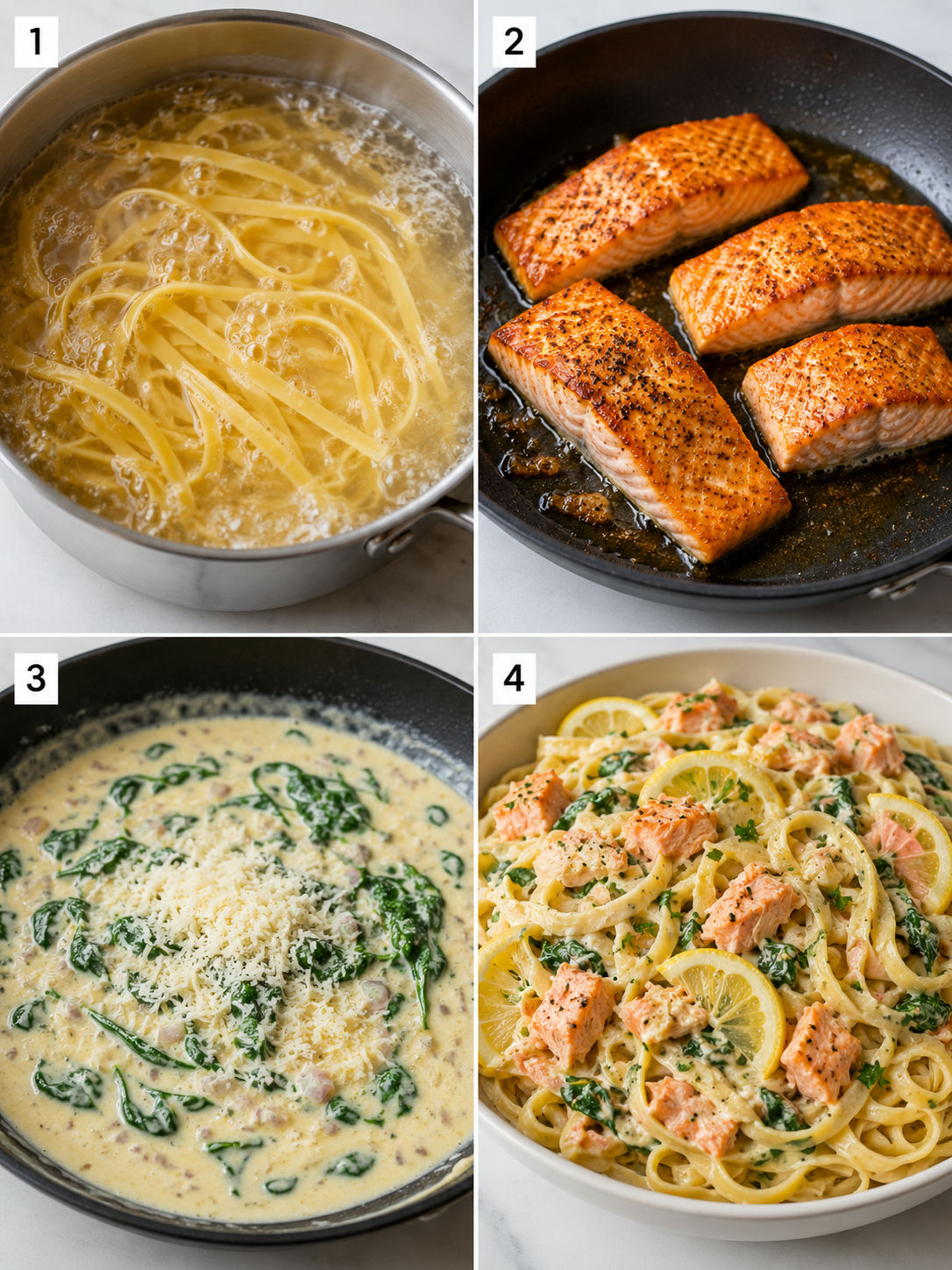
- Cook the pasta. Boil the pasta in well-salted water until just shy of al dente. Reserve 1 cup of pasta water before draining.
- Season the salmon. Pat the fillets dry, then season both sides with salt, pepper, and a little paprika if you like a warmer color.
- Sear the fish. Cook the salmon in olive oil over medium-high heat until golden and just flaky, about 3-4 minutes per side. Transfer it to a plate.
- Start the garlic base. Lower the heat, melt the butter, and cook the shallot and garlic until fragrant. Keep the garlic pale so it stays sweet.
- Make the cream sauce. Add broth or wine, simmer briefly, then stir in cream, parmesan, lemon zest, and spinach until smooth and wilted.
- Finish the pasta. Toss in the pasta with a splash of reserved water. Fold in large flakes of salmon and finish with lemon juice and parsley.
Keep The Salmon Tender
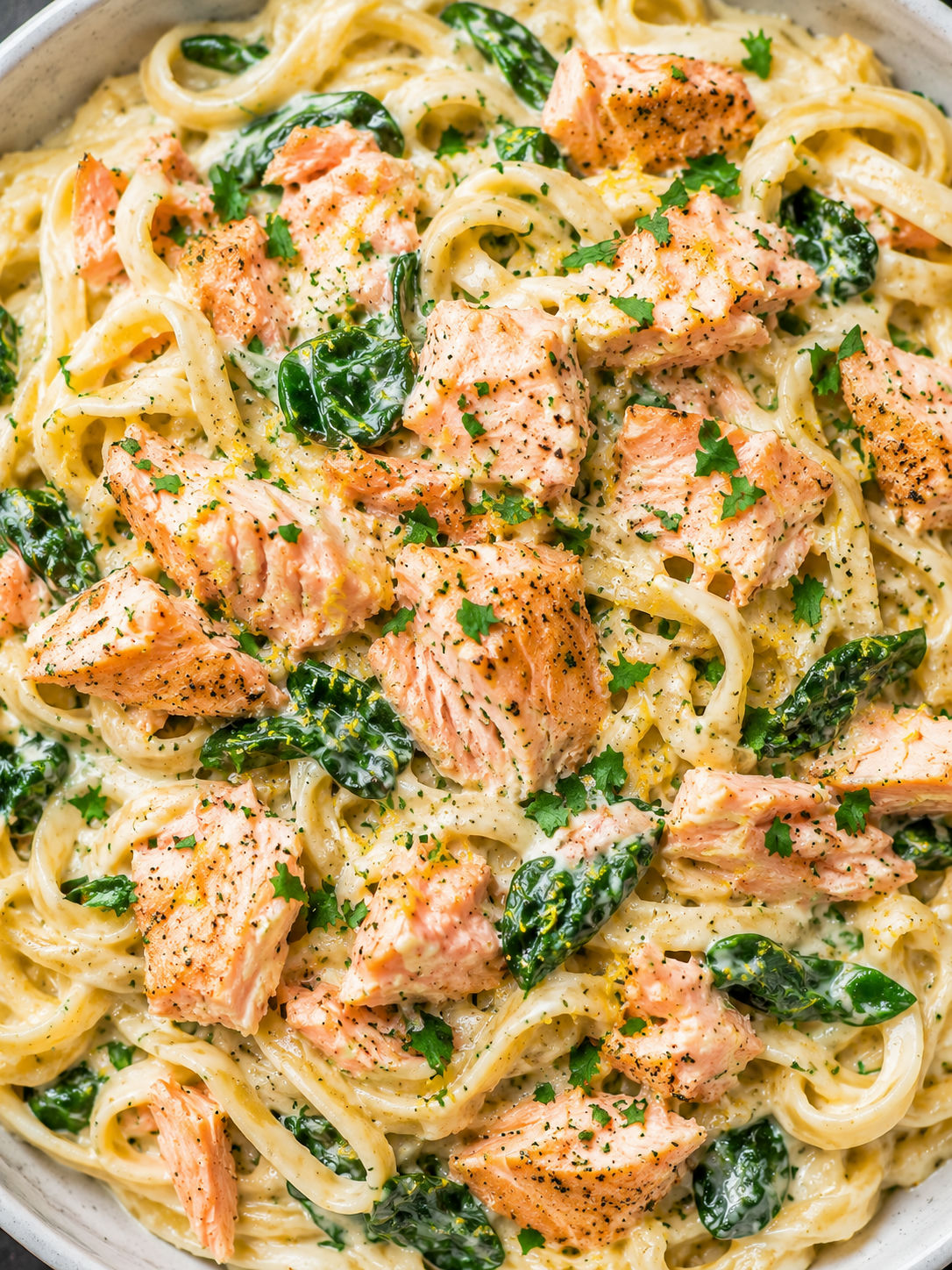
Salmon is forgiving until it is not. The difference between juicy flakes and chalky pieces is usually just a couple of minutes. I sear the fillets whole, then break them into big chunks after they rest. That gives you browned edges and soft centers. It also keeps the pasta from turning into a bowl of shredded fish.
The FDA says most seafood should reach 145°F, and the flesh should separate easily with a fork. You can read their seafood safety guidance if you want the full handling notes. In practice, pull the salmon when the thickest part flakes and still looks moist. It will warm again in the sauce.
Why The Sauce Turns Silky
The sauce works because cream, parmesan, and starchy pasta water meet in the pan while the pasta is still hot. Add the pasta water slowly and toss before adding more. You want a coating sauce, not soup. If the pan looks dry, add another tablespoon or two. If it looks loose, let it bubble for a minute.
This same creamy garlic base is useful beyond salmon. For another seafood version, try Creamy Shrimp Alfredo Pasta with Parmesan and Garlic. If you want a lighter salmon pasta with a brighter herb note, Lemon Dill Salmon with Creamy Pasta is a good next dinner.
Smart Swaps That Fit
No white wine in the house? Use low-sodium chicken broth or vegetable broth. No spinach? Stir in peas, chopped asparagus, or sauteed mushrooms. Half-and-half can replace cream, but keep the heat low once it goes in. It can separate if boiled hard.
For extra garlic flavor without making the sauce harsh, add one grated garlic clove near the end and cook it for only 20 seconds. For a deeper salmon dinner without pasta, the creamy skillet style in Garlic Butter Salmon with Spinach and Mushrooms has the same comfort-food feel.
Storage Without Dry Pasta
Creamy salmon pasta is best right after tossing, but leftovers can still be good. Let the pasta cool, then pack it in a shallow airtight container. FoodSafety.gov lists cooked leftovers at 3-4 days in the refrigerator on its cold storage chart. I stay closer to 3 days for seafood pasta.
Reheat it in a skillet over low heat with a splash of milk, cream, or water. Stir gently and stop as soon as it is hot. The microwave works in a pinch, but use short bursts and stir between them so the salmon does not tighten up.
What To Serve Beside It
This pasta is rich, so keep the sides crisp or green. A lemony arugula salad, roasted asparagus, steamed green beans, or simple cucumber salad all work. Garlic bread is welcome, but I would keep it light because the sauce already has plenty of cream and parmesan.
If your table likes the creamy garlic flavor, serve this near other pasta favorites like Creamy Garlic Chicken with Penne Pasta. For a salmon night with a different glaze, Honey Garlic Salmon with Glazed Sauce is a good contrast.
Summary
Serve this pasta right away while the sauce is glossy. A green salad or roasted asparagus is all it needs on the side.
FAQs
- Can I use frozen salmon for Creamy Garlic Salmon Pasta?
Yes. Thaw frozen salmon overnight in the refrigerator, then pat it very dry before seasoning. Dry fish browns better and is less likely to steam in the pan.
- What pasta shape works best?
Fettuccine, linguine, and tagliatelle are my first picks because they hold the cream sauce well. Short pasta like penne or bowties also works if that is what you have.
- Can I make this without heavy cream?
You can use half-and-half for a lighter sauce, but keep the heat gentle so it does not split. Cream cheese whisked with a little pasta water also makes a thicker sauce with more tang.
- How do I keep the salmon from drying out?
Sear the salmon only until it flakes at the thickest part, then move it to a plate. It will warm through again when folded into the pasta at the end.
- How long do leftovers keep?
Store leftovers in an airtight container in the refrigerator for up to 3 days. Reheat gently in a skillet with a splash of milk, cream, or water to loosen the sauce.
- Can I add vegetables?
Baby spinach is easy because it wilts right into the sauce. Peas, asparagus tips, or sauteed mushrooms also fit the garlic cream sauce without changing the method much.
