 Pin it
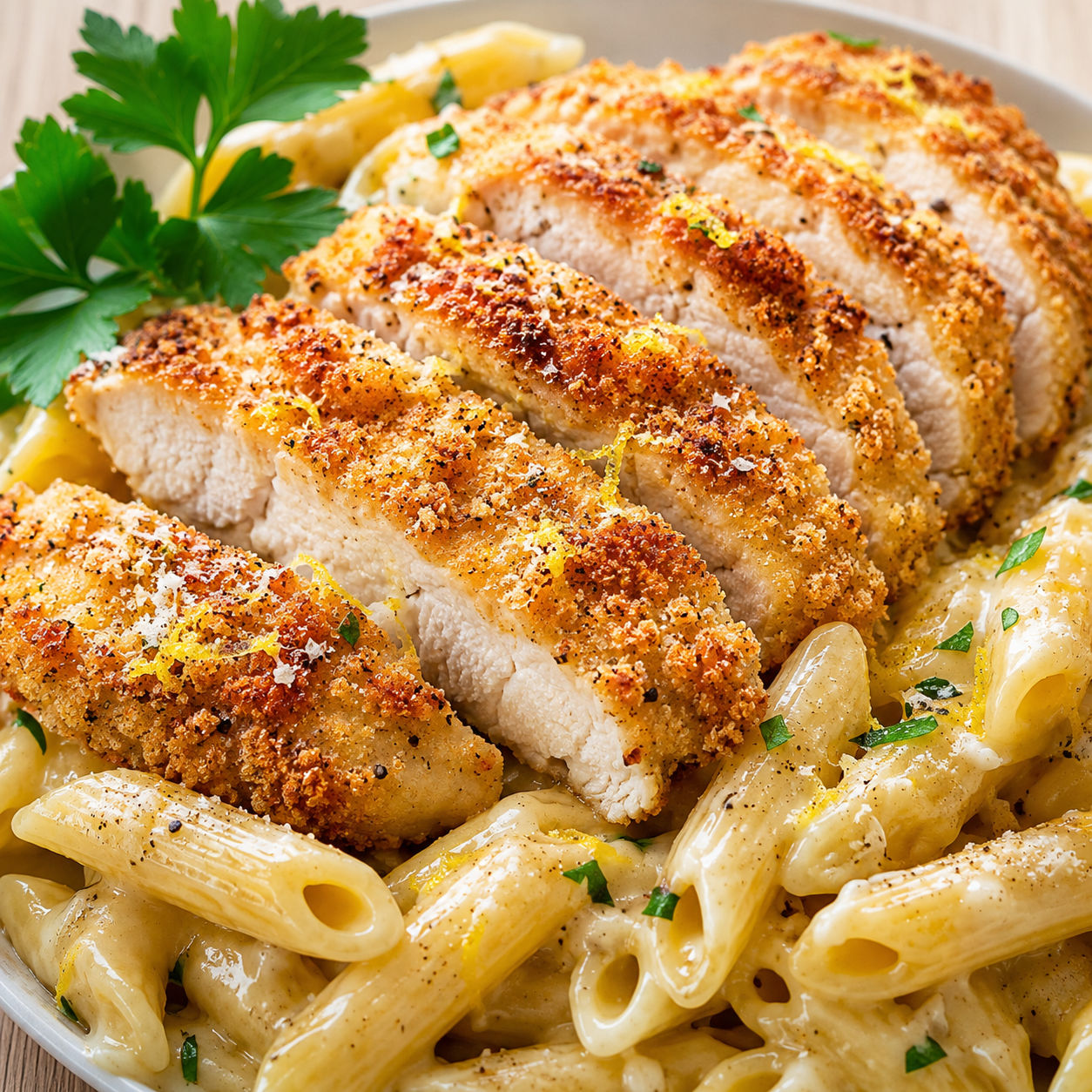
Some nights call for a plate that covers every craving at once. Crispy Parmesan Chicken with Creamy Lemon Pasta delivers golden crunch and bright, silky pasta in about 35 minutes. The whole meal builds from pantry staples and one block of good parmesan.
The trick is timing. Start the pasta water first, then bread the chicken while it boils. Fry the cutlets, then build the lemon cream in the same skillet with all the browned bits left behind. It feels like a splurge but uses basics you probably already own.
The lineup for crunch and cream
Quality matters here. Buy a solid block of parmesan and grate it yourself. Pre-grated cheese has anti-caking agents that keep it from melting smoothly into the sauce.
- Boneless chicken breasts. Halved horizontally so they cook fast and evenly without drying out.
- Panko breadcrumbs. Lighter and flakier than regular breadcrumbs, they fry up louder and crisper.
- Freshly grated parmesan. Half goes into the breading for a salty, nutty crust. The rest builds the sauce.
- All-purpose flour and eggs. The glue that keeps the breadcrumb coating stuck through frying.
- Short pasta. Penne or rigatoni catch the creamy sauce inside their tubes and ridges.
- Heavy cream and lemon. The cream carries the sauce. The zest and juice cut the richness and keep you going back for more.
- Garlic and butter. The flavor base for the sauce, scraped up with every brown bit left from the chicken.
Fry cutlets then build sauce
- Prep the chicken. Halve each breast horizontally to make thin cutlets. Pat them very dry with paper towels so the coating sticks and the oil stays clean.
- Set up the breading. Mix panko, parmesan, garlic powder, paprika, salt, and pepper in a shallow dish. Dredge each cutlet in flour, dip in beaten egg, then press into the panko mix until fully coated.
- Boil the pasta. Cook in well-salted water two minutes shy of al dente. Reserve one cup of the starchy water, then drain.
- Fry until golden. Heat olive oil in a large skillet over medium-high heat. Cook the cutlets for three to four minutes per side until deep gold and crisp. Transfer to a wire rack.
- Make the lemon cream. In the same skillet, melt butter and sauté garlic for 30 seconds. Pour in cream, lemon juice, and zest. Simmer for two to three minutes until slightly thickened. Stir in parmesan and a splash of pasta water.
- Toss and serve. Add the pasta to the sauce and toss until coated. Loosen with more pasta water if needed. Slice the chicken and fan it over the top. Finish with extra parmesan and cracked black pepper.
The coating that stays crisp
The secret to breading that doesn't fall off is dry meat and a firm press. After dredging in flour and egg, push each cutlet into the panko-parmesan mix so the crumbs adhere. Let the coated chicken rest on a plate for five minutes before it hits the pan. That rest sets the crust and reduces flaking. Fry in a hot skillet with enough oil to coat the bottom. If the oil is too cool, the breading soaks up fat and turns soggy. A wire rack instead of paper towels keeps the underside crisp while you finish the sauce. If you want a simpler take on parmesan breading, our lemon garlic parmesan chicken tenders use the same method in smaller pieces.
Lemon cream without curdling
Cream and lemon juice can split if the heat is too high or the acid goes in too fast. Keep the flame at medium-low when you add the liquid. Pour the cream in first, then the lemon juice and zest. Stir constantly and never let it boil. The parmesan and pasta water help stabilize everything into a smooth emulsion. If the sauce looks thin, simmer gently for another minute. If it gets too thick, add pasta water a tablespoon at a time. The result should coat the back of a spoon and cling to the pasta rather than pooling in the bowl.
Pasta shape and timing
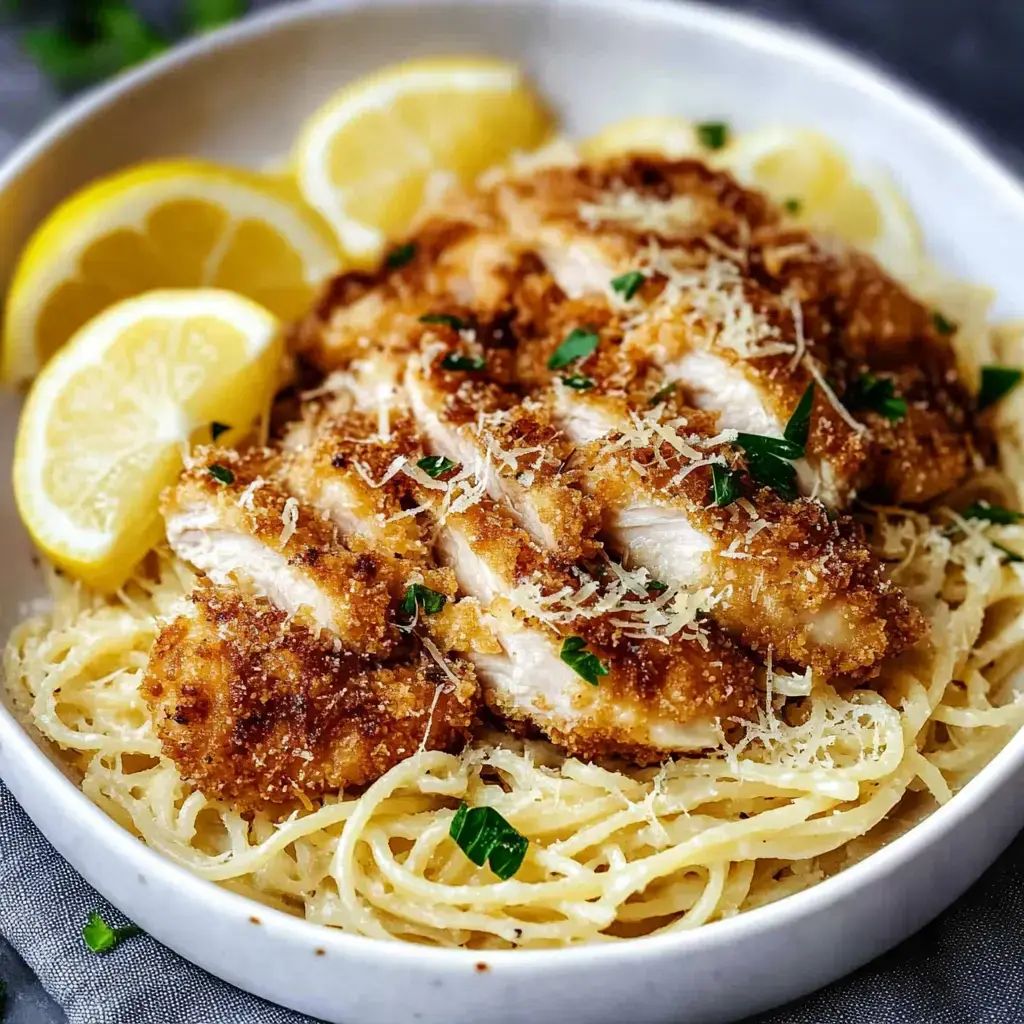
Short pasta with ridges or tubes works best because it traps the creamy sauce. Penne rigate and rigatoni are my first choices. Cook it two minutes less than the package says. It will finish softening in the skillet with the lemon cream and pasta water. That extra step lets the noodles absorb flavor instead of just getting sauced on the outside. If you are out of short pasta, linguine works too. The sauce wraps around the strands differently but tastes just as good.
Swaps and additions
You can swap chicken breasts for thighs pounded flat. They stay juicier and add a richer flavor. For a lighter sauce, replace half the heavy cream with half-and-half, though the finished dish will be a little less lush. Add a handful of baby spinach to the sauce at the end if you want some green. It wilts in seconds and adds color without changing the flavor profile. For a similar creamy base with different accents, try our creamy parmesan garlic pasta on meatless nights.
Storing and reheating leftovers
Store the pasta and chicken separately if possible. The pasta keeps in an airtight container for up to three days. The chicken stays crispier if you reheat it on a sheet pan in a 375°F oven for eight to ten minutes instead of the microwave. For the pasta, warm it gently in a skillet with a splash of milk or reserved pasta water to bring the sauce back to life. The USDA recommends reheating cooked chicken to 165°F internally. See their safe food-handling guidelines for details.
Sides that balance the plate
A simple arugula salad with lemon and olive oil cuts through the richness. Roasted asparagus or green beans work well too. For bread, warm ciabatta is ideal for soaking up any extra sauce. A chilled glass of pinot grigio rounds out the meal without competing with the lemon. If you want another crispy chicken dish in your rotation, our crispy chicken parmesan rolls use the same breading in a fun format.

FAQs
- Can I bake the chicken instead of frying?
Yes. Lay the breaded cutlets on a wire rack set over a sheet pan and bake at 425°F for eighteen to twenty minutes until golden and cooked through. The rack lets hot air circulate so the bottom stays crisp.
- What pasta shape works best?
Short pasta with ridges or tubes is ideal. Penne rigate and rigatoni trap the creamy sauce inside. Linguine or fettuccine also work if you prefer long pasta.
- Can I make the sauce ahead of time?
You can, but it thickens as it sits. Reheat gently over low heat and thin it with a splash of pasta water or milk until it loosens back to a pourable consistency.
- How do I keep the breading from getting soggy?
Pat the chicken very dry before breading, fry in hot oil, and rest the finished cutlets on a wire rack instead of paper towels. Store leftovers separately from the pasta.
- Can I use chicken thighs?
Absolutely. Pound boneless thighs to an even thickness and bread them the same way. They cook slightly faster and stay extra juicy.
- How long do leftovers last?
Keep everything in airtight containers in the refrigerator for up to three days. Reheat the chicken in the oven and the pasta gently in a skillet for the best texture.
- Can I make this gluten-free?
Yes. Swap the all-purpose flour and panko for gluten-free breadcrumbs and a one-to-one gluten-free flour blend. The rest of the recipe stays the same.
