 Pin it
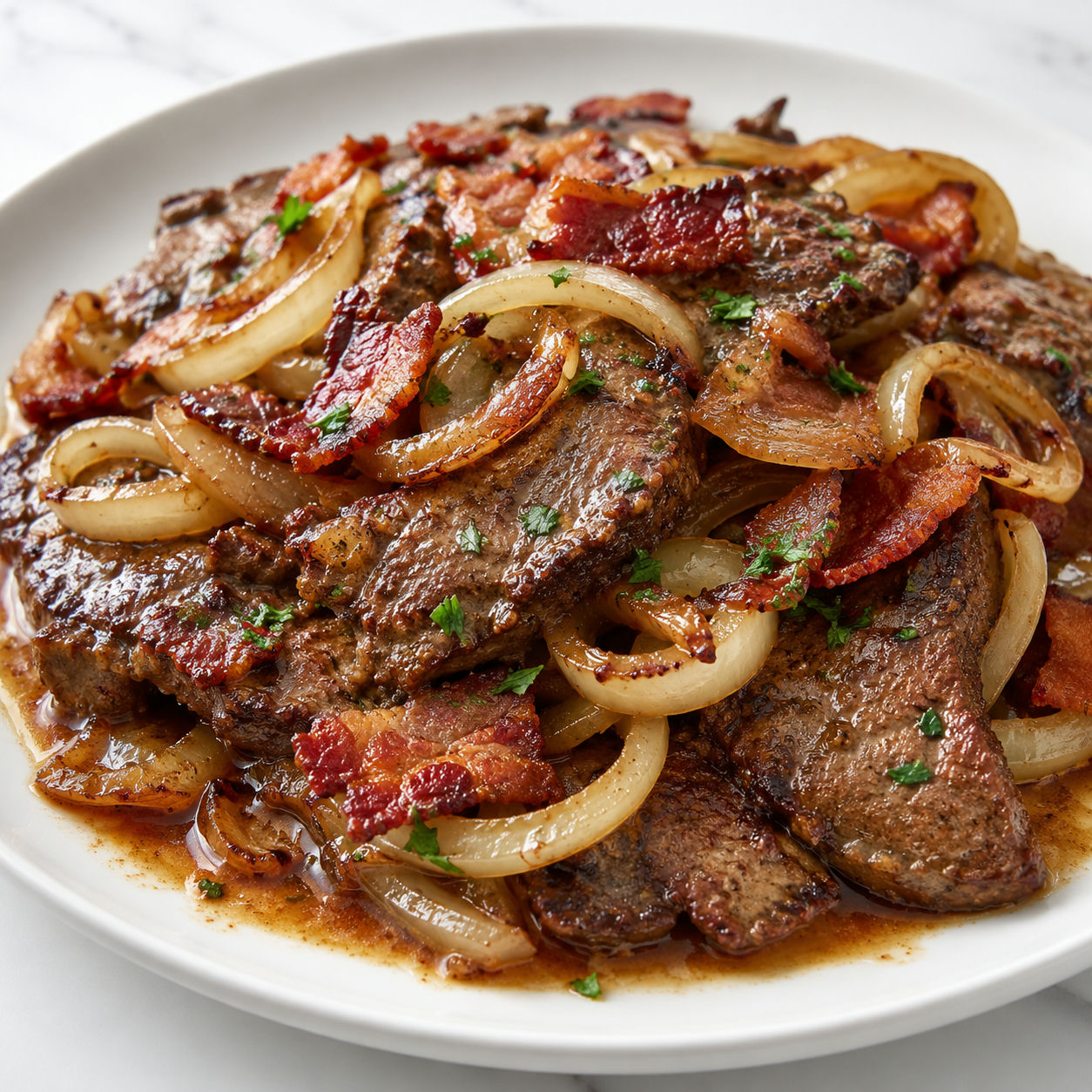
Beef Liver and Onions is one of those old-fashioned dinners that can be wonderful or rough, depending on two small choices. Give the liver a short milk soak, then cook it quickly in a hot skillet. That is the difference between tender slices and the chalky kind people remember for the wrong reason.
This version keeps the flavor classic. Sweet onions, a light flour coating, a little bacon, and a splash of broth make the pan taste rich without burying the liver. It is hearty, fast, and best eaten while the onions are still glossy.
What Makes This Skillet Work
Good beef liver should look moist, deep reddish-brown, and cleanly sliced. Ask for pieces about 1/4 inch thick if you can. Thick liver is harder to cook evenly, while thin slices brown fast and stay tender.
- Beef liver. The main ingredient, sliced thin so it cooks quickly without turning tough.
- Whole milk. Mellowing the liver in milk softens the strong mineral edge before cooking.
- Yellow onions. They turn sweet and silky in the skillet and balance the richness of the liver.
- Bacon. Adds smoky fat for cooking the onions and a crisp finish on top.
- All-purpose flour. Gives the liver a light crust and helps the pan juices cling.
- Butter. Rounds out the skillet flavor and helps brown the liver.
- Beef broth. Loosens the browned bits into a quick savory spoon-over sauce.
- Parsley. Adds a fresh finish so the plate does not taste heavy.
Beef Liver and Onions Method
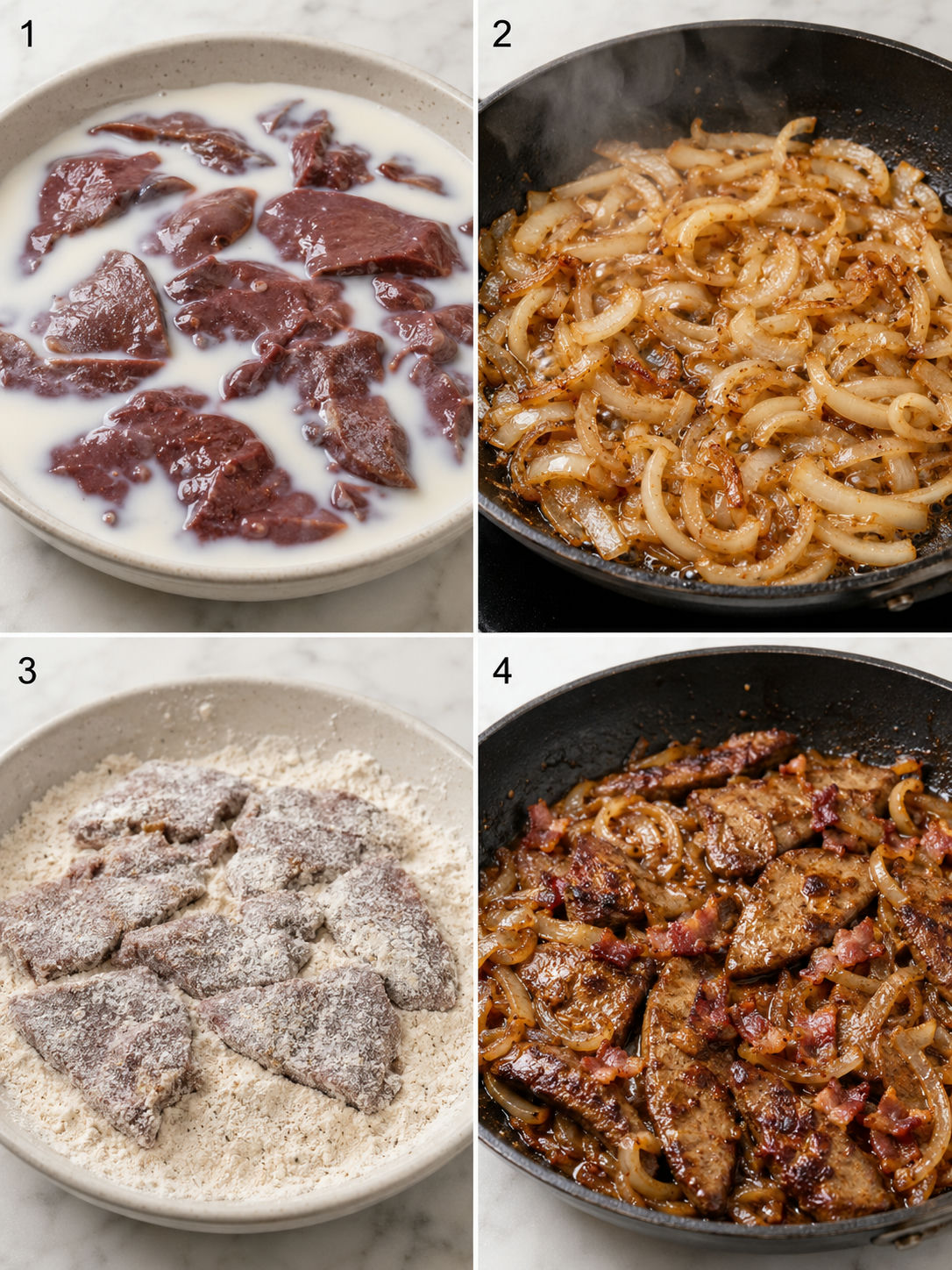
- Soak the liver. Place the liver slices in milk for 20-30 minutes. Drain, then pat each piece very dry so the flour sticks and the liver sears.
- Cook the bacon. Fry the bacon in a large skillet until crisp. Move it to a plate and keep about 2 tablespoons of the drippings in the pan.
- Brown the onions. Cook the sliced onions in the bacon fat with a pinch of salt until soft and golden, about 12-15 minutes. Transfer them to a warm bowl.
- Flour the liver. Mix flour, salt, pepper, and paprika on a plate. Dredge the liver lightly and shake off extra flour.
- Sear fast. Add butter to the skillet and cook the liver over medium-high heat for 2-3 minutes per side, just until browned and barely pink inside.
- Finish the pan. Add broth and Worcestershire to the skillet, scraping up browned bits. Return onions and bacon, spoon everything over the liver, and finish with parsley.
The Tenderness Rule
Liver is lean and delicate. It punishes long cooking faster than a steak does. Once the slices hit a hot pan, stay close. The first side should brown in about 2 minutes, then the second side needs about the same. If your slices are thinner than 1/4 inch, cut that time down.
A short milk soak also helps. The idea shows up in classic recipes such as calf's liver with bacon and onions, where milk is used to mellow the flavor before the liver is cooked. Do not rinse after soaking. Just drain and pat dry. Water left on the surface blocks browning.
Getting Sweet Onions Right
The onions need more time than the liver. That is why they go first. Let them cook in the bacon drippings until they slump, turn golden at the edges, and smell sweet. If they start scorching before they soften, lower the heat and add a tablespoon of water.
For a softer onion-heavy plate, slice them thin from root to tip. For more bite, slice them crosswise into half-moons. This recipe sits close to the old diner style, but the sweet-onion idea also pairs well with deeper beef dishes like Salisbury steak with savory gravy and onions and French onion beef and noodles.
Smart Swaps For This Recipe
Calves liver works here and tastes milder. Chicken livers are smaller and need a different approach, so save them for a separate recipe. For gluten-free beef liver and onions, replace the flour with a fine gluten-free all-purpose blend or use rice flour. The crust will be a little lighter, but it browns nicely.
If you want to skip dairy, soak the liver in cold water with a spoonful of lemon juice for 15 minutes, then use olive oil instead of butter. The flavor will be sharper. For a richer plate, add mushrooms after the onions soften and cook them until their moisture evaporates.
Serving The Old-School Way
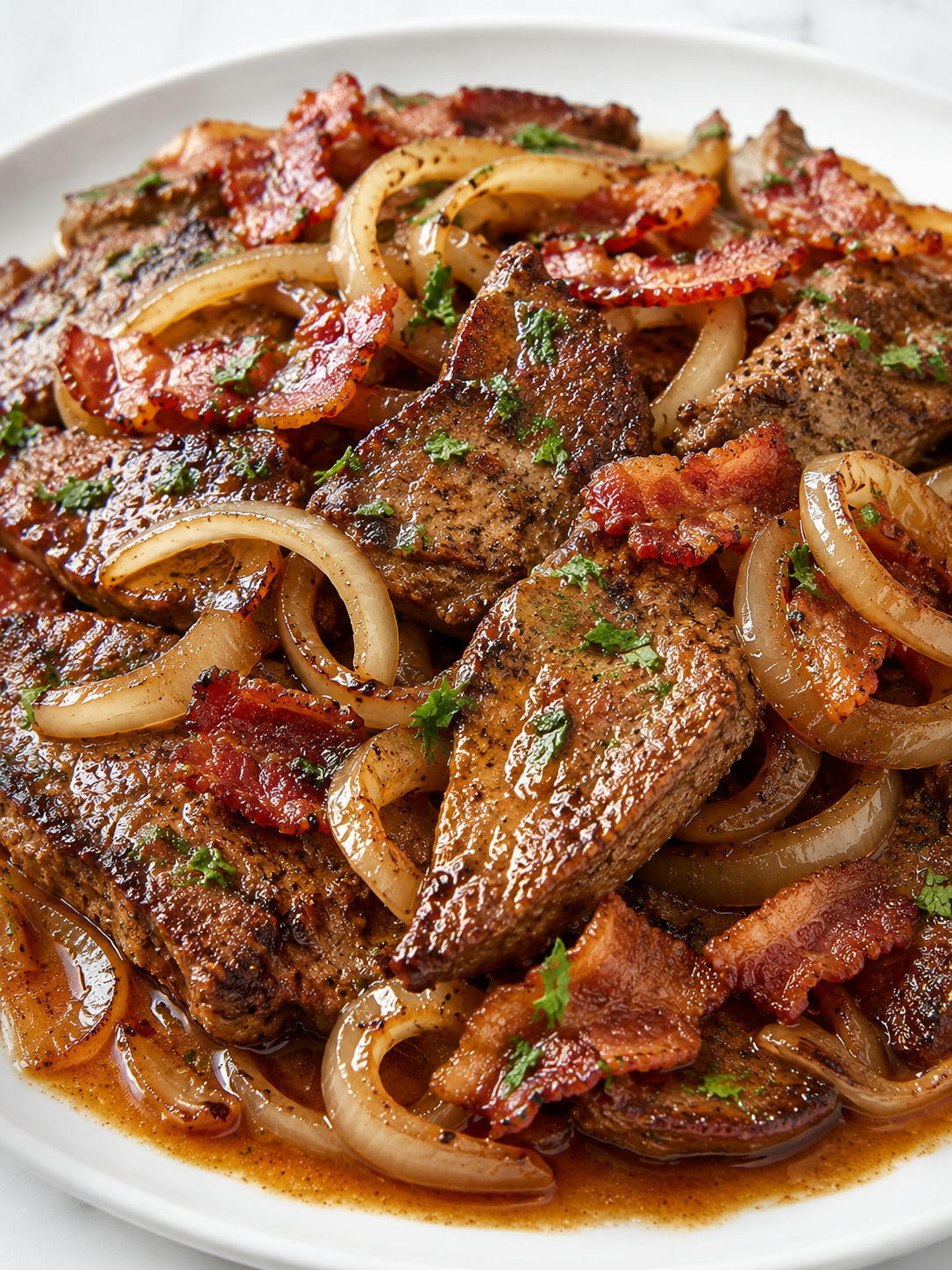
Serve liver and onions as soon as the skillet is done. The texture is best hot, with the onions spooned over the top and the crisp bacon scattered last. Mashed potatoes are the classic landing place for the pan juices. White rice, buttered noodles, or a simple slice of toasted bread also do the job.
For something green, add a crisp salad or a side of cabbage. If you like the onion flavor in this dinner, easy foil packet ground beef and vegetables has the same practical weeknight feel. For a lighter side with a little sharpness, fried cabbage with onions and bacon fits the plate without much extra work.
Storing Without Drying It Out
Leftover liver is never quite as tender as fresh from the pan, but it can still be good. Keep it covered in the refrigerator for up to 3 days with the onions and a little pan juice. That moisture matters.
Reheat in a covered skillet over low heat with a splash of broth. Turn the pieces once and stop as soon as they are warm. The microwave works in a hurry, but use short bursts at half power. Beef liver is naturally rich in several nutrients, and you can compare basic values through USDA FoodData Central if you are tracking nutrition closely.
Summary
This skillet beef liver and onions recipe uses a milk soak, browned onions, and fast searing for a tender, savory dinner with classic comfort-food flavor.
FAQs
- Do I have to soak beef liver in milk?
You do not have to, but it helps mellow the mineral flavor and softens the texture a bit. Twenty to thirty minutes is enough for thin slices. Drain it well and pat it dry before flouring.
- Can I make beef liver and onions without bacon?
Yes. Skip the bacon and use 2 tablespoons of olive oil or butter for the onions. You will lose the smoky edge, so add a pinch of smoked paprika if you like that flavor.
- How do I know when beef liver is done?
The outside should be browned and the center should still feel slightly springy. For food safety, follow the USDA safe temperature chart for meats and use an instant-read thermometer when needed.
- Can I use calves liver instead of beef liver?
Yes. Calves liver is usually milder and more tender. It cooks even faster than mature beef liver, so start checking after 90 seconds per side if the slices are thin.
- How should I store leftovers?
Store leftovers in an airtight container in the refrigerator for up to 3 days. Reheat gently in a covered skillet with a spoonful of broth. High heat makes liver firm and dry.
- What goes well with liver and onions?
Mashed potatoes are the classic choice because they catch the onions and pan juices. Rice, buttered egg noodles, fried cabbage, or a sharp green salad also work well.
