 Pin it
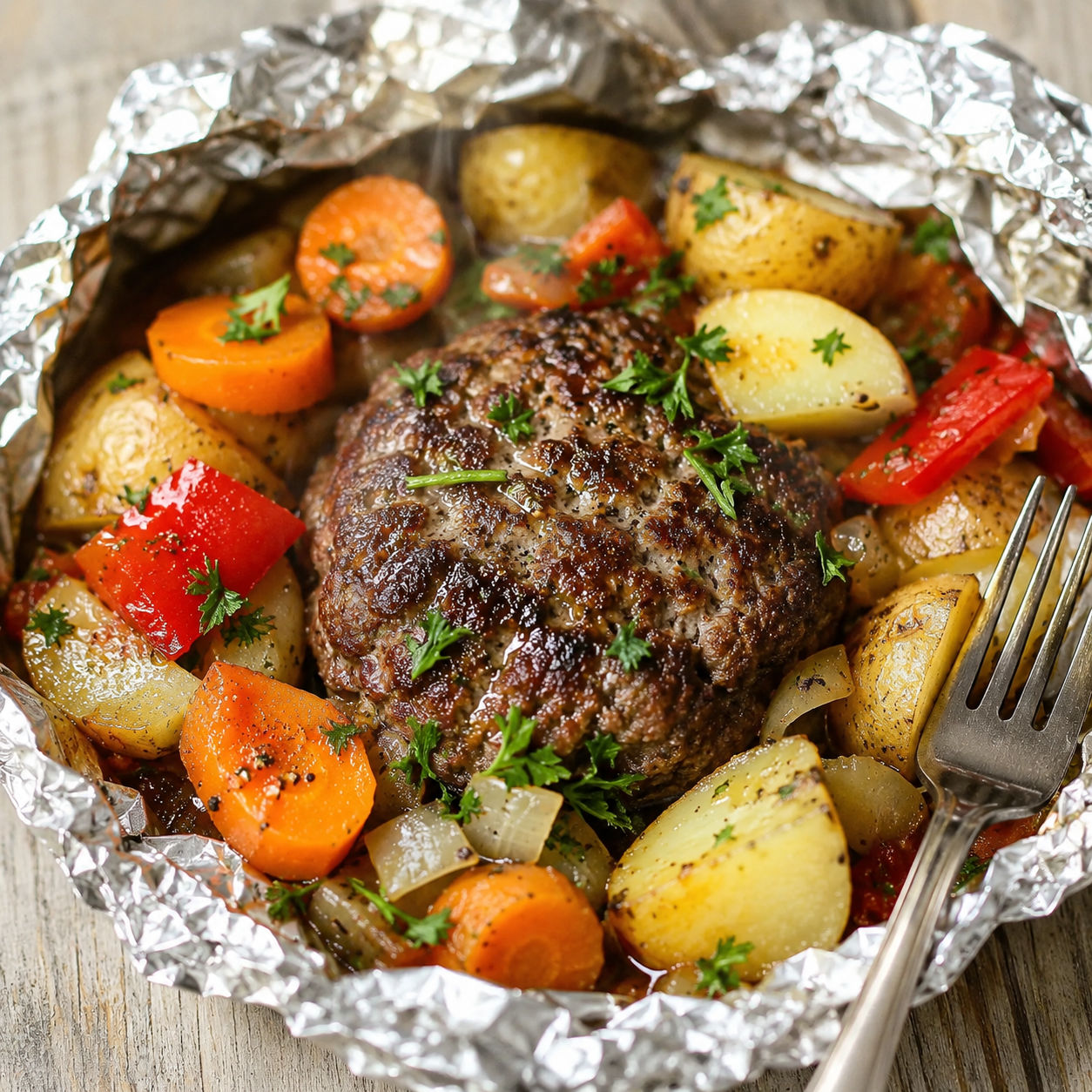
Easy Foil Packet Ground Beef and Vegetables is the kind of dinner that earns its keep on a busy night. You get browned-edged potatoes, sweet carrots, savory onion, and juicy beef in one tidy packet.
I like this recipe because the cleanup is almost nothing, but the meal still feels complete. The trick is cutting the vegetables small enough to cook through before the beef dries out.
What Goes Inside Each Packet
The best packets start with sturdy vegetables and well-seasoned beef. Choose small potatoes with thin skins, fresh carrots, and ground beef with enough fat to stay tender.
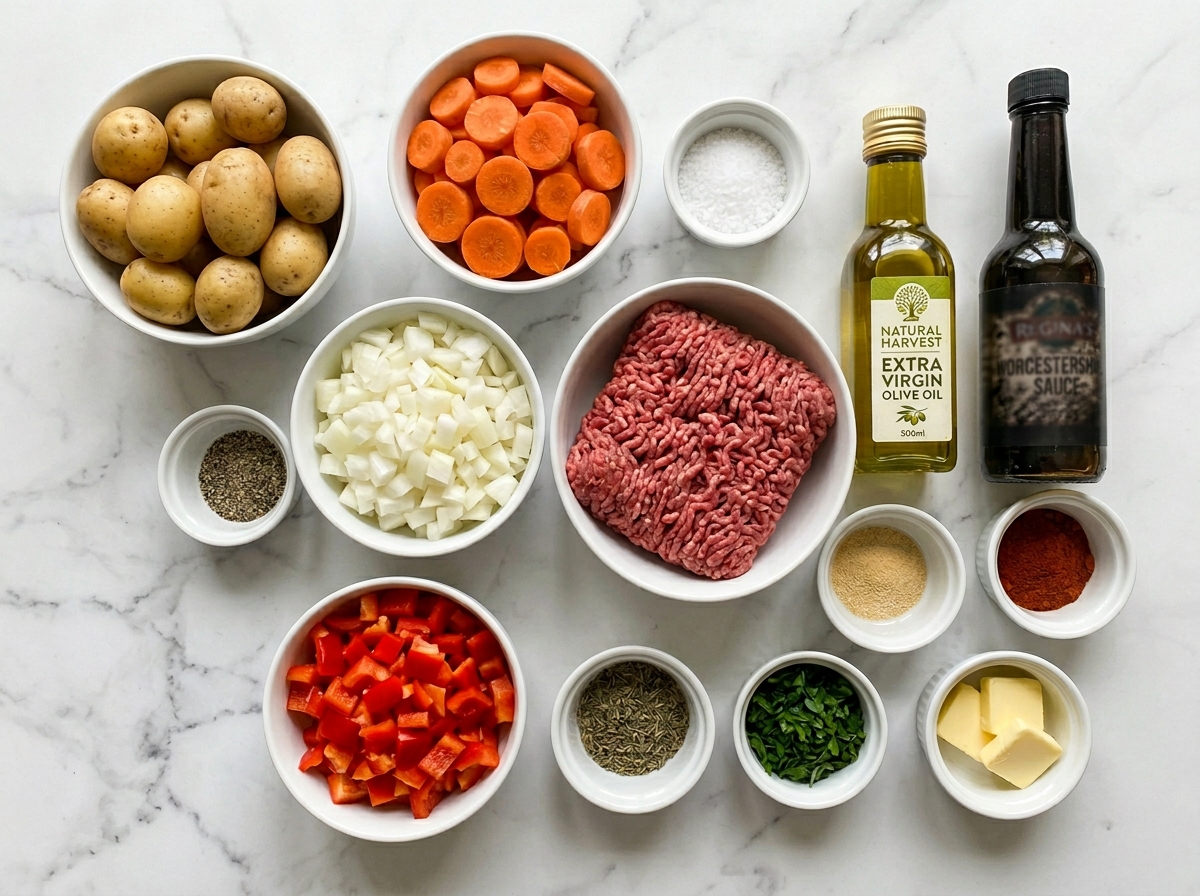
- Ground beef. The main protein, shaped into thin patties so it cooks evenly and seasons the vegetables underneath.
- Baby potatoes. They turn creamy inside and soak up the buttery beef juices.
- Carrots. They add sweetness and hold their shape during the long steam.
- Yellow onion. It softens into the packet juices and makes the beef taste more savory.
- Bell pepper. It adds color and a softer vegetable that cooks at the same pace as the beef.
- Butter. It keeps the vegetables moist and gives the packet a rich finish.
- Worcestershire sauce. A small splash gives the beef deeper flavor without making the packets soupy.
- Garlic powder, paprika, and thyme. Pantry seasonings that work well with beef, potatoes, and carrots.
Easy Foil Packet Beef Steps
- Prep the foil. Tear four large sheets of heavy-duty foil and lightly oil the center of each one so the potatoes do not stick.
- Season the vegetables. Toss the potatoes, carrots, onion, and bell pepper with oil, salt, pepper, garlic powder, paprika, and thyme.
- Shape the beef. Mix the beef with Worcestershire sauce, salt, and pepper, then form four thin patties. Thin patties cook more evenly in a sealed packet.
- Build the packets. Divide the vegetables on the foil, top each pile with a beef patty, and add a small pat of butter.
- Seal tightly. Bring the long sides together and fold them down twice. Fold the short ends in so steam stays inside but leave a little room for heat to circulate.
- Cook and check. Bake at 400°F or grill over medium heat for 35-40 minutes, turning once on the grill. Open carefully and check for tender potatoes and beef at 160°F.
Cut Vegetables Small
The biggest foil-packet problem is undercooked potato. Cut potatoes into 1/2-inch pieces and slice carrots no thicker than 1/4 inch. Those sizes give the dense vegetables enough time to soften while the beef stays juicy. If you leave the potatoes chunky, the beef will be done long before the center of the potato gives way.
Keep the vegetables in a loose mound instead of packing them down hard. Steam needs room to move through the packet. For another beef dinner built around simple vegetables, try this ground beef veggie stir-fry bowl when you want the same idea in a skillet.
Keep The Beef Tender
Loose crumbles can turn firm in a foil packet because they steam from every side. A thin patty works better. It holds together, cooks evenly, and still lets the juices run down into the vegetables. Mix the beef gently and stop as soon as the seasoning is spread through. Overmixing makes the patty dense.
A little Worcestershire sauce helps, but do not add too much liquid. Foil packets make their own broth as the onions, butter, and beef cook. For food safety, ground beef should reach 160°F. The USDA ground beef safety guide is a useful reference if you are cooking packets outdoors.
Oven, Grill, Or Campfire
The oven is the easiest method because the heat is steady. Set the packets on a rimmed baking sheet at 400°F and cook for 35-40 minutes. On a grill, use medium heat and turn the packets once halfway through. Avoid a screaming-hot grill, which can scorch the bottom before the carrots soften.
For campfire cooking, wait for glowing coals instead of tall flames. Set the packets near the edge of the heat and rotate them often. This is the same relaxed, outdoorsy dinner style as a rustic campfire beef and potato casserole, but portioned into single servings.
Smart Packet Swaps
You can change the vegetables as long as you respect cooking times. Zucchini and mushrooms cook quickly, so cut them bigger. Sweet potatoes work well, but keep them small like regular potatoes. Frozen corn can go in straight from the freezer. Green beans are best trimmed and cut into short pieces.
Ground turkey works too, though it benefits from an extra teaspoon of oil or a little more butter. For a cheesy finish, open the cooked packets, sprinkle with cheddar, and let them sit closed for two minutes. If you want a saucier ground beef dinner instead, the cheesy ground beef and rice casserole is a good next recipe.
Make-Ahead And Leftovers
Assemble the packets up to a day ahead and refrigerate them on a tray. Do not leave raw beef packets in a cooler without plenty of ice. Keep them cold until they go on the heat. If you are prepping for camping, pack the sealed packets in a leakproof bag so raw juices cannot touch drinks or ready-to-eat foods.
Leftovers keep for 3 days in the fridge. Move the food out of the foil and into an airtight container. Reheat in a covered skillet with a splash of water, or microwave in short bursts. For a soupier way to stretch extra beef and vegetables, make classic vegetable beef soup later in the week.
Summary
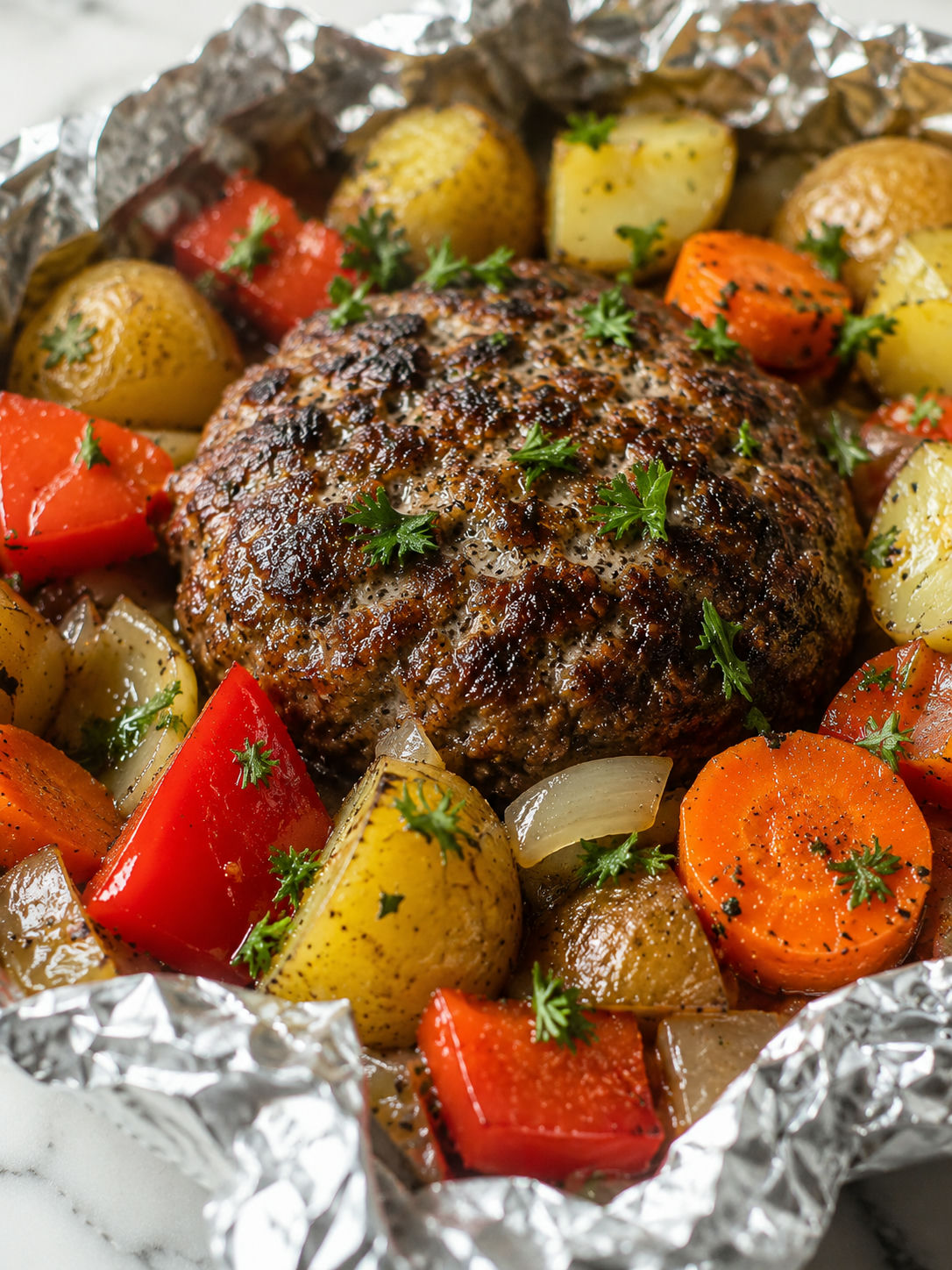
These ground beef foil packets are hearty, flexible, and easy to prep ahead. Serve them straight from the foil or slide each packet onto a plate with the buttery juices spooned over the top.
FAQs
- Can I make ground beef foil packets in the oven?
Yes. Bake the sealed packets on a rimmed sheet pan at 400°F for 35-40 minutes. Open one packet carefully and check that the potatoes are tender and the beef is fully cooked.
- What ground beef works best for foil packets?
Use 85% or 90% lean ground beef. Very lean beef can turn dry, while fattier beef can leave too much grease in the bottom of the packet.
- Can I swap the vegetables?
Yes. Bell peppers, zucchini, mushrooms, green beans, or corn all work well. Keep potatoes and carrots cut small because dense vegetables need the most time.
- How do I know the ground beef is done?
The beef should no longer be pink and should reach 160°F in the center. A food thermometer is the most reliable check, especially when packets are cooked on a grill or campfire.
- Can I prep foil packets ahead of time?
You can assemble them up to 24 hours ahead and keep them refrigerated. Place the packets on a tray so they stay flat, then cook them straight from the fridge with a few extra minutes if needed.
- Are these foil packets gluten-free?
They can be gluten-free if you use gluten-free Worcestershire sauce and check your seasoning blends. Plain beef, vegetables, butter, and dried herbs are naturally gluten-free.
- What should I serve with beef foil packets?
They are filling on their own, but a crisp salad or fruit works well beside them. For a bigger dinner, add rice, rolls, or a spoonful of sour cream on top.
