 Pin it
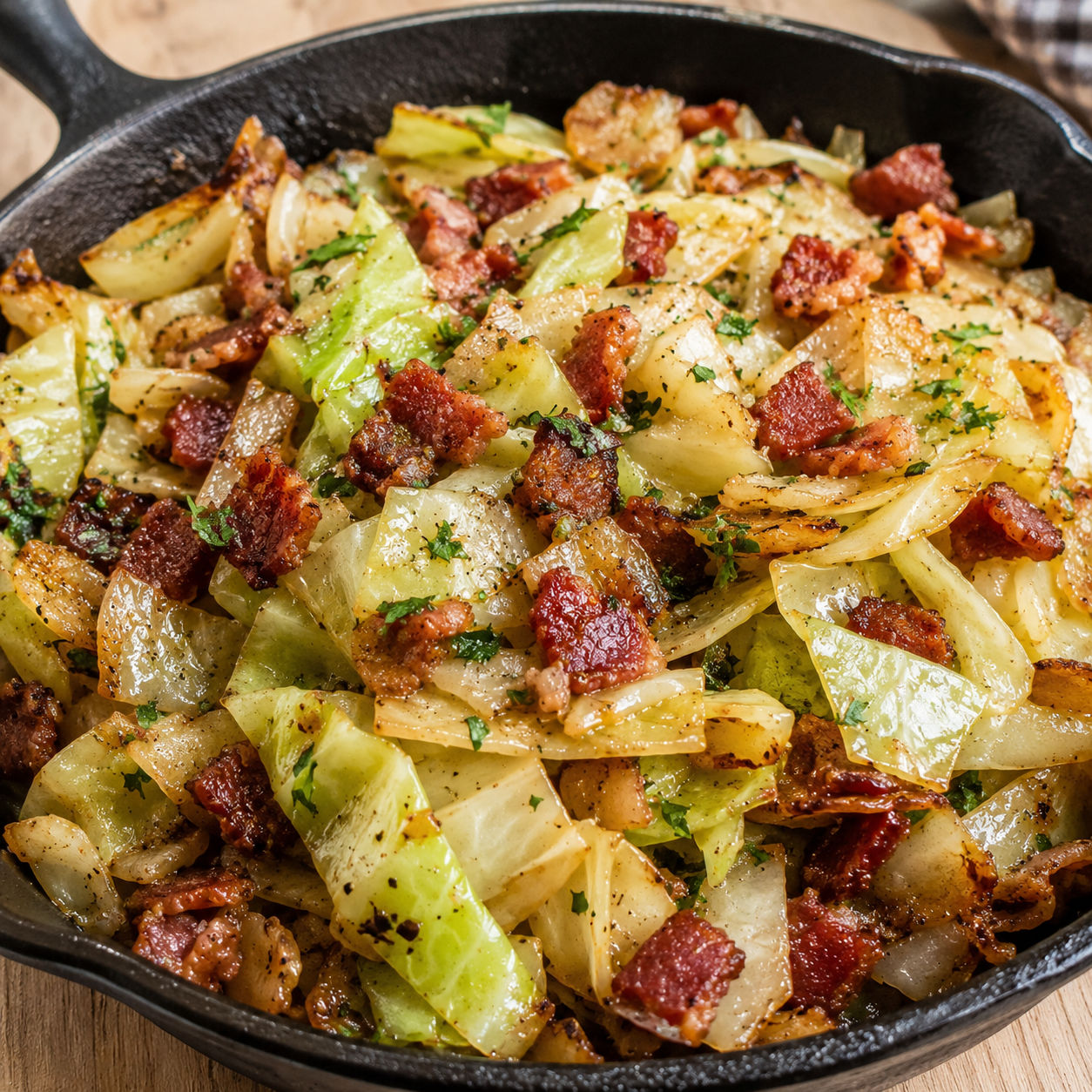
Easy Fried Cabbage with Onions and Bacon is the kind of side dish that makes a plain dinner feel cared for. The cabbage softens in smoky bacon drippings, the onions turn sweet, and the edges pick up just enough browning to taste rich without much work.
I like it best when the cabbage still has a little bite. Let it cook down, but do not walk away for too long. A hot skillet and a few good stirs give you tender pieces, golden bits, and crisp bacon in every scoop.
Easy Fried Cabbage Ingredients
Choose a firm green cabbage with crisp leaves and a heavy feel for its size. Thick-cut bacon gives the best texture because it stays meaty after crisping.
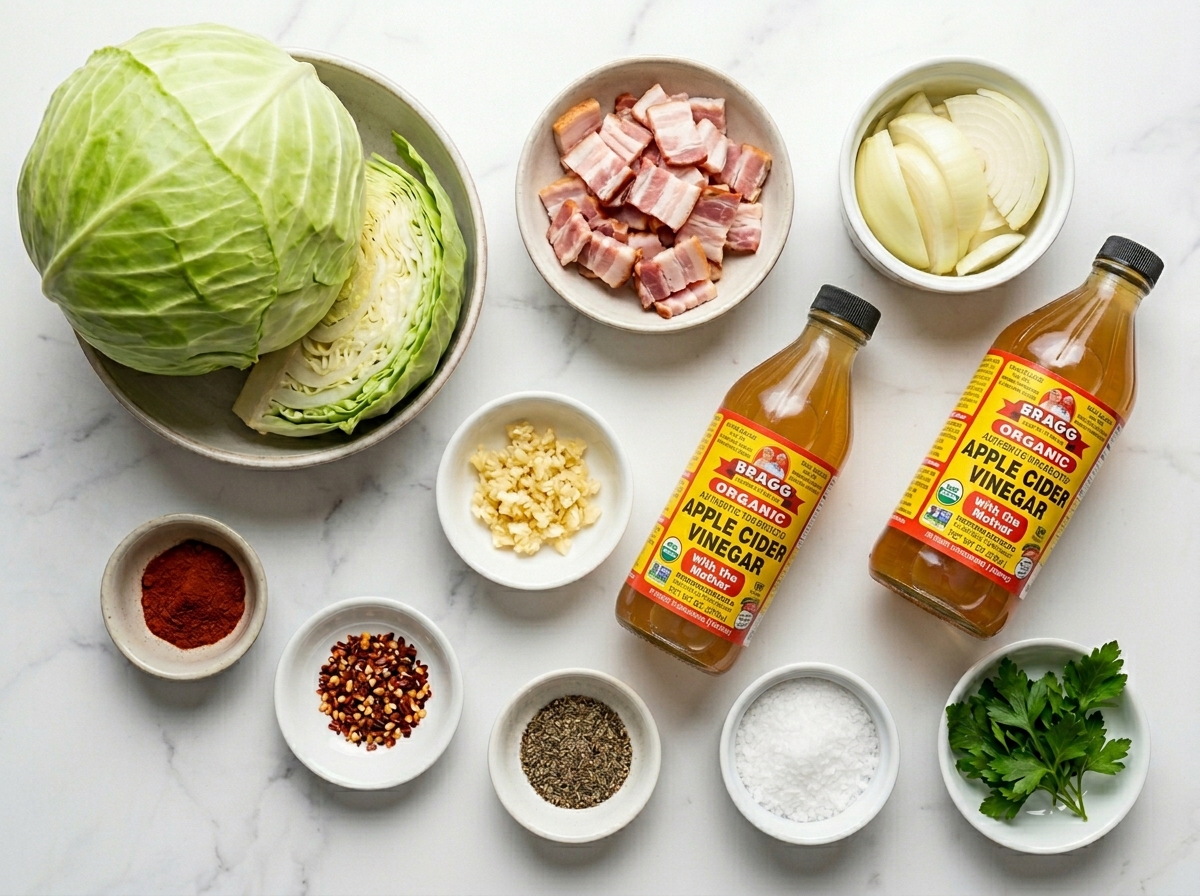
- Green cabbage. The main vegetable softens quickly and turns sweet as it cooks in the skillet.
- Thick-cut bacon. Adds smoky flavor, crisp texture, and the cooking fat for the whole dish.
- Yellow onion. Cooks down into a sweet base that balances the cabbage.
- Garlic. Adds savory depth, but it only needs a quick cook so it does not burn.
- Apple cider vinegar. Wakes up the pan at the end and cuts through the richness.
- Smoked paprika. Builds a deeper smoky note without making the dish spicy.
- Red pepper flakes. Optional, but a small pinch keeps the skillet lively.
- Parsley. Adds fresh color and a clean finish.
Skillet Method That Works
- Cut the cabbage. Remove the core, then slice the cabbage into 1-inch ribbons or rough chunks so it cooks evenly.
- Crisp the bacon. Cook chopped bacon in a large skillet until browned and crisp. Move it to a plate and keep about 2 tablespoons of drippings in the pan.
- Soften the onion. Add the onion to the bacon drippings and cook until glossy and lightly golden. Stir in garlic for the last 30 seconds.
- Fry the cabbage. Add cabbage in big handfuls, tossing as it wilts. Cook until tender with browned edges, about 10-12 minutes.
- Season and finish. Stir in smoked paprika, pepper, vinegar, and the crisp bacon. Taste before adding salt because bacon varies a lot.
Browning Without Burning
The best fried cabbage has soft pieces and a few browned edges. That only happens when the pan is wide enough. If the cabbage is piled too high, it steams and turns limp before it ever gets color. Add it in batches if your skillet is crowded.
Medium heat is enough once the bacon is cooked. The bacon drippings carry a lot of flavor, but they can scorch if the pan gets too hot after the onions go in. Stir, then let the cabbage sit for a minute at a time. Those short pauses make the golden bits. This is the same reason skillet sides like Southern fried potatoes taste better when they are not stirred nonstop.
Salt It At The End
Bacon can be mild or very salty, so wait before adding much salt. Cook the cabbage first, fold the bacon back in, then taste. Most pans need only a small pinch.
The vinegar goes in at the end for the same reason. If it cooks too long, the bright edge disappears. One tablespoon is enough to sharpen the cabbage without making it taste sour. For general leftover handling, the USDA leftover safety guide is a useful reference.
Easy Ways To Change It
For a heartier skillet, add sliced smoked sausage after the bacon and brown it before the onions. That makes it close to a full dinner, especially if you like the flavors in Cabbage and Kielbasa Skillet. You can also stir in cooked shrimp at the end, like the richer fried cabbage with shrimp, sausage and bacon.
For a softer Southern-style pan, cover the skillet for 5 minutes after the cabbage wilts. For more texture, leave it uncovered the whole time. A pinch of brown sugar is optional if your cabbage tastes sharp, but I usually skip it unless the head is older.
Serving It Hot
This cabbage is best right after the bacon goes back in, while the edges are still crisp and the pan smells smoky. Serve it with pork chops, baked chicken, corned beef, or meatloaf. It also works as a low-carb main with a fried egg on top.
If you are building a comfort-food plate, pair it with country fried pork chops with bacon gravy and something starchy. The cabbage brings enough freshness to balance a rich main dish.
Leftovers And Reheating
Leftover fried cabbage keeps well, but the bacon softens as it sits. Store it airtight in the fridge for 3-4 days. Reheat it in a skillet over medium heat with a tiny splash of water if it looks dry.
Do not overcook it the second time. Warm it just until hot, then let it sit against the pan for a minute to bring back a little browning. The microwave works when you are in a hurry, but the skillet gives better texture.
Summary
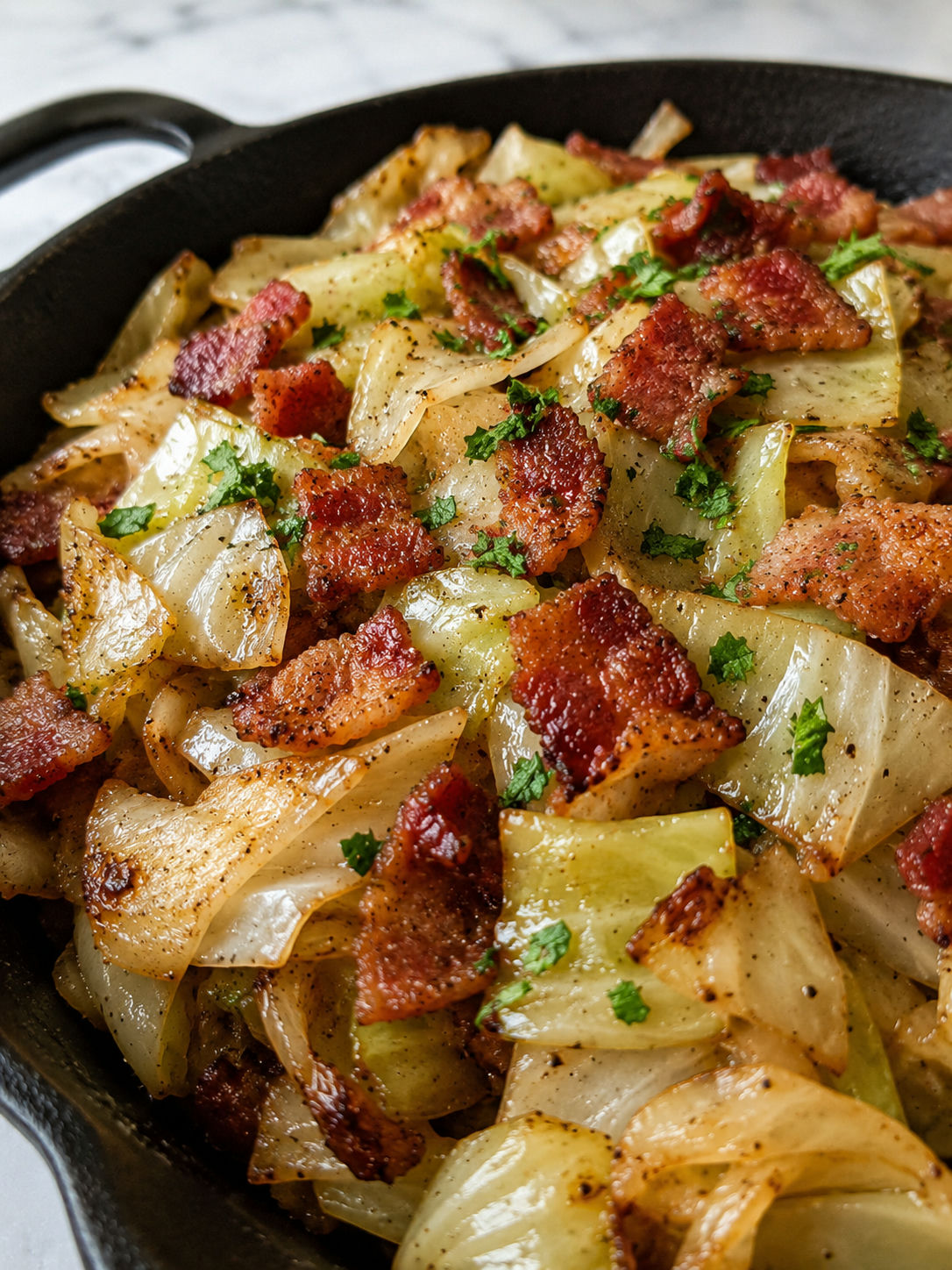
Serve this fried cabbage hot from the skillet with roasted meats, pork chops, sausage, corned beef, or a simple fried egg for a low-carb meal.
FAQs
- Can I use red cabbage instead of green cabbage?
Yes, but the flavor and color will be different. Red cabbage is a little earthier and can turn the skillet a deep purple shade. Cook it the same way and add the vinegar at the end to brighten it.
- How do I keep fried cabbage from getting mushy?
Use a large skillet and cook the cabbage uncovered for most of the time. Stir often, but give it short pauses against the hot pan so moisture can cook off and the edges can brown.
- Can I make this without bacon?
You can. Use 2 tablespoons olive oil or butter, then add smoked paprika to bring back some smoky depth. The dish will be vegetarian only if you use plant-based fat and skip the bacon completely.
- How long do leftovers keep?
Store leftovers in an airtight container in the fridge for 3-4 days. Reheat in a skillet over medium heat so the cabbage warms through and any excess moisture cooks away.
- What should I serve with fried cabbage?
It is great with pork chops, roasted chicken, corned beef, kielbasa, meatloaf, or fried eggs. For a fuller plate, add mashed potatoes or buttered noodles.
- Can I add sausage or shrimp?
Yes. Brown sliced sausage before the cabbage or add cooked shrimp at the end just long enough to warm through. Keep the bacon amount a little lighter if you add another salty protein.
