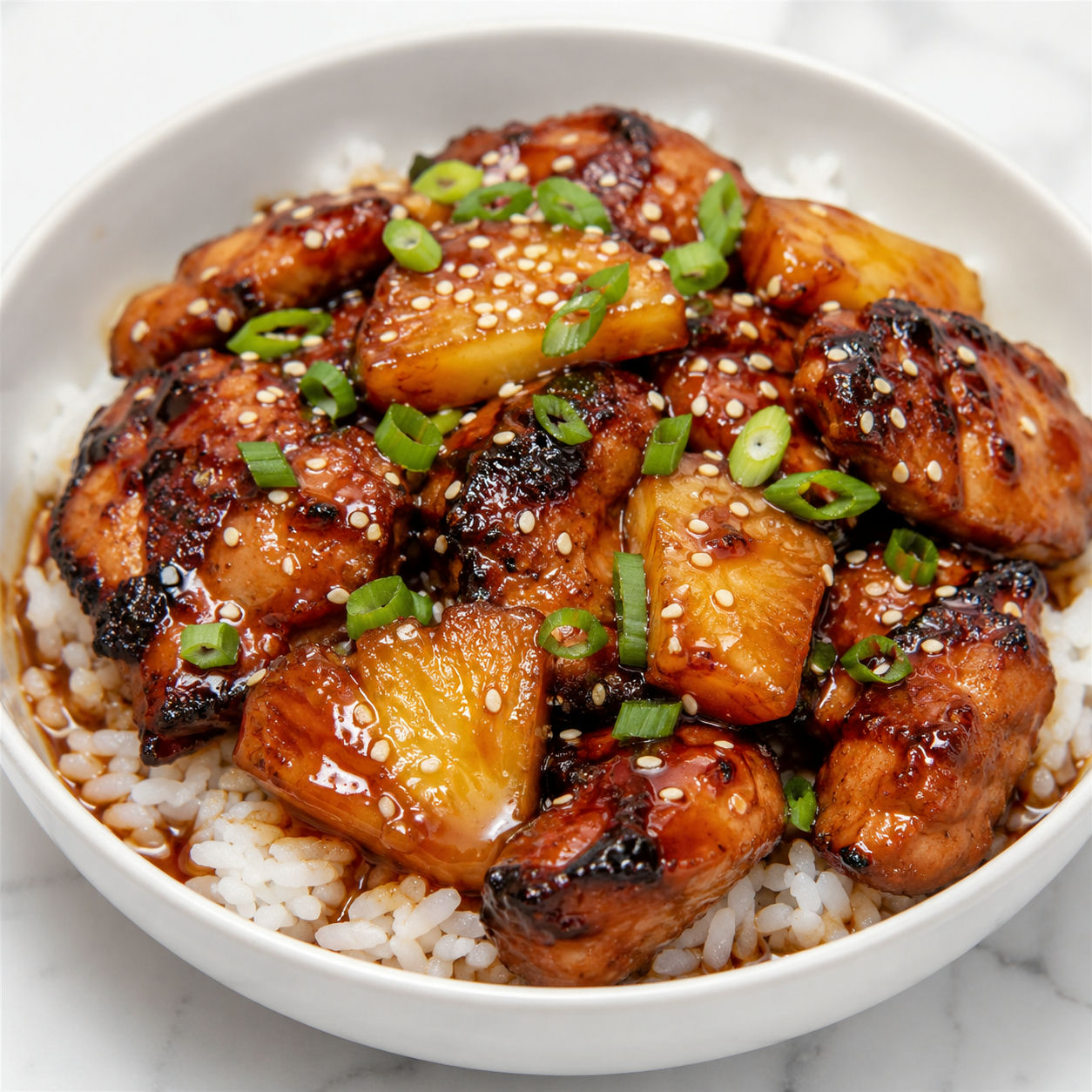
 Pin it
Hawaiian Teriyaki Chicken with Pineapple and Brown Sugar is the kind of dinner that smells good before it even hits the table. The sauce starts with pineapple juice, soy sauce, brown sugar, ginger, and garlic. It cooks down into a sticky glaze that clings to every piece of chicken.
I like boneless chicken thighs here because they stay tender while the sauce reduces. Pineapple chunks go in near the end, so they warm through without turning mushy.
It is sweet, salty, tangy, and easy to serve over rice on a busy night. Add grilled vegetables or a crisp cucumber salad and dinner is handled.
Pineapple Glaze Lineup
The best flavor comes from a real pineapple base, fresh ginger, and chicken thighs with enough richness to handle the sticky sauce. If you use canned pineapple, buy chunks in juice so the sauce does not get too sweet.
- Boneless chicken thighs. They stay juicy while the glaze thickens and take on the soy-pineapple flavor fast.
- Pineapple juice. Adds tang and fruitiness to the sauce, plus enough acidity to balance the brown sugar.
- Pineapple chunks. Warmed at the end, they give the dish sweet bites without falling apart.
- Brown sugar. Helps the teriyaki glaze turn shiny and caramelized.
- Soy sauce. Brings the salty backbone that keeps the sauce from tasting like candy.
- Garlic and ginger. Add warmth and a little bite to the sweet glaze.
- Rice vinegar. Brightens the sauce so each bite feels balanced.
- Cornstarch slurry. Thickens the glaze quickly and keeps the chicken glossy.
- Scallions and sesame seeds. Add freshness and a nutty finish right before serving.
Skillet Steps That Work
- Mix the sauce. Whisk pineapple juice, soy sauce, brown sugar, ketchup, vinegar, ginger, garlic, and sesame oil until the sugar mostly dissolves.
- Brown the chicken. Pat the thigh pieces dry, season lightly, and sear them in a hot skillet until golden on the edges. Browning adds flavor before the sauce goes in.
- Simmer gently. Pour in most of the sauce, cover, and cook until the chicken is tender and cooked through. Stir once or twice so the sugar does not catch.
- Thicken the glaze. Stir in the cornstarch slurry and simmer until the sauce coats the back of a spoon.
- Add pineapple. Fold in the pineapple chunks for the last few minutes so they stay bright and juicy.
- Finish fresh. Spoon the chicken over rice and top with scallions and sesame seeds while the glaze is still glossy.
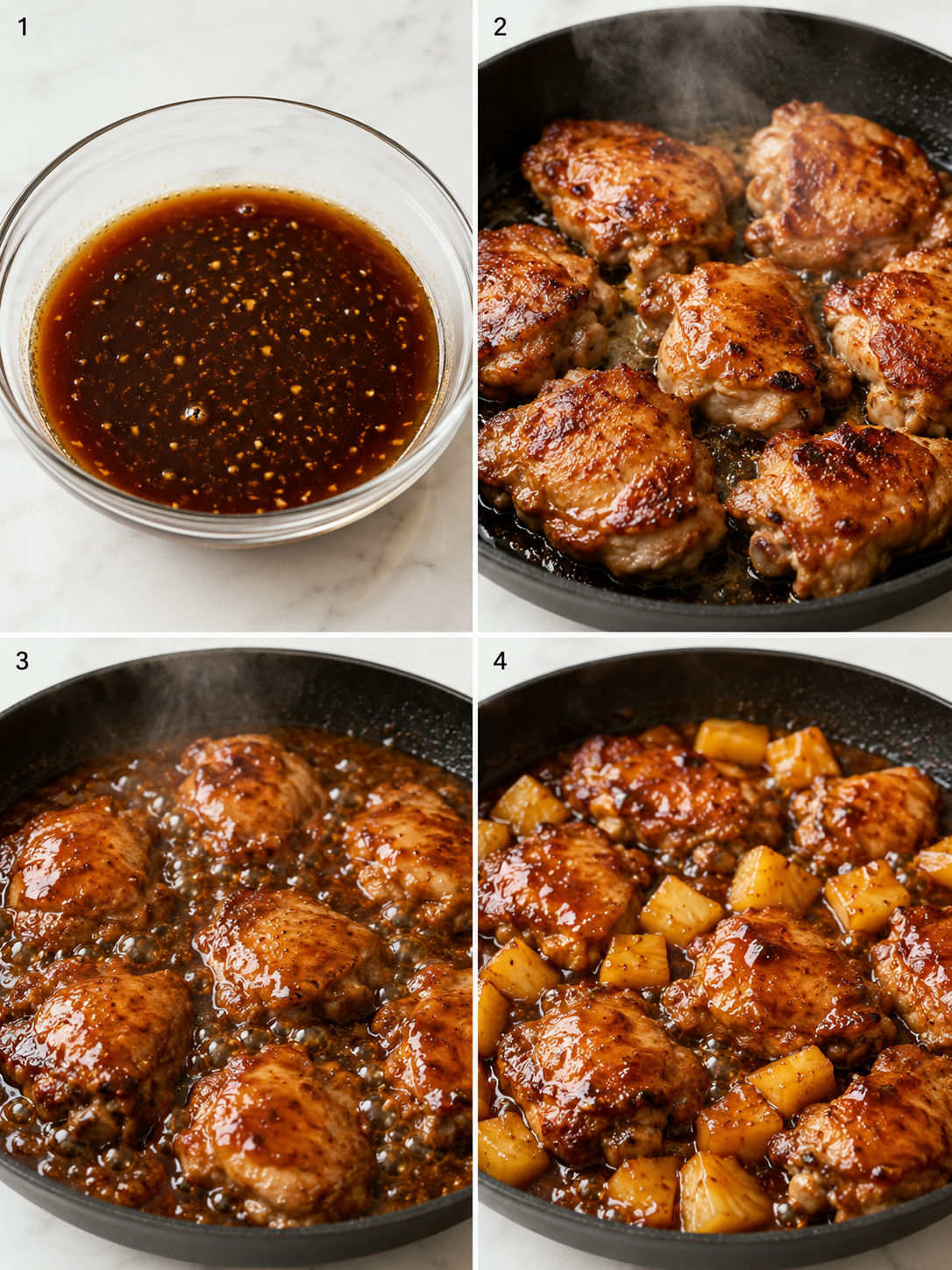
Hawaiian Teriyaki Chicken Method
This recipe borrows the sweet soy glaze idea from teriyaki and the pineapple-brown-sugar profile used in many Hawaiian-style chicken recipes. Traditional teriyaki is built around a glossy soy sauce glaze, a background worth noting if you want to understand why the sauce should look shiny instead of watery. You can read more about the cooking style in this teriyaki overview.
I cook the chicken first, then let the sauce reduce around it. That gives you tender meat and a glaze with body. FoodSafety.gov lists 165°F as the safe minimum temperature for poultry, so use an instant-read thermometer if your thigh pieces are thick. Here is the safe temperature chart for reference.
Why The Sauce Turns Glossy
The glaze thickens two ways. First, the brown sugar and pineapple juice reduce as water cooks off. Then the cornstarch slurry gives the sauce a smooth finish that clings to the chicken. A little ketchup may sound simple, but it adds tomato tang and helps the color turn deep amber.
Huli huli-style chicken often uses pineapple, brown sugar, soy sauce, ginger, and garlic in a sticky grilling sauce. This skillet version keeps that same sweet-savory mood but is quicker for a weeknight. I used the flavor pattern from recipes like Huli Huli Pineapple Chicken as a reference, then adjusted the method for boneless chicken and a shorter cook time.
Pineapple Timing Matters
Pineapple chunks are best when they are hot and juicy, not faded and stringy. Add them after the chicken is cooked and the sauce has started to thicken. Two or three minutes in the pan is enough.
If you want a smoky edge, grill fresh pineapple rings separately and serve them on top. That makes this dish feel closer to Hawaiian grilled chicken with pineapple and teriyaki. For a hands-off dinner with similar flavors, the easy Hawaiian chicken sheet pan dinner is a good place to go next.
Simple Swaps And Add-Ins
Use low-sodium soy sauce if your family likes a lighter sauce. For more heat, add a pinch of red pepper flakes or a spoonful of chili garlic sauce with the ginger. Bell peppers are a good add-in too. Add them after browning the chicken and let them soften for a few minutes before the sauce goes in.
You can also turn the same sauce into skewers. Thread chicken, pineapple, and peppers onto soaked wooden skewers, then grill and brush with sauce near the end. If that sounds like your kind of dinner, try these Hawaiian chicken pineapple kebabs another night.
Serving It For Dinner
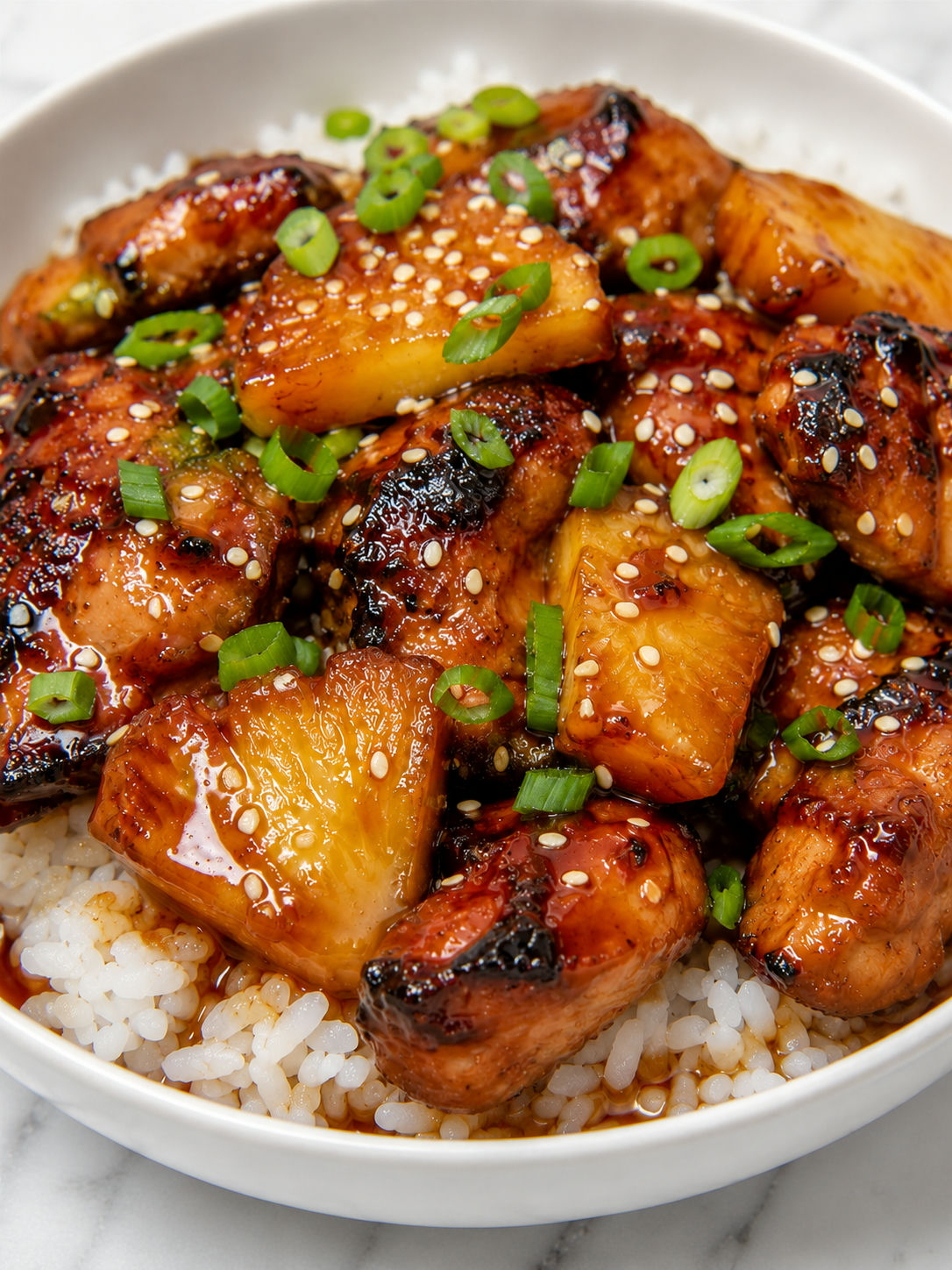
Rice is the obvious base, and it is the right one. Jasmine rice, coconut rice, or plain long-grain white rice all soak up the glossy sauce. Add sliced cucumbers or a quick cabbage slaw if you want crunch beside the sweet chicken.
For a bigger pineapple-brown-sugar menu, pair this with grilled vegetables and finish with brown sugar grilled pineapple. If you are cooking for a party, make the rice first and keep it warm while the chicken finishes. The glaze tastes best right from the pan.
Leftovers Stay Saucy
Store leftovers in an airtight container for up to 4 days. Keep the rice separate if you can, since it will drink up the sauce in the fridge. Reheat the chicken gently in a skillet with a splash of water or pineapple juice until the glaze loosens.
This also packs well for lunch. Slice the larger chicken pieces before storing so they reheat evenly. I do not freeze it with pineapple chunks because the texture gets soft after thawing. If you want to freeze it, freeze just the cooked chicken and sauce for up to 2 months, then add fresh pineapple when reheating.
Summary
This skillet Hawaiian teriyaki chicken uses pineapple juice and brown sugar for a glossy sauce that tastes rich without a long marinade.
FAQs
- Can I use chicken breasts instead of thighs?
Yes, but watch the timing closely. Cut chicken breasts into even pieces and simmer just until they reach 165°F, since lean white meat dries out faster than thighs.
- Can I use canned pineapple?
Canned pineapple works well. Choose pineapple packed in juice, not heavy syrup, and use the juice in the sauce. Drain the chunks before adding them near the end.
- How long should I marinate the chicken?
Thirty minutes is enough for flavor. You can marinate up to 4 hours, but I would not leave it overnight because the pineapple juice can make the surface of the chicken softer than you want.
- Is this recipe gluten-free?
As written, it is not gluten-free because regular soy sauce usually contains wheat. Use certified gluten-free tamari and check the labels on your vinegar and ketchup if you need a gluten-free version.
- What should I serve with Hawaiian teriyaki chicken?
Steamed white rice is the easiest choice because it catches the extra glaze. Coconut rice, grilled zucchini, roasted broccoli, or a crunchy cabbage slaw also work well with the sweet sauce.
- How do I keep the sauce from burning?
Keep the heat at a steady simmer once the brown sugar goes in. Stir often and lower the heat if the sauce starts sticking hard to the pan before the chicken is cooked through.
