 Pin it
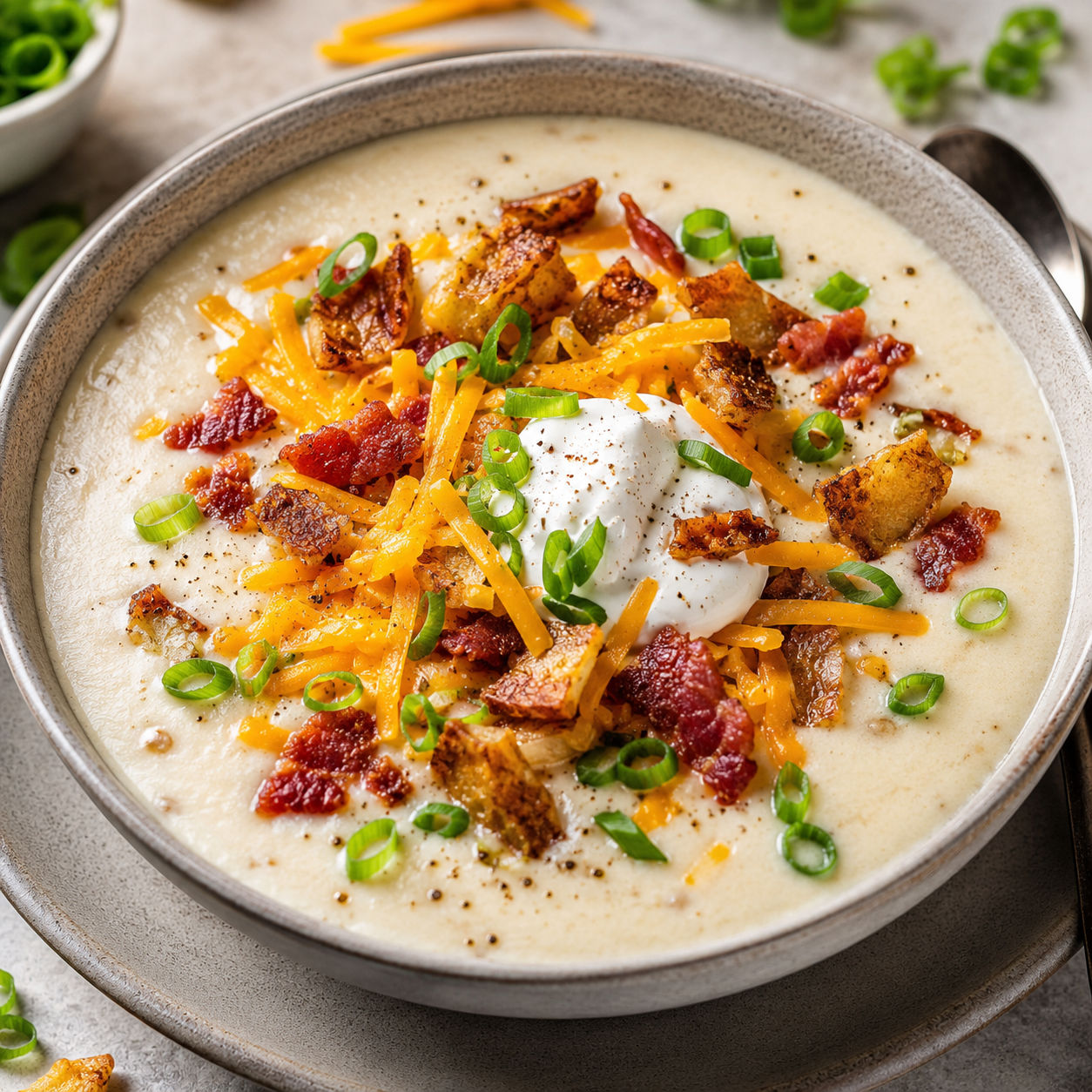
Baked Potato Soup should taste like the potato came hot from the oven, split open, and loaded with all the good toppings. This version starts with baked russets instead of raw diced potatoes, so the soup has a deeper potato flavor and a soft, fluffy body.
I like it thick enough to hold bacon and cheese on top, but not so thick that a spoon stands up in it. A quick mash in the pot keeps small potato pieces in every bite.
Russets, Bacon, And Cheddar
Russet potatoes are the right choice here because they bake up fluffy and break down into a naturally thick soup. Sharp cheddar, bacon, sour cream, and green onions give it the loaded baked potato flavor people expect.
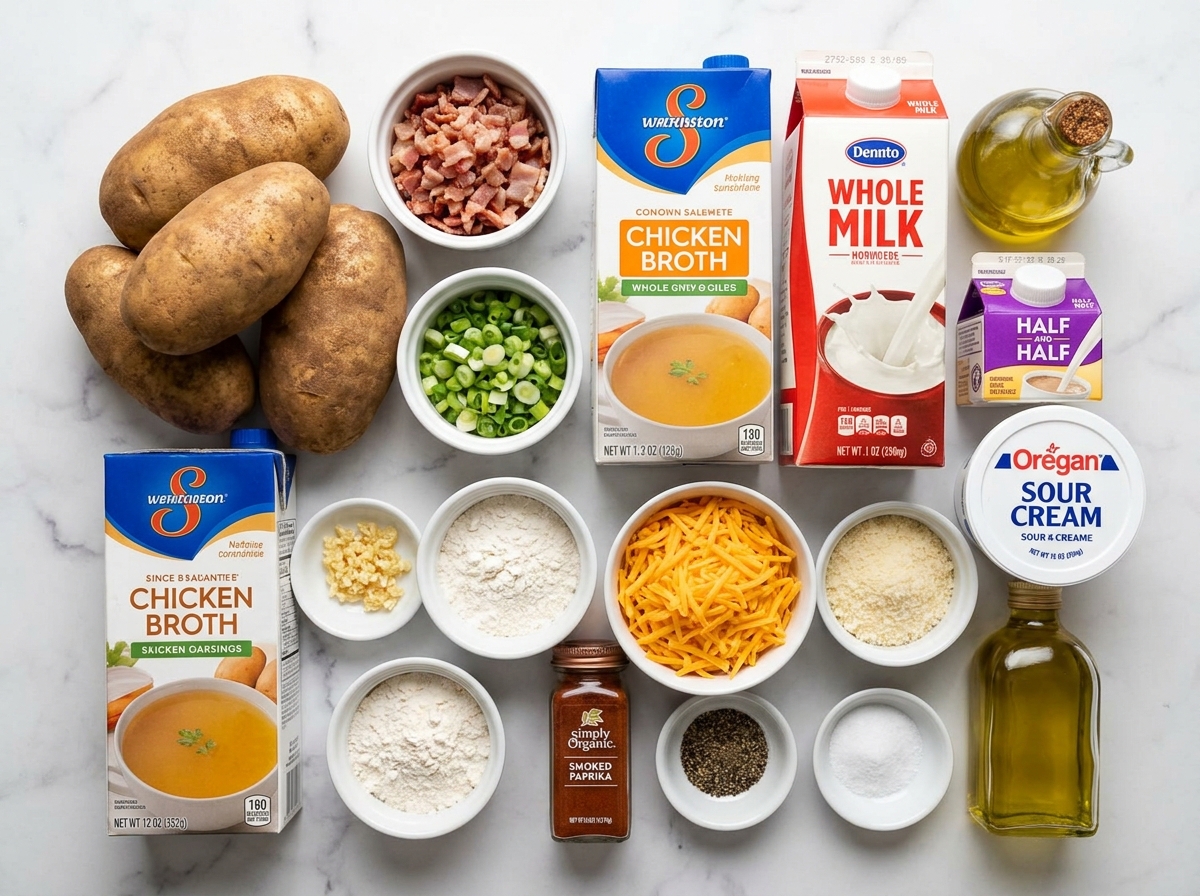
- Russet potatoes. Bake into dry, fluffy centers that thicken the soup without making it heavy.
- Bacon. Adds smoky flavor, crisp topping, and enough drippings to start the base.
- Green onions. The pale parts cook into the soup and the green tops finish it fresh.
- Garlic. Gives the broth a warmer flavor without taking over.
- Flour. Thickens the bacon drippings into a light roux.
- Chicken broth. Keeps the soup savory and loosens the potato starch.
- Milk and half-and-half. Make the base creamy without needing all heavy cream.
- Sharp cheddar. Melts into the hot soup and gives it that baked potato topping taste.
- Sour cream. Adds tang and makes the finish taste loaded.
- Parmesan. A small amount deepens the cheese flavor.
Baked Potato Soup Method
- Bake the potatoes. Scrub the russets, pierce them with a fork, and bake until a knife slides through the center. Let them cool just enough to handle.
- Cook the bacon. Brown chopped bacon in a soup pot until crisp. Lift it out and keep the drippings in the pot.
- Start the base. Cook the pale green onion parts in the drippings, then stir in flour and garlic until the flour smells lightly toasted.
- Add broth and potato. Whisk in the broth, milk, and half-and-half. Scoop the potato flesh into the pot and simmer until the base looks creamy.
- Mash and enrich. Mash the potatoes by hand, then stir in sour cream, cheddar, and parmesan off the heat.
- Crisp the skins. Chop some reserved potato skins and fry them in olive oil until browned at the edges.
- Load each bowl. Ladle the soup into bowls and top with bacon, crisp skins, cheddar, and green onion tops.
Why Bake The Potatoes
Boiled potatoes make good soup, but baked potatoes taste more like the dish named on the bowl. The oven dries the skins and concentrates the flesh a little, which gives the soup a warmer potato flavor. That is the same reason loaded baked potatoes can handle butter, cheese, bacon, and sour cream without tasting watery. The Idaho Potato Commission uses the same loaded idea with russets, cream, bacon, and cheddar.
If you already have baked potatoes from dinner, use them. This soup is one of the best ways to turn leftovers into another meal. For the full loaded potato mood, serve it beside loaded baked potato rounds or make this as the cozy soup course before a steak dinner.
Keep The Texture Creamy
The easiest way to ruin potato soup is to overwork it. Russets are full of starch. If you run an immersion blender through the pot for too long, that starch turns stretchy and dull. A potato masher gives you better control. Mash until the soup is thick and creamy, but stop while you can still see a few soft pieces of potato.
The soup will thicken as it sits. That is normal. Keep extra broth or milk nearby and loosen it a splash at a time. If you like a smoother bowl, blend one or two cups of soup in a blender, then stir it back into the pot. That gives you body without losing every bit of texture.
Cheese That Melts Smoothly
Take the pot off the heat before adding cheddar. High heat can make cheese split into oily streaks, especially in a thick dairy soup. Freshly grated sharp cheddar melts better than bagged shreds because it does not have the same dry coating. Stir in small handfuls and let each one melt before adding more.
Parmesan is optional, but I like the way it sharpens the soup without adding more cheddar. Sour cream goes in last for the same reason. It tastes brighter when it is not boiled. If you want a hands-off version for a busy day, easy slow cooker loaded potato soup keeps the same comfort with less stovetop time.
Toppings Carry The Bowl
This is not the place to be shy with toppings. Bacon should stay crisp, so add most of it at the end instead of stirring it all into the pot. Green onion tops add color and a clean bite. A little extra cheddar melts into the surface and makes each spoonful feel like a loaded potato.
The crisp skins are worth the few extra minutes. They add a salty edge and keep the soup from feeling like plain mashed potatoes with broth. If your family likes loaded potato dinners, the same flavor shows up in loaded baked potato steak bites and steak shrimp loaded baked potato.
Make-Ahead And Leftovers
You can bake the potatoes up to 2 days ahead. Keep them chilled, then scoop and warm the flesh in the soup base when you are ready to cook. You can also chop the bacon and slice the green onions ahead. Keep the toppings separate so they stay crisp and fresh.
Leftover soup keeps in the refrigerator for up to 4 days. The USDA has clear leftovers and food safety guidance if you want exact storage rules. Reheat on medium-low and stir often. Add milk or broth until it loosens back into a spoonable soup.
Swaps That Still Taste Right
For a lighter soup, use whole milk instead of half-and-half and keep the sour cream. The tang matters more than extra richness. For a vegetarian version, skip the bacon, use vegetable broth, and start the roux with butter. Add smoked paprika for a little of the missing bacon flavor.
For gluten-free soup, swap the flour for white rice flour or a gluten-free blend. The texture stays close. If you want another potato soup with a different profile, best homemade potato soup leans simpler and more classic. This baked version is richer, more loaded, and built for toppings.
Summary
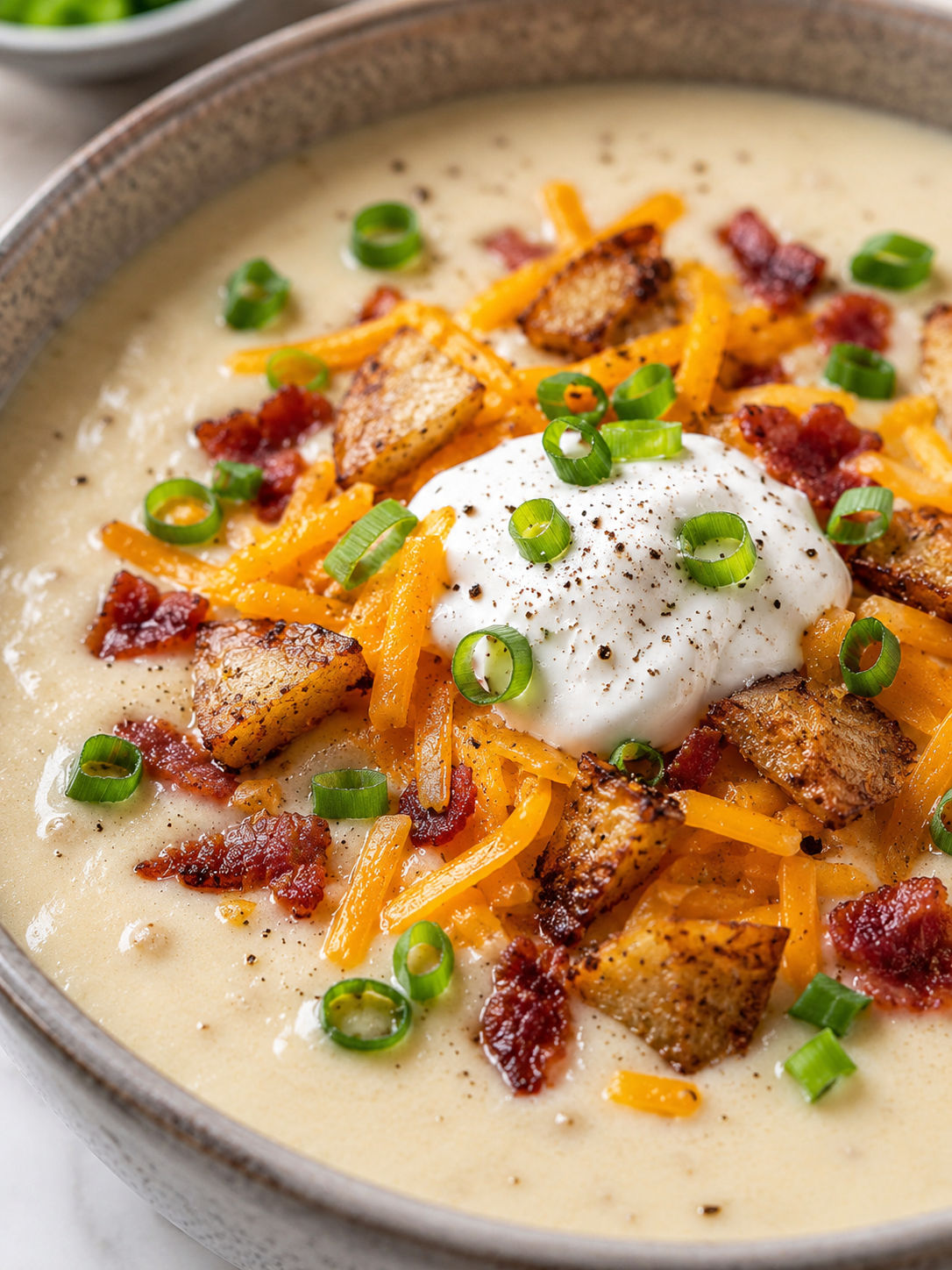
This cozy soup is rich, hearty, and best served hot with extra cheddar, bacon, green onions, and crisp potato skins.

FAQs
- Can I make Baked Potato Soup with leftover baked potatoes?
Yes. Leftover baked potatoes work well and make the soup much faster. Use about 5 large baked russets, scoop out the centers, and warm them in the broth before mashing.
- Can I make this soup gluten-free?
Yes. Replace the all-purpose flour with white rice flour or a gluten-free all-purpose blend. Check the broth, bacon, and cheese labels too, since packaged ingredients can vary.
- Why did my potato soup turn gluey?
Potatoes can get gummy when they are blended too hard. Mash by hand, or pulse only briefly with an immersion blender. Russets thicken the soup quickly, so stop while it still has some texture.
- How long does baked potato soup keep?
Store it in an airtight container in the refrigerator for up to 4 days. Reheat gently on the stove with a splash of milk or broth, stirring often so the dairy stays smooth.
- Can I freeze Baked Potato Soup?
I do not recommend freezing this soup. Dairy can separate after thawing and potatoes often turn grainy. If you need a smaller batch, halve the recipe instead.
- What should I serve with it?
Serve it with a crisp salad, warm bread, or roasted vegetables. For a heavier dinner, add extra bacon and cheese or pair it with a simple chicken dish.
