 Pin it
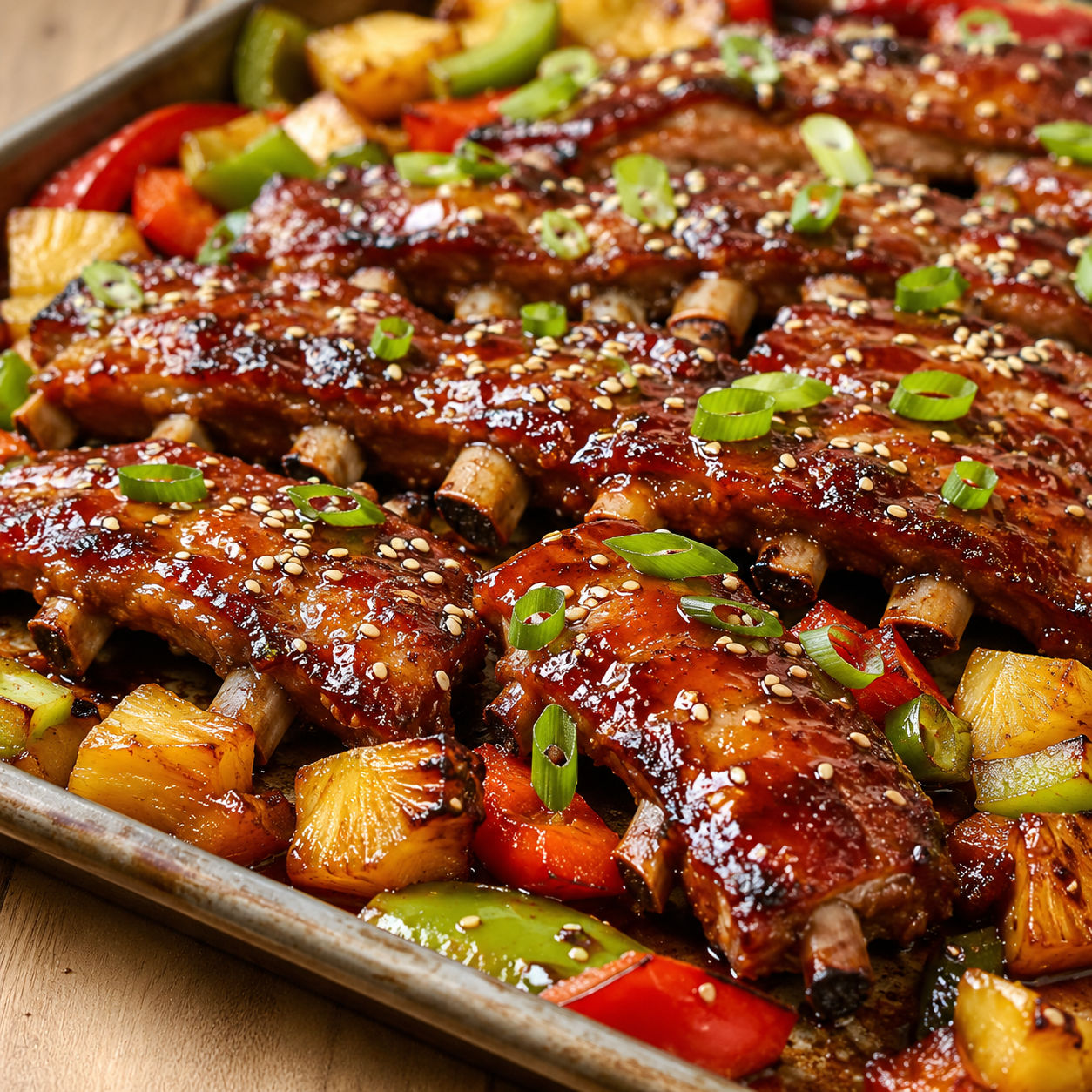
Baby Back Ribs Sheet Pan with Sweet and Tangy Pineapple Glaze is the kind of oven dinner that smells like a weekend cookout without needing a grill. The ribs bake gently under foil first, so they get tender before the glaze has a chance to burn.
The pineapple juice, rice vinegar, ketchup, honey, soy sauce, ginger, and garlic cook down into a shiny glaze that lands between barbecue sauce and sweet-and-sour sauce. Bell peppers roast in the extra glaze at the end, which gives you a full pan of ribs, fruit, vegetables, and sauce for spooning over rice.
Ribs, Pineapple, Peppers
Choose a meaty rack of baby back ribs with even thickness from end to end. Canned pineapple is helpful here because you get juice for the glaze and fruit for the pan in one ingredient.
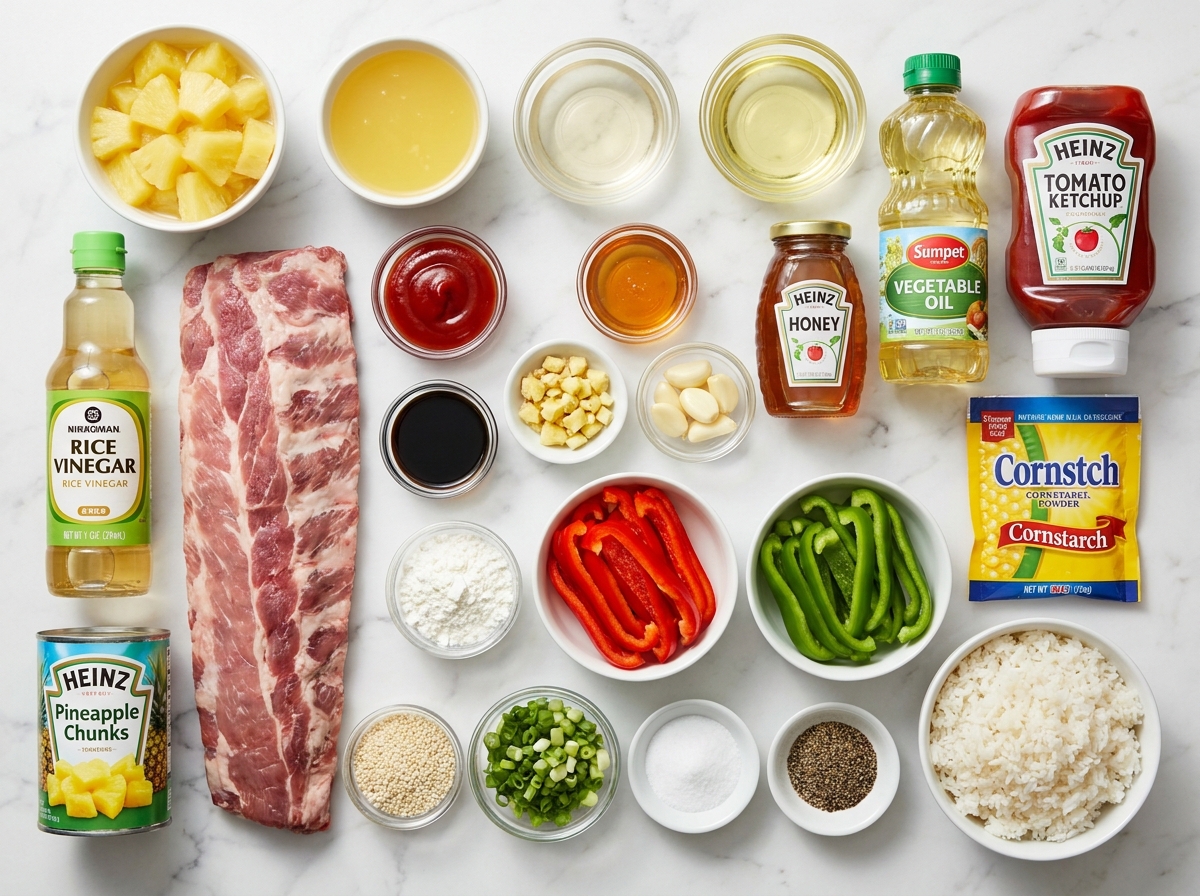
- Baby back ribs. They turn tender in the oven and fit well on a rimmed sheet pan.
- Canned pineapple. The juice becomes the glaze base and the chunks caramelize over the ribs.
- Rice vinegar. It keeps the sauce bright instead of syrupy sweet.
- Ketchup. Adds body, color, and familiar barbecue-style tang.
- Honey. Helps the glaze shine and brown during the final roast.
- Soy sauce. Gives the glaze savory depth so the pineapple does not taste flat.
- Fresh ginger and garlic. Add warmth and bite that stand up to pork.
- Cornstarch. Thickens the glaze so it clings to the ribs and peppers.
- Bell peppers. Roast quickly at the end and soak up the extra sauce.
- Sesame seeds and scallions. Finish the pan with crunch and freshness.
Baby Back Ribs Sheet Pan Method
- Heat the oven. Set the oven to 275°F and line a rimmed sheet pan with foil for easier cleanup.
- Make the glaze. Drain the pineapple and save the fruit. Whisk the pineapple juice with vinegar, oil, soy sauce, ketchup, honey, ginger, garlic, and cornstarch in a saucepan, then simmer until thick and glossy.
- Season the ribs. Pat the rack dry, remove the membrane if needed, and season both sides with salt and pepper.
- Start covered. Brush the ribs with half the glaze, cover tightly with foil, and bake for about 2 hours until the meat is tender.
- Add the vegetables. Raise the oven to 400°F, uncover the pan, scatter the bell peppers around the ribs, and toss them with the reserved glaze.
- Finish uncovered. Spoon the pineapple chunks over the ribs and bake 18-22 minutes, until the peppers soften and the glaze bubbles at the edges.
- Rest and serve. Let the ribs rest for 10 minutes, then slice between the bones and finish with sesame seeds and scallions.
Why The Glaze Clings
The glaze works because it gets cooked before it ever touches the meat. Pineapple juice and rice vinegar are thin on their own. Ketchup, honey, and cornstarch give them enough body to brush onto the ribs instead of running straight into the pan. Keep the saucepan moving as it bubbles. Cornstarch can settle on the bottom if you walk away.
Split the glaze after it thickens. The first half seasons the ribs while they steam under foil. The second half stays cleaner and brighter for the peppers and final sticky coating. If you like pineapple sauces with more heat, the flavor is close enough to pair with Sweet Chilli Pineapple Sauce on the table.
How To Judge Tenderness
Baby back ribs are technically cooked long before they are tender, so do not use color alone. After the covered bake, lift one end with tongs. The rack should bend easily and the surface should look relaxed, not tight. The meat will usually pull back from the bone ends a little.
For food safety, pork should be cooked to a safe internal temperature. The USDA pork safety guide is a good reference. Ribs need more time than a chop because the goal is softened connective tissue, not just safe doneness. If the rack still feels stiff after 2 hours, cover it again and give it another 20 minutes before adding the peppers.
Timing The Peppers
The peppers go in after the ribs are tender because they only need a short, hot roast. Add them too early and they collapse into the sauce. Add them too late and they stay raw and watery. Aim for soft edges with a little bite left in the thicker pieces.
Cut the peppers into rough 1-inch pieces so they cook at the same pace as the final glaze. Red peppers taste sweeter. Green peppers bring a sharper bite that keeps the pan from feeling heavy. This same sweet-savory pineapple style also shows up in Sweet Hawaiian Chicken with Pineapple and Bell Peppers if you want a slower cooker version another night.
Swaps That Make Sense
Fresh pineapple works, but canned is steadier because the juice is measured and already mellow. If you use fresh, blend or juice enough pineapple to get about 1 cup of liquid, then add the cut fruit during the final roast. For a smoky note, stir 1 teaspoon smoked paprika into the glaze. For heat, add chili flakes or a little sriracha.
You can swap tamari for soy sauce. Coconut aminos also work, though the glaze will taste sweeter. Spare ribs or St. Louis ribs are fine if you adjust the time. For a more classic oven rib dinner with fewer tropical notes, try Easy Oven-Baked Baby Back Ribs.
Serving The Pan
Serve these ribs over hot white rice and spoon the pepper-pineapple glaze around the edges. The rice catches the sharp, sticky sauce and turns the pan juices into part of the meal. Scallions matter here. Their clean onion flavor wakes up the sweet glaze right before serving.
For a bigger table, add a crunchy cabbage slaw, cucumber salad, or roasted broccoli. If you are building a pineapple dinner menu, Pineapple Brown Sugar Glazed Ham uses a similar sweet-tangy idea for a holiday-style main.
Storing Tender Leftovers
Cool leftovers and refrigerate them in an airtight container within 2 hours. The USDA leftovers guide recommends using refrigerated cooked leftovers within 3-4 days. Keep the ribs with a little glaze so they do not dry out.
Reheat covered at 300°F with a spoonful of water or extra glaze in the pan. Once warm, uncover for a few minutes to bring back the sticky surface. Microwaving works for a quick lunch, but use 50 percent power so the meat warms gently.
Summary
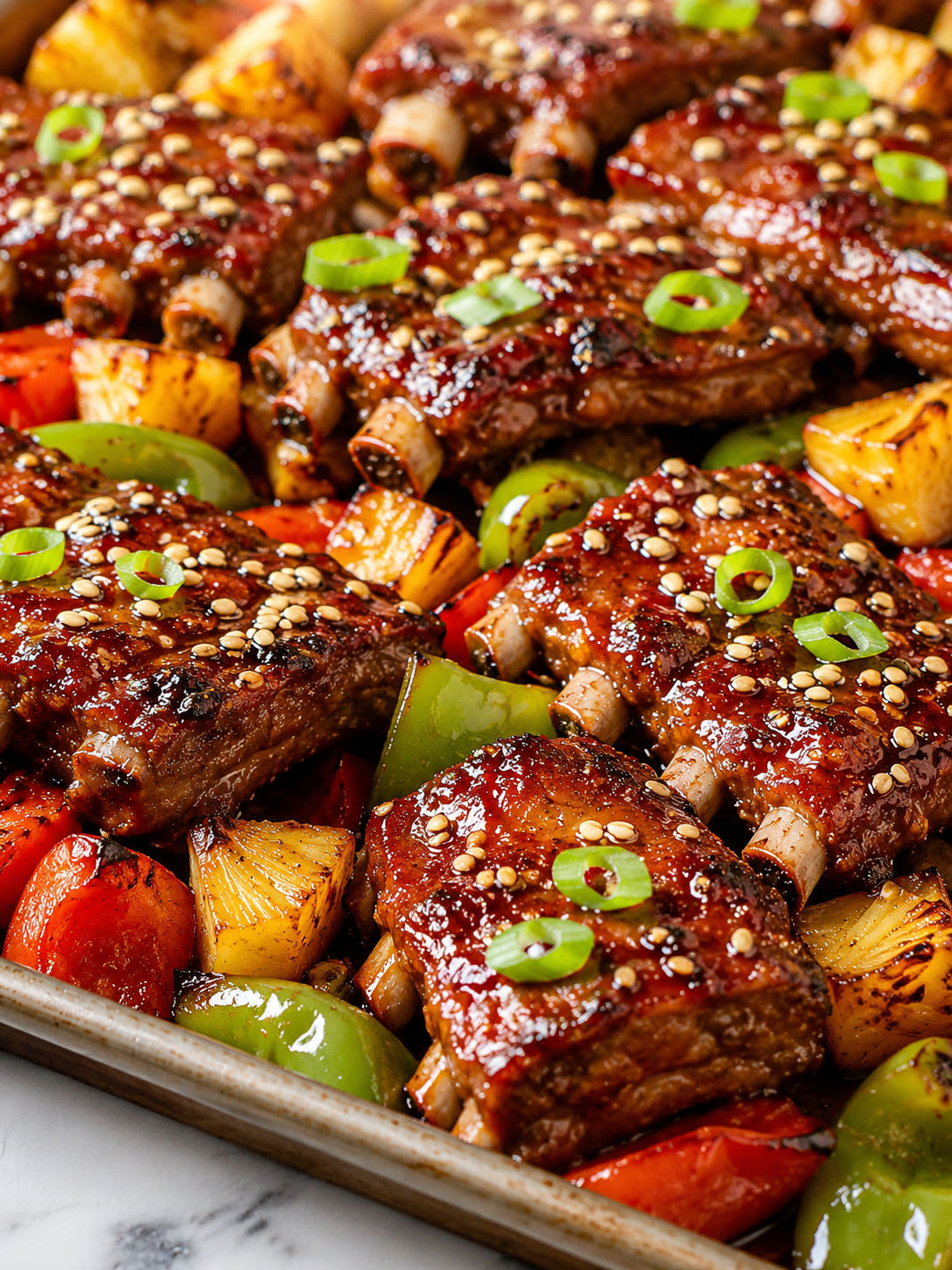
These oven-baked baby back ribs use a cooked pineapple glaze, a covered low bake, and a hot uncovered finish for tender meat with glossy sweet-tangy edges.

FAQs
- Can I use spare ribs instead of baby back ribs?
Yes, but spare ribs are larger and usually need more time. Plan on adding 30-45 minutes to the covered bake, then check for tenderness before adding the peppers and pineapple.
- Can I make the pineapple glaze ahead?
Yes. Cook the glaze, cool it, and refrigerate it for up to 3 days. Warm it gently before brushing it on the ribs so it spreads evenly.
- Do I have to remove the membrane from ribs?
It is worth doing if the membrane is still attached. Slide a butter knife under one corner, grip it with a paper towel, and pull it away so the seasoning and glaze reach the meat more evenly.
- Can I make these ribs gluten-free?
Use gluten-free tamari instead of regular soy sauce and check the ketchup label. The rest of the recipe is naturally free of wheat ingredients.
- How do I know when the ribs are tender?
The meat should pull back slightly from the bone ends and bend when lifted with tongs. A probe or skewer should slide through the thick meat with little resistance.
- What should I serve with pineapple glazed ribs?
White rice is the easiest choice because it catches the sauce. Coconut rice, cucumber salad, slaw, or roasted sweet potatoes also work well with the sweet and tangy glaze.
