 Pin it
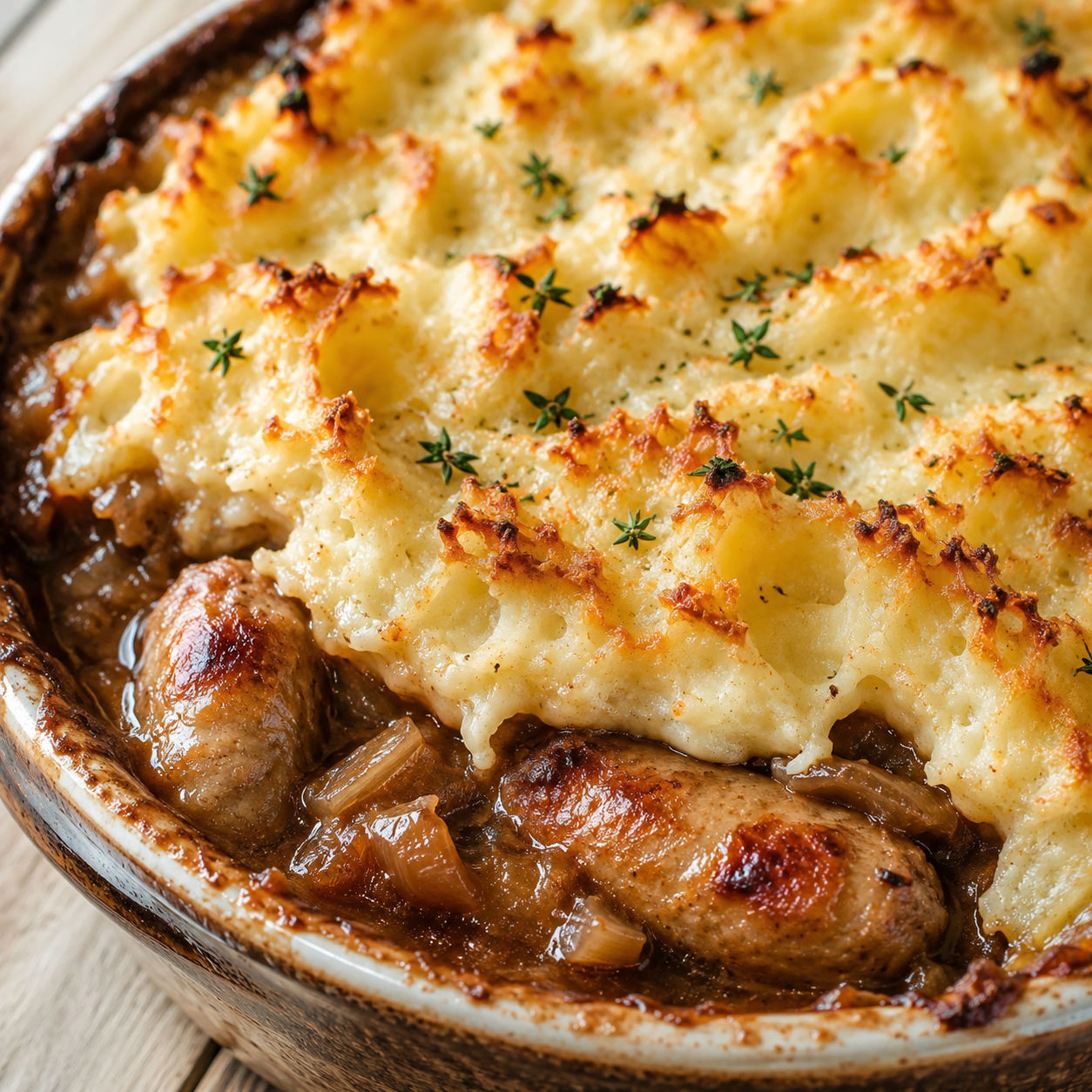
This is the dinner I make when the sky is gray and everyone at the table needs something solid and warm. Sausages, onion gravy, and mashed potatoes are already a classic combination, but baking them together changes everything. The gravy thickens underneath, the potato peaks catch heat and crisp, and the whole dish comes to the table in one bubbling pan.
The trick is to keep the mash light and the gravy thick. If the gravy is too thin, the potatoes sink and the whole thing turns soupy. If the mash is too dense, it sits like a lid instead of becoming a golden crust. Get those two things right and the rest is simple.
What builds the layers
Quality matters here more than technique. Good pork sausages with a decent fat content keep the gravy rich. Floury potatoes like Russets or Yukon Golds give you mash that is fluffy rather than gluey. And the gravy depends on real caramelized onions, not just soft ones.
- Pork sausages. Choose thick, meaty bangers with a good fat ratio so they stay juicy through the bake.
- Potatoes. Russets or Yukon Golds mash up light and absorb butter and cream without turning waxy.
- Onions. Two large yellow onions cook down into a sweet, savory gravy base.
- Beef stock. Adds depth and color to the gravy, much richer than plain water.
- Worcestershire sauce. A splash brings sharp, fermented depth that cuts through the fat.
- Butter and heavy cream. The dairy that makes the mash rich and easy to spread.
- Sharp cheddar. Optional but excellent, folded into the mash or sprinkled on top for a golden crust.
- Fresh thyme. Earthy and subtle, it works with both the gravy and the sausage.
How it comes together
- Brown the sausages. Sear them in a hot skillet for three to four minutes until they take on color. They do not need to cook through, just pick up flavor.
- Caramelize the onions. Cook sliced onions in the same pan over medium-low heat for fifteen to twenty minutes until they are deep gold and sweet. Deglaze with stock and Worcestershire, then simmer until thick.
- Make the mash. Boil the potatoes in salted water until completely tender. Drain well, then steam them dry for a minute. Mash with warm butter and cream, season, and keep the texture loose.
- Assemble the pie. Spoon the onion gravy into a baking dish, nestle the browned sausages on top, then spread the mash over everything. Use a fork to rough up the surface so the ridges crisp.
- Bake until golden. Bake uncovered at 400 degrees F (200 degrees C) for twenty to twenty-five minutes until the mash peaks are browned and the gravy bubbles at the edges.
Keep the mash light
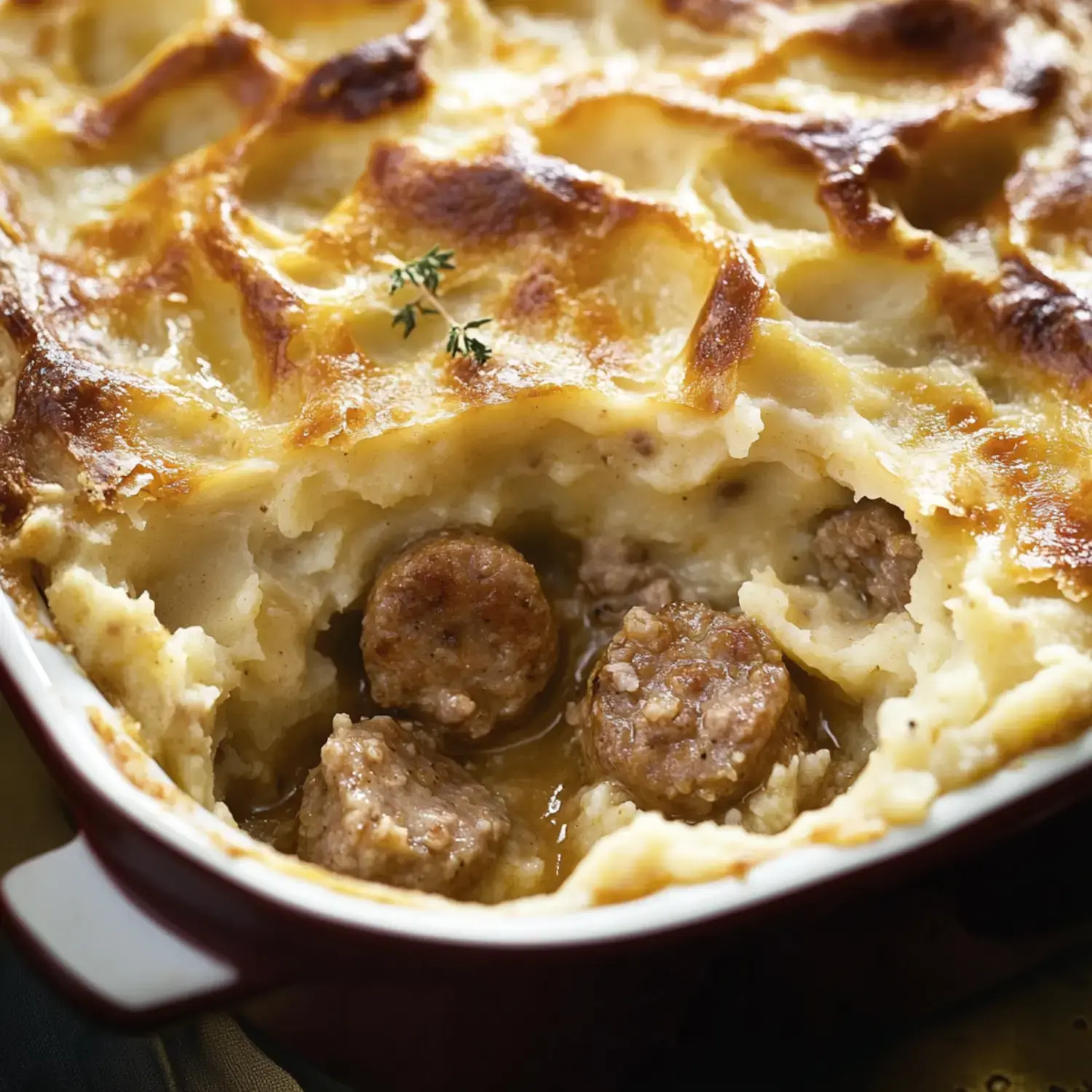
The biggest mistake is overworking the potatoes. Boil them in big chunks so they do not waterlog, drain thoroughly, and let them sit in the colander for a minute so steam escapes. Warm your butter and cream before folding them in, and stop as soon as the mash is smooth. Over-mixing turns the starch gummy and the topping becomes heavy instead of crisp. If you want a variation with a different potato approach, creamy sausage potato bake uses a similar idea.
The gravy consistency test
The gravy needs to be thick enough to hold the sausages in place. If it is runny, the potatoes slide and the layers merge into one pale mush. Reduce the gravy until it coats the back of a spoon before you assemble. You can always thin it later with a splash of stock, but you cannot thicken it once the pie is built. A similar sausage-and-gravy idea runs through savory sausage gravy and biscuit pie, though that one leans breakfast instead of dinner.
Serving and pairing
This pie is a full meal on its own, but a pile of buttered peas or steamed green beans on the side cuts the richness. A sharp English mustard on the table lets anyone add heat. For a different sausage-and-potato angle, Polish sausage with sauerkraut and potatoes is another hearty option.
Storing and reheating
Leftovers keep in the fridge for up to three days. Reheat covered in a 350 degree F (180 degree C) oven for about twenty minutes so the center warms through without drying the top. The microwave works in a pinch but softens the crispy ridges. This dish also freezes well for up to two months, wrapped tight. Thaw overnight in the fridge before reheating.

FAQs
- What sausages work best?
Thick pork sausages with a good fat content are ideal. Cumberland-style bangers or quality butcher sausages stay juicy through the bake and give the gravy the best flavor.
- Can I make this ahead?
Yes. Assemble the pie up to twenty-four hours ahead, cover tightly, and refrigerate. Bake straight from the fridge, adding five to ten minutes to the cooking time.
- How do I store leftovers?
Let the pie cool completely, then store airtight in the refrigerator for up to three days. Reheat covered in a 350 degree oven for about twenty minutes.
- Can I freeze it?
Yes, it freezes well for up to two months. Wrap the dish tightly and thaw overnight in the fridge before reheating. The mash may soften slightly but the flavor stays excellent.
- Why did my mash topping sink?
The gravy underneath was too thin. Reduce the gravy until it thickly coats the back of a spoon before you add the potatoes. Thick gravy holds the mash in place.
- Can I use instant mashed potatoes?
Fresh potatoes give the best texture, but if you are in a pinch you can use instant. Make them thicker than usual so the topping holds its shape in the oven.
- What sides go well with this pie?
Buttered peas, steamed green beans, or a simple salad cut the richness. A jar of sharp English mustard on the table is also a classic pairing.
