 Pin it
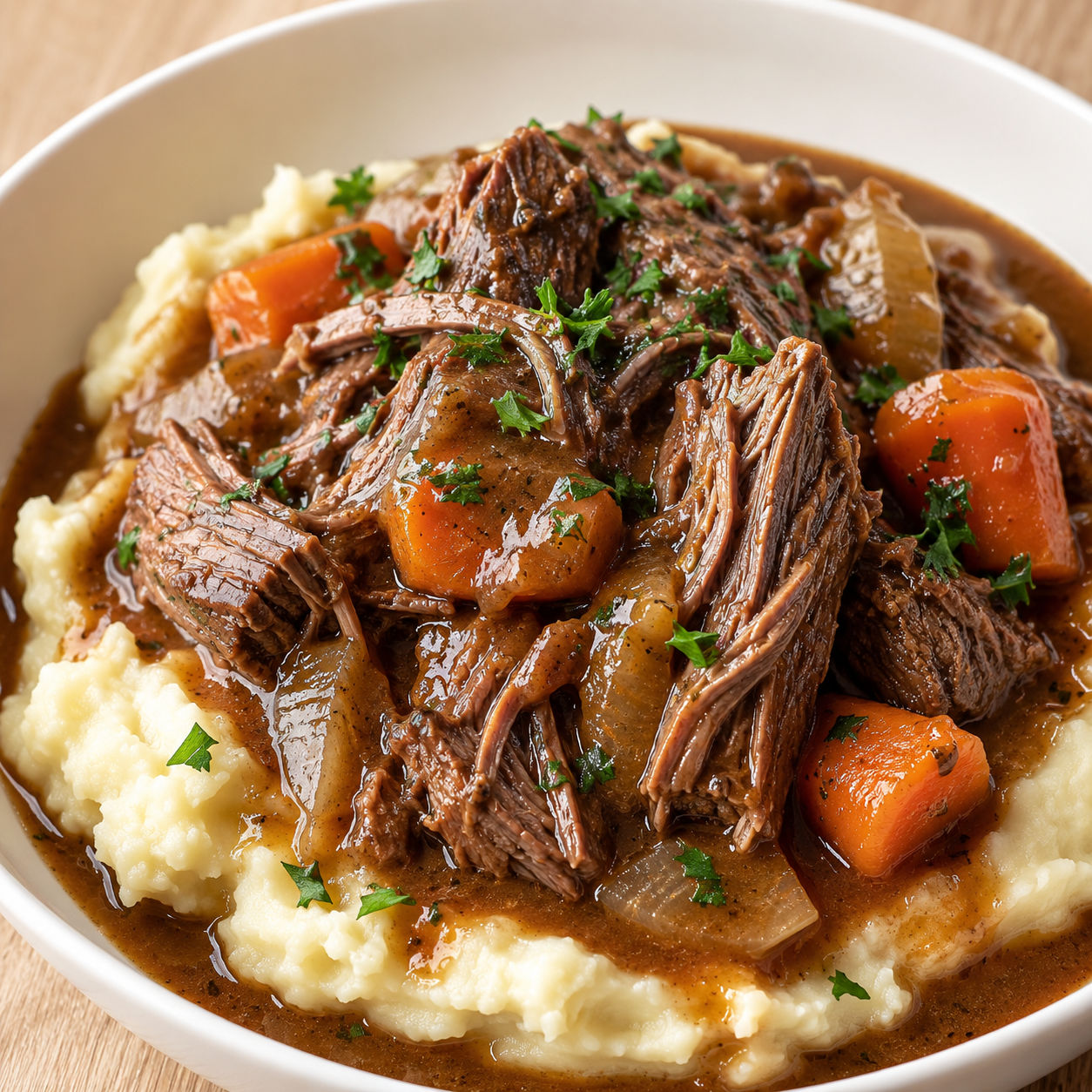
Pot Roast Over Mashed Potatoes is the kind of dinner that makes the kitchen smell settled and warm long before anyone sits down. The beef turns soft enough to pull apart with a fork, and the mashed potatoes catch every bit of the oniony gravy.
I like this version because the potatoes stay separate from the braise. They taste clean and buttery instead of watery, and the roast juices become a real gravy you can spoon over the top.
Beef, Potatoes, And Gravy Basics
Start with a well-marbled chuck roast and Yukon Gold potatoes if you can find them. Chuck needs slow heat to soften, while the potatoes need gentle handling so they stay fluffy.
The gravy comes from the browned beef, softened vegetables, broth, tomato paste, and thyme. A little Worcestershire gives it a deeper savory edge without making the dish taste sharp.
- Chuck roast. The main cut, rich with connective tissue that melts during a long braise.
- Kosher salt and black pepper. Season the beef from the start and help build a crust.
- Neutral oil. Handles high heat for browning without burning.
- Onion, carrots, and celery. Create the sweet, savory base for the gravy.
- Garlic. Adds warmth once the vegetables have started to soften.
- Tomato paste. Browns in the pot and gives the gravy body.
- Beef broth and red wine. Make the braising liquid rich and balanced. Use more broth if you skip wine.
- Worcestershire sauce. Adds salty depth in a small amount.
- Thyme and bay leaves. Give the roast a classic slow-cooked aroma.
- Cornstarch slurry. Thickens the pan juices into a glossy gravy.
- Yukon Gold potatoes. Mash creamy without needing heavy whipping.
- Butter and warm milk. Make the potatoes soft, smooth, and rich enough for the gravy.
Braise, Mash, And Serve
- Season and brown the beef. Pat the chuck roast dry, season it all over, and sear it in hot oil until each side has a deep brown crust. This is where the gravy starts.
- Cook the vegetables. Remove the roast and soften the onion, carrots, and celery in the same pot. Add garlic and tomato paste, then cook until the paste darkens slightly.
- Start the braise. Pour in wine and scrape up the browned bits. Add broth, Worcestershire, thyme, bay leaves, and the roast, then cover the pot and move it to a low oven.
- Cook until fork-tender. Braise at 300°F until the beef pulls apart easily, usually 3 to 3 1/2 hours. Turn it once if the top looks dry.
- Make the potatoes. Boil peeled potato chunks in salted water until tender, then drain well. Mash with butter and warm milk until smooth.
- Finish the gravy. Rest the beef, strain or skim the juices if needed, then simmer them with cornstarch slurry until lightly thickened.
- Plate the bowls. Spoon mashed potatoes into shallow bowls, add chunks of pot roast and vegetables, then ladle gravy over the top.
Pot Roast Over Mashed Potatoes Gravy
The gravy should taste like the whole afternoon, not just broth. Give the roast a serious sear before any liquid goes in. If the bottom of the pot looks dark brown, that is good. If it smells burnt, lower the heat and move on.
After the wine hits the pot, scrape slowly so those browned bits dissolve into the liquid. Tomato paste helps the sauce taste rounded, and cornstarch keeps it smooth without flour. For beef safety basics, the USDA shares a useful safe temperature chart, though pot roast cooks far past minimum temperature so the collagen has time to relax.
Why The Potatoes Stay Separate
Cooking potatoes inside the roast is easy, but mashed potatoes need their own pot. They soak up too much braising liquid when they cook with the beef, and the mash can turn loose instead of creamy.
For a smoother base, cut the potatoes into even chunks and start them in cold salted water. Warm the milk before it goes in so the butter melts cleanly and the potatoes do not cool down too fast. If you like a stronger garlic flavor under the beef, try the site's Mashed Potatoes Roasted Garlic as the base for this roast.
Dutch Oven Or Slow Cooker
A Dutch oven gives you the best gravy because the beef browns and braises in the same pot. It also reduces the liquid slightly as it cooks, which concentrates the flavor.
The slow cooker is easier for a busy day. Sear the beef first if you can, then move it to the insert with the vegetables and liquids. Cook until the roast shreds easily, then pour the juices into a saucepan and thicken them there. If that method fits your schedule better, the Classic Slow Cooker Pot Roast is a good one to keep nearby.
Smart Swaps And Add-Ins
Use all beef broth if you do not cook with wine. Add mushrooms with the vegetables for a darker gravy, or stir in a small spoonful of prepared horseradish at the end for a sharper finish.
Baby carrots work when you are short on prep time, though whole carrots have better flavor. For a more tomato-rich braise, look at the site's Italian Pot Roast. For a holiday-style sweet and tangy roast, Cranberry Balsamic Roast Beef goes in a different direction but uses the same slow-cooked beef comfort.
Leftovers That Still Taste Good
Store the beef and gravy together in an airtight container for up to 4 days. Keep mashed potatoes in a separate container so they do not absorb all the sauce overnight.
Reheat the roast gently on the stove with a splash of broth. Warm the potatoes with a little milk and butter, stirring often. Leftover beef also makes a strong sandwich filling, especially if you reduce the gravy until it is thick enough to cling.
Summary
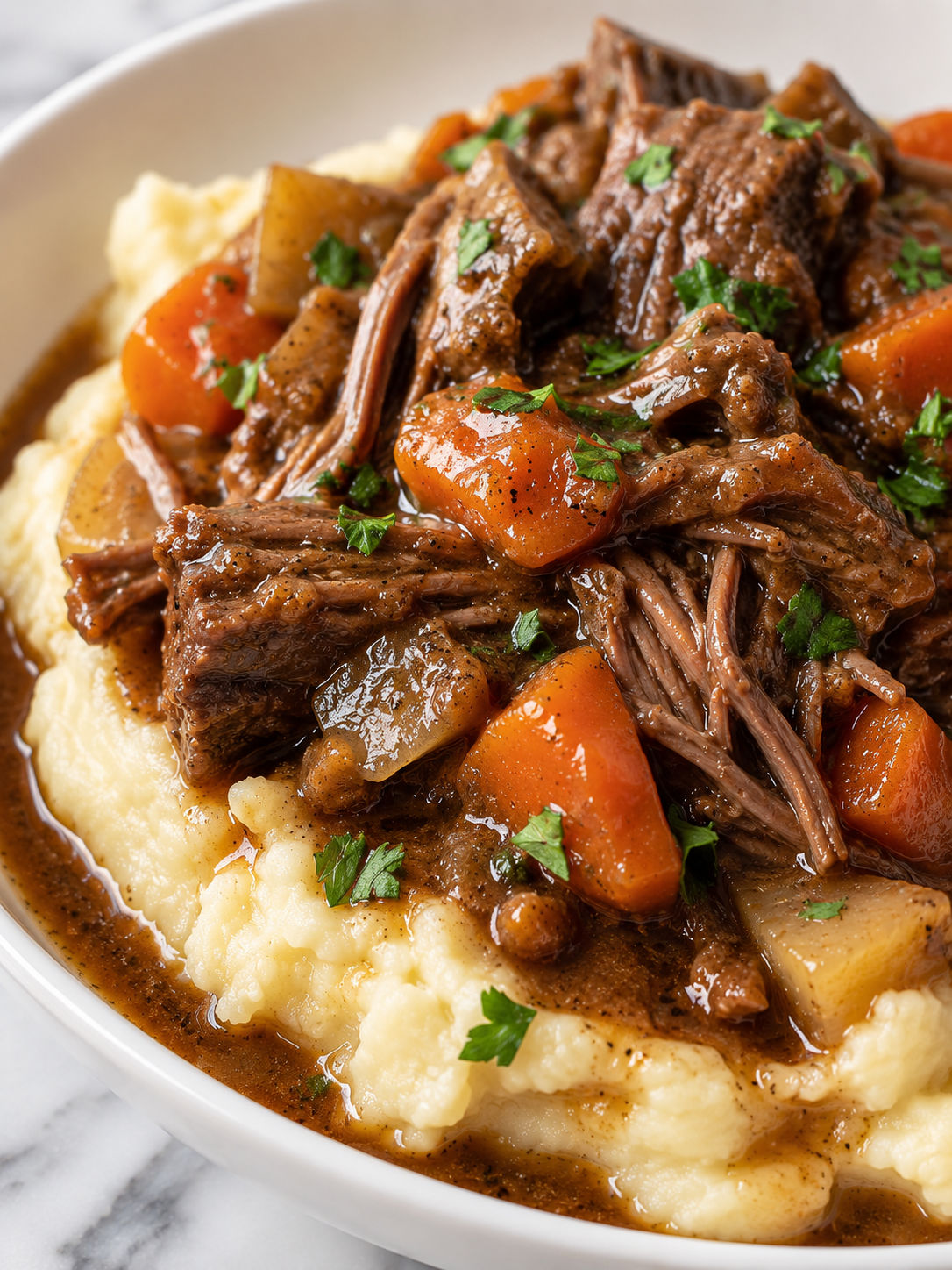
This Dutch oven pot roast is browned first, slowly braised until tender, and finished with a quick gravy before it lands on a bed of warm mashed potatoes.

FAQs
- What cut of beef is best for pot roast over mashed potatoes?
Chuck roast is the best choice because it has enough marbling and connective tissue to become tender during a long braise. Brisket or bottom round can work, but chuck gives the most forgiving texture for this style of dinner.
- Can I make this in a slow cooker?
Yes. Sear the beef and cook the vegetables on the stove first, then transfer everything to a slow cooker. Cook on low for 8-9 hours or on high for 4-5 hours, then thicken the juices into gravy before serving.
- How do I keep mashed potatoes from getting gummy?
Drain the potatoes well and mash them while they are hot. Use a hand masher or ricer instead of a food processor, which can overwork the starch and make the potatoes gluey.
- Can I make pot roast ahead of time?
Yes, and it often tastes better the next day. Chill the beef in its gravy, then reheat it gently in a covered pot at low heat until hot. Make the mashed potatoes fresh if you can, or reheat them with a splash of milk.
- Is this recipe gluten-free?
It can be gluten-free if your beef broth and Worcestershire sauce are labeled gluten-free. This recipe thickens the gravy with cornstarch instead of flour, which keeps the method friendly for gluten-free cooking.
- What should I serve with pot roast and mashed potatoes?
A crisp green salad, roasted green beans, peas, or simple steamed broccoli all work well. The plate is rich, so a fresh or lightly bitter vegetable balances the beef and gravy nicely.
