 Pin it
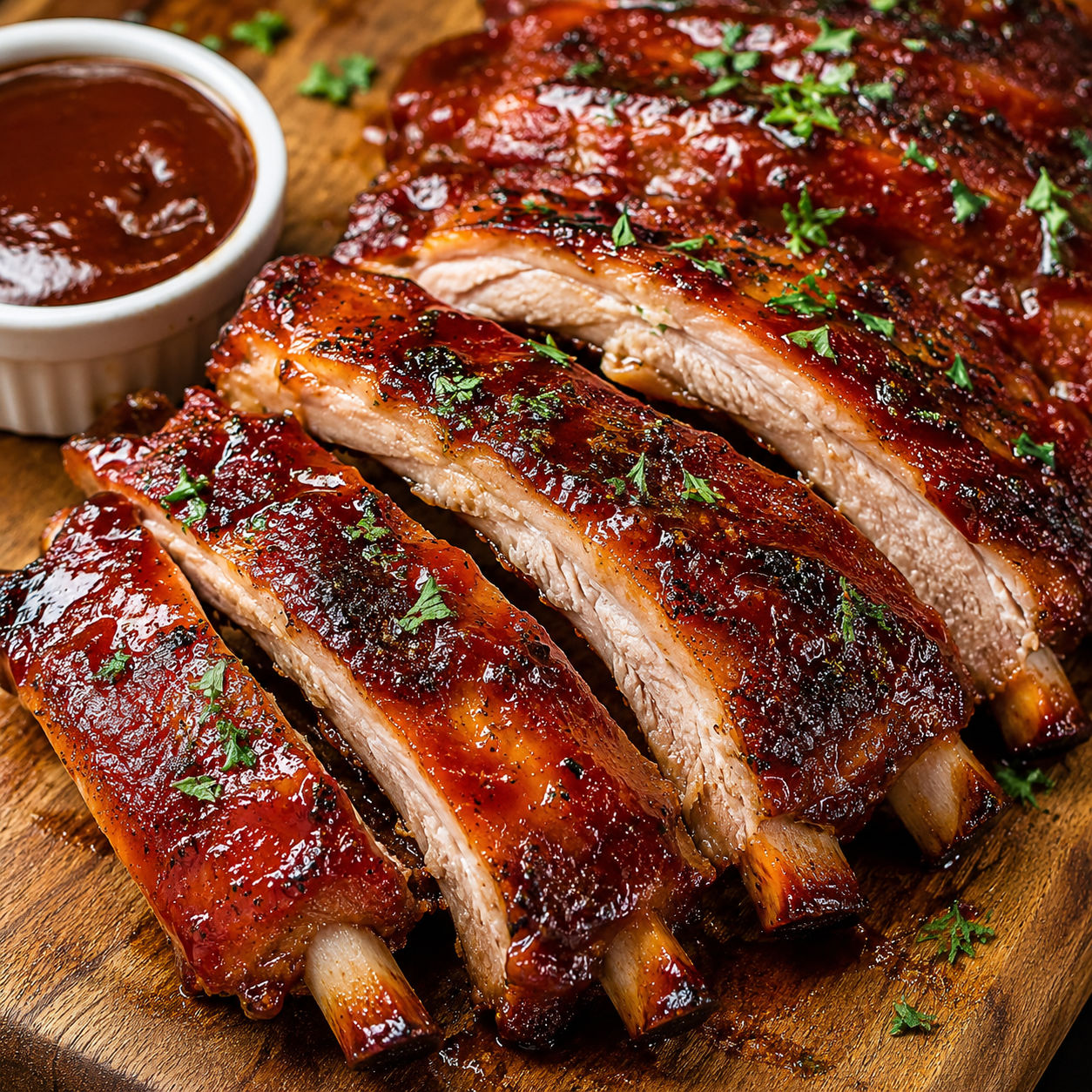
Easy Oven-Baked Baby Back Ribs are my answer when barbecue sounds good but I do not want to babysit a smoker. The oven does the slow work while the foil keeps the pork juicy.
The key is simple. Season the ribs well, wrap them tightly, and save the sauce for the end so it turns glossy instead of scorched. You get tender meat, lightly caramelized edges, and a kitchen that smells like weekend dinner.
Pork Rack And Pantry Rub
Choose meaty baby back ribs with even thickness from end to end. A simple dry rub gives the pork a smoky backbone before the barbecue sauce goes on.
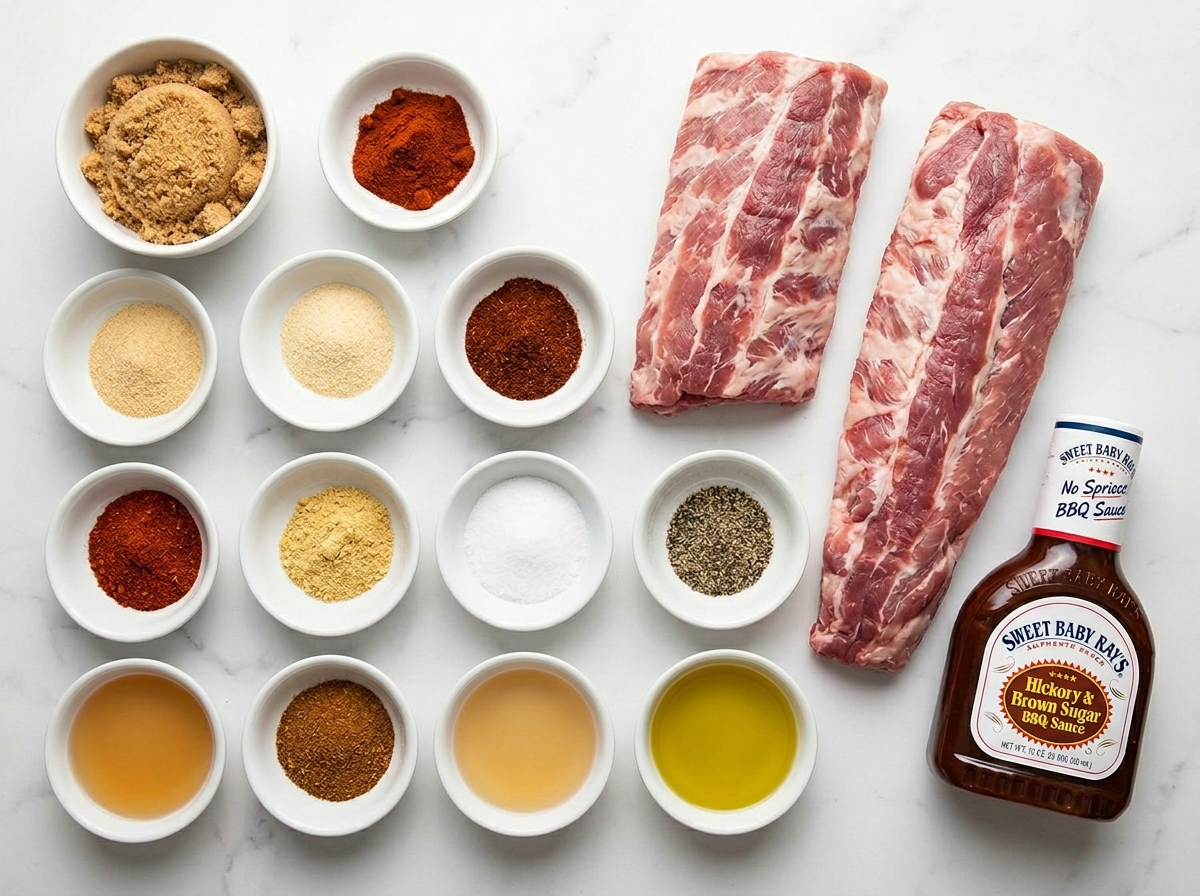
- Baby back ribs. Lean, curved pork ribs that become tender in a low oven without needing a grill.
- Brown sugar. Helps the rub cling and gives the finished glaze a deep caramel note.
- Smoked paprika. Adds gentle smoke flavor when you are cooking indoors.
- Garlic and onion powder. Build savory flavor across the whole rack.
- Chili powder. Brings warmth without making the ribs sharply spicy.
- Dry mustard. Cuts through the sweet sauce and makes the pork taste more rounded.
- Apple cider vinegar. Adds a small tang that brightens the rich meat.
- Barbecue sauce. Goes on near the end so it turns sticky and glossy under the broiler.
Low Oven, Sticky Finish
- Prep the ribs. Heat the oven to 300°F. Pat the ribs dry and remove the thin membrane from the bone side if you can grip it.
- Season both sides. Mix the sugar, spices, salt, and pepper. Rub the ribs with oil and vinegar, then coat them all over with the spice mixture.
- Seal the foil packets. Place each rack meat side up on heavy foil. Wrap tightly so steam stays inside, then set the packets on a rimmed sheet pan.
- Bake until tender. Cook for 2 hours and 15 minutes, then check tenderness. The meat should pull back from the bone tips and bend easily when lifted.
- Sauce and broil. Open the foil, brush the ribs with barbecue sauce, and broil for 3-5 minutes until bubbling and sticky. Watch closely.
- Rest and slice. Let the ribs sit for 10 minutes before cutting between the bones. Serve with extra warm sauce.
Easy Oven-Baked Baby Back Ribs
The oven method works because the ribs cook in their own steam first. Foil traps moisture around the pork, which softens the connective tissue without drying out the leaner baby back cut. If you like a sheet-pan dinner style, the same low-and-covered idea shows up in these sheet pan ribs.
Do not rush the wrapped stage. The sauce can make ribs look done before the meat is tender, so keep the glaze for the last few minutes. For a simpler version with a similar oven rhythm, see these oven baby back ribs.
The Membrane Matters
Flip the rack over and look for a shiny skin on the bone side. Slide a butter knife under one corner, lift it, then grab it with a paper towel and pull. When it comes off in one sheet, seasoning reaches the meat better and the finished bite feels cleaner.
If the membrane will not move, leave it alone. Some racks are trimmed before packaging and some have a membrane too fragile to pull. You can still make good ribs. Just season both sides and give them enough time in the foil.
Tender, Not Mushy
Ribs are safe before they are tender, so temperature alone does not tell the whole story. The USDA safe temperature chart lists pork safety guidance, but ribs need more cooking for that soft pull from the bone.
Look for visual cues. The meat should shrink back about 1/4 inch from the bone tips. When you lift the rack with tongs, it should bend easily and start to crack on the surface. If it feels stiff, reseal the foil and bake another 15-20 minutes.
Glaze Without Burning
Barbecue sauce has sugar, and sugar can burn under direct heat. Brush on a generous but not heavy layer, then broil on the middle or upper-middle rack. The sauce should bubble and darken at the edges. Black patches mean it went too far.
If your broiler runs hot, skip the top rack. You can also finish the ribs uncovered at 425°F for 8-10 minutes. The glaze sets more gently that way, which helps if you are cooking sides at the same time.
Make-Ahead And Leftovers
You can bake the ribs through the foil stage a day ahead. Cool them in the packets, refrigerate, then bring them to room temperature for about 25 minutes before saucing and broiling. This is useful for holidays, game day, or any dinner where the oven is busy.
Leftovers keep well because the sauce protects the meat. Wrap portions in foil and reheat at 300°F until warm. Add a spoonful of water or sauce before sealing the packet. For the table, oven-baked corn casserole and baked potato salad both hold up beside sticky ribs.
Summary
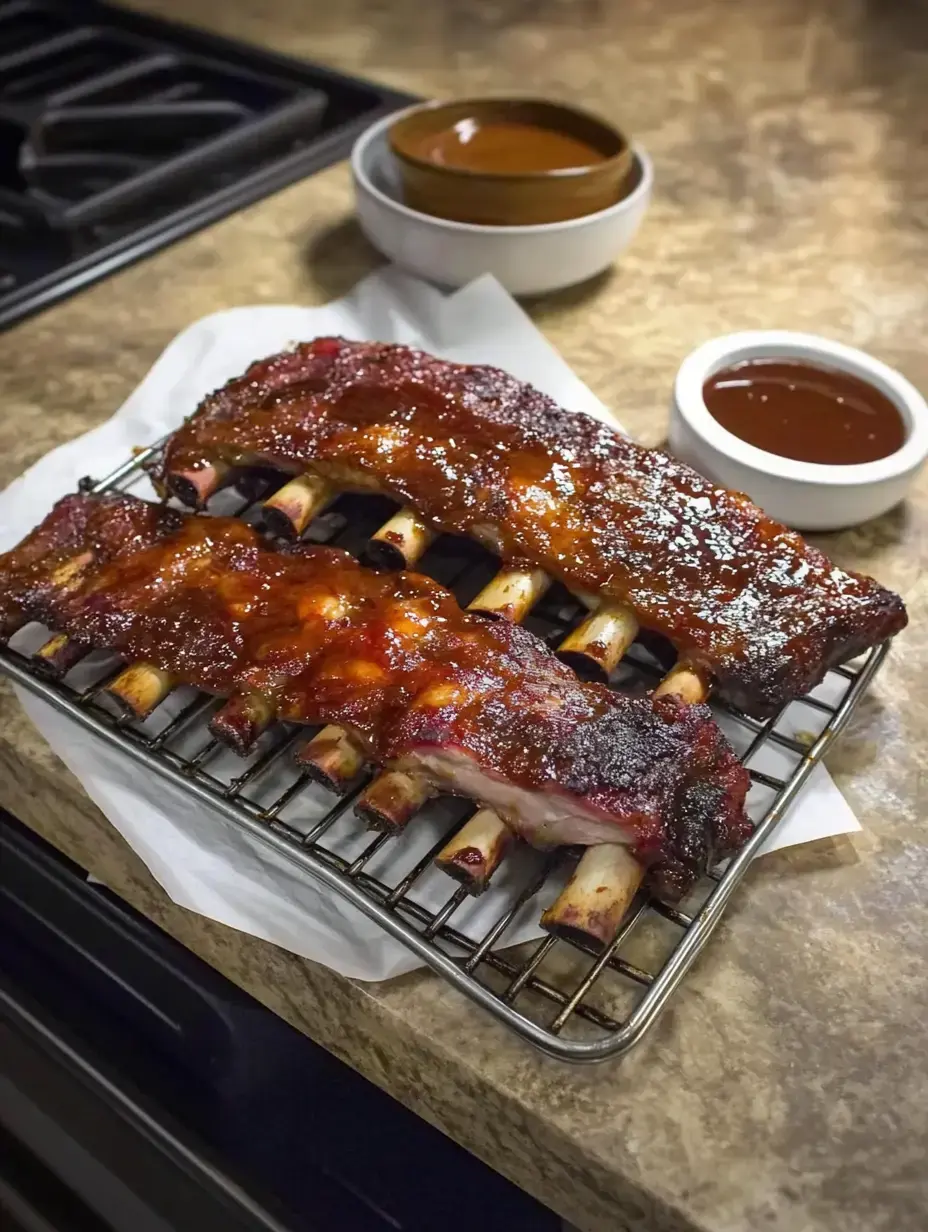
These oven-baked baby back ribs use a smoky dry rub, a sealed foil bake, and a quick broil with barbecue sauce for tender ribs any time of year.
FAQs
- How long do baby back ribs take in the oven?
At 300°F, baby back ribs usually need about 2 hours and 15 minutes to 2 hours and 30 minutes wrapped in foil. The exact time depends on rack size and how tender you like them.
- Do I have to remove the membrane?
It is worth removing if you can. The membrane on the bone side can turn chewy and can block seasoning. If it is already gone or too thin to grip, keep cooking and do not worry.
- Can I make these ribs without barbecue sauce?
Yes. Bake the ribs with the dry rub, then finish them uncovered for 8-10 minutes to set the spices. They will taste more like dry-rub ribs and less sweet.
- Can I use spare ribs instead of baby back ribs?
You can, but spare ribs are larger and fattier. Give them more time in the foil, usually 3 hours or a little longer at 300°F, then sauce and broil as written.
- How do I store leftover baked ribs?
Cool the ribs, wrap them tightly, and refrigerate for up to 3 days. Reheat covered in a 300°F oven with a spoonful of water or extra sauce until hot.
- What should I serve with baby back ribs?
Ribs like simple sides that balance the sticky sauce. Corn casserole, baked potato salad, coleslaw, beans, and roasted vegetables all work well.
