 Pin it
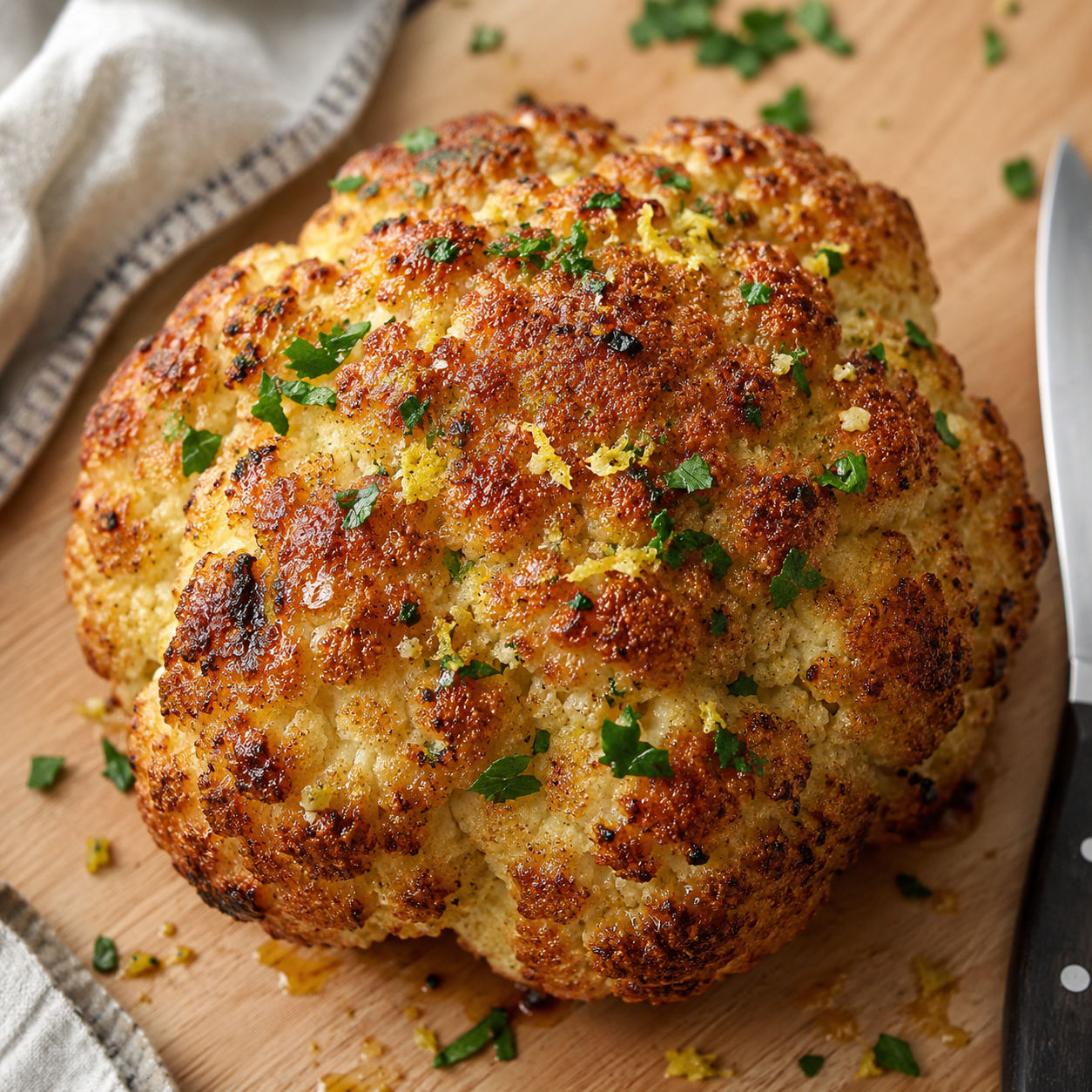
There is something dramatic about bringing a whole roasted cauliflower to the table. It looks impressive, but the truth is the oven does almost all the work. You trim the head, whisk together a quick garlic butter, and let heat and time turn a plain vegetable into a side dish people fight over.
This version keeps things simple. No boiling, no steaming, no cheese sauce. Just butter, garlic, a little lemon zest, and a hot oven. The result is a nutty, golden exterior and a creamy center that slices like a cake.
What goes into the baste
A short list of pantry staples does the heavy lifting here. Use a good fresh head of cauliflower with tight, white curds and no dark spots. The butter should be real unsalted so you can control the salt yourself.
- Cauliflower. One medium head, about 2 pounds, feeds four as a side. The fresher it is, the sweeter it roasts.
- Unsalted butter. Melted and brushed all over, it browns in the oven and gives the outside a rich, nutty crust.
- Fresh garlic. Minced fine and stirred into warm butter so it infuses without burning.
- Lemon zest. A little zest in the butter brightens the whole dish and keeps it from feeling heavy.
- Fresh parsley. Chopped and added after roasting for a fresh, grassy finish.
- Salt, pepper, and red pepper flakes. Basic seasoning that lets the cauliflower shine. The optional pinch of heat is nice against the sweet, roasted edges.
Roast it whole
- Heat the oven. Preheat to 375°F. Pour about 1/4 cup of water into a deep baking dish or oven-safe skillet. The water creates a little steam so the center cooks through before the outside burns.
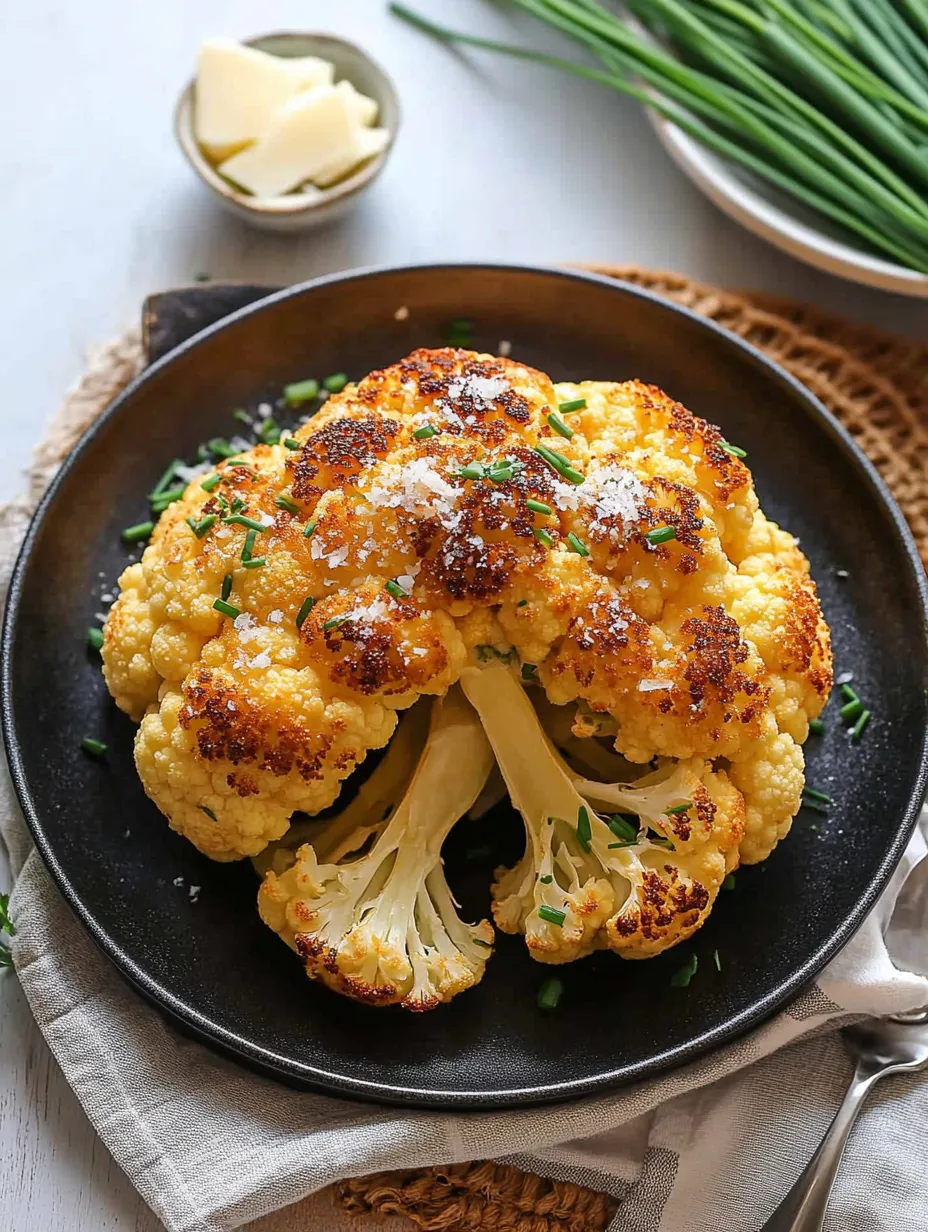
- Trim the head. Pull off the outer leaves and slice the very bottom of the stem so the cauliflower sits flat. Cut a shallow cross into the base of the stem. That helps heat travel up into the dense center.
- Mix the garlic butter. Melt the butter and stir in the minced garlic, lemon zest, salt, pepper, and red pepper flakes.
- Brush and roast. Place the cauliflower stem-down in the dish. Brush about half the garlic butter all over the top and sides. Roast uncovered for 30 minutes.
- Baste and finish. Remove the pan and brush the remaining garlic butter over any pale spots. Return to the oven and roast another 25 to 35 minutes, until a paring knife slides easily into the center.
- Rest and serve. Let it sit for five minutes so the juices settle, then slice into wedges or break into florets at the table. Scatter fresh parsley over the top.
The cross-cut trick
A whole cauliflower is dense. Without help, the outer edges can dry out while the middle stays crunchy. Cutting a shallow cross into the bottom of the stem opens pathways for heat and lets the center steam and soften evenly. Do not cut too deep or the head will fall apart when you slice it later.
Basting builds the crust
Brushing the cauliflower twice does two things. The first layer gives the garlic a head start on flavoring the vegetable. The second layer, added after the surface has partially dried in the oven, creates a thicker, more browned crust. If you want an even deeper color, switch the oven to broil for the final two to three minutes. Watch it closely so the garlic does not char.
Make it the centerpiece
This dish works as a side for roast chicken or salmon, but it is hearty enough to be the main event. Serve it over a swoosh of hummus or tahini, or shower it with grated parmesan in the last few minutes of roasting. For a richer cauliflower dish, try our Cheesy Garlic Parmesan Cauliflower. If you want something with more vegetables in the mix, Garlic Cauliflower and Mushrooms is a great match.
Leftovers and reheating
Store any leftover cauliflower in an airtight container in the refrigerator for up to three days. The fastest way to reheat without turning it mushy is a hot oven or air fryer at 400°F for eight to ten minutes. The microwave works in a pinch, but it softens the crisp edges. You can also chop leftovers cold into a grain bowl or salad.
FAQs
- Do I need to boil the cauliflower before roasting?
No. Boiling adds a waterlogged texture and an extra step. The small amount of water in the baking dish creates just enough steam to soften the center while dry heat caramelizes the outside.
- Can I use frozen cauliflower?
This recipe really needs a fresh whole head. Frozen cauliflower is usually cut into florets and holds too much ice to roast whole successfully. Save the frozen bags for soups or mashed cauliflower.
- How do I know when the cauliflower is done?
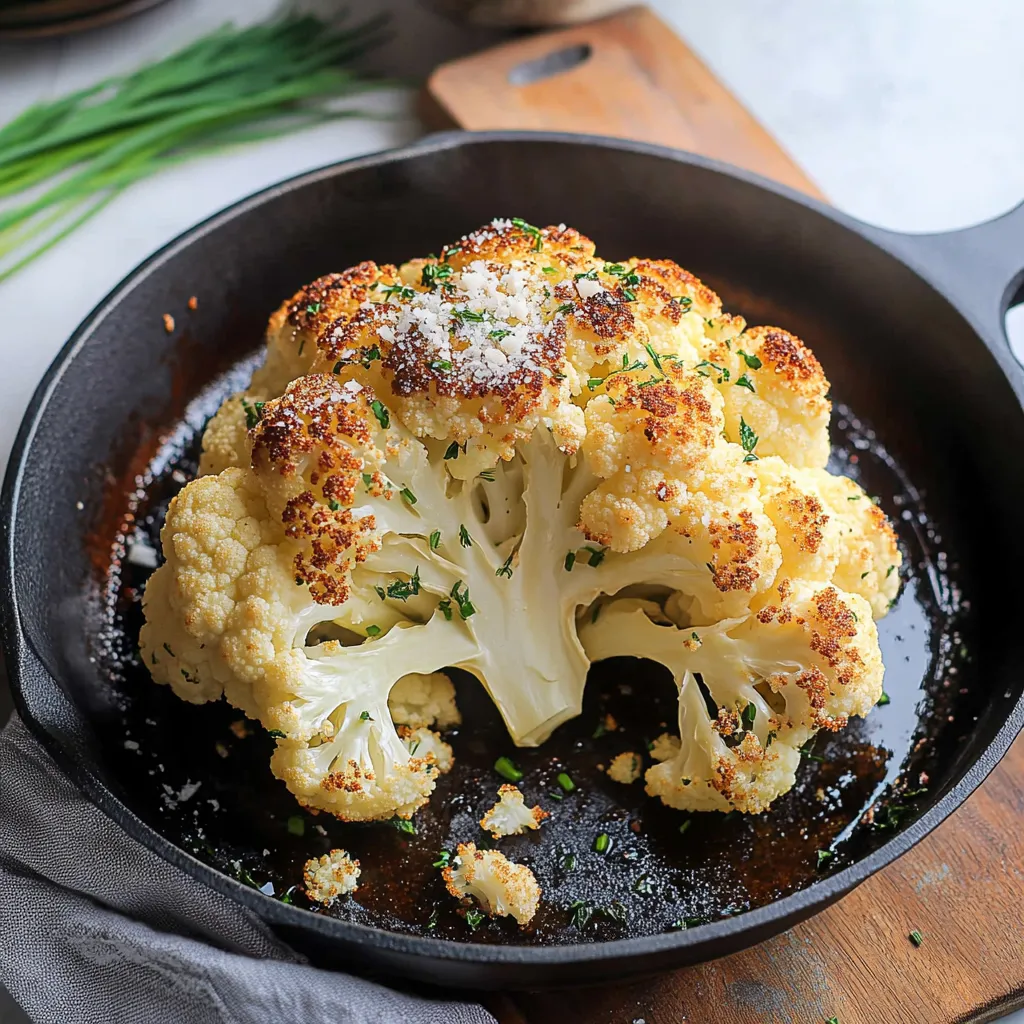
Slide a thin paring knife straight into the center of the head. It should meet almost no resistance. The outside should be deeply golden and the florets should separate easily.
- Can I make this dairy-free or vegan?
Yes. Swap the butter for a good vegan butter or use extra-virgin olive oil. The flavor will be lighter and the crust slightly less rich, but it still roasts beautifully.
- What should I serve with whole roasted cauliflower?
It pairs well with roast chicken, grilled fish, or a crisp green salad. You can also treat it as a vegetarian main with a side of Easy Cauliflower Gratin With Gruyère for a double-cauliflower feast.
- Can I roast it as florets instead?
Absolutely. Cut the head into bite-size florets, toss them with the garlic butter in a bowl, and spread them on a baking sheet. Roast at 425°F for 25 to 30 minutes, tossing once, until browned and tender.
- How do I store and reheat leftovers?
Refrigerate in an airtight container for up to three days. Reheat in a 400°F oven or air fryer for the best texture. The U.S. FDA offers safe-handling guidance for fresh produce on their safe food handling page.
