 Pin it
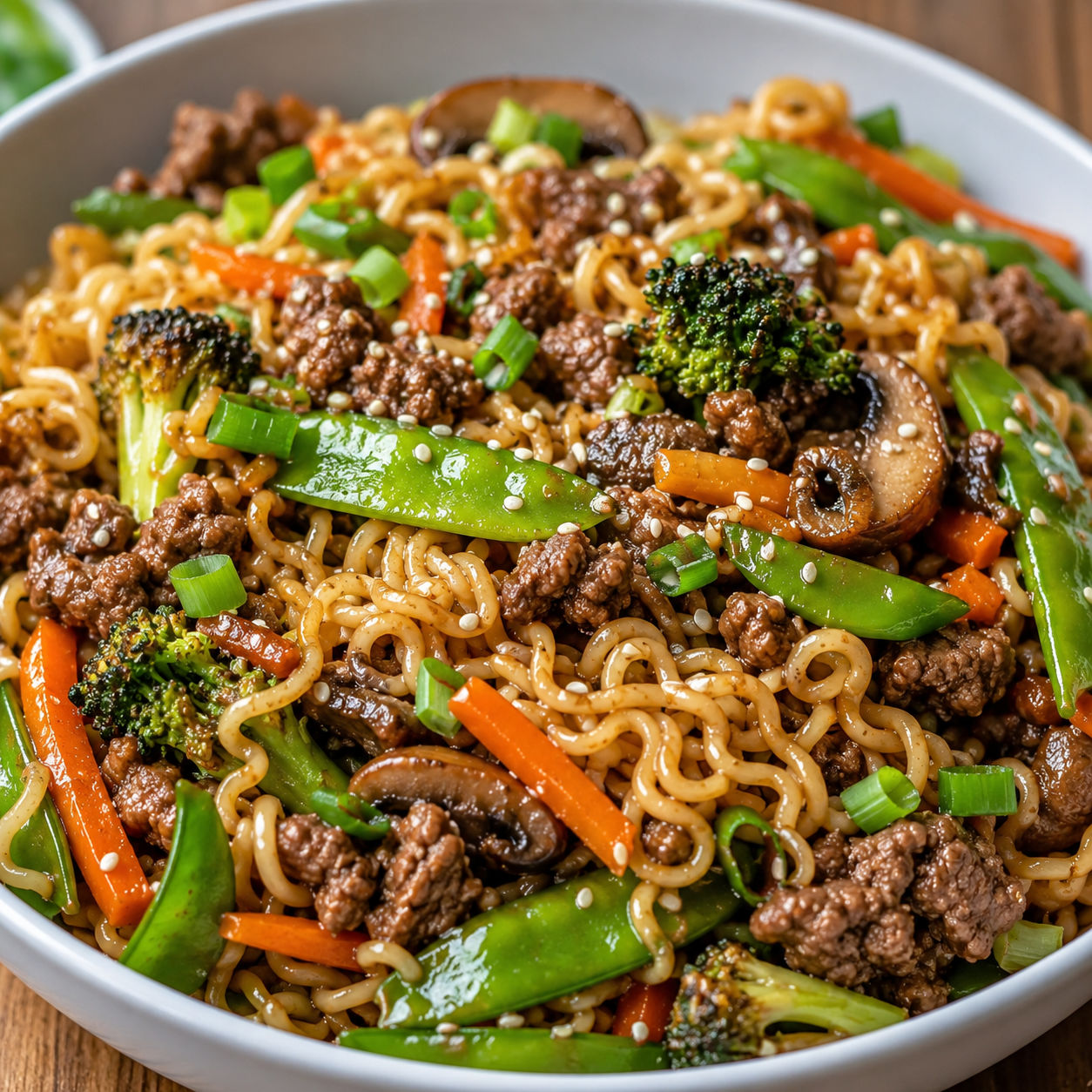
Ultimate Healthy Beef Ramen Noodles is the kind of dinner that fixes a weeknight fast. You still get the cozy noodle bowl feeling, but with lean beef, plenty of vegetables, and a sauce you control.
The best part is how balanced it feels. The beef browns until savory, the vegetables keep a little snap, and the ramen soaks up just enough sauce to taste rich without turning heavy.
The Better Ramen Lineup
Choose ingredients that bring flavor without leaning on the instant seasoning packet. Lean beef, fresh aromatics, and crisp vegetables make this bowl feel full and satisfying.
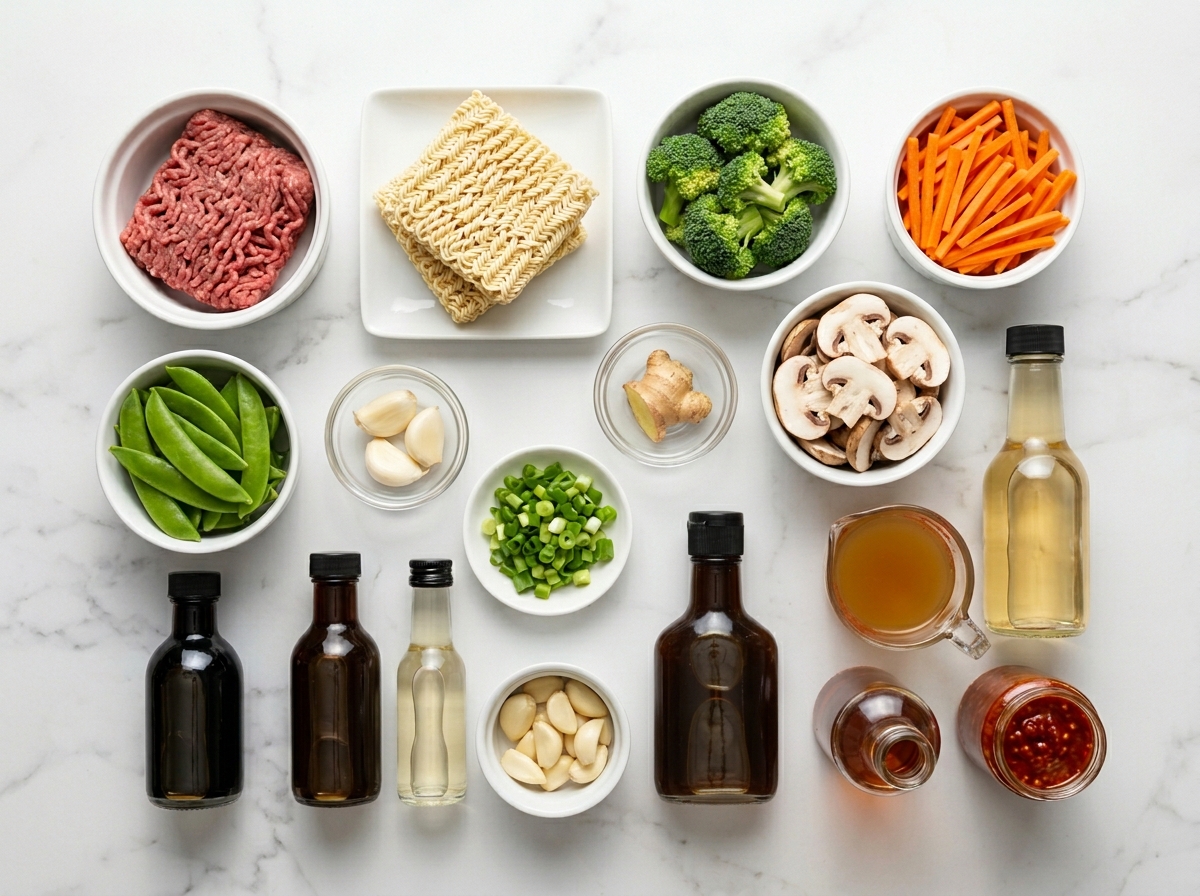
- Lean ground beef. Adds savory richness and enough protein to make the noodles feel like dinner.
- Ramen noodles. Cook quickly and stay pleasantly chewy when they finish in the skillet.
- Broccoli florets. Bring color, crunch, and a sturdy vegetable bite.
- Carrots. Add sweetness and soften fast when cut into matchsticks.
- Snow peas. Keep the stir-fry fresh with a crisp snap.
- Mushrooms. Add a deeper savory note that makes the lighter sauce taste fuller.
- Garlic and ginger. Build the warm, sharp base of the sauce.
- Low-sodium broth and soy sauce. Give the noodles flavor while keeping the salt easier to manage.
- Rice vinegar and sesame oil. Add brightness and a nutty finish.
Cook It Without Mushy Noodles
- Mix the sauce. Whisk broth, soy sauce, oyster sauce, rice vinegar, sesame oil, honey, and chili paste in a small bowl so it is ready when the pan is hot.
- Cook the ramen briefly. Boil the noodles just until they loosen, then drain and rinse with cool water to stop the cooking.
- Brown the beef. Cook the lean ground beef in a hot skillet, breaking it into small crumbles until no pink remains.
- Stir-fry the vegetables. Add broccoli, carrots, mushrooms, and snow peas. Cook until the vegetables are bright and just tender.
- Add aromatics and sauce. Stir in garlic and ginger for about 30 seconds, then pour in the sauce and let it bubble lightly.
- Toss and finish. Add the noodles and green onions, then toss until glossy and hot. Finish with sesame seeds if you like.
Why This Tastes Lighter
The healthy part comes from changing the balance, not stripping out the good stuff. You use a pound of lean beef, but the bowl is also full of broccoli, carrots, snow peas, and mushrooms. That means every forkful has protein, vegetables, and noodles together.
The seasoning packet stays out of the pan. Instead, the sauce uses low-sodium broth, a small amount of soy sauce, rice vinegar, ginger, and garlic. If you are watching sodium closely, the American Heart Association sodium guide is a useful reference. You can also look at sesame garlic ramen noodles for another packet-free ramen idea.
The Noodle Timing Matters
Ramen can go from springy to soft fast. Boil it only until the block opens and the noodles bend easily. For most instant ramen, that is about 2 minutes. They will cook again once they hit the sauce.
Rinsing the noodles is not fancy, but it helps. A quick cool rinse removes surface starch and stops carryover cooking. When the noodles go back into the skillet, they soak up the sauce instead of clumping. This same finish-in-the-pan idea works well in Mongolian ground beef noodles too.
Smart Swaps For Busy Nights
Ground turkey can replace the beef if you want an even lighter bowl. Thin sliced sirloin works too, but sear it fast and pull it out before the vegetables. For vegetables, use what cooks quickly. Shredded cabbage, bell pepper, zucchini, frozen broccoli, or a bag of stir-fry mix all fit.
For the noodles, brown rice ramen is a good choice if you like a slightly nuttier flavor. Regular instant ramen is fine when the seasoning packet is skipped. If you need a cabbage-heavy version, healthy Chinese ground beef cabbage uses a similar flavor direction with fewer noodles.
Make The Sauce Yours
The sauce is savory, a little tangy, and lightly glossy. Oyster sauce adds body, but hoisin can stand in if that is what you have. Use tamari instead of soy sauce if you are making a gluten-free version, and check that every bottled sauce is gluten-free too.
For more heat, add extra chili garlic sauce or a pinch of red pepper flakes. For less sweetness, cut the honey to 1 teaspoon. If you like saucier noodles, add 2 extra tablespoons of broth at the end rather than doubling the soy sauce.
Storage And Reheat Notes
Leftovers keep well for 3 days, but the noodles continue to drink up sauce in the fridge. Reheat them in a skillet over medium-low heat with a splash of broth or water. Stir gently until the noodles loosen and the beef is hot.
I do not freeze this dish. The vegetables lose their snap and the ramen turns too soft. For make-ahead cooking, brown the beef and mix the sauce ahead of time. Then boil the noodles and stir-fry the vegetables right before dinner. If you want a similar saucy beef noodle dinner with a different flavor, try beef noodle stir-fry.
Summary
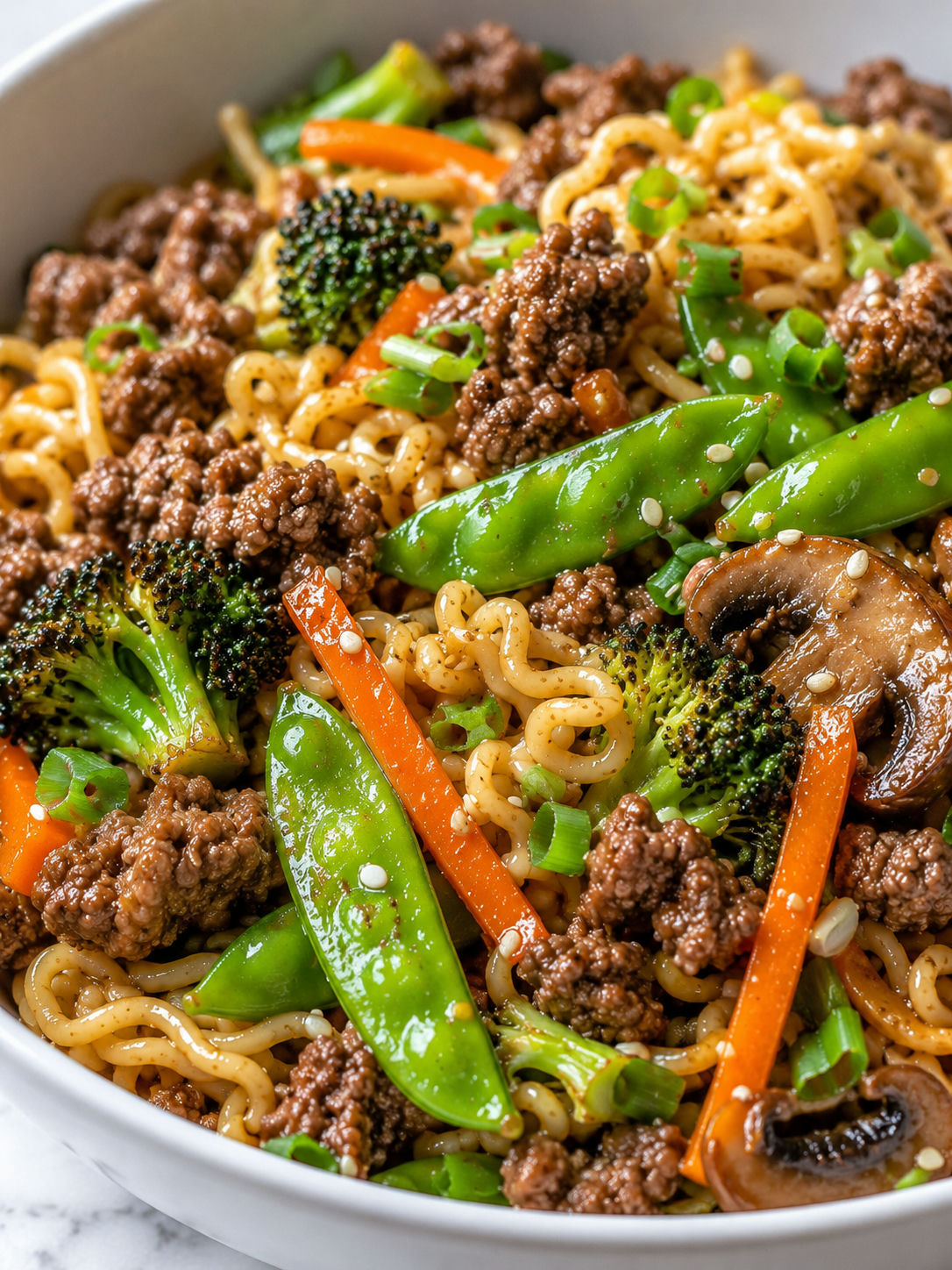
A lighter beef ramen stir-fry with lean ground beef, fresh vegetables, and a quick garlic ginger sauce.
FAQs
- Can I use regular instant ramen noodles?
Yes. Cook the noodles and discard the seasoning packets. The packets are usually very salty, so the homemade sauce gives you better control over flavor and sodium.
- What beef is best for healthy beef ramen?
Use 90% to 93% lean ground beef for the easiest version. Thin sliced sirloin or flank steak also works, but cook it quickly and remove it from the pan before the vegetables so it stays tender.
- Can I make this gluten-free?
Yes, but you need to choose carefully. Use brown rice ramen, gluten-free tamari, and a gluten-free oyster sauce or hoisin-style sauce. Check every label because ramen and bottled sauces often contain wheat.
- How do I keep ramen noodles from getting mushy?
Boil them just until they separate and still feel firm, usually 1 minute less than the package says. Rinse briefly with cool water, then finish them in the skillet with the sauce.
- Can I make it ahead?
You can prep the sauce, chop the vegetables, and brown the beef up to 2 days ahead. For the best texture, cook the noodles right before serving and toss everything together at the end.
- How should I store leftovers?
Store leftovers in an airtight container in the fridge for up to 3 days. Reheat in a skillet with a splash of broth or water so the noodles loosen without drying out.
- What can I serve with beef ramen noodles?
This is already a full meal, but cucumber salad, steamed edamame, or a simple cabbage slaw are good sides. If you want more vegetables, add extra broccoli or shredded cabbage right into the skillet.
