 Pin it
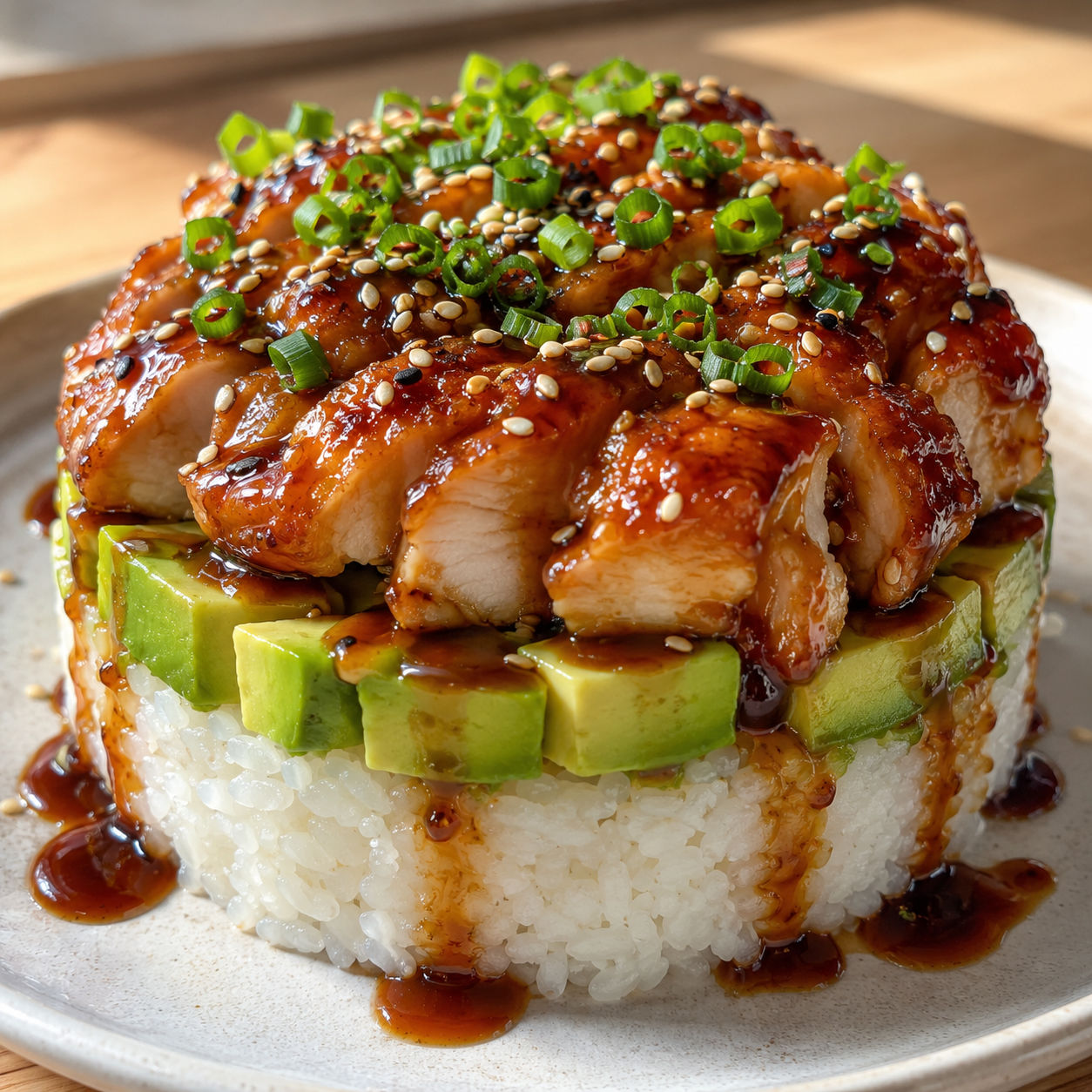
This is the kind of meal I build when I want something that looks restaurant-plated but comes together on a regular Tuesday. Layers of seasoned rice, creamy avocado, and sticky teriyaki chicken stack into a bowl that eats like a deconstructed rice bowl with better posture. Everyone at the table gets the same ratio of glaze, greens, and grains in every bite.
The real win is the homemade teriyaki glaze. It takes five minutes to whisk together and tastes brighter than anything from a bottle. Once you get the layering trick down, you can repeat it with any protein or grain you have on hand.
What goes into the layers
The ingredient list is short, so quality matters. Use plump chicken breasts, avocados that yield gently to pressure, and a soy sauce you would happily dip sushi into. Sushi rice holds the cleanest layer, but jasmine rice works for a looser, fluffier base.
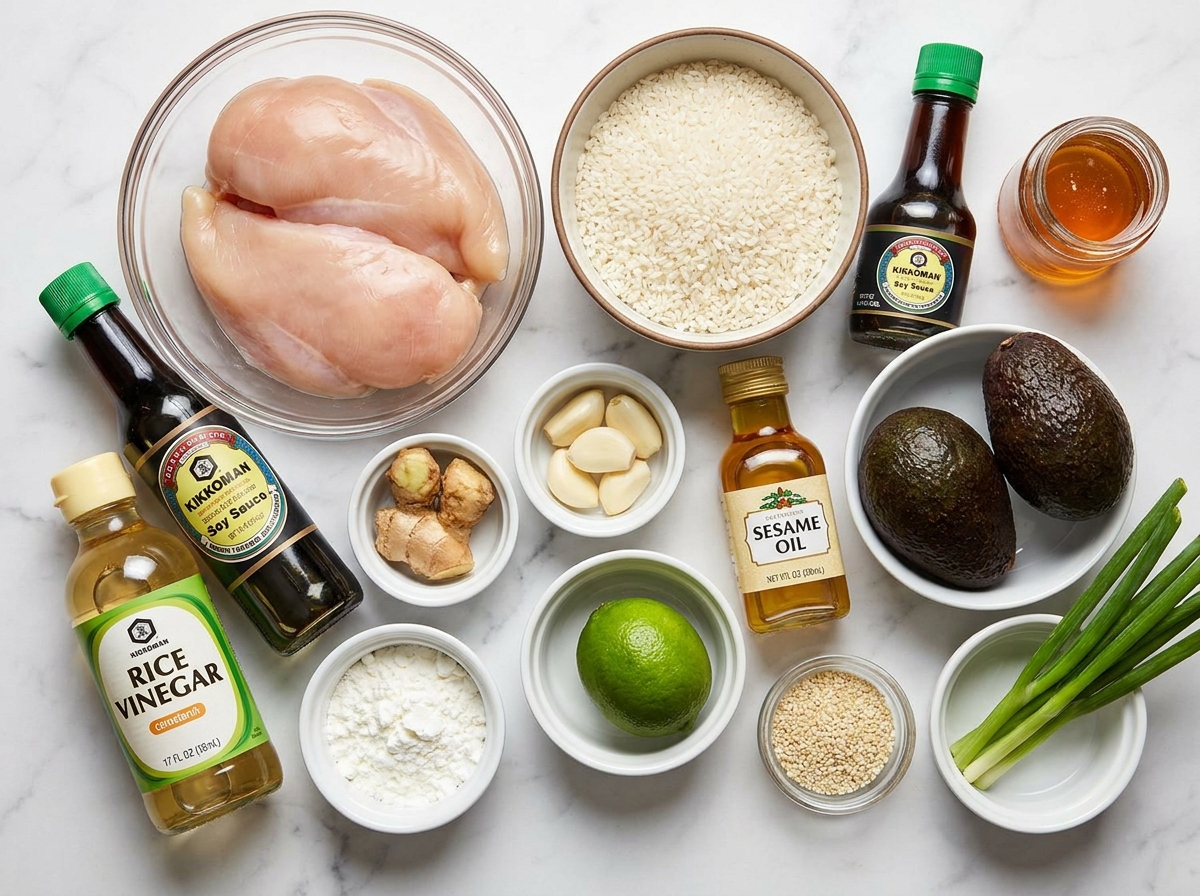
- Boneless chicken breasts. They cook fast and slice neatly for stacking. Pound them to an even thickness so they sear uniformly.
- Soy sauce. The salty, savory backbone of the glaze. Use tamari if you need gluten-free.
- Honey. Gives the teriyaki its signature gloss and balances the salt. Brown sugar works in a pinch.
- Fresh ginger and garlic. They lift the sauce above bottled teriyaki. Grate the ginger so it melts into the glaze.
- Rice vinegar and sesame oil. A little tang and toasty depth that rounds out the sauce.
- Cornstarch slurry. Just a tablespoon of cornstarch whisked with water turns the simmering sauce into a clingy glaze.
- Sushi or jasmine rice. Sushi rice is sticky and layer-friendly. Jasmine is fragrant and softer.
- Ripe avocados. They add the creamy, cooling layer that balances the salty chicken.
- Lime juice. Keeps the avocado green and adds a bright pop against the rich glaze.
- Sesame seeds and green onion. Small crunch and freshness on top. Pickled ginger is a nice optional kick.
How to build the stack
- Whisk the glaze. Combine soy sauce, honey, rice vinegar, sesame oil, garlic, and ginger in a small bowl. Have the cornstarch slurry ready on the side.
- Sear the chicken. Pat the breasts dry and season lightly. Cook in a hot skillet for 4 to 5 minutes per side until golden. The internal temperature should reach 165°F. The USDA offers clear guidance on safe chicken cooking temperatures.
- Glaze and thicken. Pour the sauce into the skillet and let it bubble gently. Turn the chicken to coat, then stir in the slurry and simmer for a minute until the sauce turns sticky and coats the back of a spoon.
- Season the rice. Fold warm cooked rice with rice vinegar, sesame oil, and a pinch of salt. Let it cool for 5 minutes so it does not steam the avocado.
- Prep the avocado. Slice or cube the avocados and toss with lime juice, salt, and pepper immediately.
- Layer and serve. Pack rice into the bottom of a ring mold or bowl, add avocado, then sliced chicken. Drizzle with extra glaze and top with sesame seeds and green onion.
Searing chicken without drying it out
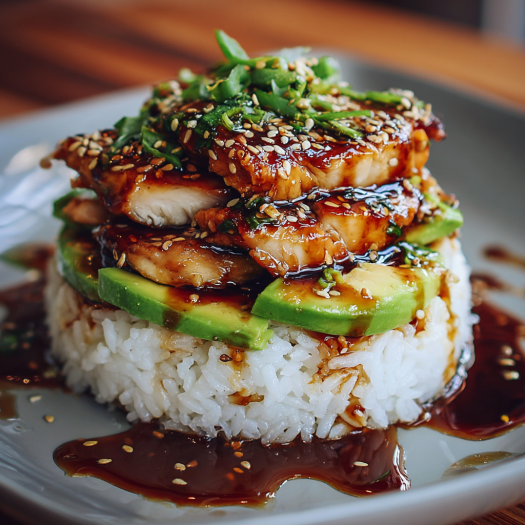
The biggest mistake home cooks make with chicken breasts is cooking them straight from the fridge into a lukewarm pan. Cold meat in a cool pan releases juices and steams instead of sears. Let the chicken sit at room temperature for 15 minutes, then preheat the skillet until a drop of water sizzles on contact. A quick sear locks in moisture before the glaze ever hits the pan.
Rice that holds its shape
Sushi rice wins for neat layers because its starch content lets you press it into a firm disk. If you only have jasmine rice, use slightly less water during cooking so the grains stay separate but still cling. Season the rice while it is warm so the vinegar and salt absorb evenly. A slightly sticky base is the secret to a stack that does not collapse the moment you lift the ring. For another stacked rice dinner with similar bones, see our teriyaki chicken avocado rice stack.
Smart swaps and shortcuts
Swap chicken thighs if you prefer darker meat. They take a few minutes longer but stay forgiving if you overcook them slightly. For a vegetarian version, press and cube extra-firm tofu, coat lightly in cornstarch, and pan-fry until golden before glazing. Brown rice or quinoa work in place of white rice for a fiber boost. If you love the chicken-and-avocado pairing with a citrus twist, try our honey lime chicken and avocado rice stack. For a bolder Asian-fusion bowl, bang bang chicken with fried rice hits the same weeknight notes.
Storage and meal prep
This stack meal-preps well if you treat the components separately. Cook the chicken and rice up to three days ahead and store them in airtight containers. Mash or slice the avocado fresh on the day you eat. Reheat the chicken and rice together in a skillet with a tablespoon of water to loosen the glaze. Avoid the microwave if you can. It overheats the chicken and turns the rice gummy.
Finishing touches that matter
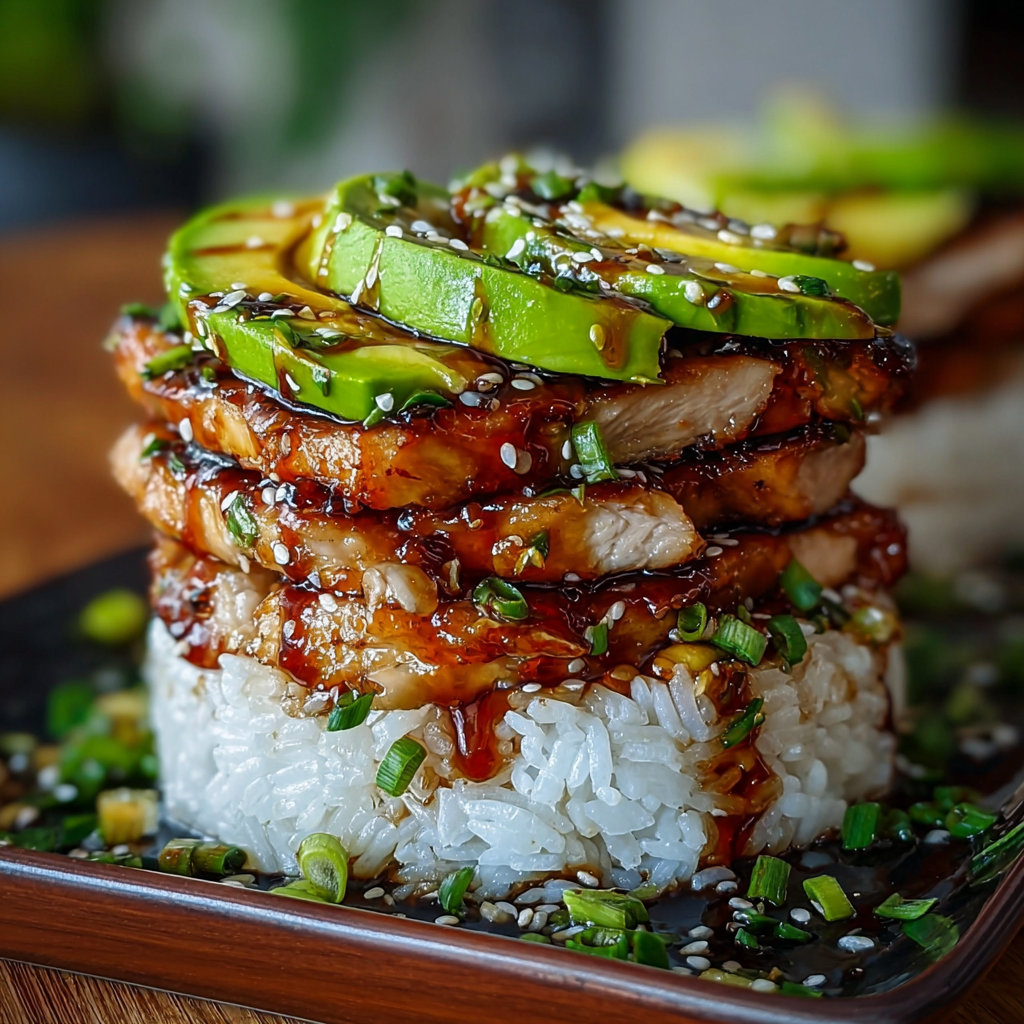
The garnish is not just decoration here. Toasted sesame seeds add a tiny crunch against the soft layers. Thinly sliced green onion brings freshness. A few strips of pickled ginger cut through the sweetness of the glaze. If you want heat, drizzle a little sriracha mayo or sprinkle chili flakes on top. Serve with a simple cucumber salad or miso soup on the side and dinner feels complete.
FAQs
- Can I use store-bought teriyaki sauce instead of homemade?
Yes. Use about two-thirds of a cup of a good quality store-bought teriyaki sauce and skip the soy sauce, honey, rice vinegar, garlic, ginger, and cornstarch slurry in the recipe. Warm it in the pan after searing the chicken so it can reduce and cling.
- What kind of rice works best for stacking?
Sushi rice is the easiest to layer because it is sticky and holds its shape when pressed. Jasmine rice gives a lighter, fluffier layer but needs a gentler hand when stacking. Either way, season the rice while it is warm and let it cool slightly before pressing.
- How do I keep the avocado from turning brown?
Toss sliced avocado with fresh lime or lemon juice right after cutting. If you are prepping ahead, press plastic wrap directly against the surface to keep air out. Do not assemble the avocado layer more than an hour before serving.
- Can I make this gluten-free?
Yes. Swap the soy sauce for tamari or a certified gluten-free soy sauce. Double-check your rice vinegar and sesame oil labels, though most are naturally gluten-free. The rest of the dish stays the same.
- Do I need a ring mold to make the stacks?
No. A ring mold or a clean empty can with both ends removed gives you a neat cylinder, but you can also layer freeform in a bowl and pack gently with the back of a spoon. Presentation is fun, but flavor is what matters.
- What can I use instead of chicken?
Salmon, shrimp, firm tofu, or sliced flank steak all work. Cook the protein almost through, then glaze it the same way. For a beef version with pineapple, try our teriyaki beef pineapple rice stack.
- How should I store and reheat leftovers?
Store the chicken, rice, and avocado in separate containers in the refrigerator for up to three days. Reheat the chicken and rice gently in a skillet with a splash of water, then add fresh avocado just before eating.
