 Pin it
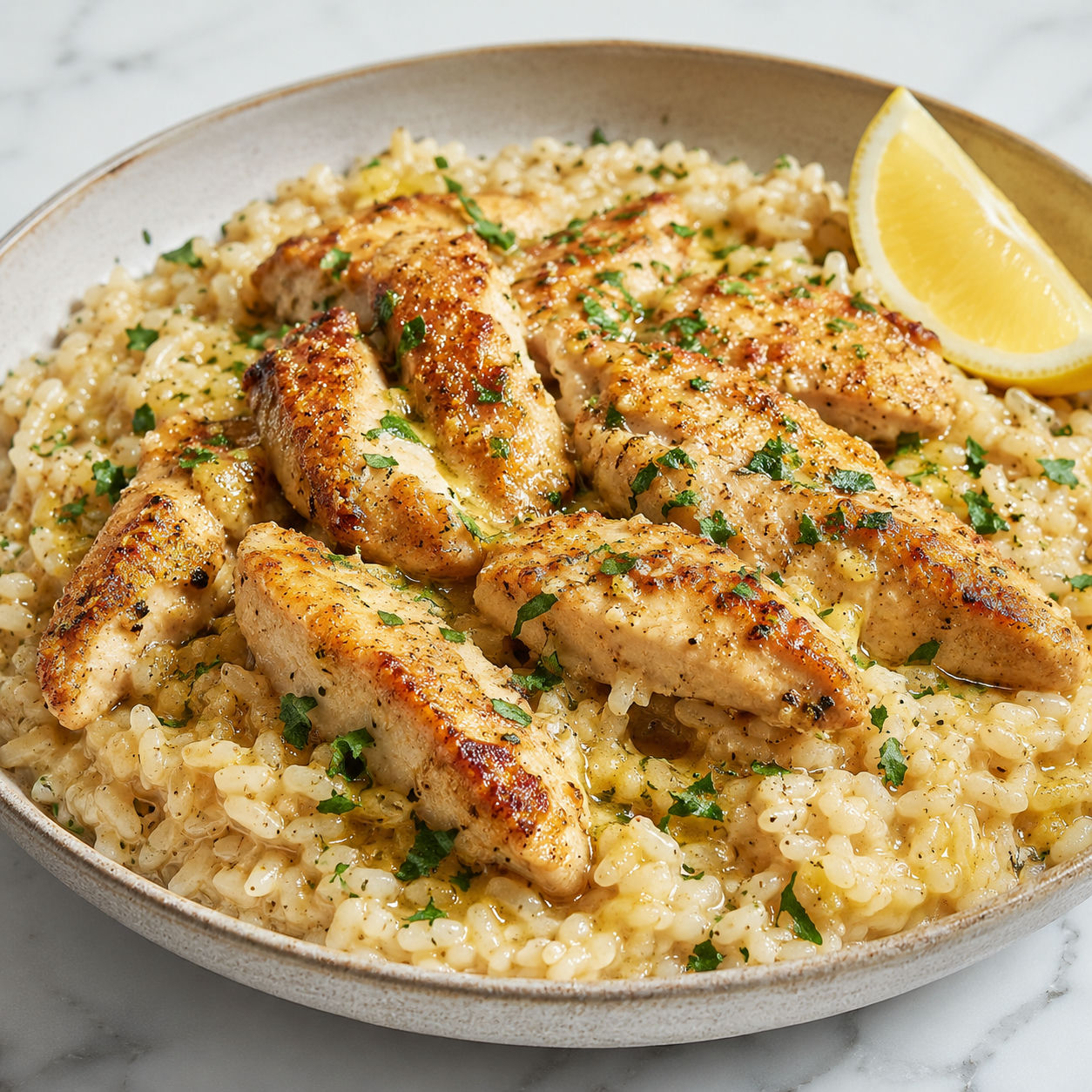
Chicken scampi is everything good about the shrimp classic, just heartier and more filling. Same white wine butter sauce, same punch of garlic, same squeeze of lemon at the end. But strips of chicken that sear golden and stay juicy.
What makes this version stand out is the rice. It toasts right in the pan after you build the scampi sauce, soaking up all those garlicky drippings before the broth goes in. By the time it finishes, you get something between a pilaf and a risotto. Creamy with parmesan, silky from a touch of cream, and deeply savory all the way through.
One pan. About 40 minutes. And the cleanup is almost as satisfying as the dinner.
Everything That Goes Into the Pan
The ingredient list is short but every item pulls weight. Fresh garlic and good parmesan are the two places not to cut corners. Pre-minced jarred garlic and pre-grated parmesan both produce a noticeably flatter result.
- Chicken breasts. Cut into strips for fast, even cooking and a good crust-to-meat ratio in every bite.
- All-purpose flour. A light dredge gives the chicken a thin crust that holds up in the sauce and adds a little body to the pan drippings.
- Unsalted butter. The base of the scampi sauce and what gives it that silky, restaurant-quality finish.
- Garlic. Six cloves for a sauce that actually tastes like scampi. Don't hold back.
- Dry white wine. Deglazes the pan and adds brightness that butter alone can't replicate.
- Long-grain white rice. Toasts in the pan drippings before the broth goes in, which is what makes it taste so good.
- Chicken broth. The cooking liquid for the rice. Low-sodium keeps you in control of the salt level.
- Heavy cream. Just a splash at the end to make the rice silky and coat everything in a glossy sauce.
- Parmesan. Freshly grated melts smoothly and gives the rice its savory, nutty depth.
- Lemon and parsley. A squeeze and a handful at the finish brighten the whole dish and cut through the richness.
How This Comes Together
- Season and dredge the chicken. Mix the flour with garlic powder, paprika, salt, and pepper in a shallow bowl. Toss the chicken strips in it and shake off any excess. You want a thin coat, not a thick batter.
- Sear the chicken. Heat olive oil in a large deep skillet over medium-high heat. Sear the strips in a single layer for 3 to 4 minutes per side until golden and cooked through. Work in batches if needed so the pan doesn't get crowded. Set the chicken aside on a plate.
- Build the garlic butter. Lower the heat to medium. Melt 3 tablespoons of butter in the same pan. Add the garlic and red pepper flakes and cook for about a minute until fragrant but not browned.
- Deglaze with wine. Pour in the white wine and scrape up the browned bits on the bottom of the pan. Let it cook for 2 to 3 minutes until the wine reduces by about half and the sharp alcohol smell cooks off.
- Toast and simmer the rice. Add the dry rice and stir to coat it in the buttery sauce. Toast for 2 to 3 minutes until a few grains look lightly golden. Pour in the chicken broth, bring to a low boil, then cover and reduce to the lowest heat setting. Cook for 18 to 20 minutes without lifting the lid.
- Finish and serve. Take the pan off the heat. Stir in the heavy cream, parmesan, and remaining tablespoon of butter until the rice looks glossy and creamy. Return the chicken to the pan, squeeze lemon juice over everything, and scatter parsley on top.
What Makes Scampi Taste Like Scampi
The three flavors that make scampi taste like scampi are butter, garlic, and white wine. The wine is the part most people skip when they're nervous about cooking with alcohol, but it's what gives the sauce its sharp, savory edge. Serious Eats covers the science of how wine reduces and concentrates in sauces, and the short version is that the alcohol burns off fast and what stays behind is flavor that makes the butter and garlic more interesting.
The lemon at the end matters just as much. Without it, the sauce tastes rich but flat. A good squeeze right before serving wakes everything up. You'll find the same balance in chicken scampi with garlic parmesan rice, which takes a slightly different approach to building the sauce but lands in the same place.
Searing Chicken Strips That Stay Juicy
The two things that dry chicken out are a crowded pan and too much time on the heat. When strips are packed in together, they steam instead of sear and lose moisture instead of locking it in. Work in batches and give each strip space to breathe.
The target is 165°F internally, which is the safe minimum for poultry per the USDA food safety guidelines. Pull the chicken the moment it hits that mark. It goes back into the pan right at the end, just long enough to warm through in the sauce. This is the same principle used in creamy garlic chicken, where resting the meat before the sauce goes on keeps it from drying out.
Getting the Rice Creamy, Not Gummy
Toasting the rice in the butter and garlic drippings before the broth goes in is the step that sets this apart from a plain rice pilaf. The heat dries out the surface of the grains so they stay separate as they cook. The same technique works any time you're making a simple garlic butter rice from scratch.
Keep the lid on and the heat as low as your burner will go once the broth is in. Lifting the lid lets steam escape and leaves the rice unevenly cooked. When the 20 minutes are up, take the pan off the heat and let it sit covered for another five. Then stir in the parmesan, cream, and last tablespoon of butter until it looks glossy.
Swaps and Variations Worth Trying
No heavy cream? Two to three tablespoons of cream cheese stirred in at the end give a similar richness. Pecorino romano in place of parmesan adds a sharper, saltier bite. Chicken thighs are actually a better cut than breasts because they stay moister under higher heat.
To make it gluten-free, swap the all-purpose flour for a gluten-free blend or cornstarch. The crust won't be identical but the sauce holds fine. For a baked version that feeds a crowd with less hands-on time, the creamy chicken rice casserole uses a similar flavor base and works great for meal prep.
Storing and Reheating Well
Leftovers keep for three days in the fridge. The rice firms up as it absorbs more sauce overnight, but a splash of chicken broth in the pan on low heat brings it right back. Stir every minute until it looks glossy again. Avoid high heat on the reheat because the chicken strips go chewy fast.
This dish doesn't freeze particularly well because cream sauces tend to break when they thaw. The fridge leftovers are genuinely good the next day though, sometimes better than the night you made it because the flavors have had time to settle.
FAQs
- Can I use chicken thighs instead of breasts?
Thighs actually work better here. They have more fat than breasts, so they stay moist even if the pan runs a little hot, and the extra flavor holds up well against the bold scampi sauce. Boneless skinless thighs cut into strips are the swap to make.
- What wine should I use for chicken scampi?
Any dry white wine works. Pinot grigio, sauvignon blanc, and unoaked chardonnay are the usual picks. Avoid anything labeled "cooking wine," which has added salt and gives a flat, tinny flavor. Use the wine you would actually drink.
- Can I make this without wine?
Yes. Replace the wine with an equal amount of low-sodium chicken broth and add an extra squeeze of lemon juice. The sauce won't have quite the same brightness, but it still works well. A small splash of white wine vinegar can help close the gap if you have it.
- How do I know when the chicken is fully cooked?
The safe minimum internal temperature for poultry is 165°F, per USDA guidelines. A quick-read thermometer is the most reliable check. Visually, the strips should be fully white through the center with no pink and should feel firm but not rubbery when pressed.
- Can I use pre-cooked or instant rice?
This recipe is built around raw long-grain rice that absorbs the sauce as it cooks. Pre-cooked or instant rice would turn mushy and overcooked by the time the other flavors develop. If you need to use leftover rice, cook the sauce separately and stir the rice in at the end, just long enough to heat through.
- How do I store and reheat leftovers?
Store leftovers in an airtight container in the fridge for up to three days. To reheat, add a tablespoon of chicken broth to the pan and warm over low heat, stirring gently, until the sauce comes back together. If using a microwave, cover the bowl and use 60-percent power to keep the chicken tender.
- Can I add vegetables to this dish?
Absolutely. Baby spinach wilts into the sauce in the last two minutes of cooking. Cherry tomatoes halved and added with the garlic blister nicely and contribute a little sweetness. Asparagus cut into one-inch pieces can go in during the last five minutes of the rice simmer and will stay slightly crisp.
