 Pin it
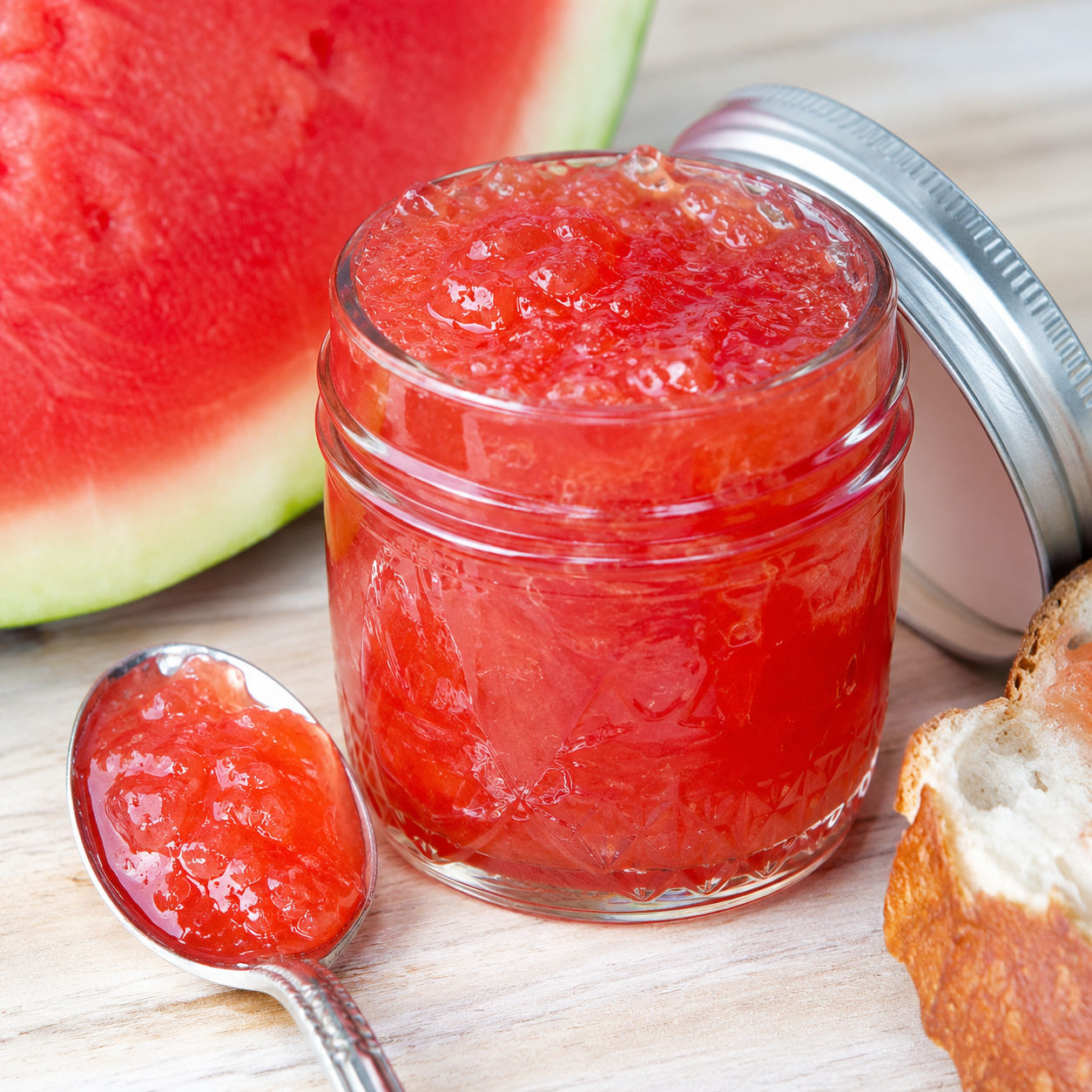
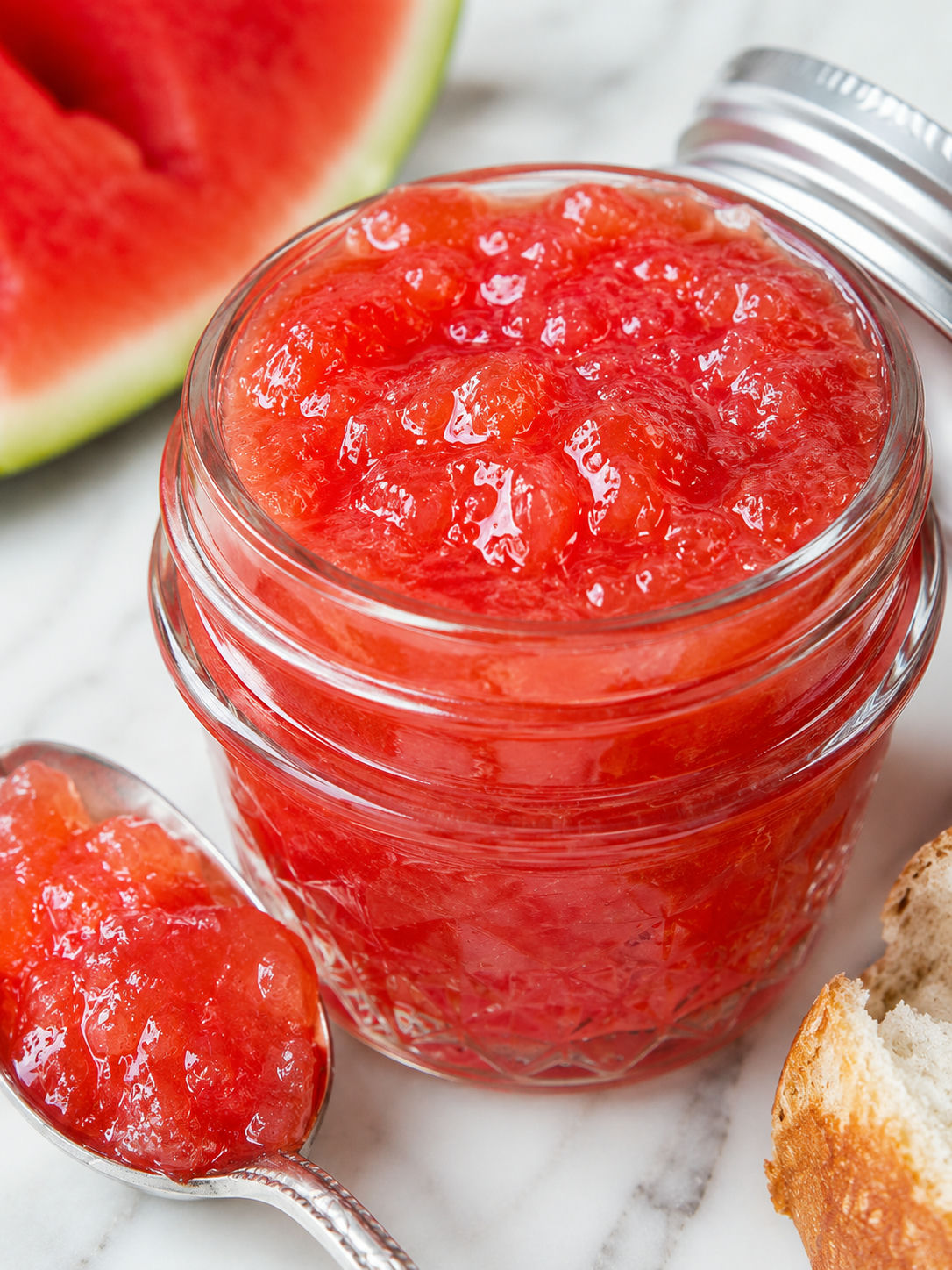
When watermelon is cheap and heavy at every farm stand, I buy the biggest one I can carry and set aside half for jam. It sounds unusual, but watermelon cooks down into a bright, coral-pink spread that tastes like summer concentrated in a jar. The flavor is lighter than berry jam, with a gentle sweetness that wakes up buttered toast in a way no store-bought spread can match.
The trick is accepting that watermelon is mostly water. You need a little pectin and patience to get a proper set, but the actual work is simple. Once the jars seal and ping on the counter, you will have a shelf-stable stash that lasts well past August.
What goes into the pot
A seedless watermelon saves you from picking out black seeds, but a seeded melon works if you cut carefully. Fresh lemon juice is non-negotiable. It provides the acid that helps the pectin gel and keeps the color vivid.
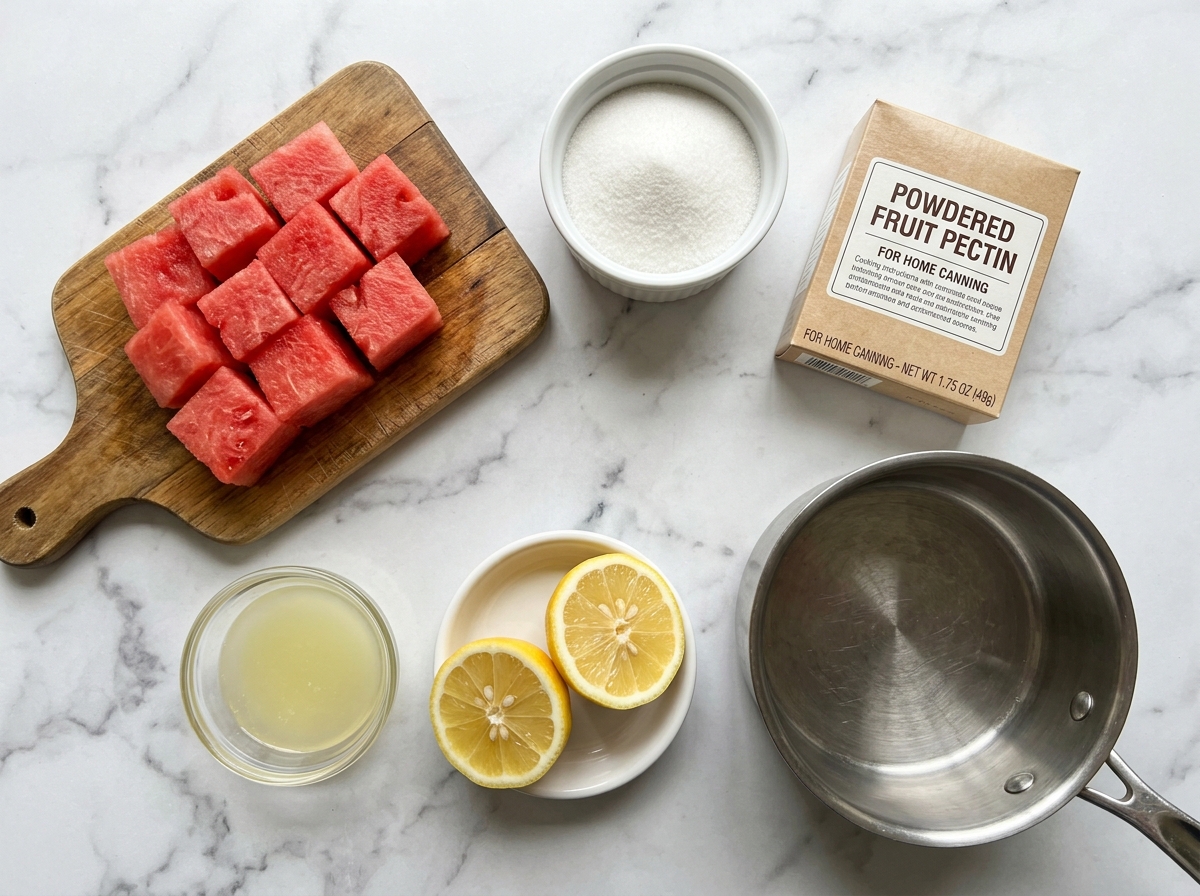
- Watermelon. Ripe, sweet flesh gives the jam its coral color and light melon flavor. Seedless makes prep faster.
- Granulated sugar. Sweetens and helps the gel form when combined with acid and pectin.
- Fresh lemon juice. The acid boost that activates the pectin and brightens the overall flavor.
- Powdered fruit pectin. Watermelon is low in natural pectin, so a standard box ensures a spreadable set instead of syrup.
How it cooks down
- Puree the melon. Scoop the flesh away from the rind and cube it. Blend in batches until smooth, then measure out 4 cups of puree.
- Prep the pectin. Whisk the powdered pectin with about 1/2 cup of the sugar in a small bowl. This prevents clumps when it hits the liquid.
- Simmer and dissolve. Pour the watermelon puree and lemon juice into a wide, deep pot. Stir in the pectin mixture and bring to a full rolling boil over medium-high heat, stirring constantly.
- Add the sugar. Dump in the remaining sugar all at once. Stir until it dissolves, then return the mixture to a rolling boil. Boil hard for exactly one minute.
- Check the set. Remove the pot from the heat. Drip a spoonful onto a cold plate and let it sit for thirty seconds. Run your finger through it. If it wrinkles and holds a trail, it is ready. If not, boil another thirty seconds and test again.
- Jar and process. Ladle the hot jam into sterilized half-pint jars, leaving 1/4 inch headspace. Wipe the rims, apply lids and rings fingertip-tight, and process in a boiling water bath for 10 minutes.
Why pectin matters here
Watermelon contains very little natural pectin compared to apples or citrus. If you simply boil watermelon and sugar, you will end up with a thin syrup that never truly gels. A box of standard powdered pectin gives you a reliable spreadable texture without overcooking the fruit. If you prefer a looser sauce, you can cut the pectin in half and serve it over ice cream or pancakes instead. I have even stirred a spoonful into watermelon lime jelly preserves for a mixed-fruit batch that looks beautiful in the jar.
The cold-plate test
Jam making is part recipe and part observation. The thermometer can lie, but a cold plate tells the truth. Keep a small saucer in the freezer before you start. When you think the jam is close, drip a teaspoon onto the frozen plate and wait half a minute. Push the puddle with your fingertip. If the surface wrinkles and the jam stays divided, the gel structure is there. If it floods back together, keep boiling. This test works for caramel apple jam and any other preserves you make this summer.
Sugar, swaps, and twists
Three cups of sugar balances the melon and gives a firm set with standard pectin. You can use a low-sugar pectin formula if you want to cut the sweetness, but do not simply reduce the sugar in a standard recipe or the gel may fail. For flavor twists, add a split vanilla bean during boiling or a pinch of cinnamon with the sugar. Some cooks stir in a handful of finely diced strawberries for color and body. If you are new to canning, the National Center for Home Food Preservation has tested guidelines for safe water-bath processing times.
Storage and shelf life
Properly sealed jars keep in a cool, dark pantry for up to one year. Once opened, refrigerate and use within three weeks. If a jar fails to seal after processing, store it in the refrigerator and enjoy it first. You can also skip the water bath entirely and freeze the jam in plastic freezer jars, leaving an inch of headspace for expansion. The texture stays nearly identical after thawing.
Ways to serve it
Beyond the obvious toast and biscuits, watermelon jam shines as a glaze for grilled chicken or pork. Swirl it into plain yogurt or layer it between cake rounds with whipped cream. It also makes a thoughtful gift alongside a loaf of homemade bread. If you want another fun preserve project, try our festive jam recipe for holiday gifting.
FAQs
- Can I make watermelon jam without pectin?
You can, but it will not set firmly. Without added pectin, cooked watermelon and sugar reduce to a thin syrup or sauce. That sauce is delicious over pancakes, but for a true jam texture, pectin is the reliable route.
- Why did my jam turn out runny?
The most common cause is undercooking or too little pectin. Make sure you reach a full rolling boil that cannot be stirred down before you start the one-minute timer. Also test with the cold-plate method to confirm the gel before jarring.
- How long does canned watermelon jam last?
Unopened, properly processed jars last about one year in a cool, dark pantry. After opening, refrigerate and use within three weeks.
- Can I use less sugar?
Only if you use a low-sugar or no-sugar-needed pectin formulated for reduced sugar. Standard pectin needs a minimum sugar concentration to gel correctly.
- Do I have to water-bath can the jars?
No. You can refrigerate the jam for up to three weeks, or freeze it for up to one year. Water-bath canning is only necessary if you want shelf-stable pantry storage.
- Can I use frozen watermelon?
Yes. Thaw it completely in the refrigerator first, then drain off excess liquid before pureeing. You may need to cook the jam a minute or two longer to reach the gel point.
- What pairs well with watermelon jam?
Buttermilk biscuits, warm sourdough toast, cream cheese on a bagel, or stirred into Greek yogurt. It also works as a glaze for grilled pork or chicken.
