 Pin it
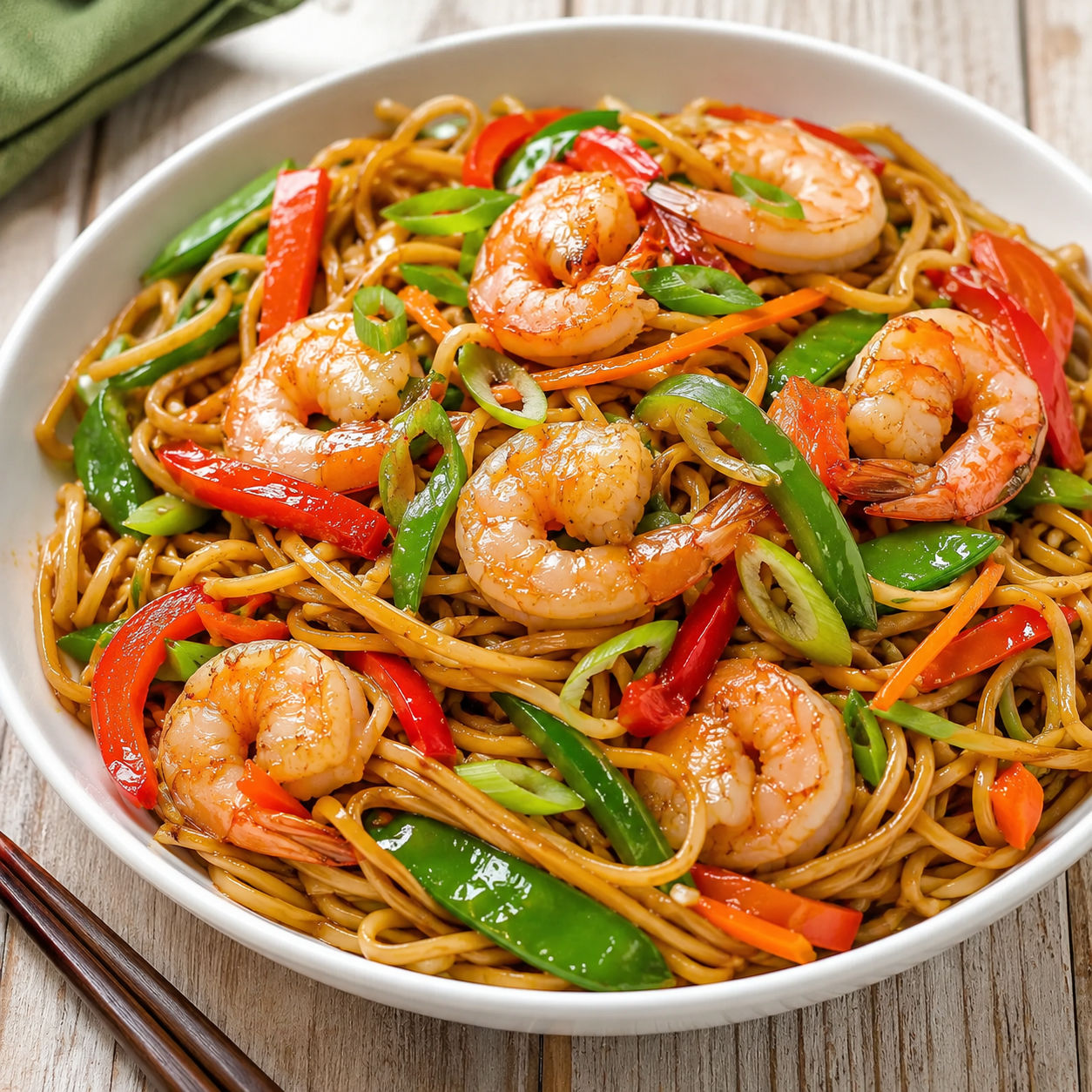
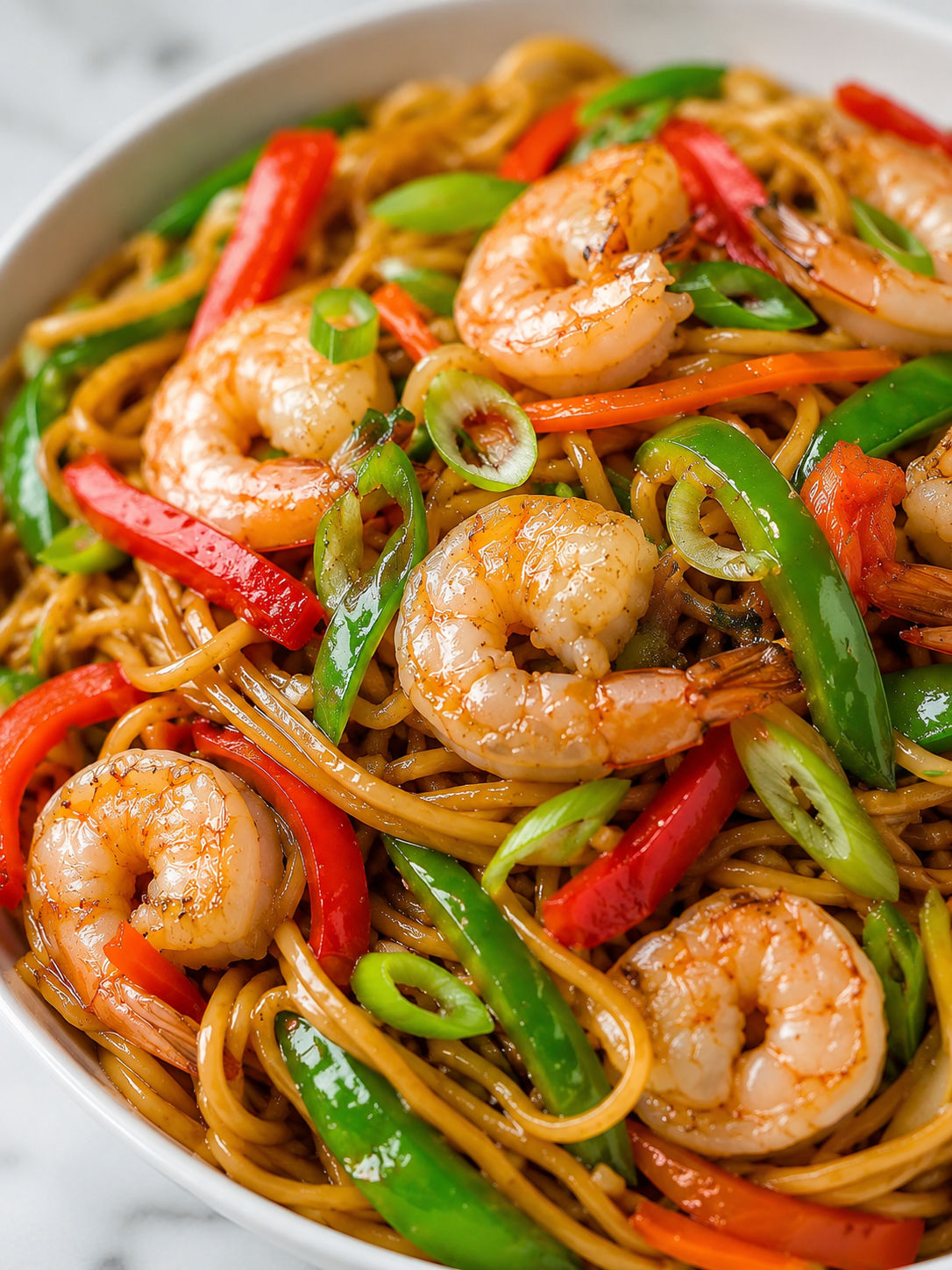
Shrimp Lo Mein With Red And Green Pepper is the kind of dinner that saves a busy night without tasting rushed. The noodles are springy, the shrimp stay juicy, and the peppers add enough crunch and color to make the bowl feel fresh.
The key is having everything sliced and stirred together before the pan gets hot. Once you start cooking, the recipe moves fast, just like a good stir-fry should.
Colorful Lo Mein Staples
Use shrimp that smell clean and sweet, not strong or briny. The peppers should feel firm and glossy, since they are doing more than adding color here.
- Lo mein noodles. Chewy egg noodles give the dish its takeout-style texture and hold the sauce well.
- Shrimp. Quick-cooking protein that stays sweet when seared briefly and pulled from the pan on time.
- Red bell pepper. Adds sweetness, color, and a softer crunch than green pepper.
- Green bell pepper. Brings a sharper, grassy bite that balances the sweet sauce.
- Snap peas and carrot. Add freshness and a little extra crunch without making the stir-fry heavy.
- Garlic and ginger. The warm aromatic base that makes the noodles smell like they came from a wok station.
- Soy, oyster, and hoisin sauces. Build a salty, savory, lightly sweet coating for the noodles.
- Sesame oil. A small finishing amount adds toasted aroma without making the dish greasy.
Fast Wok Toss Method
- Mix the sauce. Stir the soy sauce, oyster sauce, hoisin, water, sugar, sesame oil, and chili flakes in a small bowl so it is ready before the heat goes on.
- Cook the noodles. Boil the lo mein noodles until just tender, then drain and rinse lightly if they seem sticky. Toss with a few drops of oil if they need to sit.
- Season the shrimp. Pat the shrimp dry, then coat with a little soy sauce, cornstarch, and white pepper. This helps them stay juicy in the hot pan.
- Sear the shrimp. Cook in a hot wok or skillet for 1-2 minutes per side until pink and barely opaque. Move them to a plate before they tighten.
- Stir-fry the vegetables. Add the peppers, carrot, and snap peas. Cook fast over high heat until the edges brighten and the centers stay crisp.
- Toss the noodles. Add garlic, ginger, noodles, sauce, and shrimp. Toss until the noodles are glossy and the shrimp are heated through, then finish with green onions.
Red And Green Pepper Timing
The peppers should not cook like fajita vegetables. For this lo mein, you want them bright and crisp enough to break up the soft noodles. Thin strips work better than chunks because they soften quickly without needing a long cook.
Put the peppers in after the shrimp comes out. That gives you room in the pan and keeps the shrimp from overcooking while the vegetables finish. If your skillet is small, cook the peppers in two batches. Crowding traps steam, and steamed peppers lose their snap fast. For another pepper-heavy dinner, try the Shrimp and Bell Pepper Stir-Fry.
Keep The Shrimp Tender
Shrimp are done sooner than most people think. They should curl into a loose C shape and turn opaque, usually in 2-4 minutes total depending on size. If they curl tightly and feel springy, they have gone too far.
A quick cornstarch coating gives the surface a light silkiness and helps protect the shrimp from the heat. It is a small restaurant trick that works at home. The FDA has helpful seafood storage and cooking guidance in its seafood safety guide if you want a food-safety reference for buying and handling shrimp.
Sauce That Coats Noodles
Lo mein sauce should cling, not pool in the bottom of the bowl. Soy sauce brings salt, oyster sauce adds depth, and hoisin gives body with a gentle sweetness. A spoonful of water loosens the mixture enough to coat the noodles evenly.
Do not add the sauce too early. Let the vegetables get hot first, then add noodles and sauce together. Toss with tongs until the noodles look shiny and evenly stained. If you like noodle dinners with a similar fast-pan rhythm, the Easy Shrimp Lo Mein Recipe and Delicious Chow Mein Noodles with Chicken are good next picks.
Smart Swaps For Busy Nights
No lo mein noodles? Use spaghetti, linguine, or fresh yakisoba noodles. The texture changes a little, but the sauce still works. For vegetables, swap snap peas for broccoli, shredded cabbage, mushrooms, or baby bok choy.
For heat, add chili garlic sauce or a pinch of crushed red pepper with the sauce. For a milder family version, skip the chili and add extra green onion at the end. You can also trade the shrimp for thin chicken strips, but cook them all the way through before adding the vegetables.
Leftovers Without Mushy Noodles
Leftover lo mein thickens as it sits because the noodles keep drinking in sauce. Store it airtight and reheat it in a skillet instead of blasting it in the microwave. Add 1-2 tablespoons water, cover for a minute, then toss until the noodles loosen.
Do not freeze this dish if you care about texture. The peppers soften and the noodles can break. If you want to prep ahead, mix the sauce, slice the vegetables, and thaw the shrimp earlier in the day. Cook the noodles and stir-fry right before eating.
What To Serve Beside It
This shrimp lo mein is filling on its own, so keep sides simple. Cucumber salad, steamed edamame, egg drop soup, or a quick cabbage slaw all fit without crowding the plate. For a bigger spread, pair it with Honey Garlic Shrimp Stirfry and let everyone build a mixed noodle-and-rice bowl.

FAQs
- Can I use frozen shrimp for lo mein?
Yes. Thaw frozen shrimp under cold running water or overnight in the fridge, then pat them very dry. Dry shrimp sear better and will not water down the sauce.
- What noodles work best for shrimp lo mein?
Fresh lo mein noodles give the bounciest texture, but dried lo mein noodles work well too. Spaghetti is a fine backup if that is what you have, especially when cooked just shy of tender.
- Can I make this without oyster sauce?
You can replace oyster sauce with more hoisin plus a splash of soy sauce. The flavor will be a little sweeter and less briny, but the noodles will still come out glossy and savory.
- How do I keep the peppers crisp?
Slice the red and green peppers thin and cook them over high heat for only 2-3 minutes. They should soften at the edges but still have a clean snap when you bite them.
- How long do leftovers keep?
Store leftovers in an airtight container in the fridge for up to 3 days. Reheat in a skillet with a spoonful of water so the noodles loosen without turning mushy.
- Can I add more vegetables?
Yes. Broccoli florets, mushrooms, cabbage, baby bok choy, or bean sprouts all work nicely. Keep the total vegetable amount close to 3 cups so the pan does not overcrowd.
