 Pin it
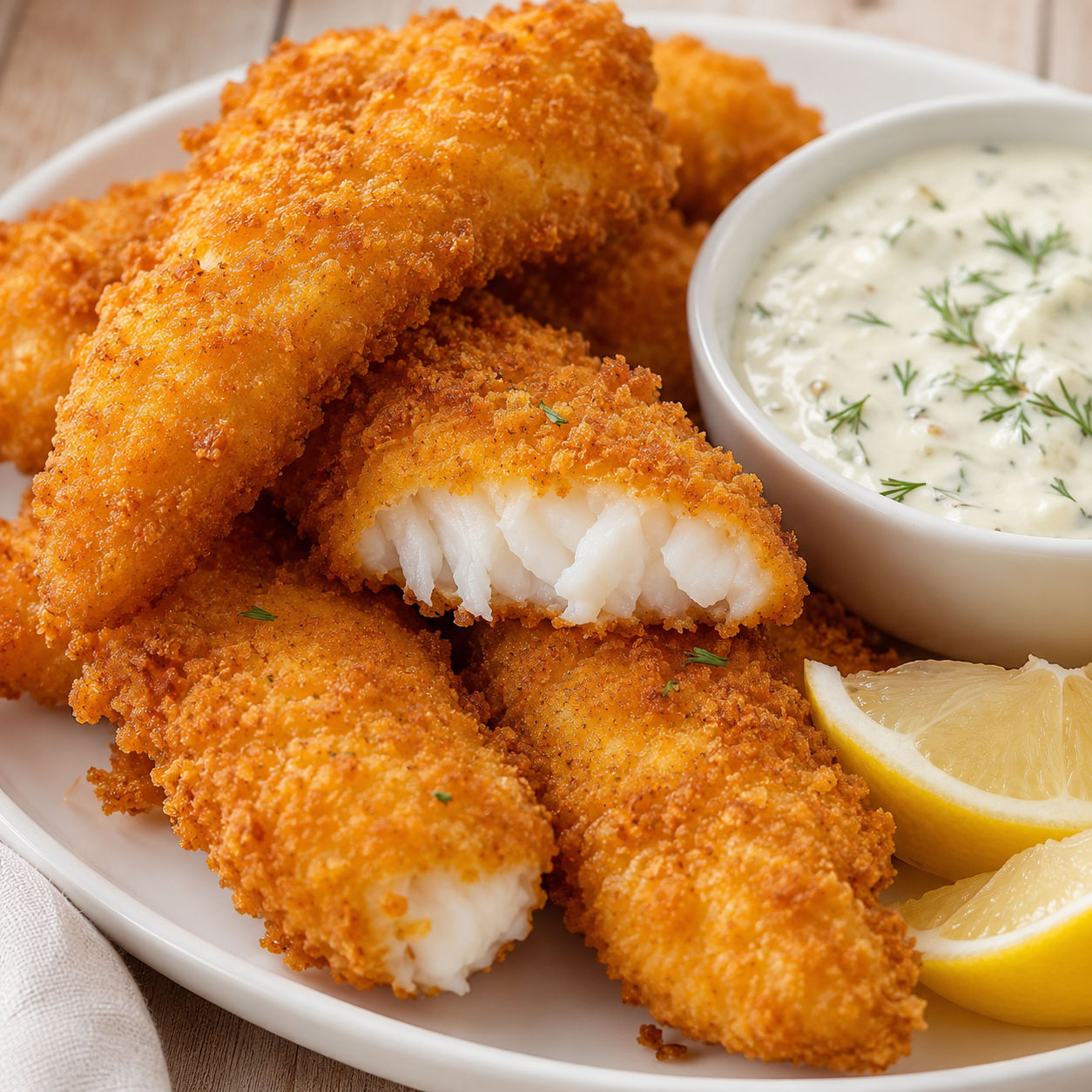
Crispy Fish With Dipping Sauce is the kind of dinner that makes a plain piece of white fish feel like something everyone wants to grab first. The coating is light and craggy, the fish stays tender, and the sauce brings the lemony bite fried food needs.
I like this with cod, haddock, or tilapia because they cook fast and take a crunchy coating well. The real difference comes from drying the fish before breading and giving the panko a firm press so it sticks.
What Gives It Crunch
The ingredients are simple, so use fish that smells clean and feels firm. Panko is the main crunch-maker here, and a fresh lemon keeps the dipping sauce bright instead of heavy.
- White fish fillets. Cod, haddock, tilapia, or pollock stay mild and flaky under the crisp coating.
- All-purpose flour. Gives the egg something to grip so the breading stays on.
- Eggs. Work as the sticky middle layer between flour and crumbs.
- Panko breadcrumbs. Create a lighter, sharper crunch than regular breadcrumbs.
- Garlic powder and paprika. Season the coating without adding wet ingredients.
- Neutral oil. Lets the fish fry cleanly without a strong flavor.
- Mayonnaise. Makes the sauce creamy and sturdy enough for dipping.
- Lemon juice and Dijon mustard. Cut through the fried coating with tang.
- Dill and garlic. Add fresh flavor to the sauce without making it fussy.
Crispy Fish Method
- Mix the sauce. Stir mayonnaise, lemon juice, Dijon, dill, garlic, salt, and pepper until smooth, then chill it while you cook.
- Cut and dry the fish. Slice the fillets into wide strips and pat every side dry with paper towels so the breading grips.
- Set up the bowls. Put seasoned flour in one shallow bowl, beaten eggs in the second, and panko in the third.
- Bread each piece. Coat fish in flour, dip in egg, then press firmly into panko until covered on all sides.
- Fry in batches. Heat oil in a skillet over medium heat and cook the fish for 2-3 minutes per side until golden and crisp.
- Drain and serve. Move the fish to a wire rack, sprinkle lightly with salt, and serve hot with sauce and lemon wedges.
Dry Fish Fries Better
Moisture is the quiet reason fried fish turns soft. Before the fish touches flour, press it dry with paper towels and let it sit for a minute while you set up the bowls. That little pause matters. The flour sticks in a thin layer instead of turning pasty, and the egg does not slide off.
Cut the fish into pieces of similar size so everything cooks at the same pace. I aim for strips about 1 inch wide. If a fillet has a thin tail end, fold it slightly before breading or cook that piece for less time. For a fish sandwich version, use larger portions and borrow serving ideas from crispy fried cod sandwich.
Keep The Coating Attached
A good breading station works in thin layers. Flour first, then egg, then panko. Shake off the extra flour because clumps make weak spots. Let excess egg drip back into the bowl. When the fish goes into the panko, press the crumbs on firmly with your fingertips.
After breading, let the pieces rest on a plate for about 10 minutes. This gives the coating time to hydrate and cling. It is the same idea that helps other crunchy recipes, like crispy batter dipped fish, stay intact once they hit hot oil.
Oil Heat Matters
Medium heat is safer than rushing the pan. If the oil is too cool, the coating drinks it up and tastes heavy. If it is too hot, the panko browns before the fish cooks through. You want a steady sizzle when a crumb touches the oil.
Work in batches and leave space between the strips. Crowding traps steam and softens the crust. Once the fish is golden, move it to a wire rack instead of paper towels. A rack lets air move under the crust, which keeps the bottom from going limp. The FDA seafood guide is a helpful reference for choosing and handling fish safely, and the FoodSafety.gov temperature chart lists 145°F as the safe internal temperature for fish.
Sauce Swaps That Fit
The lemon garlic mayo is quick and mild, which makes it easy for kids and adults. For a sharper sauce, add chopped pickles or capers. For heat, stir in a spoonful of hot sauce or a pinch of cayenne. If you want a classic pairing, homemade tartar sauce is a natural match with this fish.
Greek yogurt can replace half the mayo if you want a lighter dip. I would not replace all of it because the sauce can taste chalky. Keep enough fat in the sauce to balance the crisp coating.
Storing Leftover Fish
Crispy fish is best right after frying, but leftovers can still be good. Cool them fully, then refrigerate in an airtight container for up to two days. Keep the sauce separate so the coating does not absorb moisture.
Reheat the fish in an air fryer or oven at 375°F until hot and crisp again, usually 6-8 minutes. Skip the microwave unless you are fine with a softer crust. Leftover strips also make quick tacos with slaw, avocado, and a squeeze of lemon. For a seafood dinner with a lighter feel, the site also has Thai lime-garlic steamed fish.
Summary
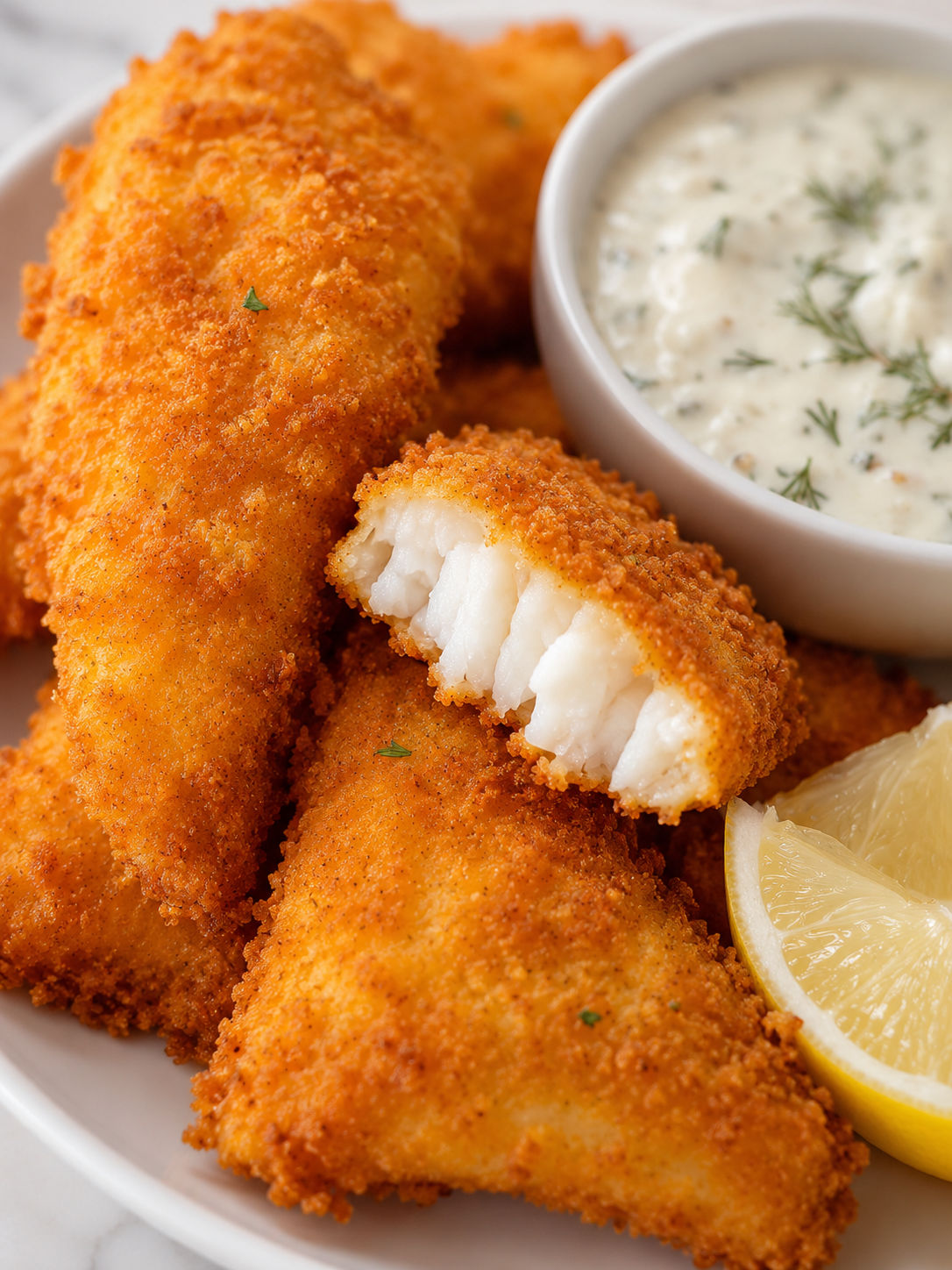
This recipe keeps the fish crisp with a simple breading station, steady pan heat, and a wire rack for draining. Serve it hot with lemon wedges and the chilled dipping sauce.
FAQs
- What kind of fish works best for crispy fish with dipping sauce?
Cod, haddock, tilapia, pollock, and halibut all work well. Choose firm white fish that can be cut into strips without falling apart. Very thin fillets cook fast, so check them early.
- Can I bake the fish instead of frying it?
Yes, but it will be a little less crisp. Spray the breaded fish well with oil and bake on a rack at 425°F for about 12-15 minutes, flipping once. For deeper color, toast the panko in a little oil before breading.
- Can I make the dipping sauce ahead?
Yes. Stir it together up to two days ahead and keep it covered in the refrigerator. The garlic gets stronger as it sits, so use a small clove if making it early.
- Why is my breading falling off?
The fish may be too wet, or the coating layers may not be pressed on firmly enough. Pat the fish dry, shake off extra flour, let excess egg drip away, then press the panko onto every side. Resting the breaded fish for 10 minutes also helps.
- How do I know fried fish is done?
The outside should be golden and the center should flake easily. For food safety, fish should reach 145°F in the thickest part. Small strips often get there in 2-3 minutes per side.
- What should I serve with crispy fish?
Fries, slaw, roasted potatoes, or a green salad are all good. For more crunch on the side, try crispy Brussels sprouts with Dijon aioli or a simple cabbage slaw.
