 Pin it
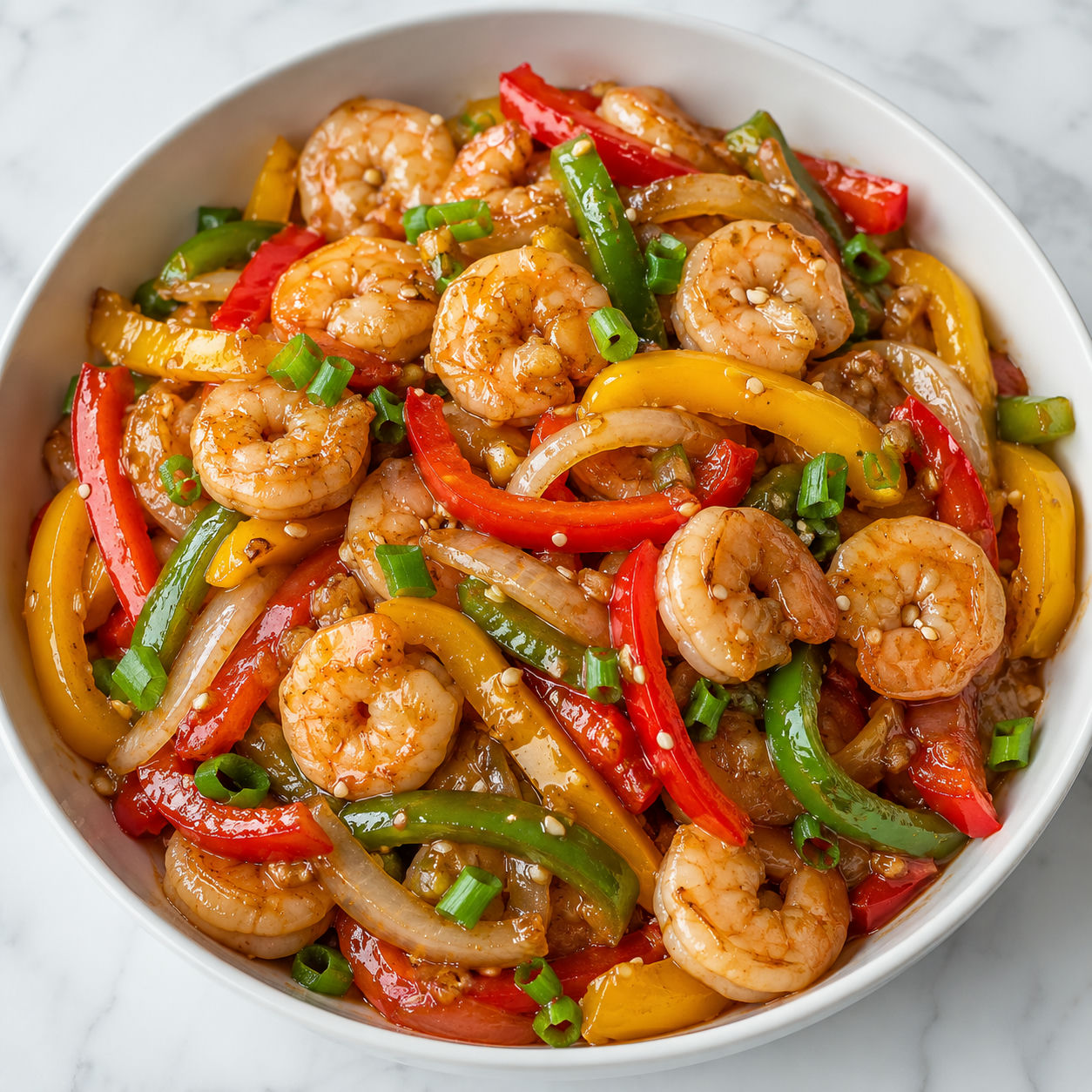
Shrimp and Bell Pepper Stir-Fry is the kind of dinner I lean on when I want something bright, fast, and not heavy. The shrimp turn pink in minutes, the peppers keep a little snap, and the sauce is glossy enough to coat every bite without drowning the pan.
The key is cooking in stages. Shrimp first, peppers second, sauce last. That little bit of order keeps the seafood tender and the vegetables from going limp.
Colorful skillet staples
Use large shrimp so they stay juicy through the quick heat. Pick firm, shiny bell peppers with smooth skins, since they are the main vegetable and bring most of the sweetness.
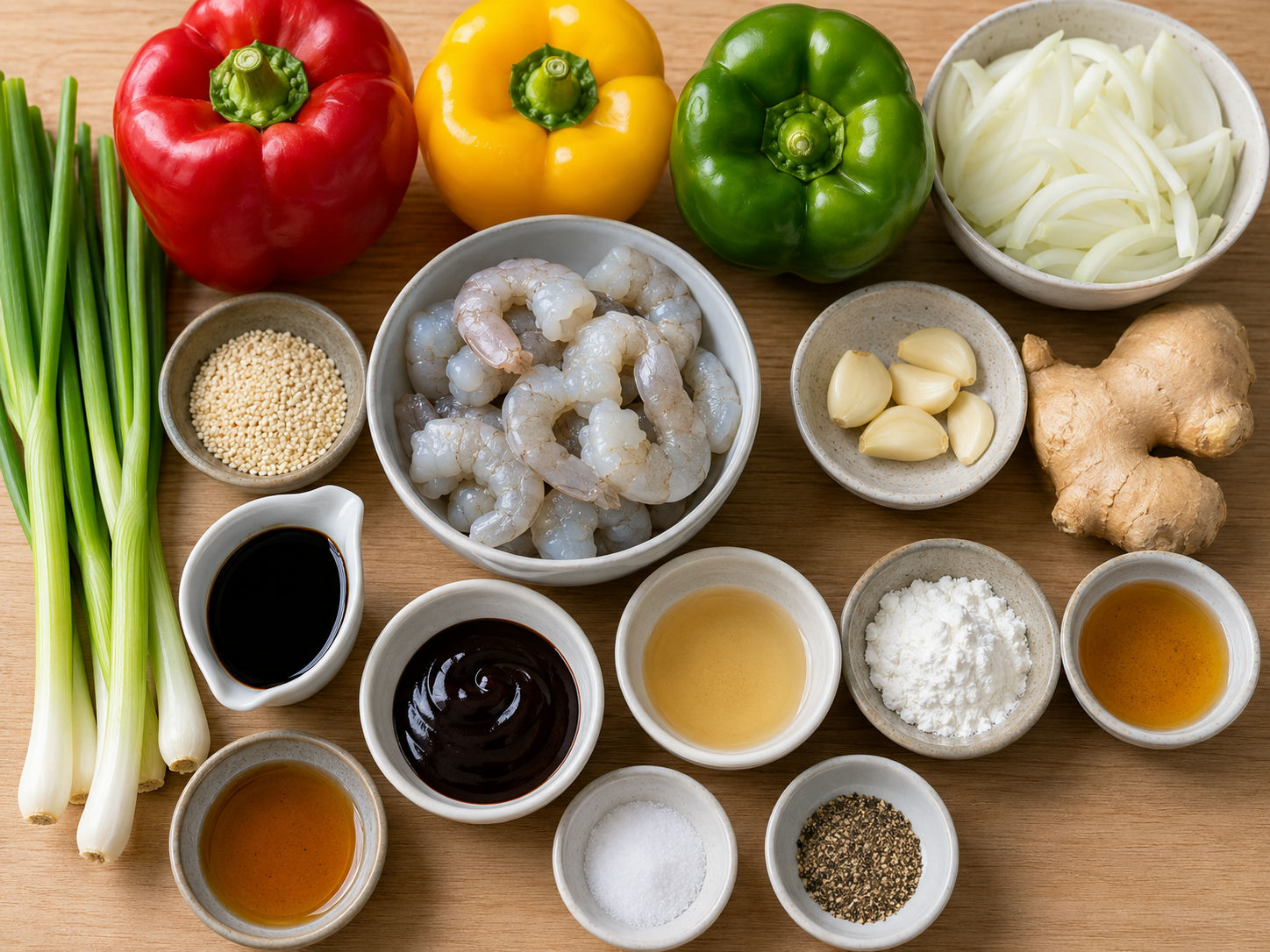
- Large shrimp. They cook fast and give the stir-fry a sweet, clean seafood flavor.
- Bell peppers. Red, yellow, and green peppers add crunch, color, and a fresh sweet edge.
- Yellow onion. Thin wedges soften quickly and make the sauce taste rounder.
- Garlic and ginger. These aromatics give the pan its warm, savory base.
- Gluten-free tamari. It brings salt and depth without using regular wheat-based soy sauce.
- Rice vinegar. A small splash keeps the sauce lively.
- Honey. It balances the salt and helps the sauce cling.
- Cornstarch. It thickens the sauce quickly so it coats the shrimp and peppers.
- Sesame oil. A little at the end gives the dish a nutty finish.
Cook it in quick rounds
- Mix the sauce. Whisk tamari, water, rice vinegar, honey, cornstarch, sesame oil, and chili flakes until smooth. Keep it near the stove because the pan moves fast.
- Sear the shrimp. Pat the shrimp dry, season lightly, and cook in hot oil for about 1 minute per side. Remove them while they are just pink.
- Stir-fry the peppers. Add the bell peppers and onion to the same skillet. Cook over high heat for 3-4 minutes until bright and crisp-tender.
- Add the aromatics. Stir in garlic and ginger for 30 seconds. Do not let them brown hard, since burnt garlic tastes sharp.
- Finish with sauce. Return the shrimp, pour in the sauce, and toss until glossy and lightly thickened. Scatter scallions over the top and serve hot.
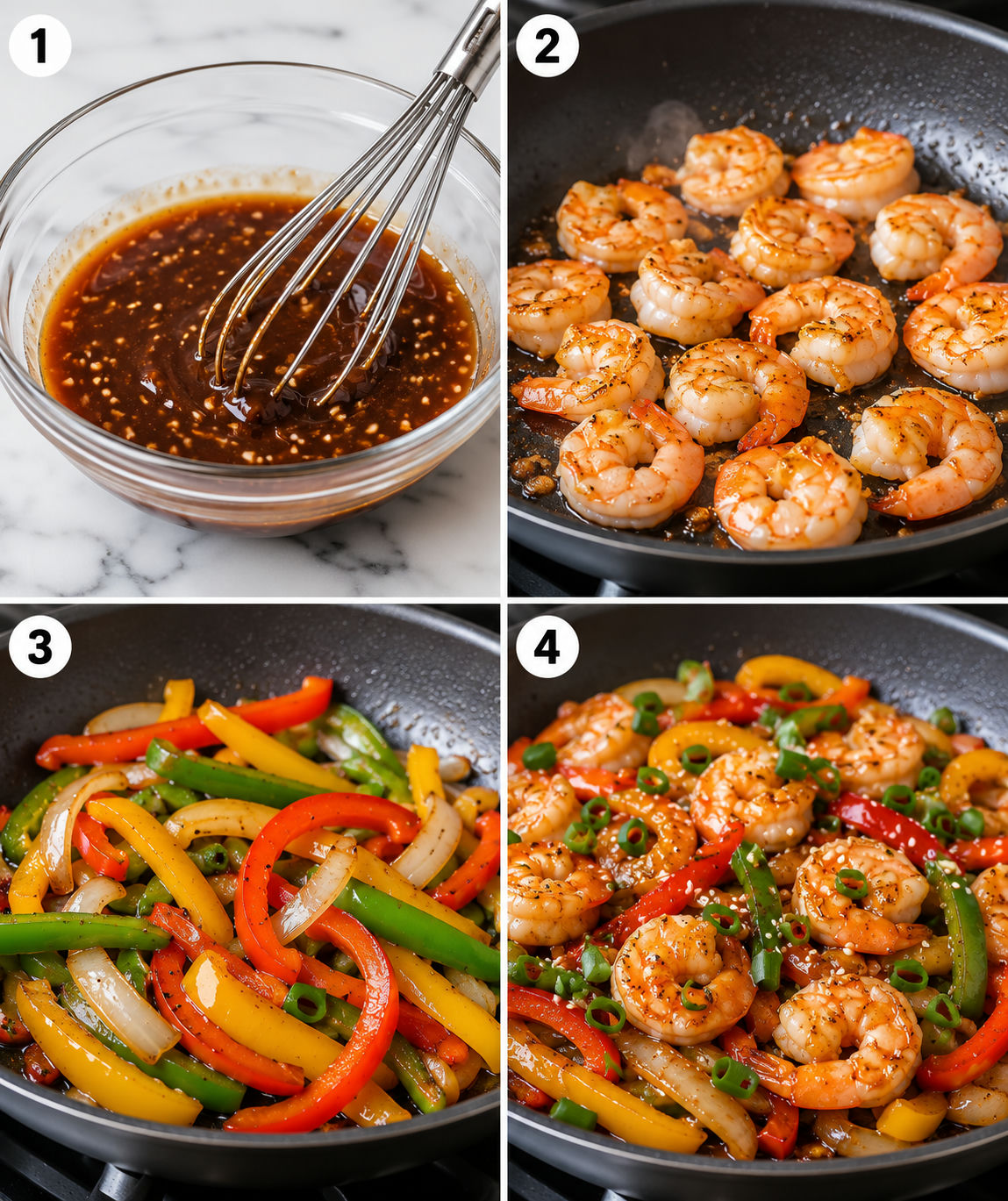
Shrimp and Bell Pepper Stir-Fry timing
The best stir-fry texture comes from short, separate cooking. Shrimp need less time than peppers, so give them a quick sear and take them out before they tighten. The FDA seafood-safety guide notes that shrimp should turn pearly and opaque when cooked. If you use a thermometer, the USDA safe temperature chart lists 145 F for seafood. In a home skillet, color and texture are usually the easiest clues. The shrimp should curl into a loose C shape, not a tight ring.
A sauce that clings
The sauce is thin when it goes into the pan, then thickens in under a minute. Stir it again right before pouring because cornstarch settles at the bottom of the bowl. Once it hits heat, toss constantly so the starch thickens evenly and does not form pale little clumps. If you like having a house sauce ready for weeknights, this same idea pairs well with an all-purpose stir fry sauce. For a sweeter version, add an extra teaspoon of honey. For more bite, add black pepper or a spoonful of chili garlic sauce.
Swaps that make sense
This recipe is flexible as long as you keep the pieces quick-cooking. Snow peas, sliced zucchini, mushrooms, or broccoli florets can replace part of the peppers. If you want a fuller vegetable mix, the method is close to this shrimp stir fry with fresh vegetables. Noodles are good too. Toss the finished skillet with cooked lo mein or rice noodles, similar to the peppers in shrimp lo mein with red and green pepper. If you use chicken or beef, slice it thin and cook it before the vegetables. Beef with peppers follows the same quick skillet logic as pepper steak stir fry.
Storing the leftovers
Leftovers keep in an airtight container in the fridge for up to 3 days. Reheat them gently in a skillet with a teaspoon or two of water. High heat on the second round can make shrimp firm, so warm it slowly and stop as soon as the sauce loosens. I do not love freezing this dish because bell peppers lose their crisp texture after thawing. If you want to prep ahead, slice the peppers and onion, whisk the sauce, and keep the shrimp separate in the fridge. Dinner will still come together in about 10 minutes at the stove.
Summary
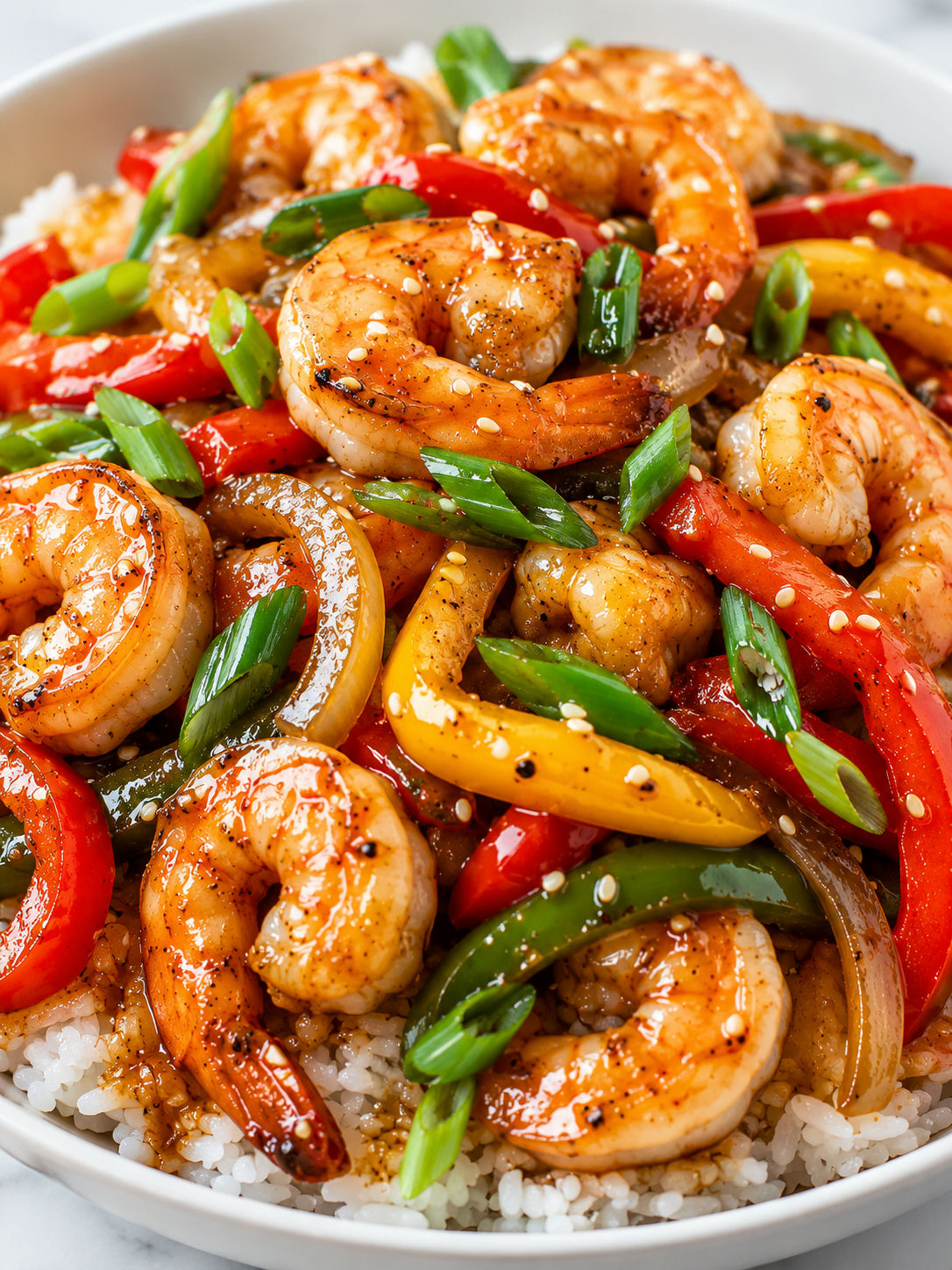
Serve this stir-fry straight from the skillet over rice, cauliflower rice, or noodles. Leftovers reheat best in a skillet over low heat.
FAQs
- Can I use frozen shrimp for this stir-fry?
Yes. Thaw the shrimp under cold running water or overnight in the fridge, then pat them very dry. Dry shrimp sear better and release less water into the skillet.
- What color bell peppers work best?
Red, yellow, and orange peppers are sweeter and look especially good with shrimp. Green bell pepper works too, but it tastes sharper and a little grassy.
- Can I make this without soy?
You can use coconut aminos in place of tamari. The sauce will taste a little sweeter and less salty, so taste before adding the final pinch of salt.
- How do I keep shrimp from turning rubbery?
Cook shrimp just until pink and opaque, then move them out of the pan while the peppers cook. They only need a brief return to the skillet once the sauce thickens.
- Can I meal prep this recipe?
You can slice the peppers, mix the sauce, and peel the shrimp up to one day ahead. For the best texture, cook the stir-fry right before serving rather than fully meal prepping it.
- What should I serve with shrimp and bell pepper stir-fry?
Steamed jasmine rice is the easiest match. Brown rice, rice noodles, or cauliflower rice also work well because the sauce is savory, light, and not too sweet.
