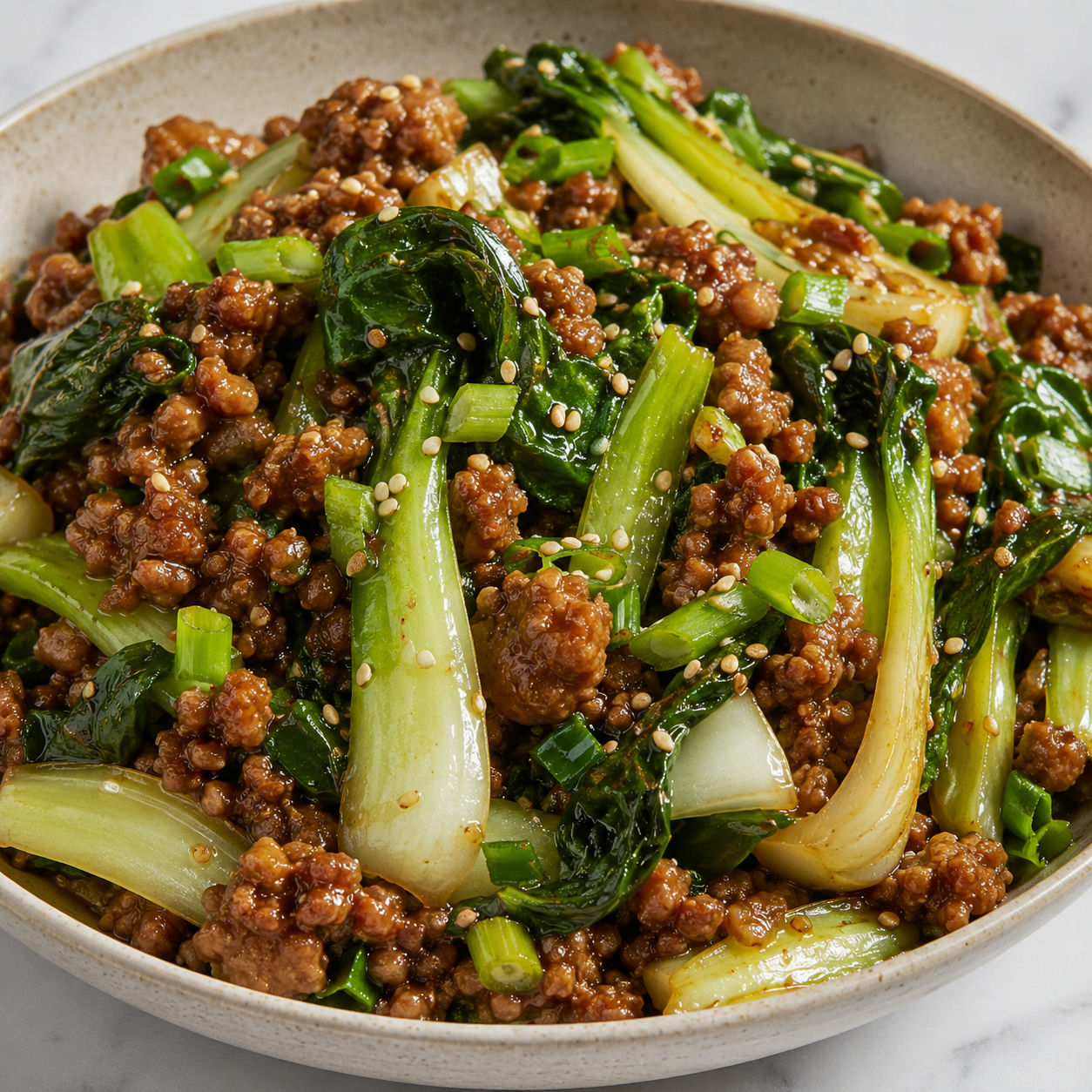
 Pin it
This Stir-fried Bok Choy with Ground Meat Recipe is the kind of dinner that saves a busy night without tasting rushed. The meat browns into savory little bits, the bok choy keeps its snap, and the sauce turns glossy in the pan.
I like it best with ground pork, but ground beef or turkey work well too. The key is cooking the stems before the leaves so you get tender-crisp pieces instead of a watery pile of greens.
What Gives This Skillet Depth
The ingredient list is short, so each piece needs to pull its weight. Choose bok choy with firm pale stems and lively green leaves, then rinse between the stalks because grit likes to hide there.
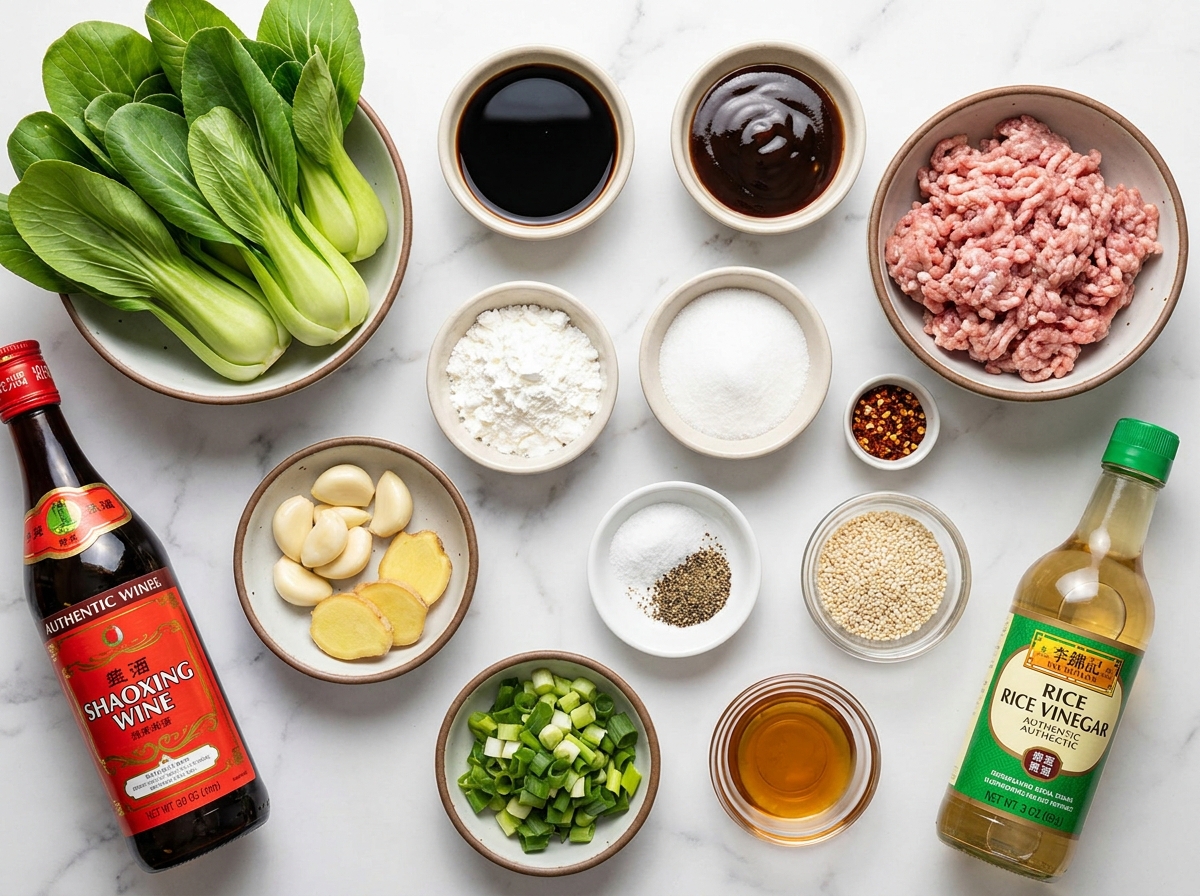
- Bok choy. The stems bring crunch and the leaves wilt into the sauce without needing much time.
- Ground pork or beef. The meat browns quickly and makes the dish satisfying enough for dinner.
- Garlic and ginger. These aromatics give the pan that fresh, savory smell right away.
- Scallions. The white parts season the oil and the green tops add a clean finish.
- Soy sauce. Adds salt and deep color to the glossy sauce.
- Oyster sauce. Gives body, sweetness, and a round savory flavor.
- Shaoxing wine. Loosens the browned bits and adds a gentle fermented note.
- Cornstarch slurry. Thickens the sauce just enough to cling to the meat and greens.
- Sesame oil. Goes in at the end for aroma rather than frying.
Fast Heat, Crisp Stems
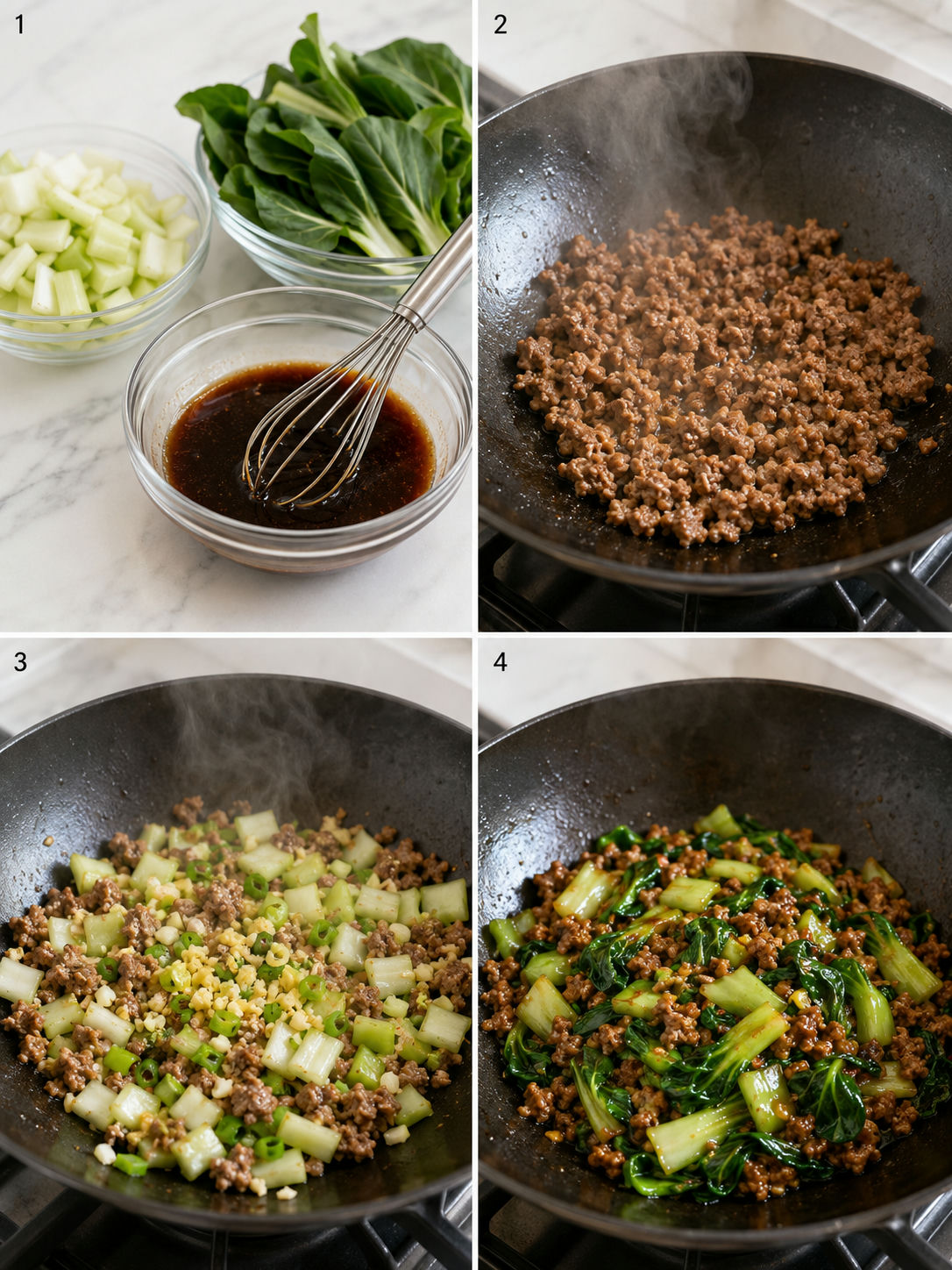
- Mix the sauce. Stir the soy sauce, oyster sauce, Shaoxing wine, rice vinegar, sugar, cornstarch, and water in a small bowl so it is ready when the pan is hot.
- Brown the meat. Cook the ground meat in a large skillet or wok until it loses its pink color and starts to caramelize at the edges.
- Add the aromatics. Stir in the garlic, ginger, scallion whites, and chili flakes for about 30 seconds until fragrant.
- Cook the bok choy stems. Add the sliced stems first and stir-fry until they look glossy and begin to soften.
- Wilt the leaves. Add the bok choy leaves and toss until bright green and just tender.
- Finish with sauce. Pour in the sauce and stir until it bubbles, thickens, and coats every bit of meat and bok choy.
Stir-fried Bok Choy with Ground Meat
The move that makes this dish work is separating the bok choy stems from the leaves. The stems need a few minutes of direct heat. The leaves only need a short toss at the end. If everything goes in together, the leaves collapse before the stems are ready.
High heat matters too. A wide skillet gives steam a place to escape, which keeps the vegetable crisp instead of soupy. Bon Appetit gives the same practical stir-fry advice in its pork and bok choy stir-fry, where the ingredients are prepped before the pan gets going. That part is not fussy. Once garlic hits hot oil, you do not have time to chop.
For another green-heavy skillet dinner, try Quick Spicy Garlic Bok Choy or the saucier Quick Ground Beef and Broccoli Stir Fry.
The Sauce Should Cling
This is not a saucy takeout bowl with liquid pooling at the bottom. The cornstarch slurry should tighten in less than a minute and coat the meat in a shiny layer. If the sauce looks too thick, add one tablespoon of water and toss again. If it looks thin, let it bubble for another 20-30 seconds.
Oyster sauce is doing a lot of work here, so use one you like. If you avoid it, hoisin gives sweetness and body, but the flavor will be different. For a bigger batch sauce to keep in the fridge, the site's All-Purpose Stir Fry Sauce has the same soy-garlic-ginger direction and works with many vegetables.
Meat Choices And Safety
Ground pork is my first pick because it stays juicy and browns well. Ground beef makes the dish richer. Ground chicken or turkey tastes lighter, but it benefits from a little extra oil and a firm scrape of the pan so it does not dry out in clumps.
Whatever meat you choose, cook it fully before the bok choy goes in. The USDA safe temperature chart lists ground meats at 160°F, so use that as your guide if you check with a thermometer through a thicker clump. Bok choy itself cooks fast and brings plenty of water to the pan. USDA FoodData Central is also a useful reference for estimating nutrition because raw vegetables like bok choy are naturally light before sauce and oil are added.
Serve It While Glossy
This stir-fry is at its best right away, when the bok choy stems still have a little snap. Spoon it over steamed rice, tuck it into lettuce cups, or serve it with plain noodles. A spoonful of chili crisp at the table is good if you want more heat.
Leftovers are still useful. Keep them chilled for up to 3 days and reheat in a skillet, not a covered microwave blast if you can help it. A tablespoon of water brings the sauce back. If you like this style of quick dinner, Stir-fried Potatoes with Minced Meat and Bell Peppers has the same comfort-food feel with a heartier vegetable base.
Summary
Keep the pan hot, prep everything before cooking, and add the bok choy leaves at the end. That small timing choice makes the dish taste fresher and keeps the texture right.
FAQs
- Can I use regular bok choy instead of baby bok choy?
Yes. Slice the thick white stems crosswise into bite-size pieces and chop the leaves separately. Start the stems first, then add the leaves near the end so they stay green and tender.
- What ground meat works best?
Ground pork gives the juiciest flavor, but ground beef, chicken, or turkey all work. If using very lean meat, add an extra teaspoon of oil so the aromatics do not scorch.
- Can I make this gluten-free?
Yes. Use gluten-free tamari instead of soy sauce and choose a gluten-free oyster sauce. Check the Shaoxing wine too, or replace it with dry sherry labeled gluten-free.
- How do I keep bok choy from turning watery?
Dry it well after washing and keep the pan hot. Cook the stems first, add the leaves later, and do not cover the skillet unless your stems are very large.
- How long do leftovers keep?
Store leftovers in an airtight container in the refrigerator for up to 3 days. Reheat in a skillet over medium heat until hot, adding a splash of water if the sauce has tightened.
- What should I serve with it?
Steamed jasmine rice is the easiest choice because it soaks up the sauce. Brown rice, rice noodles, or a fried egg on top also make it feel like a full meal.
