 Pin it
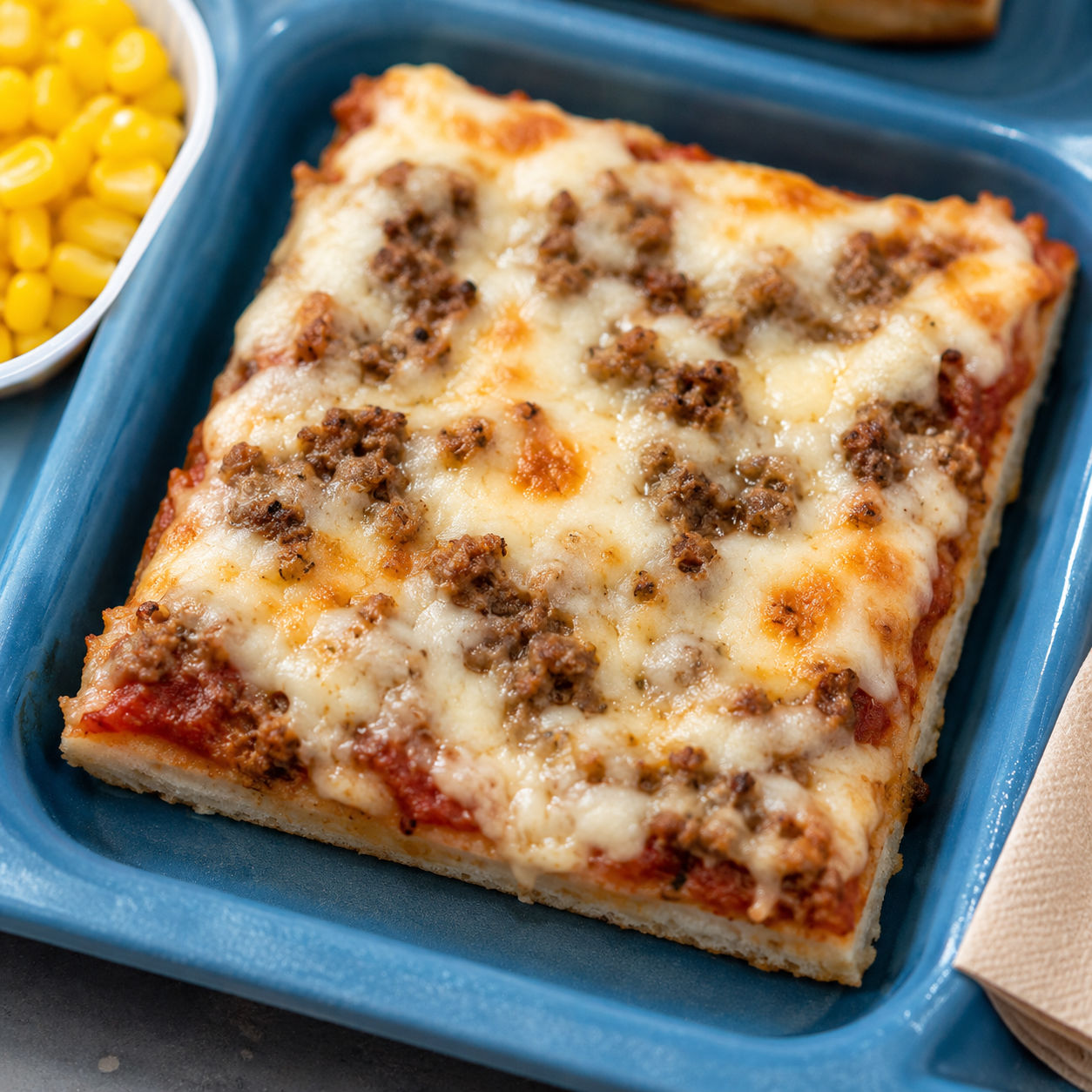
School Cafeteria Pizza is not trying to be brick-oven pizza. It is soft, square-edged, a little bready, and loaded with the kind of melty cheese that made pizza day feel better than every other lunch tray.
The trick is the pourable crust. It looks too loose at first, but after a short rest and a quick parbake it sets into that familiar tender base that holds sauce without turning soggy.
I like it with seasoned ground beef because that is the version many cafeterias served, but pepperoni, sausage, or plain cheese all work. The real point is the rectangle slice.
The lunch tray lineup
The ingredient list is plain in a good way. Use low-moisture mozzarella, a thick pizza sauce, and a half sheet pan with a real rim so the soft batter has somewhere to go.
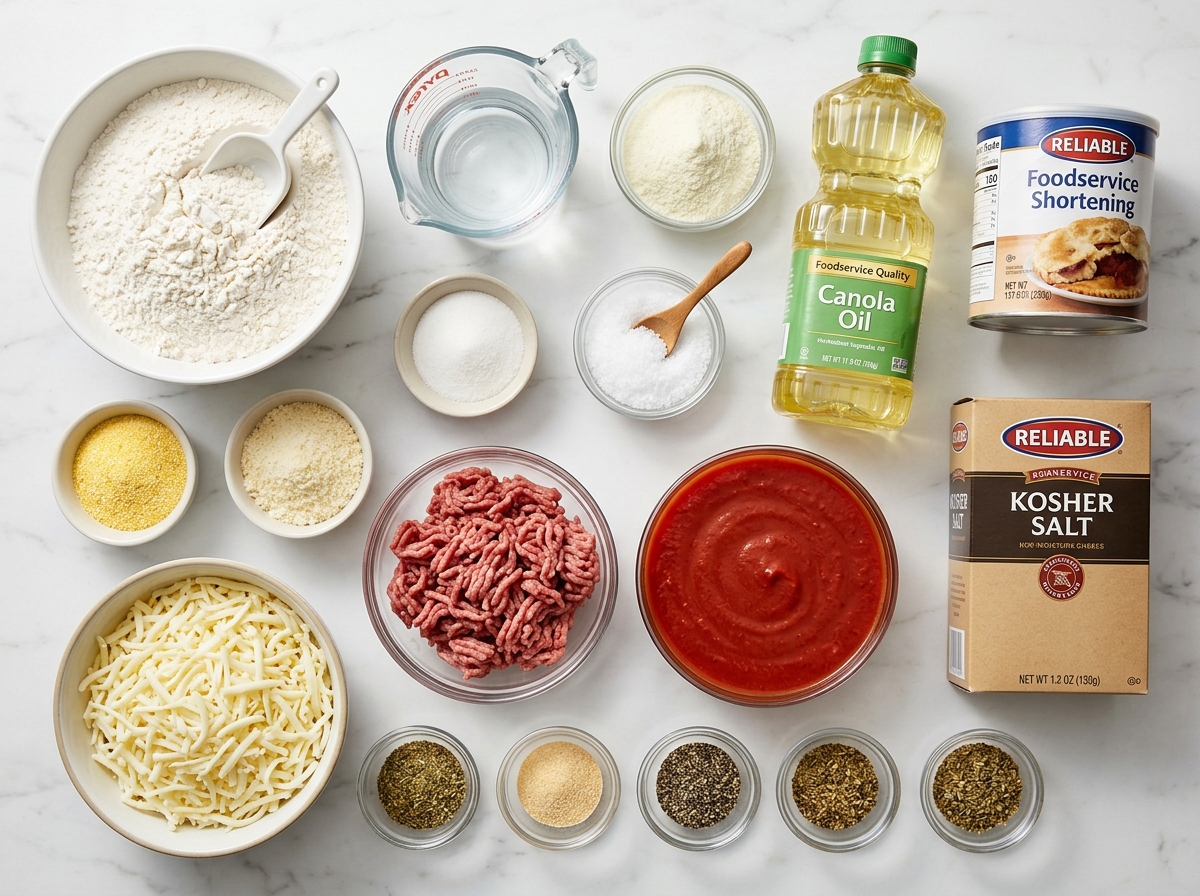
- Active dry yeast. Gives the crust lift without needing a long rise.
- Warm water. Hydrates the batter and wakes up the yeast.
- All-purpose flour. Builds the soft, bready base that makes this pizza different from thin crust.
- Nonfat dry milk powder. Adds gentle sweetness and helps the crust brown.
- Sugar. Feeds the yeast and nudges the flavor toward cafeteria-style crust.
- Shortening and cornmeal. Keep the crust from sticking and add a little texture underneath.
- Ground beef. Brings the classic lunchroom topping flavor when browned and seasoned.
- Pizza sauce. A thick sauce works best because it sits on the parbaked crust instead of soaking in.
- Mozzarella cheese. Melts into a stretchy top layer and browns lightly around the edges.
School Cafeteria Pizza Method
- Grease the pan. Heat the oven to 475°F, coat a half sheet pan with shortening, and dust it with cornmeal so the crust releases cleanly.
- Start the yeast. Stir the yeast into warm water and let it stand until slightly foamy, about 5 minutes.
- Mix the batter. Beat in flour, dry milk, sugar, salt, and oil until you have a loose sticky batter. It should pour and spread, not form a dough ball.
- Rest and parbake. Spread the batter to the pan edges, let it rest for 20 minutes, then bake until just set and lightly dry on top.
- Brown the beef. Cook the ground beef with garlic powder, Italian seasoning, salt, and pepper. Drain off extra fat so the topping does not make the pizza greasy.
- Top and finish. Spread on sauce, add beef and cheese, then bake until the cheese melts and the edges turn golden. Rest briefly before cutting into rectangles.
Why the batter matters
The batter is what makes this taste like School Cafeteria Pizza instead of regular sheet pan pizza. It is wet enough to spread with a spatula, so do not add extra flour just because it looks strange. A stiff dough will bake up chewy and ordinary.
Mixing for several minutes helps hydrate the flour and smooth out the dry milk. A few small lumps are fine. The short rest gives the yeast time to wake up and lets the batter relax into the corners. If you liked the texture in The School Pizza Sausage Cheese, this crust is built for that same soft bite.
Getting the topping right
Old cafeteria pizza often had small crumbles of beef or sausage under the cheese. Brown the meat first and drain it well. That keeps the top savory without making oily puddles. The USDA lists 160°F as the safe internal temperature for ground beef, which is a helpful check if you are cooking a larger batch. You can read their safe temperature chart for more guidance.
Do not pile on too much meat. The crust is tender, and heavy toppings can weigh it down. A thin, even scatter gives every rectangle flavor while keeping the pizza easy to slice.
Sauce, cheese, and swaps
A slightly sweet pizza sauce feels right for this recipe. Thick jarred sauce is fine, but if yours tastes sharp, stir in a pinch of sugar and a little dried oregano. Low-moisture mozzarella melts better than fresh mozzarella here because it gives you stretch without extra water.
For a white-sauce version, use a thin layer of Homemade Garlic Sauce for Pizza and swap the beef for cooked sausage. For faster weeknight pizza flavor without yeast, Quick Baked Pizza Wraps scratch the same itch in less time.
Make-ahead lunch slices
You can parbake the crust earlier in the day, cool it, and hold it at room temperature for a few hours before topping. For freezer prep, assemble the pizza after the parbake, cool it completely, wrap the pan tightly, and freeze it before the final bake.
Leftover slices freeze well too. Wrap individual rectangles and reheat from frozen at 375°F until hot in the center. The crust stays better in the oven or toaster oven than it does in the microwave. For another freezer-friendly pizza option, tuck away a batch of Homemade Cheesy Pizza Pockets.
Serving it cafeteria style
Cut the pizza into 12 rectangles for a home-size half sheet pan. A bench scraper or pizza wheel works, but let the pizza sit first so the cheese does not drag across the pan. Serve it on trays if you want the full throwback mood.
My favorite sides are simple. Corn, a green salad, apple slices, or carrot sticks all fit the school lunch feeling. If you want to lean into nostalgia, pair it with Easy Cafeteria Noodles Recipe and call dinner done.
Summary
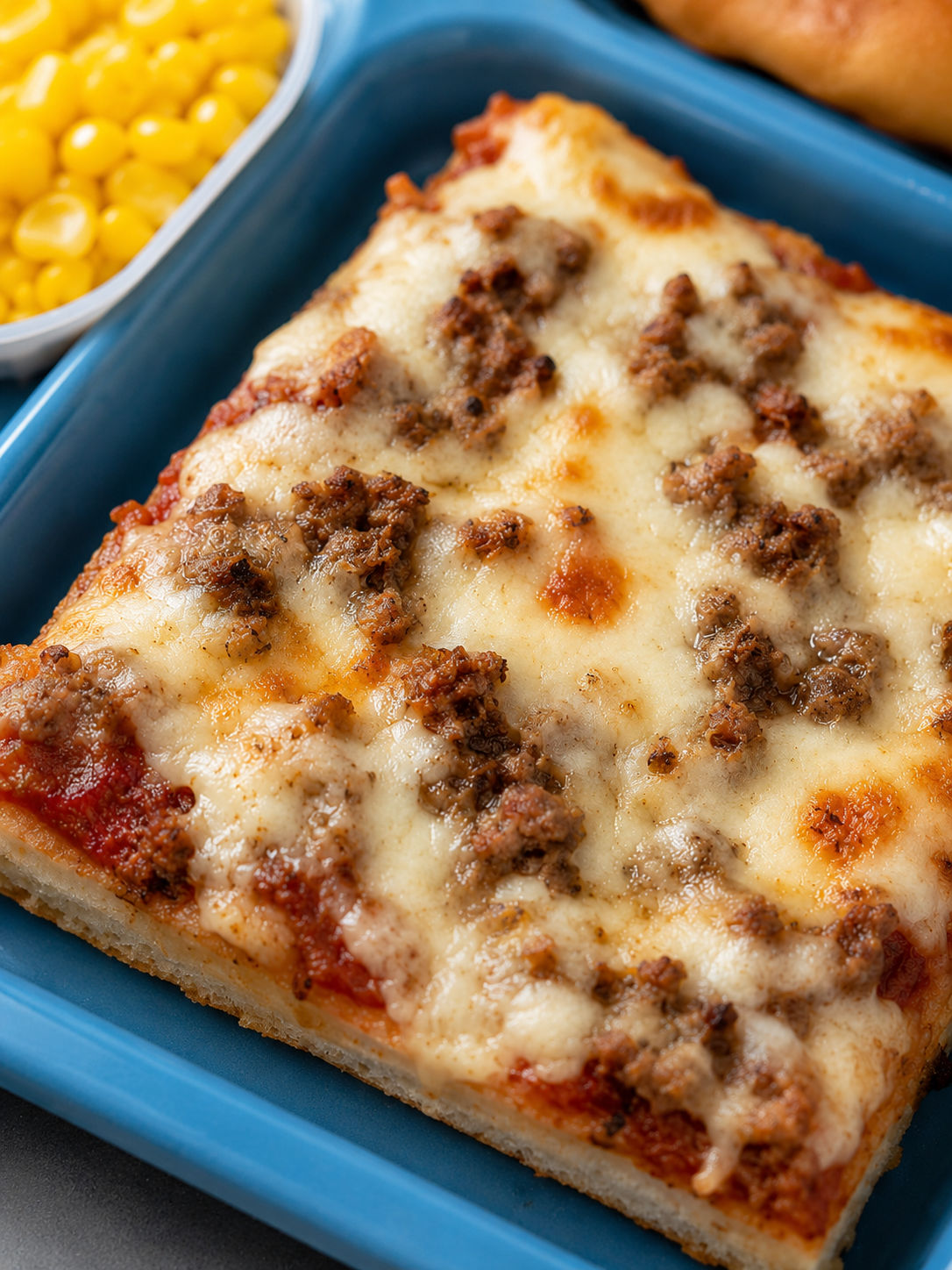
Soft pourable crust, sweet-savory sauce, browned beef, and mozzarella make this a cozy copycat of old school lunch pizza.

FAQs
- Why is school cafeteria pizza crust pourable?
Many old cafeteria-style recipes used a high-hydration yeast batter instead of a kneadable pizza dough. It spreads across the pan, rests, and bakes into a soft crust with a tender bread-like bite.
- Can I make this without dry milk powder?
Dry milk helps the crust brown and gives it that soft cafeteria flavor. If you skip it, replace about 1 cup of the water with warm milk and keep the remaining water as needed for a loose batter.
- Can I use pepperoni instead of ground beef?
Yes. Skip the beef step and scatter pepperoni over the sauce before adding the cheese. For a closer lunch tray feel, dice the pepperoni so every rectangle gets small bits.
- How do I keep the crust from getting soggy?
Parbake the crust before adding sauce, and do not drown it. A thin, even layer of sauce is enough. Let the finished pizza rest for 5 minutes before slicing so the cheese and sauce settle.
- How should I store and reheat leftovers?
Store slices in an airtight container in the fridge for up to 4 days. Reheat them on a sheet pan at 375°F until hot, about 8-10 minutes. The microwave works, but the crust gets softer.
- What goes well with cafeteria pizza?
Keep it lunch tray simple with corn, a green salad, carrot sticks, or applesauce. If you want a full pizza-night spread, add garlic bread or a crisp romaine salad with Italian dressing.
