 Pin it
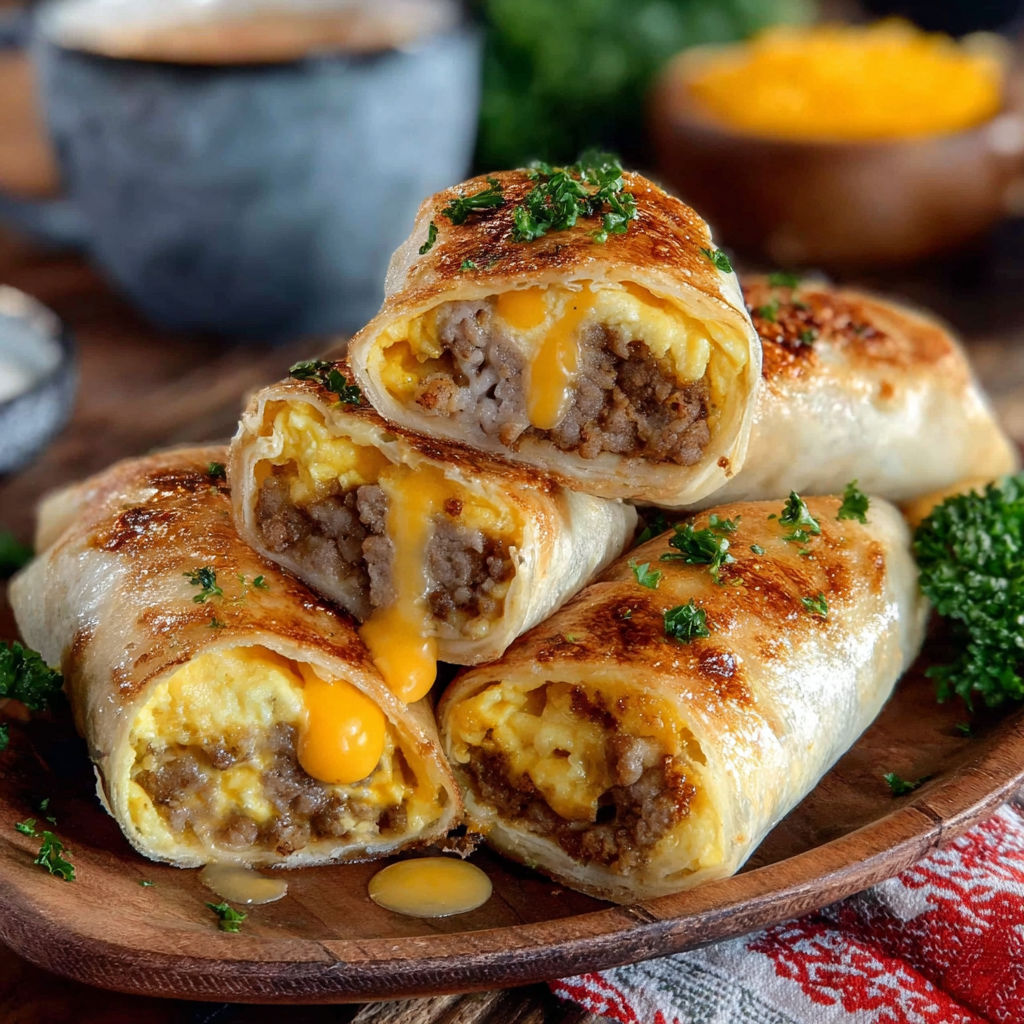
Sausage Egg Cheese Roll-Ups for Easy Breakfast are what I make when everyone needs something warm but nobody has time to sit down. They bake up flaky on the outside, with soft egg, melted cheese, and a savory sausage link tucked inside.
The trick is to keep the eggs a little soft before they go into the dough. They finish in the oven without turning dry, and the cheese helps hold everything together when you bite in.
The Breakfast Filling Lineup
This recipe leans on simple store-bought dough, so the filling needs to be well seasoned. Use fully cooked sausage links for speed, sliceable cheese for tidy rolling, and eggs that are just barely set.
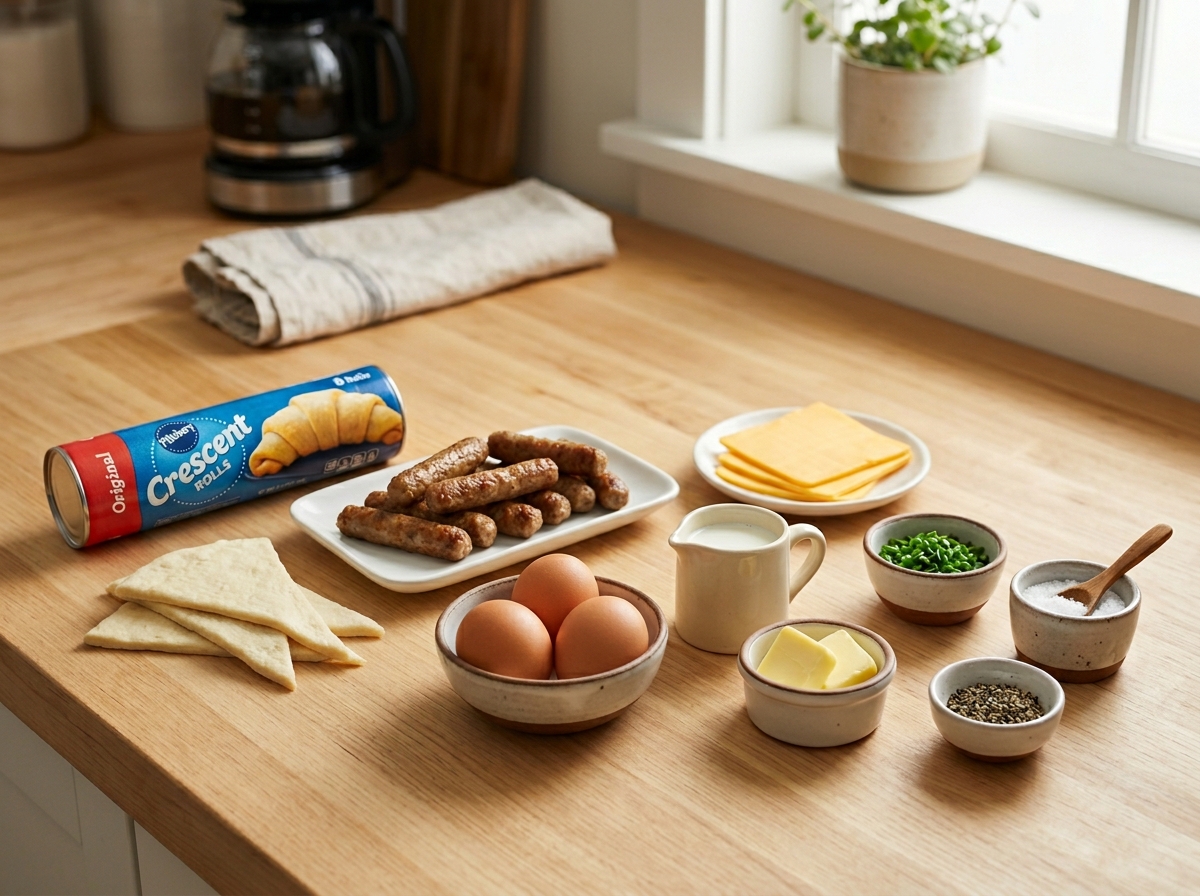
- Crescent roll dough. Wraps the filling in a buttery, flaky shell and bakes quickly on a sheet pan.
- Breakfast sausage links. Bring savory seasoning and make each roll-up feel filling enough for a real breakfast.
- Large eggs. Add soft texture and protein. Save a spoonful of beaten egg for brushing the tops.
- Cheddar cheese slices. Melt around the sausage and help the egg stay tucked inside.
- Milk. Loosens the eggs so they scramble tender instead of tight and rubbery.
- Butter. Keeps the eggs soft and adds a little richness.
- Chives. Add a fresh, oniony note that cuts through the sausage and cheese.
- Salt and black pepper. Wake up the eggs and balance the pastry.
Sausage Egg Cheese Roll-Ups for Easy Breakfast
- Heat the oven. Set it to 350°F and line a baking sheet with parchment so the cheese does not stick.
- Scramble the eggs. Beat the eggs with milk, salt, and pepper. Save 1 tablespoon for brushing, then cook the rest in butter until softly set.
- Build each roll. Separate the crescent dough into 8 triangles. Place half a cheese slice on the wide end, then add a spoonful of eggs and one sausage link.
- Roll and seal. Roll from the wide end toward the tip. Keep the point tucked underneath on the baking sheet so it stays closed.
- Brush and bake. Brush the tops with reserved egg, sprinkle with chives if using, and bake for 15-18 minutes until deep golden and cooked through.
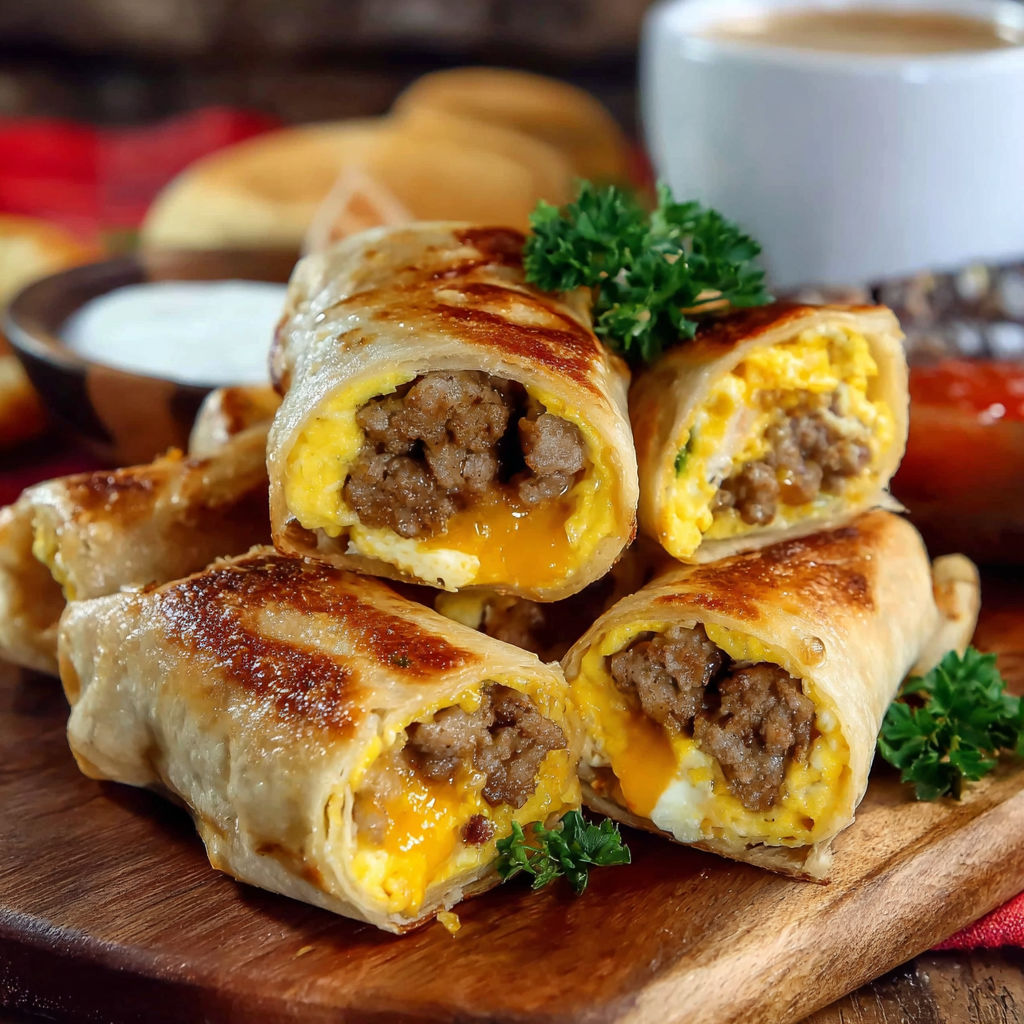
Keep The Eggs Soft
The eggs are the one place this breakfast can go wrong. Pull them from the skillet while they still look a little glossy. They sit in hot dough for another 15 minutes, so fully cooked eggs before baking can taste dry.
Small curds roll better than large folds. Stir slowly over medium-low heat, then scrape them onto a plate so they cool for a minute. This also keeps steam from soaking the crescent dough.
Roll Them Tightly Enough
Crescent dough stretches, but it tears if you fight it. Keep the dough cold until you are ready to assemble, then work one triangle at a time. Put the cheese down first so it creates a soft barrier between the egg and pastry.
If breakfast sausage is your favorite part, try the site's easy homemade breakfast sausage next. For a larger brunch pan with similar flavors, the sausage crescent roll casserole uses the same cozy sausage and pastry idea.
Smart Swaps That Work
American cheese makes a creamier roll-up, while pepper Jack adds heat. Turkey sausage works well if the links are fully cooked. You can also use cooked bacon strips, though they will not fill the pastry as neatly as sausage.
For a softer, sandwich-style bite, serve these with ketchup, salsa, or a little maple mustard. If you want more protein in the same make-ahead lane, pair them with easy high protein egg bites or sausage egg cheese breakfast sliders.
Storage And Reheating
Let the roll-ups cool before you store them. Trapped steam softens the pastry, especially in a sealed container. Refrigerate for up to 3 days, or freeze wrapped roll-ups for up to 2 months.
For the best texture, reheat in a 325°F oven or air fryer until hot. The microwave works in a rush, but the pastry will be softer. The FDA egg safety guide is useful if you are cooking for kids, older adults, or anyone with a higher food-safety risk.
Serve Them For Brunch
These are best warm, when the cheese is still melty and the bottom is crisp. Add fruit, coffee, orange juice, or a small bowl of salsa for dipping. For a sweet counterpoint, set out cinnamon roll-ups or pancakes on the same tray.
If you are serving a crowd, bake two trays and rotate them halfway through. Leave a little space between roll-ups so the sides brown instead of steaming.
Summary
Serve these warm from the oven with fruit, coffee, or a little maple syrup for dipping. They also pack nicely for school mornings, brunch trays, and make-ahead breakfasts.
FAQs
- Can I make sausage egg cheese roll-ups ahead of time?
Yes. Bake them fully, cool them, then refrigerate in an airtight container for up to 3 days. Reheat in a 325°F oven or air fryer until the pastry is warm and crisp again.
- Can I use raw sausage instead of fully cooked links?
You can, but cook it completely before assembling the roll-ups. Raw sausage will not cook evenly inside the crescent dough in the short baking time.
- What cheese melts best in breakfast roll-ups?
Cheddar slices melt well and give a classic breakfast sandwich flavor. American, Monterey Jack, pepper Jack, or Swiss also work. Sliced cheese is easier to fold into the dough than loose shreds.
- How do I keep the crescent rolls from getting soggy?
Scramble the eggs until softly set, not wet, and let them steam off for a minute before assembly. Avoid overfilling each triangle. Too much egg pushes out and keeps the inner dough from baking cleanly.
- Can I freeze these breakfast roll-ups?
Yes. Cool them completely, wrap each one, and freeze for up to 2 months. Reheat from frozen in a 350°F oven for 15-18 minutes, or until hot in the center.
- What should I serve with them?
Fresh fruit, yogurt, hash browns, or a simple green salad all work. For brunch, I like them next to egg cups or a breakfast casserole so people can build a small plate.
References
Sources cited in this recipe.
- https://www.pillsbury.com/recipes/sausage-egg-and-cheese-breakfast-crescent-rolls/e6d99aed-541a-4472-bd0a-27281ef52744
- https://www.fsis.usda.gov/food-safety/safe-food-handling-and-preparation/food-safety-basics/safe-temperature-chart
- https://www.fda.gov/food/buy-store-serve-safe-food/what-you-need-know-about-egg-safety
