 Pin it
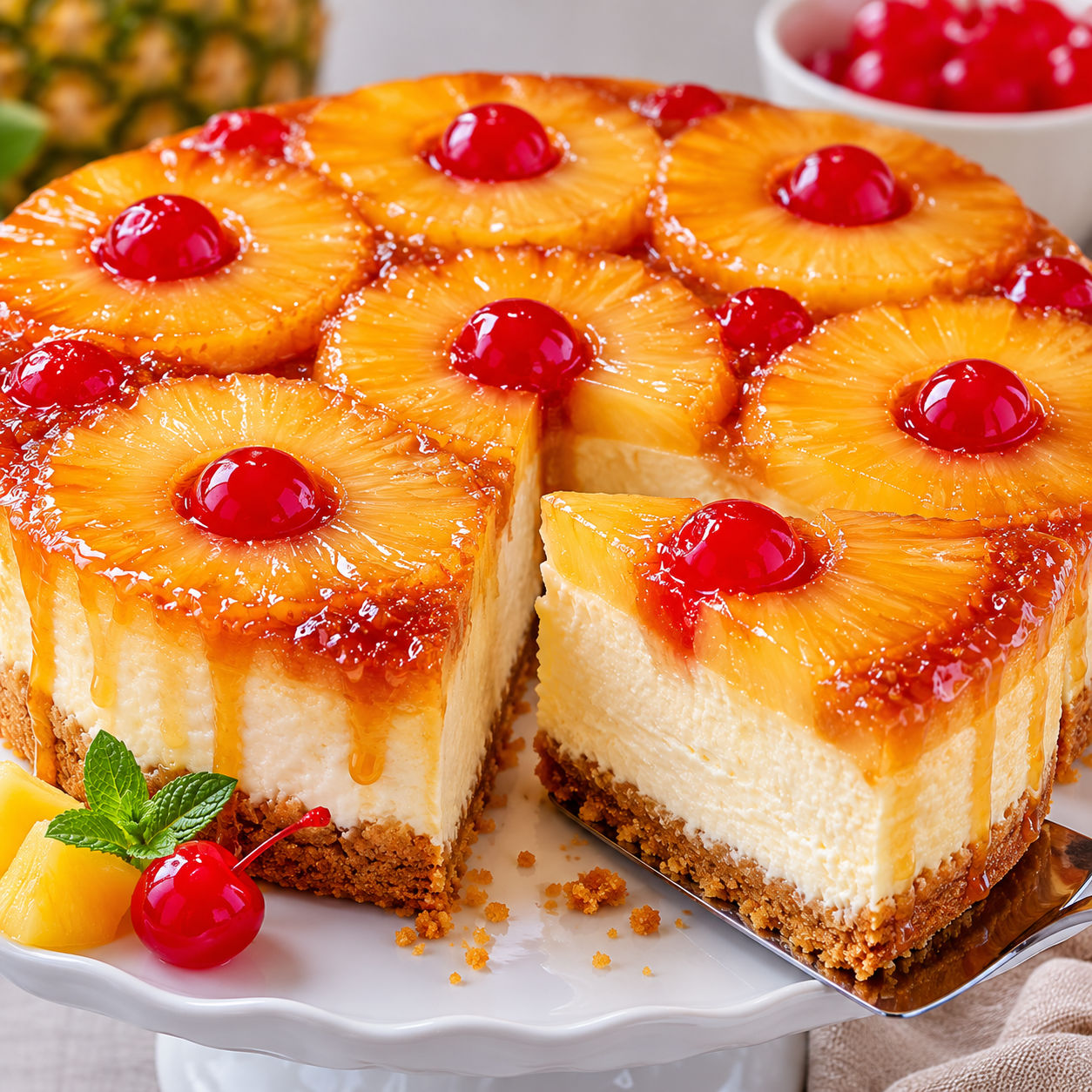
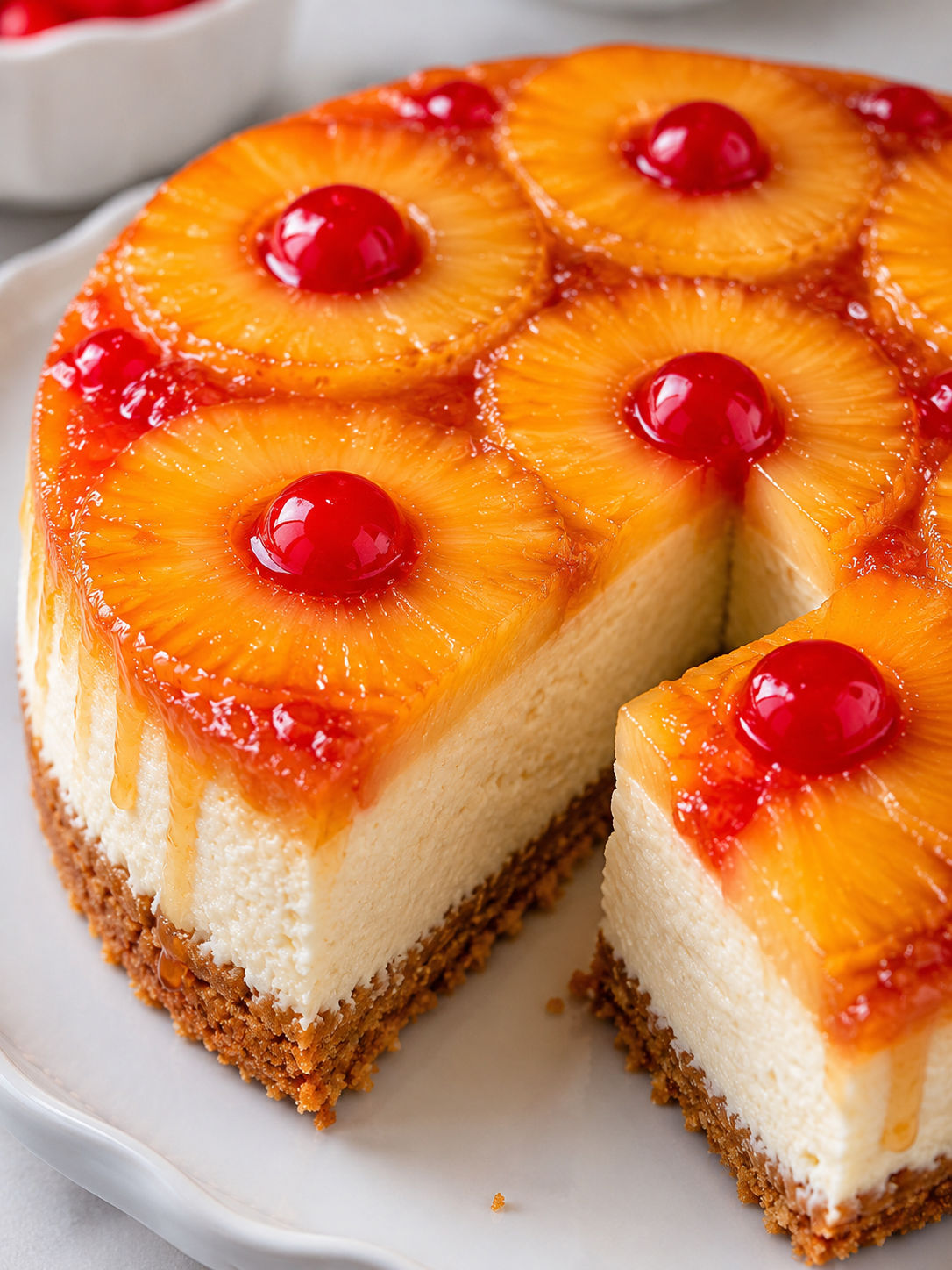
Delicious Pineapple Upside-Down Cheesecake is the kind of dessert that makes people pause before you slice it. The top is all glossy pineapple rings, red cherries, and brown sugar caramel, but the inside is cool, dense, and creamy like a classic baked cheesecake.
The trick is patience. You bake the fruit layer underneath the cheesecake, chill it until firm, then flip it so the caramelized pineapple becomes the crown. It looks dramatic, but the steps are steady if you drain the fruit well and give the cheesecake enough time in the refrigerator.
The caramel fruit layer
Choose pineapple rings packed in juice and drain them until they feel tacky rather than wet. That small step keeps the caramel glossy instead of watery and helps the cheesecake set cleanly.
- Pineapple rings. They make the classic upside-down pattern and add bright fruit flavor.
- Maraschino cherries. These fill the centers of the rings and give the top its old-school bakery look.
- Brown sugar and butter. They melt into a sticky caramel that coats the pineapple after the cheesecake is flipped.
- Cream cheese. Full-fat blocks give the filling a firm, creamy texture that slices well.
- Sour cream. It softens the richness and gives the cheesecake a slight tang.
- Eggs. They set the filling and give the cheesecake structure.
- Vanilla and salt. These keep the filling from tasting flat.
- Graham cracker crumbs. The crust bakes on top, then becomes the bottom once the cheesecake is inverted.
Bake, chill, then flip
- Prepare the pan. Line a 9-inch springform pan with parchment, grease the sides, and wrap the outside with foil. This helps the caramel stay contained.
- Build the topping. Spread melted butter and brown sugar over the bottom, then arrange dry pineapple rings with cherries in the centers.
- Mix the filling. Beat cream cheese and sugar until smooth, then mix in sour cream, vanilla, salt, cornstarch, and eggs on low speed.
- Add the crust. Pour the filling over the fruit, then sprinkle the graham mixture over the top and press it gently into an even layer.
- Bake gently. Bake at 325°F until the edges are set and the center still wobbles slightly, about 70-80 minutes.
- Cool and invert. Rest the cheesecake in the turned-off oven, cool to room temperature, chill overnight, then release and flip onto a serving plate.
Why Delicious Pineapple Upside-Down Cheesecake Works
This dessert works because the fruit and cheesecake trade places at the end. The brown sugar topping bakes against the pan where it can bubble and darken. The cheesecake filling bakes above it, protected from direct heat, so it stays creamy instead of dry.
The graham crust goes on last, which feels backward until you remember the cake gets flipped. Once chilled, that crust becomes a sturdy base. If you like the same flavor in smaller servings, try the mini pineapple upside-down cheesecakes for a cleaner party tray.
Texture cues that matter
Do not wait for the center to look fully firm in the oven. A baked cheesecake keeps setting as it cools, so the middle should wobble like softly set pudding when you nudge the pan. If it sloshes, it needs more time. If it looks puffed and dry from edge to edge, it has gone too far.
Letting it cool slowly is just as important as the bake. Turn the oven off, crack the door, and give it an hour before moving it to the counter. This gradual cooling helps prevent a deep center crack. A crack will not ruin the dessert because the pineapple topping hides it, but the texture is better when the custard relaxes slowly.
Smart swaps and shortcuts
Vanilla wafers make a sweeter, softer crust, while shortbread crumbs taste more buttery. You can add a little lime zest to the filling if you want a brighter tropical edge. For a stronger pineapple flavor, replace 2 tablespoons of sour cream with well-drained crushed pineapple, but do not add more than that or the filling may soften.
If you want the same pineapple-caramel mood without baking a full cheesecake, the pineapple upside-down cupcakes are quicker. For a richer tropical bar, pineapple coconut cheesecake bars bring in coconut without the flipping step.
Flipping without drama
Run a thin knife around the chilled cheesecake before opening the springform ring. Set a flat serving plate over the crust side, hold both plate and pan firmly, then flip in one steady motion. If the parchment sticks to the pineapple, peel it back slowly while the caramel is still cold.
A few pineapple rings may shift. That is easy to fix with a small offset spatula. Spoon any caramel left on the parchment back over the top. If the topping feels too firm, let the cheesecake sit for 10 minutes before slicing. Use a hot, clean knife for the neatest cuts.
Storing the finished cheesecake
Keep the cheesecake covered in the refrigerator and serve it cold. FoodSafety.gov's cold food storage guidance is a useful reminder that dairy desserts need steady refrigeration. This cheesecake is best within 3-4 days because the fruit topping slowly softens the surface.
Freezing is possible, but the pineapple can turn a little watery after thawing. If you do freeze it, freeze slices on a tray until firm, wrap them well, and thaw overnight in the refrigerator.
Summary
Drain the pineapple, bake the cheesecake gently, chill it completely, and flip it only when firm. Those four steps give you a glossy pineapple top and a clean creamy slice.

FAQs
- Can I use fresh pineapple instead of canned?
Yes, but canned rings are easier because they are evenly shaped and already tender. If you use fresh pineapple, slice it thinly and pat it very dry so extra juice does not loosen the cheesecake.
- Why did my cheesecake crack?
Cracks usually come from overmixing after the eggs go in, baking too hot, or cooling too fast. Mix on low speed, stop when the center still has a gentle wobble, and let the cheesecake rest in the turned-off oven before chilling.
- How long should it chill before flipping?
Chill it for at least 6 hours, but overnight is better. A warm or soft cheesecake can slump when inverted, and the topping will not release as neatly.
- Can I make it ahead for a party?
Yes. Bake it the day before, chill it overnight, and flip it a few hours before serving. Keep it refrigerated until you are ready to slice.
- What can I use instead of graham crackers?
Vanilla wafers, digestive biscuits, or shortbread crumbs all work. Use the same amount of crumbs and keep the butter level similar so the crust presses together without turning greasy.
- How should I store leftovers?
Cover leftover slices and refrigerate them for up to 4 days. The topping gets softer over time, so keep the cut side covered and avoid leaving the cheesecake at room temperature for long.
