 Pin it
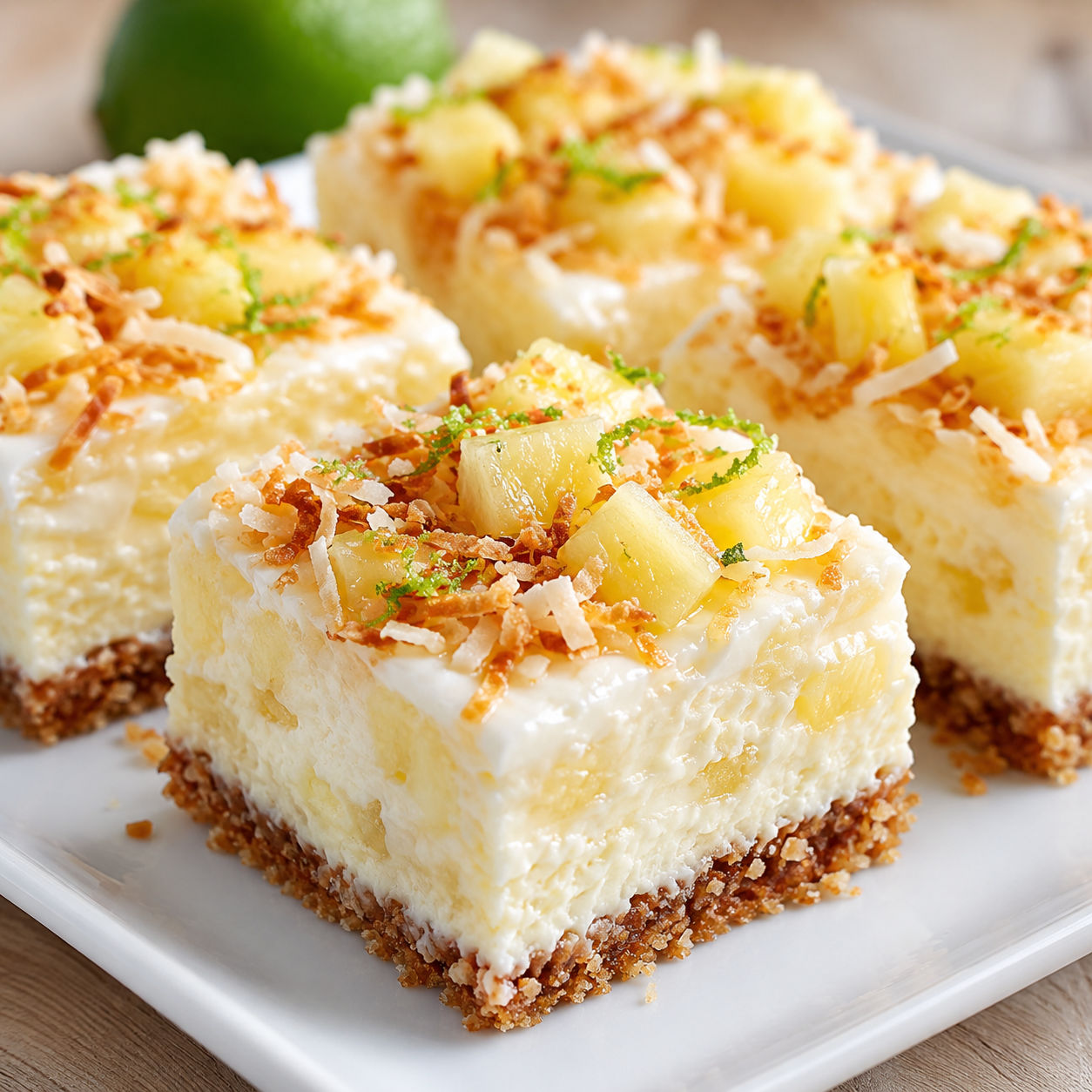
Tropical Pineapple Coconut Cheesecake Bars with Creamy Layers taste like a cold slice of sunshine from the fridge. The crust is buttery and crisp, the filling is tangy with pineapple, and the coconut gives each bite a little chew.
I like these for potlucks because they cut neatly once chilled and hold their shape on a dessert tray. They are richer than pineapple bars, lighter than a tall cheesecake, and much easier to serve.
The small details matter here. Drain the pineapple until it looks almost too dry. Beat the cream cheese smooth before the eggs go in. Chill the bars long enough that the layers settle into clean, creamy squares.
Tropical Pineapple Coconut Cheesecake Bars
The ingredient list is short, so use full-fat cream cheese and pineapple packed in juice when you can. Toasting part of the coconut makes the crust taste deeper and keeps the bars from feeling one-note sweet.
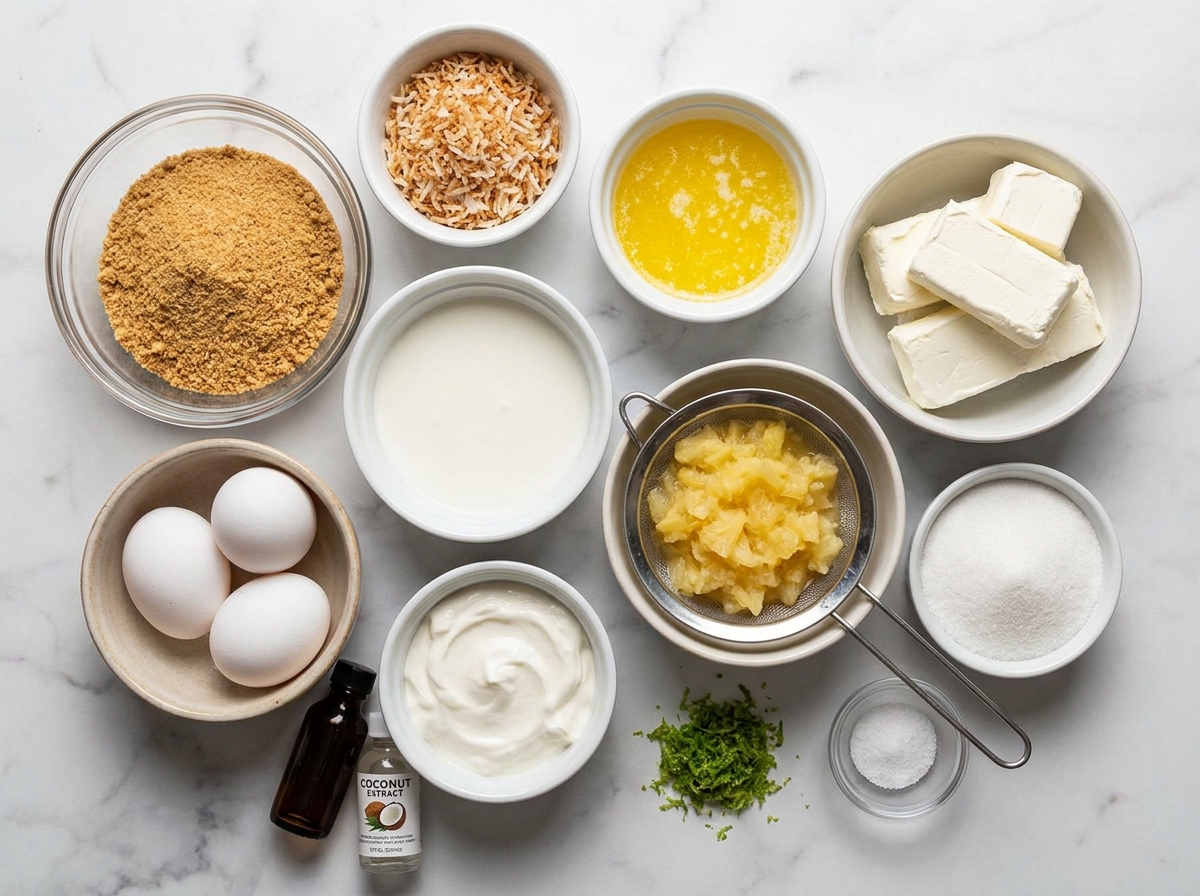
- Graham cracker crumbs. Build the crisp base that holds the creamy layers.
- Sweetened shredded coconut. Adds chew in the filling and a toasted edge in the crust.
- Unsalted butter. Binds the crumbs so the bottom slices cleanly.
- Cream cheese. Gives the bars their smooth, tangy cheesecake body.
- Granulated sugar. Sweetens the filling without hiding the pineapple.
- Eggs. Help the cheesecake layer set into neat squares.
- Sour cream. Makes the top layer creamy, bright, and soft.
- Crushed pineapple. Brings juicy tropical flavor when it is drained well.
- Vanilla and coconut extract. Round out the fruit and make the coconut taste clear.
- Lime zest. Adds a fresh finish that keeps the bars lively.
Build the Creamy Layers
- Prepare the pan. Line an 8-inch square pan with parchment, leaving overhang on two sides, and heat the oven to 325°F.
- Pack the crust. Mix graham crumbs, toasted coconut, sugar, salt, and melted butter. Press firmly into the pan and bake until fragrant.
- Beat the filling. Beat cream cheese and sugar until smooth. Add eggs one at a time, then mix in sour cream, vanilla, coconut extract, lime zest, drained pineapple, and coconut.
- Bake the base layer. Spread the filling over the warm crust and bake until the edges are set and the center still moves slightly.
- Add the creamy top. Stir sour cream, sugar, and vanilla, spread it gently over the hot cheesecake, and bake a few more minutes.
- Cool and chill. Cool at room temperature, then refrigerate until cold and firm before slicing.
Drain the Pineapple Hard
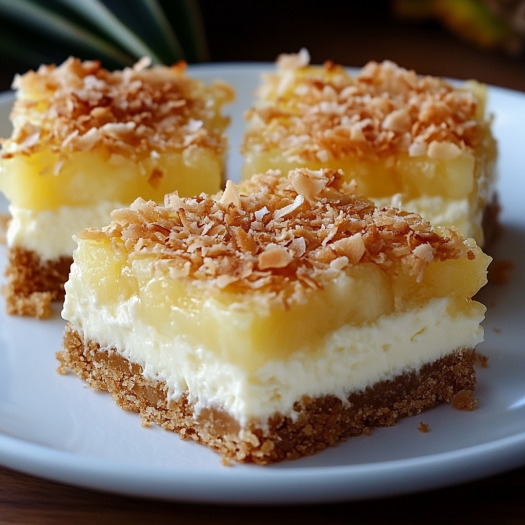
Pineapple is the flavor that makes these bars special, but extra juice is the fastest way to lose the creamy texture. Tip the crushed pineapple into a fine mesh sieve and press it with a spoon until it looks thick and pulpy. If it still drips when you lift the spoon, keep pressing. The fruit should fold into the batter without loosening it.
This is also why I prefer crushed pineapple in juice instead of syrup. It tastes cleaner and keeps the filling from turning candy-sweet. If you are comparing styles, the simpler Pineapple Coconut Cheesecake Bars are a good place to see how much moisture control matters in this dessert family.
The Crust Needs Pressure
A crumb crust should be packed, not sprinkled. Use the bottom of a measuring cup to press it into the pan with steady force, especially in the corners. The warm crust should smell like toasted butter and coconut after its short bake. That head start keeps it from turning sandy under the filling.
If the crust breaks when you slice, it was probably too loose or too dry. Add butter until the crumbs hold together when squeezed in your hand. For a softer, no-roll dessert with a similar tropical feel, try Tropical Pineapple Coconut Balls on a day when you do not want to turn on the oven.
Cream Cheese Without Lumps
Cold cream cheese never blends as smoothly as you want it to. Let it sit out until it gives easily when pressed, then beat it with the sugar before any eggs touch the bowl. Sugar helps break it down. Eggs added too early can trap little bits of cream cheese that stay visible after baking.
Once the eggs go in, slow down. Mix just until each one disappears. Too much air makes the filling puff in the oven, then sink as it cools. The flavor is still good, but the top layer looks wavy instead of clean. The USDA has helpful egg handling guidance through its egg safety information.
Cooling Makes Clean Squares
Cheesecake bars keep cooking for a bit after they leave the oven. Let the pan cool on the counter until it is no longer warm, then chill it uncovered for the first hour so steam does not drip back onto the top. After that, cover the pan and keep chilling until the center feels firm.
A hot knife gives the cleanest slices. Dip it in warm water, wipe it dry, cut straight down, and wipe again between cuts. The same patient chill helps other creamy bar desserts, like Creamy Cherry Almond Cheesecake Bars, hold their edges instead of smearing.
Easy Tropical Swaps
Vanilla wafer crumbs can stand in for graham crackers if you want a softer, cookie-like base. Unsweetened coconut also works, though the bars will taste less sweet and a little more nutty. For a brighter top, add more lime zest to the sour cream layer instead of adding more extract.
Mango can replace pineapple if it is diced small and drained, but it makes a thicker, less tangy filling. If you want more pineapple flavor without changing the batter, spoon a little drained crushed pineapple over each chilled square before serving. Fans of baked pineapple desserts may also like Delicious Pineapple Upside-Down Cheesecake.
Store Them Cold
These bars need the refrigerator. Store them in an airtight container for up to 4 days, with parchment between layers if you stack them. FoodSafety.gov has a useful cold food storage chart for checking safe storage times.
For freezing, place cut bars on a lined tray until solid, then pack them in a freezer-safe container. Thaw overnight in the fridge. Do not thaw them on the counter, since the topping softens fast and the crust can pick up moisture.
Summary
A baked tropical cheesecake bar with a graham-coconut crust, pineapple cream cheese filling, sour cream topping, and toasted coconut finish.
FAQs
- Can I use fresh pineapple instead of canned crushed pineapple?
Yes, but chop it finely and drain it very well. Fresh pineapple can be juicier than canned, so press it in a fine mesh sieve before folding it into the filling.
- Why did my cheesecake bars crack on top?
Cracks usually come from overbeating after the eggs are added or baking until the center is fully firm. Stop mixing once the eggs disappear, and pull the pan when the center still has a gentle wobble.
- Can I make these cheesecake bars ahead?
Yes. They are better after a full chill, so making them the day before is smart. Keep them covered in the fridge and add any extra toasted coconut close to serving.
- Can I make the bars gluten-free?
Use gluten-free graham crackers or gluten-free vanilla wafers for the crust. Check the coconut and extracts too, since some brands have cross-contact warnings.
- What can I use instead of sour cream?
Plain full-fat Greek yogurt works well in the topping. It tastes a little tangier and may set slightly softer, but it still gives the bars that creamy top layer.
- How long should cheesecake bars chill before slicing?
Chill them for at least 4 hours. Overnight is even better if you want sharp edges and a firmer bite.
- Can I freeze pineapple coconut cheesecake bars?
Yes. Freeze the cut bars on a tray, then layer them in an airtight container with parchment. Thaw in the refrigerator so the crust stays firmer.
