 Pin it
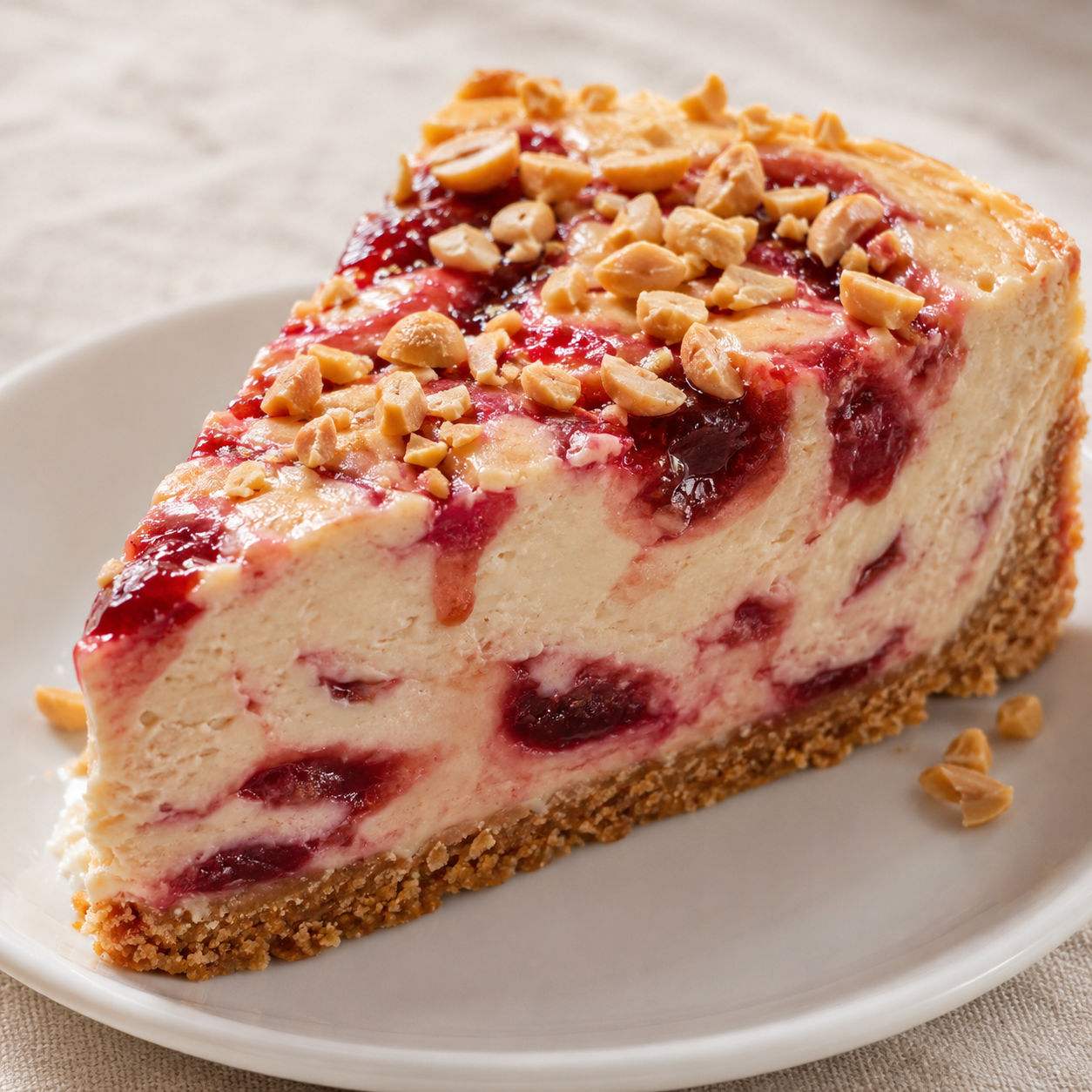
Peanut Butter and Jelly Cheesecake is rich, creamy, and a little nostalgic in the best way. The peanut butter gives the filling a salty roasted flavor, while strawberry jam cuts through it with a bright, glossy ribbon.
I like this one for birthdays, potlucks, and the kind of weekend dessert you can make a day early. The oven does the slow work, then the fridge firms everything into clean, thick slices.
Peanut Butter And Jelly Lineup
Use full-fat cream cheese and a smooth peanut butter that tastes good on its own. For the jam, pick strawberry or grape with enough tang to balance the rich filling.
- Graham crackers. They make a buttery, sturdy crust that tastes close to a peanut butter sandwich without getting too heavy.
- Roasted peanuts. A small handful adds crunch and a stronger peanut aroma in the crust.
- Cream cheese. Full-fat blocks give the filling its smooth, dense cheesecake texture.
- Creamy peanut butter. It flavors the whole batter and adds a lightly salty finish.
- Sour cream. It softens the sweetness and keeps the filling from tasting flat.
- Eggs. They set the cheesecake gently as it bakes.
- Strawberry jam. Warmed jam makes glossy swirls that cut through the peanut butter richness.
- Vanilla and salt. These small additions make the peanut butter taste rounder and more balanced.
Bake It Low And Slow
- Prepare the pan. Line the bottom of a 9-inch springform pan with parchment and wrap the outside with foil if using a water bath.
- Make the crust. Mix graham crumbs, peanuts, sugar, salt, and melted butter, then press firmly into the pan and bake until fragrant.
- Mix the filling. Beat cream cheese until smooth before adding sugar, peanut butter, sour cream, vanilla, and salt. Add eggs one at a time on low speed.
- Swirl the jam. Pour in half the batter, spoon in warm jam, add the remaining batter, and drag a knife through gently.
- Bake gently. Bake at 325°F until the edges are set and the center still wobbles slightly.
- Cool and chill. Let it cool slowly, then refrigerate at least 6 hours before slicing.
Peanut Butter Cheesecake Layers
The filling works because the peanut butter is mixed into a classic cheesecake base instead of being added as a topping. Beat the cream cheese first until it is completely smooth. Once peanut butter goes in, the batter gets thicker and any lumps become harder to chase out.
Keep the mixer on low after the eggs are added. Too much air makes a cheesecake puff high in the oven and sink as it cools. If you love peanut butter desserts, this is richer than No-Bake Peanut Butter Cheesecake, but it still has that cool, creamy finish.
Jam Swirls Without Sinking
Thick jam straight from the jar can drag through the batter and sink into heavy pockets. Warm it just until loose, then stir until glossy. It should pour slowly from a spoon, not run like syrup.
For clear ribbons, add the jam in two layers instead of dumping it all on top. Spoon some over the first half of batter, cover with the rest, then add a few more small spoonfuls. A butter knife gives better control than a skewer here. If you like the PB&J flavor in a smaller bite, try the Nostalgic PB&J Thumbprint Cookies another day.
Cooling Keeps It Creamy
Cheesecake hates sudden temperature changes. When the bake time is up, the center should jiggle like set custard, not slosh. Turn off the oven, crack the door, and let the cake sit for 30 minutes before moving it to the counter.
A pan of hot water on the lower oven rack adds steam and helps the top stay softer. The Food Network version uses steam for the same reason, and it is a good habit for rich cheesecakes. Once the cake reaches room temperature, chill it well. Cutting too early gives you soft edges and messy jam streaks.
Smart Flavor Swaps
Strawberry jam is bright and easy to find, but grape jelly gives the strongest sandwich-shop flavor. Raspberry jam works too, especially if you like a sharper fruit note. If the jam has seeds, warm it and press it through a fine sieve before swirling.
You can trade the graham crust for vanilla wafers or chocolate sandwich cookies. Chocolate makes it taste closer to a candy bar, especially if you already like Reese’s Peanut Butter Earthquake. For extra crunch, scatter chopped roasted peanuts over the chilled cake right before serving.
Storage And Serving Notes
Keep the cheesecake covered in the refrigerator and serve it within 4 days. The cold storage chart at FoodSafety.gov is a helpful reference for dairy desserts and leftovers.
For the cleanest slices, cut the cake cold and let each slice sit at room temperature for 10 minutes before eating. That short rest softens the peanut butter flavor and takes the chill off the crust. If you want a dessert table with a lighter cheesecake option beside it, Strawberry Cheesecake Nachos Dessert pairs well with the same berry flavor.
Summary
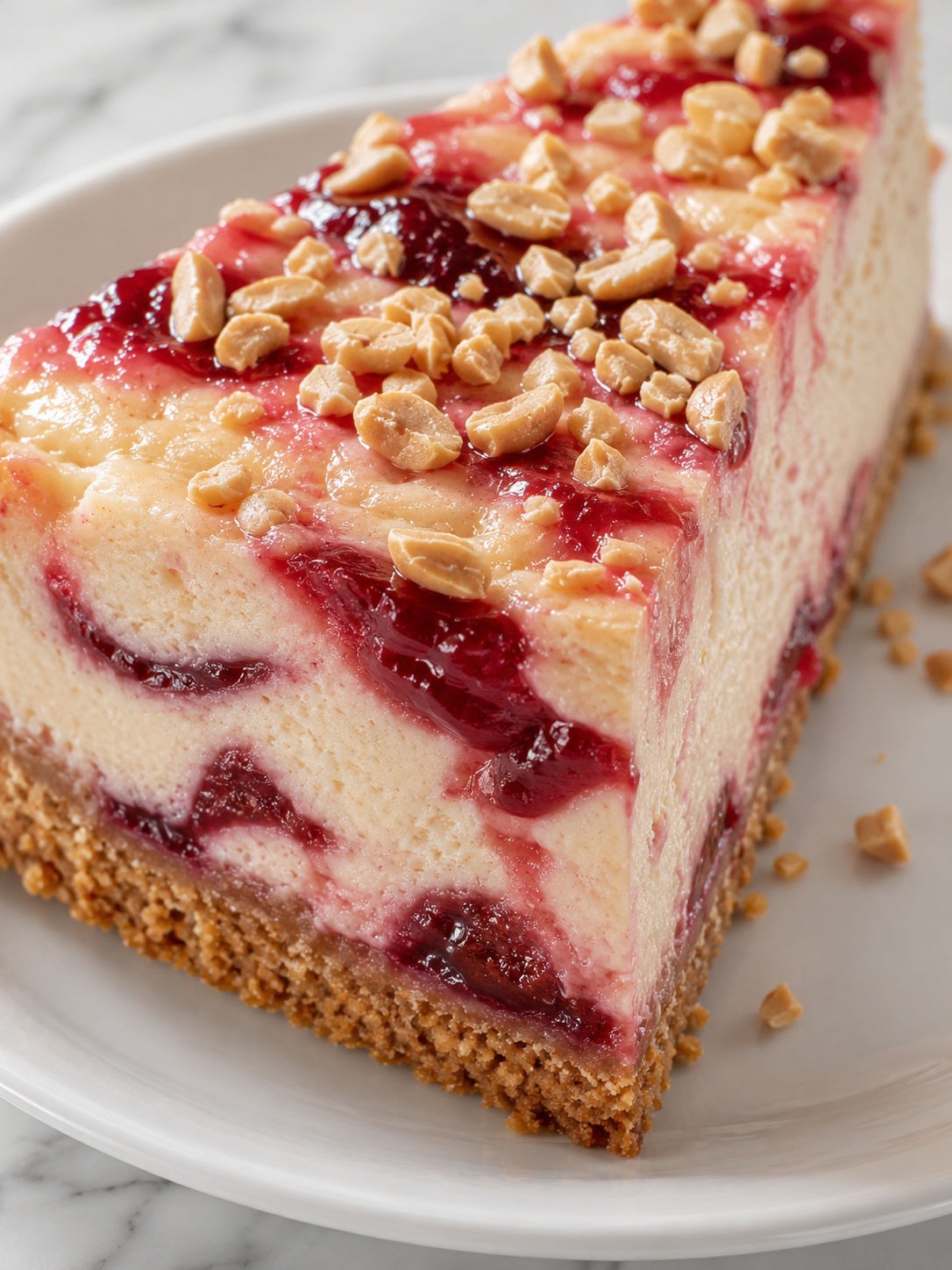
Serve this cheesecake cold with a small spoonful of extra jam and chopped peanuts over the top.

FAQs
- Can I use grape jelly instead of strawberry jam?
Yes. Grape jelly gives the most classic PB&J flavor. Warm it briefly and stir until smooth before swirling so it moves through the batter without tearing it up.
- Does this cheesecake need a water bath?
A full water bath is helpful but not required. Placing a pan of hot water on the lower rack adds steam, which helps the top bake gently and lowers the chance of cracks.
- Can I make Peanut Butter and Jelly Cheesecake ahead?
Yes. It is actually better after a full night in the fridge. Bake it the day before, chill it uncovered until cold, then cover it loosely for storage.
- What peanut butter works best?
Use a creamy shelf-stable peanut butter for the smoothest filling. Natural peanut butter can separate and make the batter oily unless it is stirred very well.
- How do I get clean cheesecake slices?
Chill the cheesecake until firm, then use a thin knife warmed in hot water. Wipe the blade between cuts so the jam and peanut butter layers stay tidy.
- Can I freeze leftovers?
Yes. Freeze plain slices on a tray until firm, then wrap them tightly. Thaw overnight in the fridge and add any extra jam or peanuts right before serving.
