 Pin it
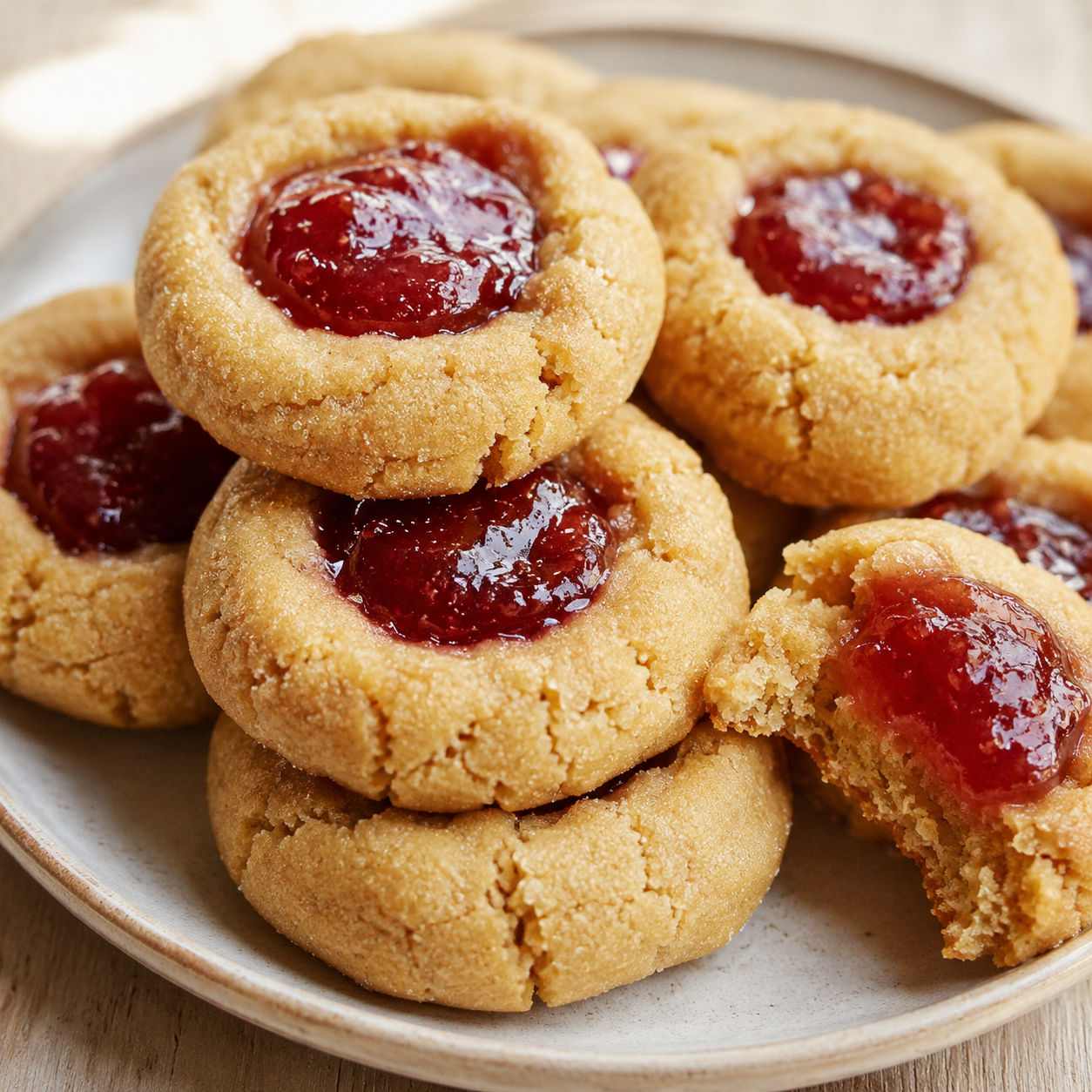
Peanut Butter and Jelly Cookies turn the lunchbox sandwich into a small, soft cookie with a jammy middle. The edges bake lightly crisp, the centers stay tender, and the peanut butter flavor comes through without feeling heavy.
I like these as thumbprints because every bite gets a little peanut butter and a little fruit. Strawberry jam is classic, grape tastes the most nostalgic, and raspberry brings a sharper finish.
Peanut Butter and Jelly Cookie Staples
This dough uses pantry basics, so the peanut butter and jam matter most. Use a creamy peanut butter with a steady texture, and choose a jam thick enough to mound on a spoon.
- Creamy peanut butter. Gives the cookies their nutty flavor and soft, slightly chewy center.
- Unsalted butter. Adds tenderness and helps the edges bake up lightly crisp.
- Brown sugar. Keeps the crumb moist and adds a warm caramel note.
- Granulated sugar. Sweetens the dough and gives the rolled edges a tiny crunch.
- Egg. Holds the dough together so the cookies do not crumble.
- Vanilla extract. Rounds out the peanut butter flavor.
- All-purpose flour. Gives the cookies enough structure to hold the jam wells.
- Baking soda. Helps the cookies spread just enough without turning flat.
- Strawberry or grape jam. Adds the glossy fruit center and the familiar peanut butter and jelly bite.
Shape, Fill, Bake
- Make the dough. Beat the butter, peanut butter, and sugars until creamy, then mix in the egg and vanilla. Stir in the dry ingredients just until no flour streaks remain.
- Roll the cookies. Scoop tablespoon-size portions, roll them into balls, and coat lightly in sugar. Set them on a parchment-lined baking sheet with room to spread.
- Press the centers. Use your thumb or the back of a 1/2 teaspoon measure to make a deep well in each ball. If the edges crack, pinch them back together.
- Add the jam. Spoon a small amount of jam into each well. Keep it just below the rim so it does not bubble over.
- Bake and cool. Bake at 350°F until the edges are set and faintly golden, 10-12 minutes. Cool on the pan for 5 minutes, then move to a rack.
The well matters most
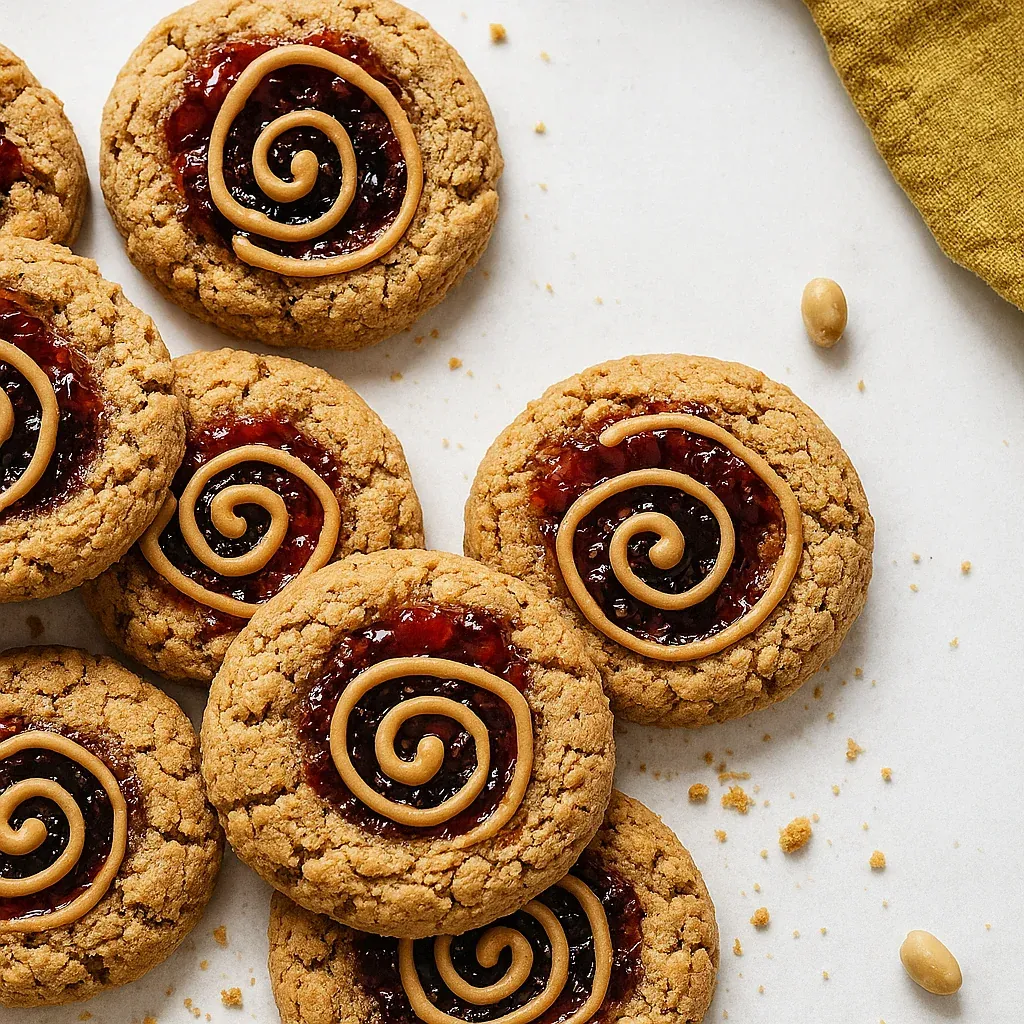
The thumbprint is the small detail that decides how these cookies bake. A shallow dent lets the jam slide over the edges, while a well that goes too deep can crack the cookie open. Aim for a rounded pocket that stops just before the bottom of the dough.
If the dough sticks to your thumb, dip your thumb or measuring spoon in granulated sugar between cookies. If a few edges split, just pinch them closed before adding jam. This is the same cozy peanut butter family as Triple Peanut Butter Cookies, but the jam center makes these feel brighter and softer.
Pick the right jam
Thick jam gives the neatest center. Preserves work too, but large fruit pieces can make tiny cookies harder to fill. If your jam is stiff from the fridge, stir it in a small bowl first so it spoons cleanly into each well.
Strawberry jam makes the prettiest red center. Grape jelly gives the most old-school flavor. Raspberry jam cuts through the richness if you want something a little less sweet. For a peanut butter dessert with a creamier finish, save Peanut Butter and Jelly Cheesecake for another baking day.
Texture without dry cookies
Peanut butter dough can turn dry if it is overmixed or overbaked. Mix the flour in gently, then stop as soon as the dough looks even. The cookies should come out when the edges look set and the tops are no longer shiny. They will firm up as they cool.
Measuring flour carefully helps too. Too much flour makes the dough stiff and crumbly. The King Arthur Baking ingredient weight chart is useful if you bake by weight. For cups, spoon the flour into the cup and level it instead of scooping straight from the bag.
Easy swaps and add-ins
Crunchy peanut butter works if you like little peanut bits in the dough. Natural peanut butter can be trickier because the oil separates, so stir it extremely well before measuring. If it is loose and oily, use a conventional creamy peanut butter for more reliable cookies.
You can roll the dough in chopped roasted peanuts instead of sugar for extra crunch. A tiny drizzle of melted peanut butter over cooled cookies also looks good, especially if you enjoy recipes like Peanut Butter Cookie Bars. For food allergies, remember that peanuts are a major allergen. The FDA food allergy guide is a helpful reference when baking for guests.
Store them the smart way
Let the cookies cool completely before stacking. Warm jam stays sticky, and warm cookies can trap steam in the container. Once cool, layer them with parchment in an airtight tin or storage box.
They keep at room temperature for about 4 days. If you want cleaner edges for a cookie tray, bake them a day ahead and let the jam settle overnight. For a chocolate version of the same peanut butter mood, Peanut Butter Brownie Swirl Cookies are a good next batch.
Summary
Serve these cookies cooled so the jam can set. They keep well for several days and are easy to change with different jams.

FAQs
- Can I use grape jelly instead of strawberry jam?
Yes. Grape jelly gives these Peanut Butter and Jelly Cookies the most classic sandwich flavor. Strawberry and raspberry jam also work well because they balance the rich peanut butter dough.
- Why did my jam leak out of the cookies?
The well was probably too shallow or too full. Press a deep indent without going through the dough, then add about 1/2 teaspoon jam per cookie. Thick jam or preserves behave better than runny jelly.
- Do I need to chill the dough?
You usually do not need to chill it. If your kitchen is warm or the dough feels greasy and soft, chill it for 15-20 minutes before shaping. That helps the cookies hold their thumbprint shape.
- Can I make these cookies gluten-free?
You can try a cup-for-cup gluten-free baking flour blend in place of the all-purpose flour. The texture may be a little more delicate, so let the cookies cool fully on the pan before moving them.
- How should I store Peanut Butter and Jelly Cookies?
Store cooled cookies in an airtight container at room temperature for up to 4 days. Place parchment between layers so the jam centers do not stick to the cookies above them.
- Can I freeze them?
Yes. Freeze baked and cooled cookies in a single layer, then transfer them to a freezer bag for up to 2 months. Thaw uncovered at room temperature so the jam does not collect too much moisture.
