 Pin it
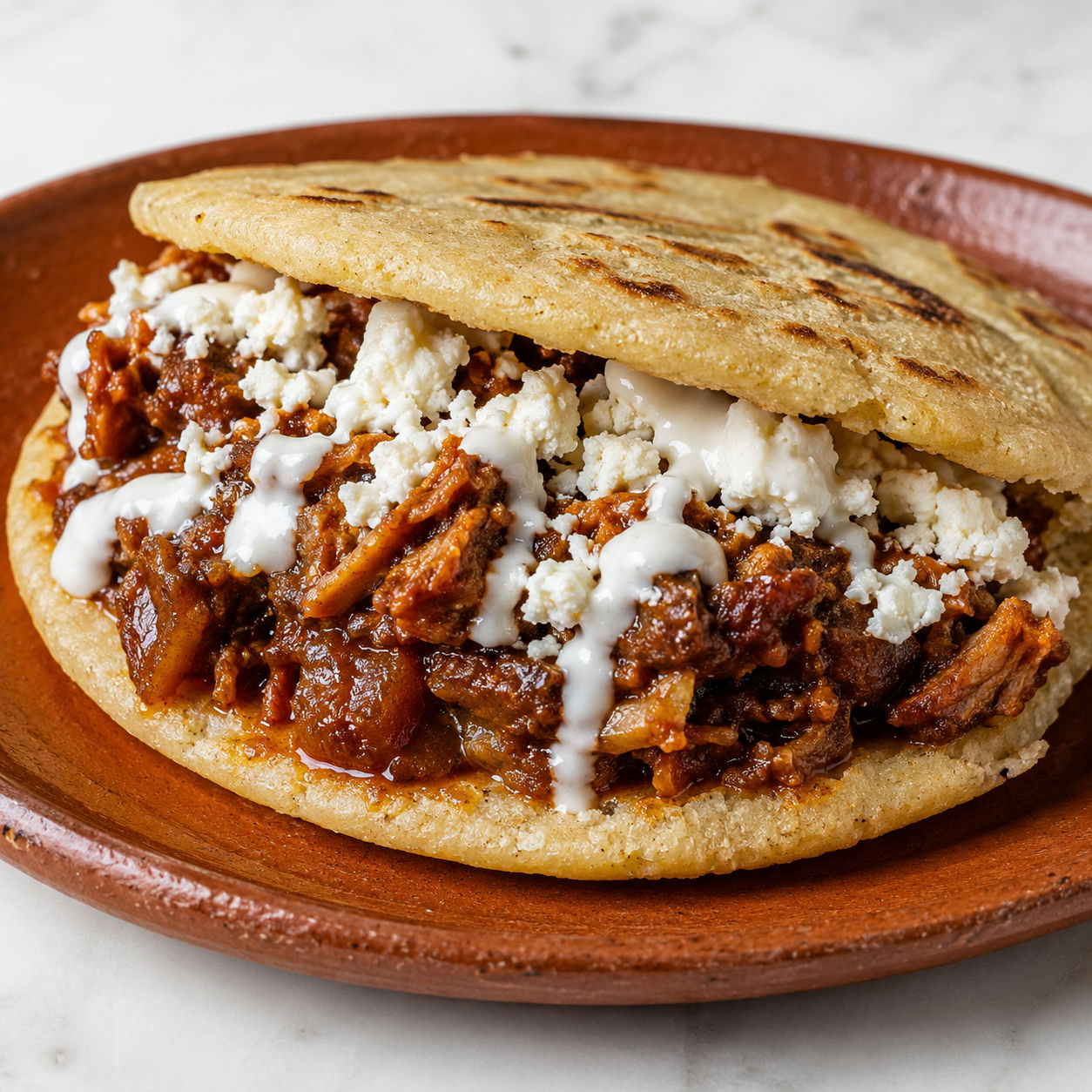
Gorditas chicharron and cheese are one of those foods that make much more sense once you understand what chicharron becomes when you stew it. The pork rinds you start with are hard and crunchy. Twenty minutes in a tomato-chile salsa and they turn soft and almost meaty, soaking up everything around them. That filling goes into a thick corn masa cake that is slightly chewy on the outside and tender in the middle, and the crumbled cheese on top ties it all together.
This is everyday street food in central Mexico. The kind of thing sold at market stalls where the comal never cools down. At home it takes a bit of patience with the masa dough, but the technique is simple enough once you do it once.
These work as a filling lunch or a casual dinner. They also hold well in a warm oven if you need to make a batch ahead for a crowd.
What goes into each gordita
The ingredient list is short but each piece matters. Start with a good masa harina like Maseca, plain unseasoned pork rinds, and either queso fresco or Oaxacan cheese for topping.
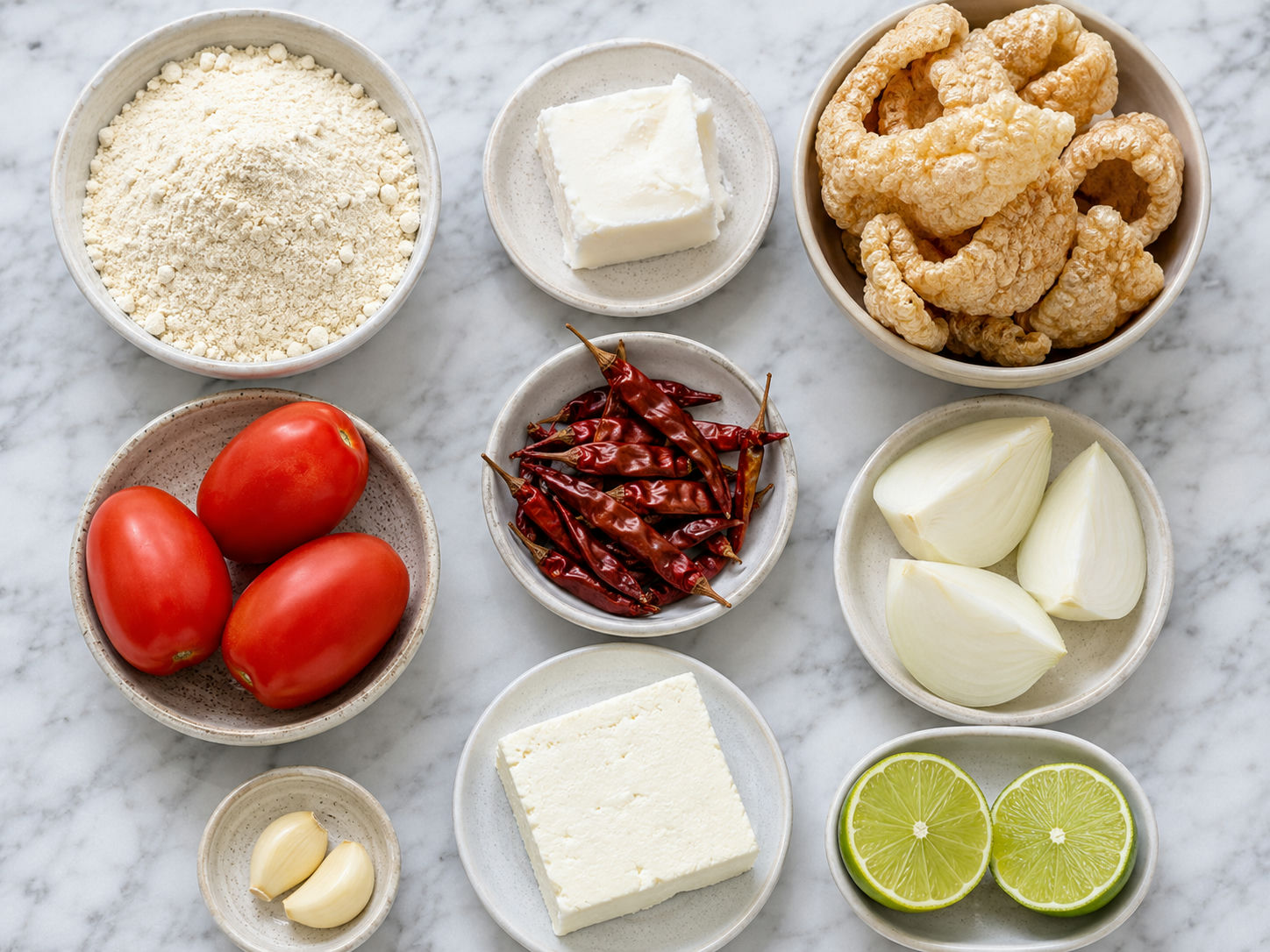
- Masa harina. The base of the gordita dough. Nixtamalized corn flour that hydrates quickly and cooks into a sturdy, slightly chewy cake.
- Lard or vegetable shortening. A small amount worked into the masa keeps the gorditas tender rather than dense. You can skip it but the texture suffers a bit.
- Plain pork rinds (chicharron). These start crunchy and brittle. The salsa transforms them into a soft, saucy filling that tastes nothing like the snack they began as.
- Roma tomatoes. The base of the salsa. They cook down quickly and give the sauce a sweet, slightly acidic backbone.
- Dried chiles de arbol or guajillo. Arbol brings heat. Guajillo is milder and fruitier. Use one or mix both depending on how spicy you want the filling.
- White onion and garlic. Background flavor for the salsa, blended right into the sauce after simmering so nothing goes to waste.
- Queso fresco. Crumbled over the filling just before eating. Its mild saltiness and slight tang balance the richness of the chicharron.
How to shape, cook, and fill
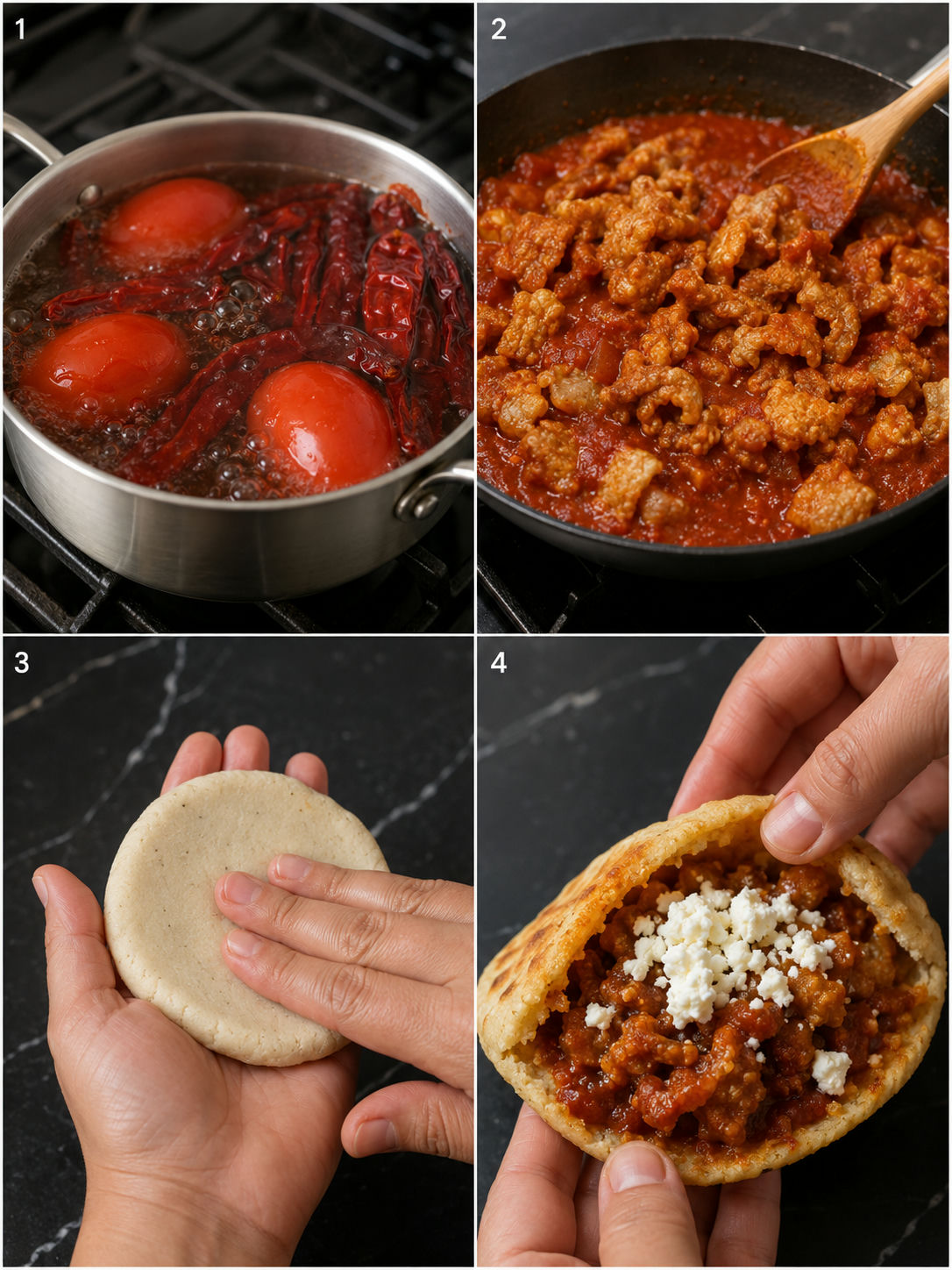
- Simmer the salsa. Combine the tomatoes, dried chiles, onion, and garlic in a small pot. Cover with water, bring to a boil, then simmer for 12 minutes until everything is soft. Drain, then blend until smooth. Strain through a sieve if you prefer a silkier sauce.
- Cook the chicharron. Pour the blended salsa into a skillet over medium heat. Add the pork rinds and stir to coat. Cook for 15 to 18 minutes, stirring occasionally, until the chicharron has softened and absorbed the sauce. Add a splash of water if the salsa reduces too quickly. Season with salt.
- Mix the masa. Combine masa harina, salt, and lard in a bowl. Add warm water a little at a time and mix with your hands until a soft, non-sticky dough forms. It should feel like firm playdough. Knead for 1 minute.
- Shape the gorditas. Divide the dough into 8 equal balls. Press each one between your palms or in a tortilla press lined with plastic to a disc about 4 inches wide and half an inch thick.
- Cook on the comal. Heat a dry comal or cast iron skillet over medium-high heat. Cook each gordita for 3 to 4 minutes per side until dry, lightly browned, and cooked through. They will puff slightly and sound hollow when tapped. Keep finished ones warm in a folded kitchen towel.
- Split and fill. Use a knife or your thumb to split each gordita halfway around its edge, opening a pocket. Spoon in a generous amount of chicharron filling and top with crumbled queso fresco. Serve right away.
From crunchy rinds to silky filling
The biggest surprise for people making these for the first time is what happens to the pork rinds. You drop in something that sounds like glass hitting the pan and 15 minutes later you have a soft, saucy filling that tastes nothing like the snack it started as.
Keep the heat at medium, not high. High heat reduces the salsa too fast before the chicharron has time to absorb it, leaving dry, rubbery pieces in a thick paste. Medium heat lets the liquid penetrate slowly. Stir every few minutes and add a splash of water if the salsa gets too thick before the chicharron is fully soft.
The finished filling should hold its shape on a spoon but still be moist enough to scoop easily. Press a piece between your fingers and it should give without resistance. That is when it is ready.
Getting masa texture exactly right
The masa dough should feel soft and smooth, not wet and sticky, not dry and crumbly. Press a small ball between your fingers. If it cracks at the edges, add a teaspoon more water and knead again. If it sticks to your hands, add a small pinch of masa harina and work it in.
Use warm water, not cold. Cold water makes the masa harina hydrate slowly and the dough stays grainy even after mixing. Warm water brings it together in under a minute.
If you've never made gorditas before, the first disc you press will probably be too thin. These are much thicker than a tortilla. Aim for a disc about the size of your palm and half an inch tall. That thickness is what creates the pocket for filling and gives the outside its slight chew. If you enjoy working with masa, homemade pupusas use a very similar dough and are a natural next recipe to try.
Picking the best cheese for this
Queso fresco is the default for a reason. It crumbles easily over hot filling, has a mild flavor that doesn't compete with the chile salsa, and stays slightly firm even from the heat rather than turning into a puddle.
Oaxacan cheese is the other strong option. It pulls into strings when warm and gives the gordita a melty, stretchy finish. Some people layer both at once, queso fresco for salt and Oaxacan cheese for pull.
Add the cheese after the chicharron is already in the gordita. The residual heat from the filling warms it just enough. Fully melted cheese runs out the sides before you can eat it. If you like cheese-forward Mexican cooking, the cheesy beef and bean enchiladas on this site make a great addition to a larger spread.
Storing and reheating without drying out
Cooked gorditas keep well. Wrap them in foil or a clean cloth and they stay pliable for a couple of hours at room temperature. For longer storage, let them cool fully and refrigerate in an airtight bag for up to four days.
The best way to reheat them is in a dry skillet for a few minutes per side. The microwave works in a pinch if you wrap them in a damp paper towel first, otherwise they turn tough. The USDA recommends reheating pork-based dishes to 165°F. See the USDA pork food safety guide for general handling guidelines.
The chicharron filling freezes well. Portion it into small bags, freeze for up to two months, and thaw in the fridge overnight before reheating with a splash of water in a small pan.
Other fillings worth trying
Once you know how to make the masa and cook gorditas, the filling is just a variable. Rajas con crema (roasted poblano strips cooked in crema and onion) is one of the best vegetarian options. Potato and chorizo is hearty and works well as a morning version. Refried beans with melted cheese needs almost no prep.
If you want a chicken option, the filling from these creamy chicken tortilla wraps spoons nicely into a gordita pocket.
The one rule with any filling is moisture level. Too dry and the gordita eats like a sandwich with stale bread. Too wet and the masa gets soggy fast. The chicharron en salsa is a good model for what the right consistency looks like.
FAQs
- What kind of chicharron should I use for gorditas?
Use plain fried pork rinds with no added seasoning or flavoring. The large, airy pieces work better than fine crumbles because they rehydrate more evenly in the salsa. You want the chicharron to soften and absorb the sauce, not dissolve into it. Avoid lime-and-chile snack versions, as those flavors will clash with the tomato-chile base.
- Can I substitute the queso fresco?
Yes. Oaxacan cheese (quesillo) is excellent here and melts slightly from the heat of the filling. Cotija is a good substitute with a saltier, drier bite. In a pinch, mild crumbled feta works well. Avoid aged sharp cheeses like cheddar, they overpower the chicharron and don't suit the masa at all.
- How do I know the gorditas are cooked all the way through?
Tap the top of the gordita. A cooked one sounds slightly hollow and feels firm rather than doughy. It should have dry, lightly browned spots on both sides and no raw masa smell. The inside should be fully set, not gummy. If you press gently, it should spring back rather than leave an indent.
- Can I make the masa dough ahead of time?
You can mix the masa up to 2 hours ahead and keep it covered at room temperature. After that it starts to dry out. If it feels stiff when you come back to it, knead in a teaspoon of water at a time until pliable again. Don't refrigerate raw masa dough, cold firms it up and makes shaping harder.
- How do I store and reheat leftover gorditas?
Store cooked unfilled gorditas in an airtight bag at room temperature for up to 2 days or refrigerate for up to 4 days. Reheat in a dry skillet for 2 to 3 minutes per side. The chicharron filling keeps well in the fridge for 3 to 4 days and actually improves overnight as the flavors settle. Reheat it in a small pan with a splash of water.
- What other fillings work in gorditas?
Gorditas are happy with almost any guisado (stewed filling). Rajas con crema (roasted poblano strips in cream), refried beans and cheese, potato and chorizo, or shredded chicken in salsa verde are all common choices. The filling should be moist enough to stay in place but not so wet it soaks through the masa.
- Are gorditas chicharron and cheese gluten-free?
Traditional gorditas made with masa harina and plain pork rinds are naturally gluten-free. Check your chicharron packaging to confirm no wheat-based additives are included. Queso fresco is also gluten-free. If serving someone with celiac disease, choose a certified gluten-free masa harina to avoid cross-contamination at the mill.
