 Pin it
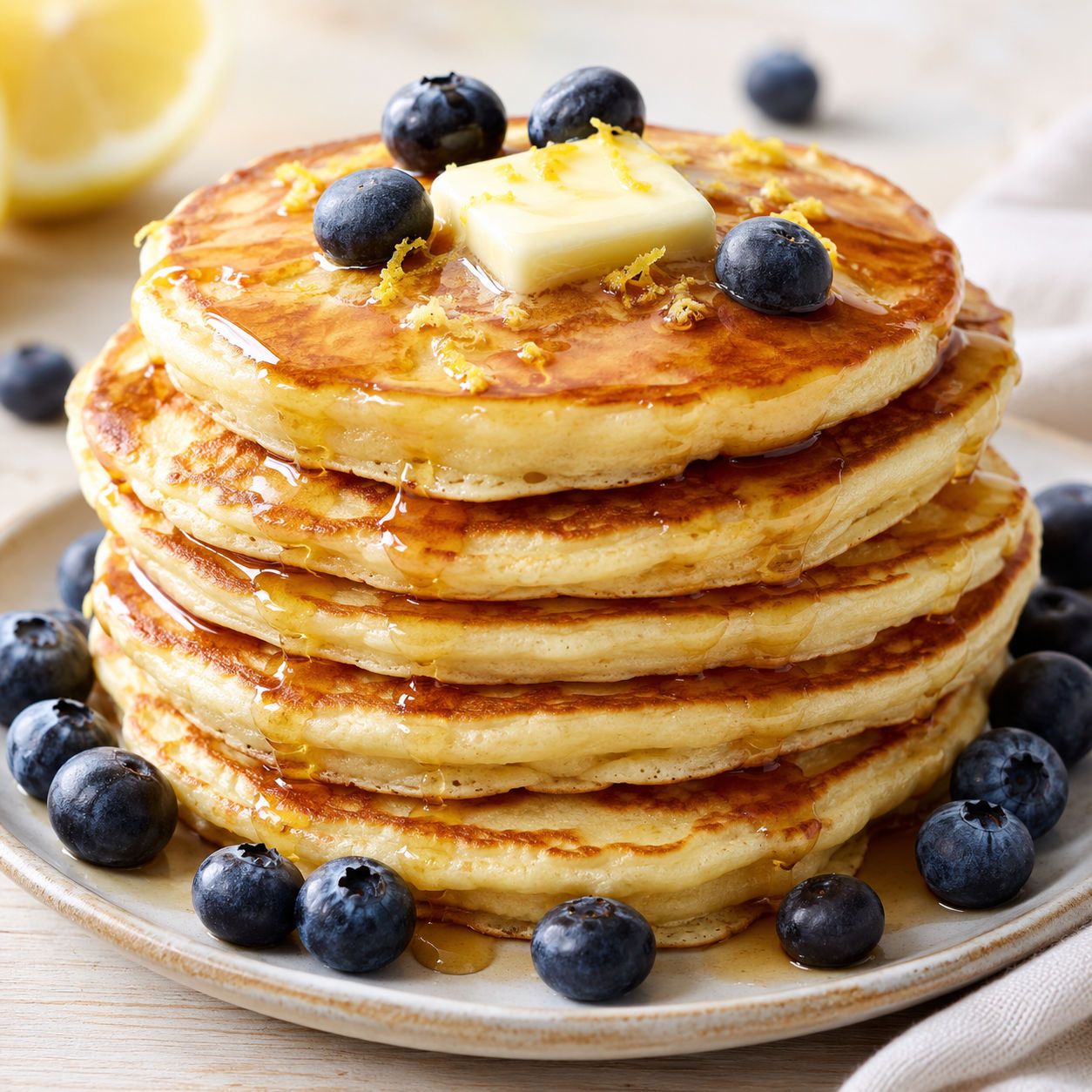
I started making these pancakes on Sunday mornings when I wanted something that felt a little more special than the usual stack, but without a lot of extra work. The ricotta does something magical to the batter. It makes the pancakes tall and tender. They turn almost pillowy, while the lemon keeps everything bright.
You do not need any fancy equipment. A bowl, a whisk, and a nonstick skillet are enough. The batter comes together in about ten minutes, and the cooking is mostly patience. These are the kind of pancakes that make people ask what your secret is.
The ricotta-and-lemon lineup
Quality matters with a short list. Use whole milk ricotta if you can. It is richer and moister than part-skim, and it blends into the batter without leaving grainy lumps. Fresh lemons are non-negotiable. Bottled juice lacks the oils in the zest, and the zest is where the real fragrance lives.
- Whole milk ricotta. This is what gives the pancakes their height and tender crumb. It adds protein and richness without making them heavy.
- Fresh lemons. You need both zest and juice. The zest carries the aromatic oils, and the juice adds a gentle tang that balances the sweetness.
- All-purpose flour. Spoon it into your measuring cup and level it off. Packed flour makes dense pancakes.
- Baking powder. The sole leavening agent. If it has been open for more than six months, test it in hot water first.
- Eggs. They bind the batter and add structure.
- Whole milk. It loosens the ricotta into a pourable batter. Two percent works, but whole is best.
- Melted unsalted butter. For flavor and a golden edge. Unsalted lets you control the seasoning.
- Vanilla extract and sugar. A little of each adds warmth and rounds out the lemon.
Flip them right
- Mix the dry. Whisk the flour, sugar, baking powder, and salt together in a large bowl so the leavening is evenly distributed.
- Whisk the wet. In a separate bowl, beat the ricotta, milk, eggs, melted butter, lemon zest, lemon juice, and vanilla until smooth. Break up any large ricotta lumps with the whisk.
- Combine gently. Pour the wet mixture into the dry and stir until you no longer see pockets of flour. A few small lumps are fine. Overmixing develops gluten and turns pancakes rubbery.
- Rest the batter. Let it sit at room temperature for five to ten minutes. This relaxes the gluten and gives the baking powder time to start bubbling.
- Cook low and slow. Heat a nonstick skillet over medium-low. Brush with butter. Use a one-third-cup scoop for each pancake. Cook until bubbles form on the surface and the edges look set, about two to three minutes. Flip and cook one to two minutes more until golden.
Why ricotta changes everything
Ricotta is not just a filling for lasagna. In pancakes, it acts like Greek yogurt or sour cream, adding moisture and fat that tenderize the crumb. The protein in ricotta also helps the pancakes hold their shape as they rise, so you get a taller stack. Unlike cream cheese, ricotta is light and slightly grainy, which creates tiny air pockets in the batter as it cooks. The result is a pancake that is fluffy but still has real texture. If you enjoy playing with pancake batters, our ultimate fluffy Japanese pancakes take the same idea in a totally different direction with whipped egg whites. If you want a sweeter shortcut, our easy cake batter pancakes are another fun weekend option.
The freshness test
Flat pancakes are almost always caused by one of two things. Old baking powder or an overmixed batter. Baking powder loses potency after about six months, even if the can looks fine. Drop a teaspoon into half a cup of hot water. If it fizzes vigorously, it is still good. If it barely bubbles, toss it and open a new can. The other culprit is too much stirring. You want to stop as soon as the dry ingredients disappear. A lumpy batter makes light pancakes. For more on the science of leavening, King Arthur Baking has excellent guides on how chemical leaveners work in batters.
Heat control and timing
Too hot and the outside burns before the middle cooks. Too cool and the pancakes spread into pale, floppy discs. Medium-low is the sweet spot for ricotta pancakes because the extra moisture from the cheese needs time to steam and set. The first pancake is your test. Adjust the heat based on how it looks after two minutes. If butter in the pan starts smoking, wipe it out with a paper towel and brush in fresh fat. Burnt butter tastes acrid and will ruin the batch. You can keep finished pancakes warm on a baking sheet in a two-hundred-degree oven. Lay them in a single layer so steam does not make them soggy.
Toppings and storage
Maple syrup is the classic move, but these pancakes also love a spoonful of blueberry compote or a dollop of lemon curd. Fresh berries and a dusting of powdered sugar turn the plate into something that looks like it came from a brunch restaurant. Leftovers keep in an airtight container in the fridge for up to three days. For longer storage, freeze them in a single layer on a baking sheet, then transfer to a bag with parchment between each pancake. They last about two months frozen. Reheat in a toaster oven or a three-hundred-fifty-degree oven until warm. If you are in the mood for more lemon, try our two ingredient lemon bars later in the day.
Swaps that still work
You can substitute a one-to-one gluten-free baking blend for the all-purpose flour if needed. The texture will be slightly more tender, so handle the batter gently. Cottage cheese blended until smooth works in place of ricotta, though the flavor is tangier. For blueberry ricotta pancakes, fold in one cup of fresh or frozen blueberries after you combine the wet and dry. If you use frozen, thaw them first and pat dry so they do not bleed purple streaks into the batter. You can also swap the lemon for orange zest and juice for a winter brunch twist.
FAQs
- Can I use low-fat ricotta?
Yes, but whole milk ricotta gives the best texture. Low-fat or part-skim versions can make the pancakes slightly drier and less rich.
- Why are my pancakes flat and dense?
Check your baking powder first. If it is older than six months, it may have lost its power. Also make sure you are not overmixing the batter. Stir until the flour disappears and then stop.
- Can I make the batter the night before?
You cannot mix the batter ahead because the baking powder will lose its lift. You can, however, measure and mix the dry ingredients in one bowl and the wet in another. Cover and refrigerate the wet, then combine in the morning.
- What is the best pan temperature?
Medium-low heat is ideal. Ricotta pancakes need a little more time than standard pancakes because of the extra moisture. If the outside browns too fast, lower the heat and let the pan cool for a minute.
- How do I keep pancakes warm while cooking the rest?
Place cooked pancakes on a baking sheet in a two-hundred-degree oven in a single layer. Do not stack them or they will steam and get soggy.
- Can I freeze leftover pancakes?
Yes. Cool them completely, then freeze in a single layer on a baking sheet. Once solid, transfer to a freezer bag with parchment paper between each pancake. They keep for about two months. Reheat in a toaster oven or oven.
- What else can I serve with these?
Fresh berries, maple syrup, lemon curd, whipped cream, or a simple dusting of powdered sugar all work beautifully. For a savory contrast, serve with crispy bacon or breakfast sausage on the side.
