 Pin it
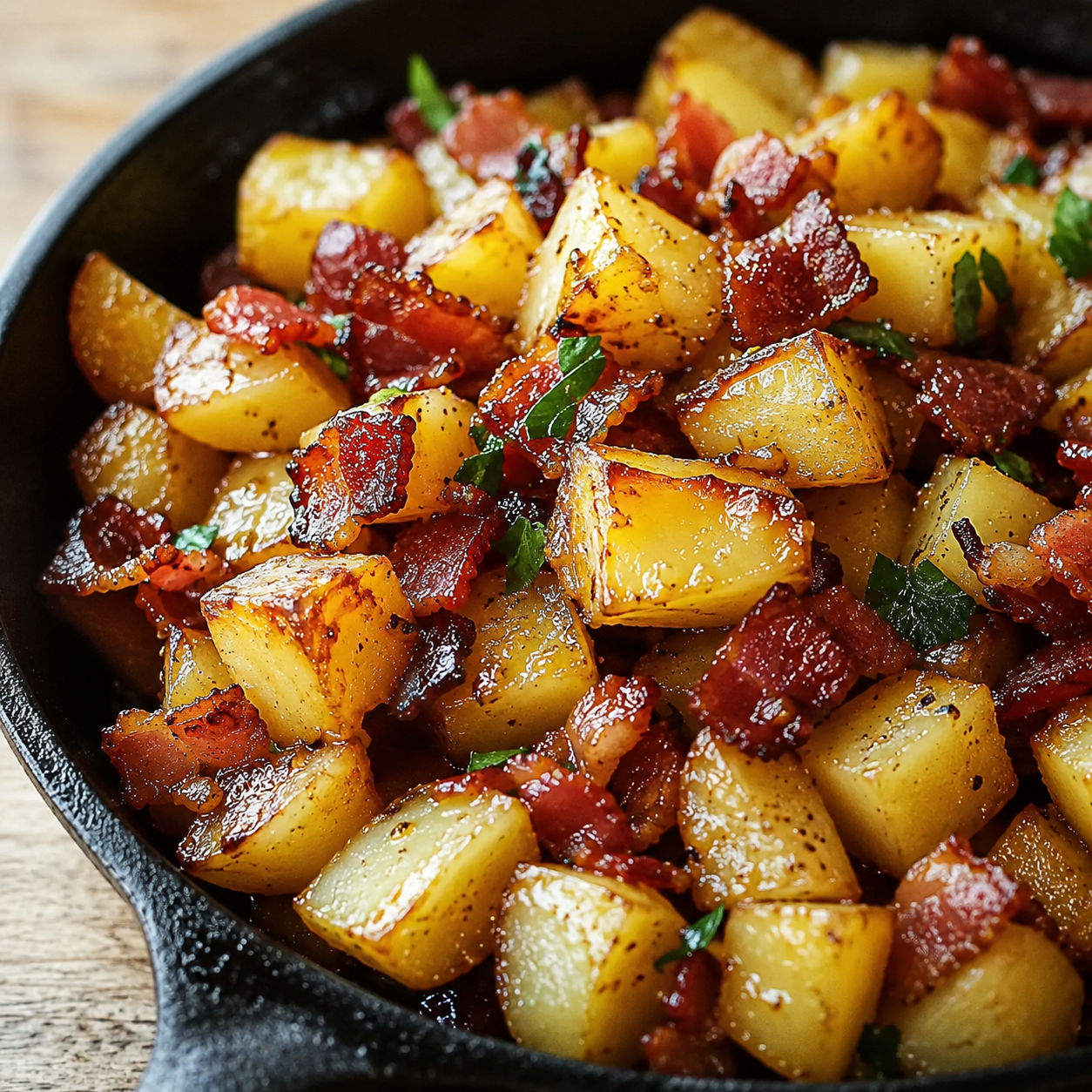
Some mornings call for toast and cereal. Others call for a skillet full of bangin breakfast potatoes with bacon and maple that crackle when you flip them and smell like Sunday before you even lift the lid. This is the recipe I pull out when people stay over and I want breakfast to feel like an event without chaining myself to the stove.
The trick is simple. Dice the potatoes small and uniform so they cook through before they burn. Let the bacon render its fat into the pan instead of cooking it separately. Then hit everything with a drizzle of real maple syrup at the very end so it caramelizes into a thin, sticky glaze rather than a soggy puddle.
From raw spuds to finished skillet, you are looking at about half an hour. Most of that is hands-off sizzle time while the potatoes develop their crust.
What builds the flavor
This is a short list, so buy the good stuff. Yukon Gold potatoes hold their shape and turn creamy inside while the outsides crisp. Thick-cut bacon gives you bigger pieces that stay chewy in the center even after they render. And please use real maple syrup. The pancake-style corn syrup stuff will burn too fast and taste one-dimensional.
- Yukon Gold potatoes. Their thin skin and waxy flesh mean you do not have to peel them, and they brown beautifully in a hot skillet.
- Thick-cut bacon. Diced small, it cooks at the same rate as the potatoes and leaves behind just enough fat to coat every cube.
- Olive oil. A small splash gets the potatoes started before the bacon fat takes over, preventing sticking on a not-yet-greased pan.
- Garlic. Added at the very end so it turns fragrant without scorching.
- Pure maple syrup. Two tablespoons are enough to lacquer the pan without making breakfast taste like dessert.
- Smoked paprika and parsley. The paprika adds a subtle campfire note, and fresh parsley cuts the richness right before serving.
How they crisp in the pan
- Prep the potatoes and bacon. Scrub the potatoes and cut them into half-inch cubes. Keep them in a bowl of cold water so they do not brown while you work. Pop the bacon in the freezer for ten minutes if it is sliding around on the cutting board, then dice it into small pieces.
- Sear the potatoes. Drain the potatoes and pat them very dry with a clean towel. Heat a large skillet over medium-high heat, add the oil, and spread the potatoes in a single layer. Season with salt, pepper, and smoked paprika. Cook for ten to twelve minutes, tossing every few minutes, until most pieces are golden and crisp at the edges.
- Add the bacon. Scatter the diced bacon over the potatoes. The fat will begin to render immediately, adding another layer of flavor and helping the potatoes finish cooking through. Keep tossing for five to six minutes until the bacon is crisp.
- Add aromatics. Reduce the heat to medium-low. Stir in the minced garlic and let it cook for about thirty seconds until you can smell it. Do not walk away. Garlic burns fast and bitter garlic ruins the batch.
- Glaze and finish. Drizzle the maple syrup over the top and toss constantly for one minute. The heat will caramelize the sugars into a thin, glossy coat. Remove from the heat, stir in the parsley, and serve right away.
Keep the dice even
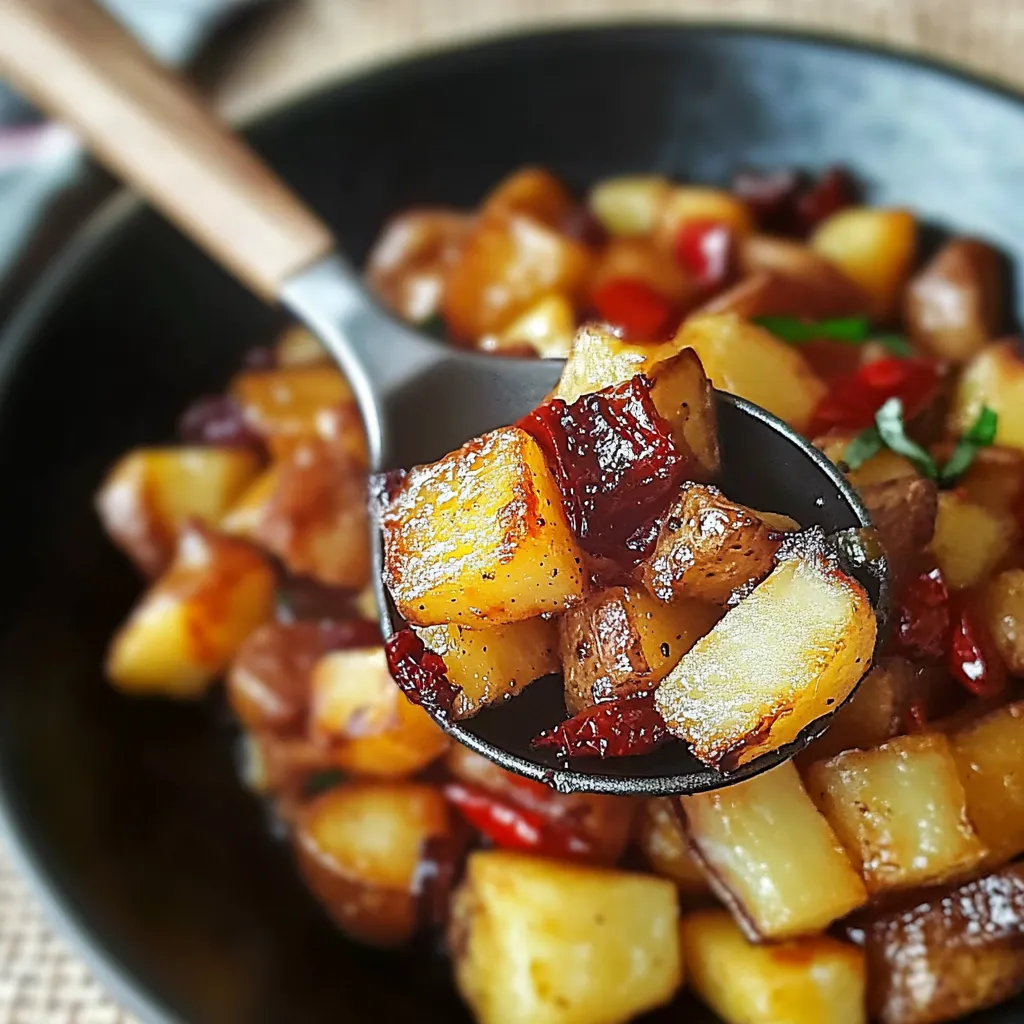
Half-inch cubes are the sweet spot. Any larger and the insides stay firm while the outsides over-brown. Any smaller and you risk potato crumbles that fall through the spatula. I cut the potato into planks, then sticks, then cubes, like a rough brunoise. It takes an extra minute but it pays off in even cooking.
Bacon goes in at the right time
If you cook the bacon first and then add raw potatoes, you end up with burnt bacon and underdone spuds. If you cook the potatoes first and add bacon at the end, the bacon stays chewy and never renders properly. The middle path works best. Sear the potatoes until they are almost tender and already picking up color, then add the raw diced bacon directly to the pan. The bacon fat melts into the potatoes as both finish together. Check the USDA bacon safety guidelines if you are new to cooking pork at home.
The maple moment
Adding maple syrup too early is the most common mistake I see. The sugars need high heat to caramelize, but they need short time so they do not burn. Wait until the very end, when the potatoes and bacon are fully cooked. Drizzle the syrup over the hot pan, then toss constantly for about sixty seconds. You want a thin lacquer, not a pool. If you love the sweet-and-savory combo, our maple pecan brie sweet potatoes use the same balance on a holiday side dish.
Breakfast pairings that work
These potatoes can stand alone, but they really shine on a full plate. I serve them with a sunny-side-up egg so the yolk runs into the skillet. For a bigger spread, add bacon egg and cheese breakfast burritos or sausage egg cheese sliders. If you are feeding a crowd, bourbon maple bacon cinnamon rolls on the same table make brunch feel like a party.
Leftovers come back strong
These keep in an airtight container in the fridge for up to three days. The microwave works in a pinch, but a hot skillet with a tiny splash of oil brings the edges back to life in about five minutes. You can also press cold leftovers into a hash and fry until the bottom is a solid golden slab.
FAQs
- Can I use russet potatoes instead of Yukon Gold?
Yes, but the texture changes. Russets will be fluffier inside and slightly more prone to falling apart. If you use them, dice carefully and do not soak too long or they absorb too much water.
- Do I really need to freeze the bacon first?
No, but it helps. Cold bacon is much easier to slice into clean cubes. If your bacon is already cold from the fridge, you can usually dice it without trouble.
- Can I make these ahead of time?
You can dice the potatoes and keep them submerged in cold water for up to four hours. You can also dice the bacon ahead. Do not cook the full dish in advance if you want the best texture.
- What if I only have pancake syrup?
Pancake syrup contains corn syrup and artificial flavors that burn quickly and taste overly sweet. Pure maple syrup is worth it here, but in a pinch, use half the amount of pancake syrup and watch the pan closely.
- Why are my potatoes sticking to the skillet?
Usually because the pan was not hot enough or the potatoes were still wet. Make sure the skillet is fully preheated and the potatoes are patted dry before they go in. A well-seasoned cast iron or a heavy non-stick skillet both work.
- Can I add onions or peppers?
Absolutely. Add diced onions about five minutes after the potatoes go in, or peppers at the same time as the bacon so they soften without turning mushy.
