 Pin it
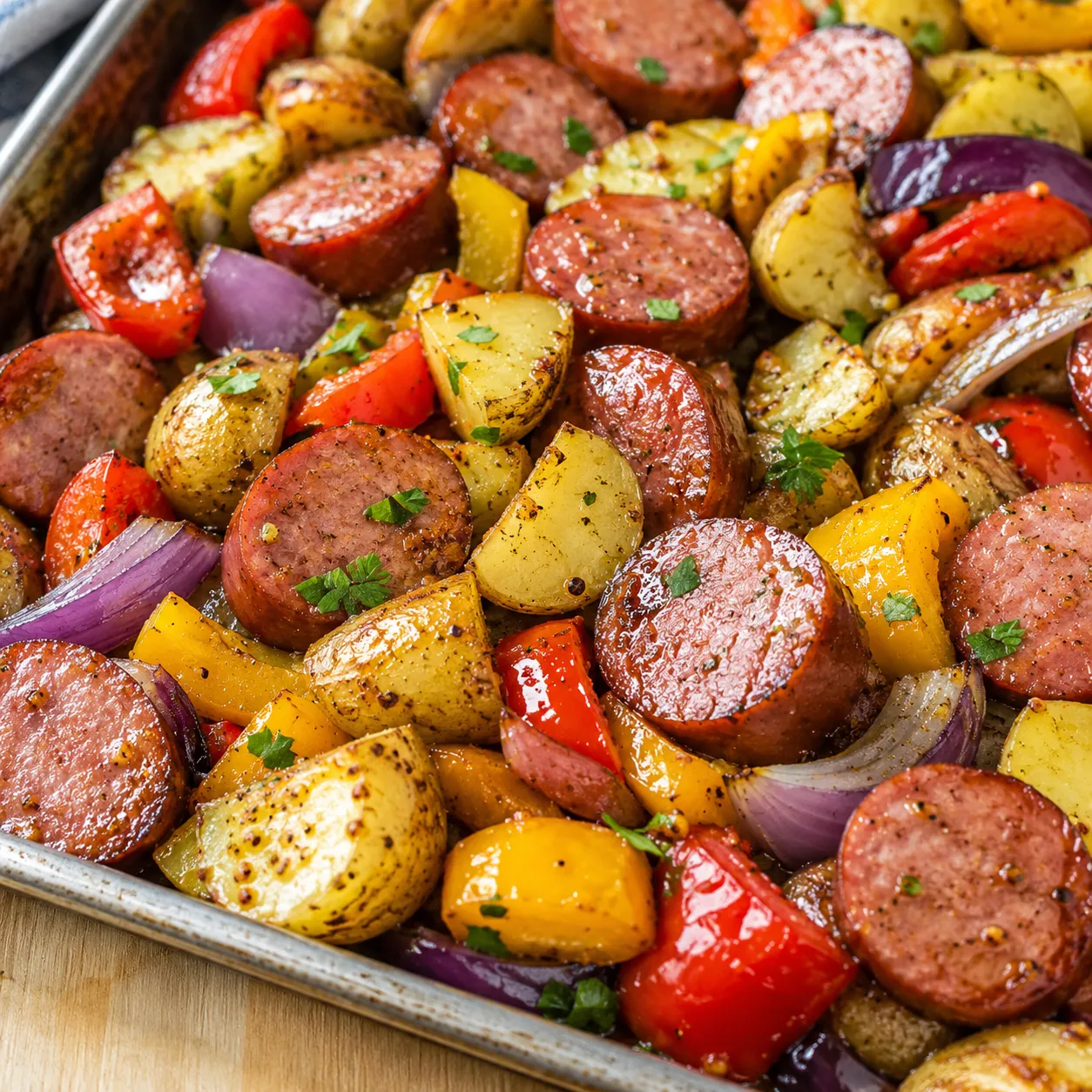
A good sheet pan dinner should not ask much of you after the chopping is done. This one gives you browned kielbasa, crisp-edged potatoes, and soft peppers with just one pan to wash.
The timing matters. Potatoes need a head start, while fully cooked kielbasa only needs enough oven time to brown and heat through. Add the sausage too early and it dries out before the potatoes are ready.
I like a small spoonful of Dijon at the end. It cuts through the richness and makes the whole pan taste brighter without turning dinner into a project.
What Makes The Pan Work
The best ingredients here are sturdy and simple. Choose fully cooked smoked kielbasa with a clean, savory aroma, firm small potatoes, and peppers that feel heavy for their size.
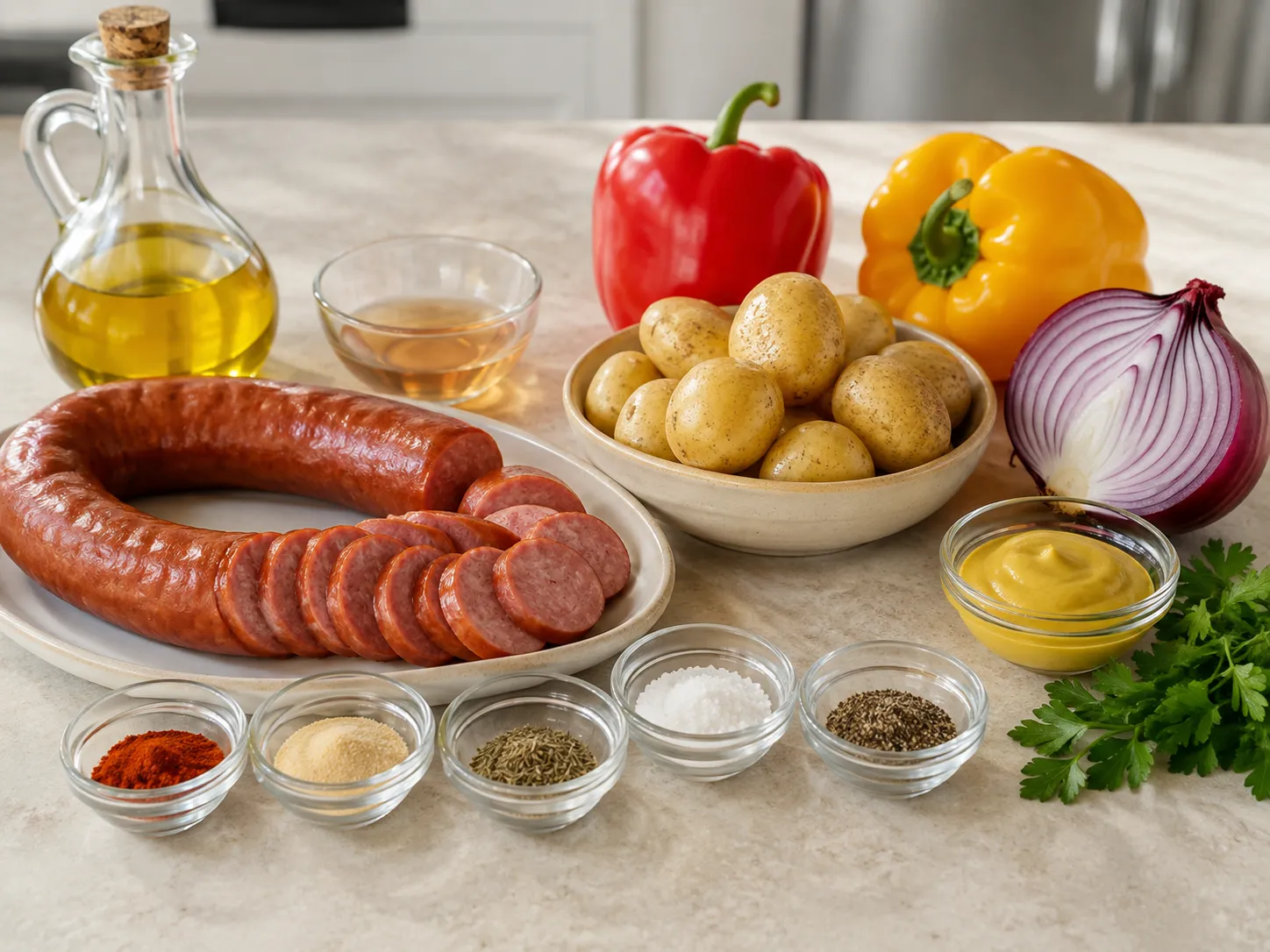
- Fully cooked kielbasa. Gives the dinner its smoky flavor and browns around the edges without a long cook time.
- Baby potatoes. Roast creamy in the middle with crisp edges when cut small and spread out.
- Bell peppers. Add sweetness and color once they soften in the oven.
- Red onion. Turns mellow and lightly caramelized against the hot pan.
- Olive oil. Helps the potatoes brown instead of drying out.
- Smoked paprika. Deepens the sausage flavor and gives the vegetables a warm color.
- Garlic powder and thyme. Season evenly without burning the way fresh garlic can at high heat.
- Dijon mustard. Adds a sharp finish that balances the rich sausage.
- Parsley. Brings a fresh note right before serving.
Roast It In Rounds
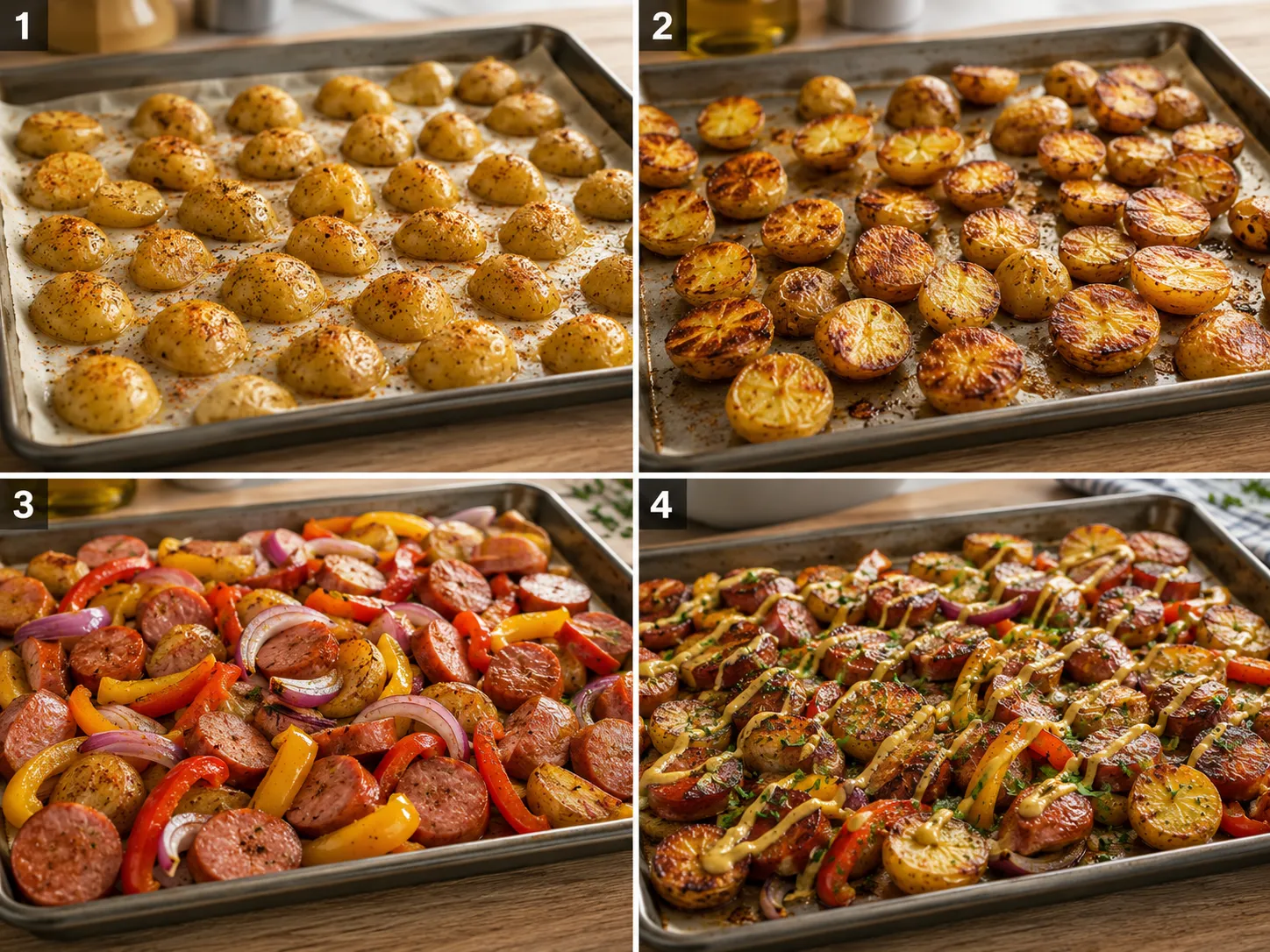
- Heat the oven. Set it to 425°F and line a large rimmed sheet pan with parchment or foil for easier cleanup.
- Start the potatoes. Toss the potatoes with oil, smoked paprika, garlic powder, thyme, salt, and pepper. Spread them cut-side down and roast until they begin to soften.
- Add sausage and vegetables. Scatter sliced kielbasa, peppers, and onion over the pan. Turn everything so the seasoned oil coats the new additions.
- Finish roasting. Roast until the potatoes are fork-tender, the peppers have browned edges, and the kielbasa is hot and crisp in spots.
- Dress the pan. Stir mustard with a splash of olive oil and vinegar, then drizzle it over the hot sausage and vegetables.
- Serve right away. Finish with parsley and a little black pepper while everything is still glossy and warm.
Give Potatoes A Head Start
Potatoes are the slowest thing on the pan. I roast them alone for the first 15 minutes so they get direct contact with the hot metal. That small head start keeps the kielbasa juicy and the peppers from collapsing into mush.
Spread matters too. If the pan is crowded, the vegetables steam and the potatoes stay pale. Use a half sheet pan if you have one. If your pan is smaller, divide the food between two pans and rotate them halfway through.
Keep The Sausage Juicy
Most grocery-store kielbasa is fully cooked, so the oven is doing two jobs. It heats the sausage and browns the outside. Thick coins are better than thin slices because they stay plump while the cut sides caramelize.
If your kielbasa is very lean, toss it with the peppers and onions instead of letting it sit bare on the hottest corners of the pan. For food safety at home, the FDA recommends keeping perishable foods out of the danger zone and following the two-hour rule for refrigerated foods.
Easy Swaps For Busy Nights
Use yellow onion if that is what you have. Swap in sweet potatoes, but cut them small and expect a slightly softer texture. Green beans can go on the pan during the last 12-15 minutes. Broccoli works too, though the florets brown fast.
For heat, add a pinch of crushed red pepper with the seasonings. For a brighter finish, use apple cider vinegar in the mustard drizzle. If you want a little more bulk, serve the roasted mixture over rice or buttered egg noodles.
The Mustard Finish Matters
The drizzle is small, but it changes the pan. Dijon, olive oil, and vinegar loosen the browned bits and sharpen the smoky sausage. Add it after roasting so the mustard stays bright instead of baking onto the pan.
If you are serving kids who prefer mild flavors, pass the drizzle at the table. The potatoes and peppers are still well seasoned without it, and the adults can add more bite to their own plates.
Storing The Leftovers
Leftovers hold up well because the ingredients are sturdy. Let the pan cool a bit, then refrigerate the food in shallow containers. The USDA says cooked leftovers can be kept for 3-4 days in the refrigerator.
Reheat on a sheet pan at 350°F until hot, or warm a serving in a skillet. If using the microwave, stir halfway through. FSIS recommends reheating leftovers to 165°F throughout.
Summary
This one-pan kielbasa dinner is built around smart timing. Roast the potatoes first, add the sausage and vegetables later, then finish with mustard and parsley for a simple meal that tastes full and balanced.
FAQs
- Can I use raw kielbasa for this sheet pan dinner?
This recipe is written for fully cooked smoked kielbasa. Raw sausage needs a different cooking plan and must be checked with a thermometer, so do not swap it in without adjusting the timing.
- What potatoes work best?
Baby gold or red potatoes work well because they roast creamy inside and crisp outside. Cut them into small 3/4-inch pieces so they finish before the peppers get too soft.
- Can I make Kielbasa Sheet Pan Dinner ahead?
You can chop the potatoes, peppers, and onion up to a day ahead. Keep the potatoes covered in cold water in the refrigerator, then drain and dry them very well before roasting.
- How do I store leftovers?
Cool leftovers quickly and refrigerate them in a covered container. The USDA says leftovers are best kept in the refrigerator for 3-4 days.
- Can I add other vegetables?
Yes. Brussels sprouts, carrots, broccoli, and green beans all fit here. Add tender vegetables like broccoli or green beans during the last 15 minutes so they do not overcook.
- What should I serve with it?
This is filling on its own, but it is good with a green salad, rye toast, sauerkraut, or pickles. A little extra mustard on the side is never a bad idea.
