 Pin it
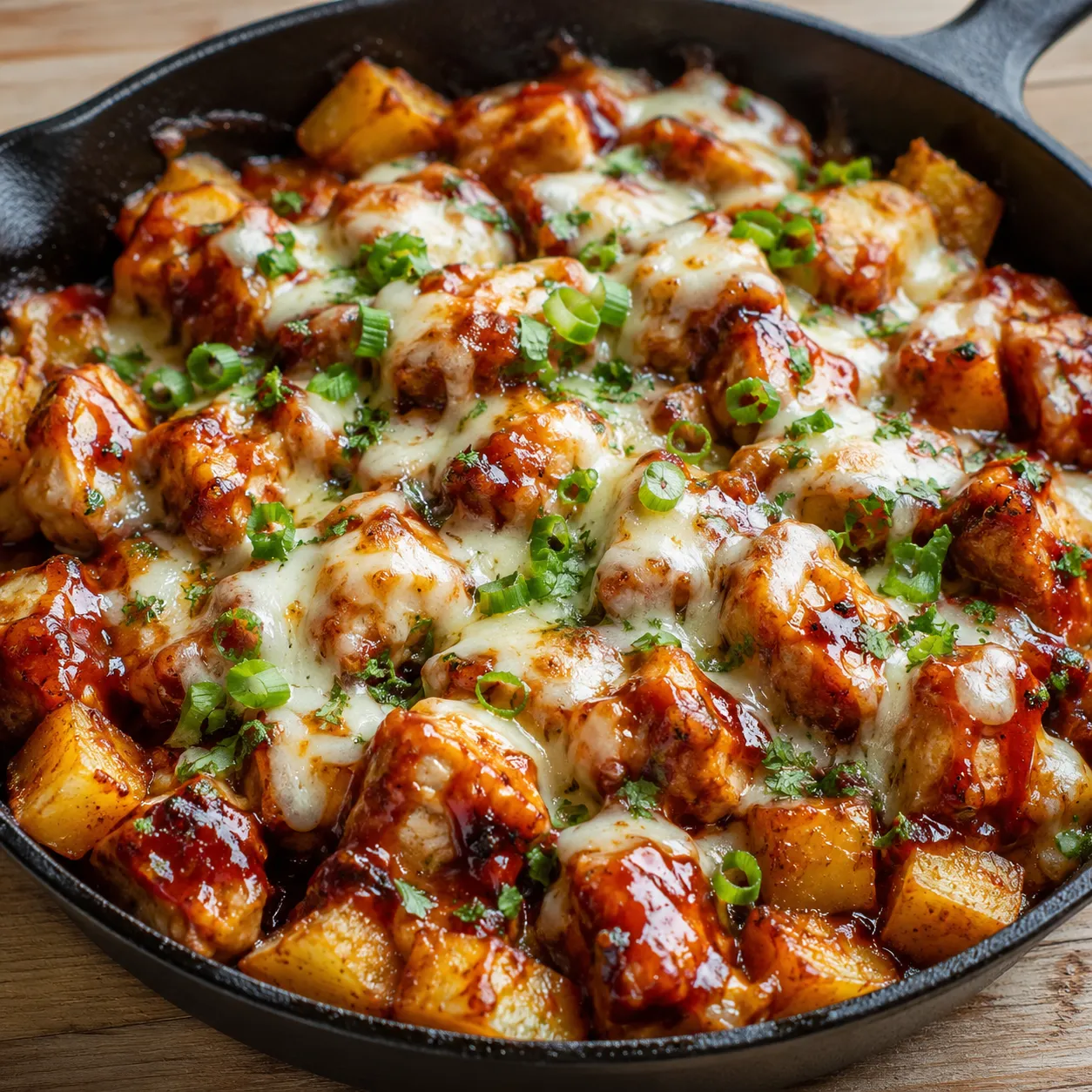
BBQ Chicken and Potato Skillet is the kind of dinner that feels like it took more work than it did. You get crisp-edged potatoes, sticky barbecue chicken, and a blanket of melted cheese without juggling three pans.
The small shortcut is to microwave the diced potatoes first. They soften in the center, then brown fast in the skillet while the chicken stays juicy and the sauce turns glossy.
Saucy Skillet Staples
Use small Yukon gold potatoes if you can find them. They hold their shape and brown beautifully after a quick microwave head start. Pick a BBQ sauce you already like because its flavor carries the whole skillet.
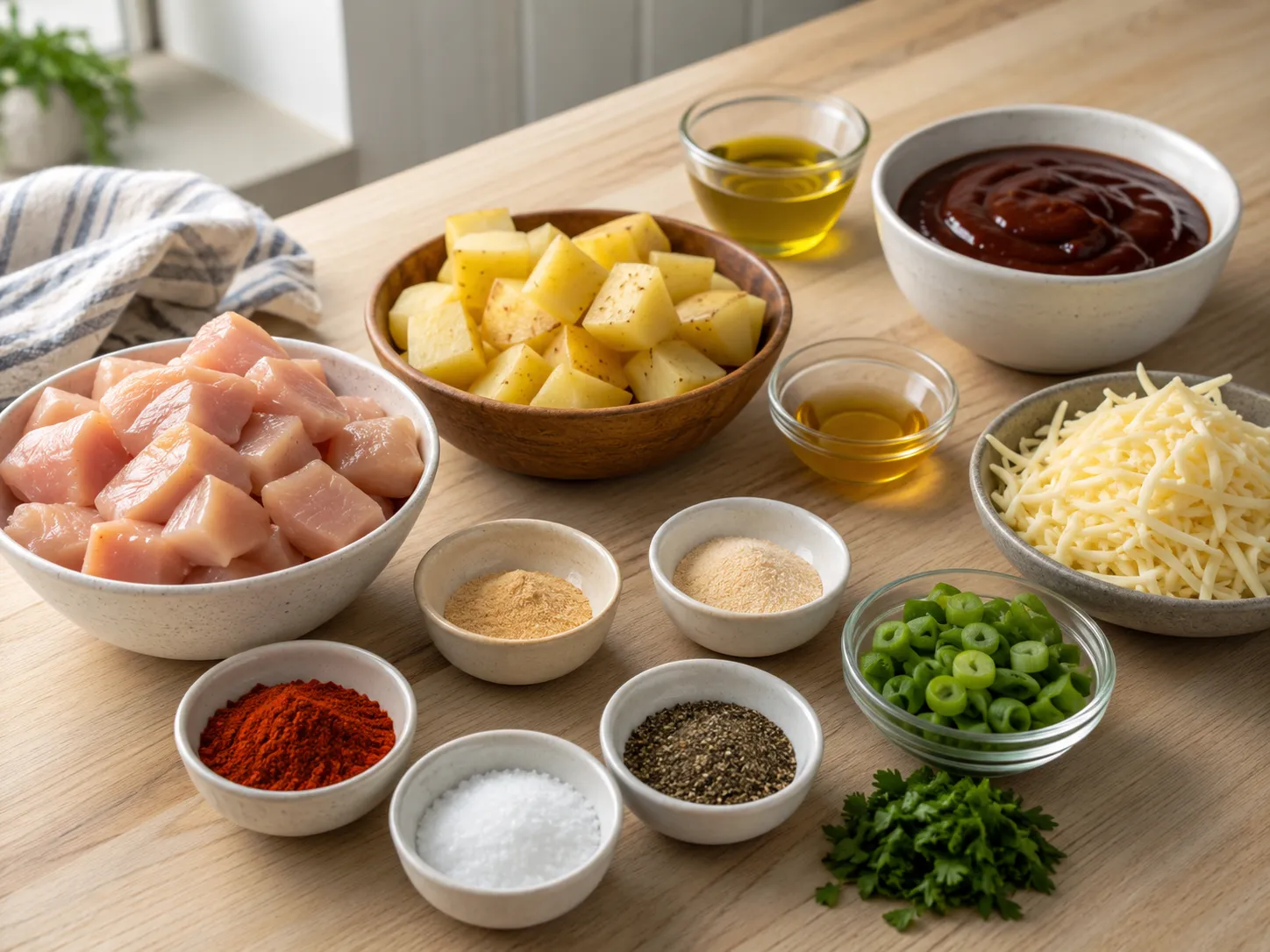
- Yukon gold potatoes. They crisp on the edges and stay creamy in the middle.
- Boneless chicken. Breast keeps the dish lean, while thighs give you a juicier bite.
- Olive oil. Helps the potatoes brown and keeps the chicken from sticking.
- Smoked paprika. Adds a gentle smoky note that makes the BBQ sauce taste deeper.
- Garlic powder and onion powder. Season the chicken evenly without burning in the hot pan.
- Gluten-free BBQ sauce. Makes the skillet sticky, tangy, and sweet in one step.
- Apple cider vinegar. Sharpens the sauce so it does not taste flat.
- Monterey Jack cheese. Melts smoothly over the chicken and potatoes.
- Scallions or parsley. Add a fresh finish after the broiler.
Crisp, Sear, Sauce, Broil
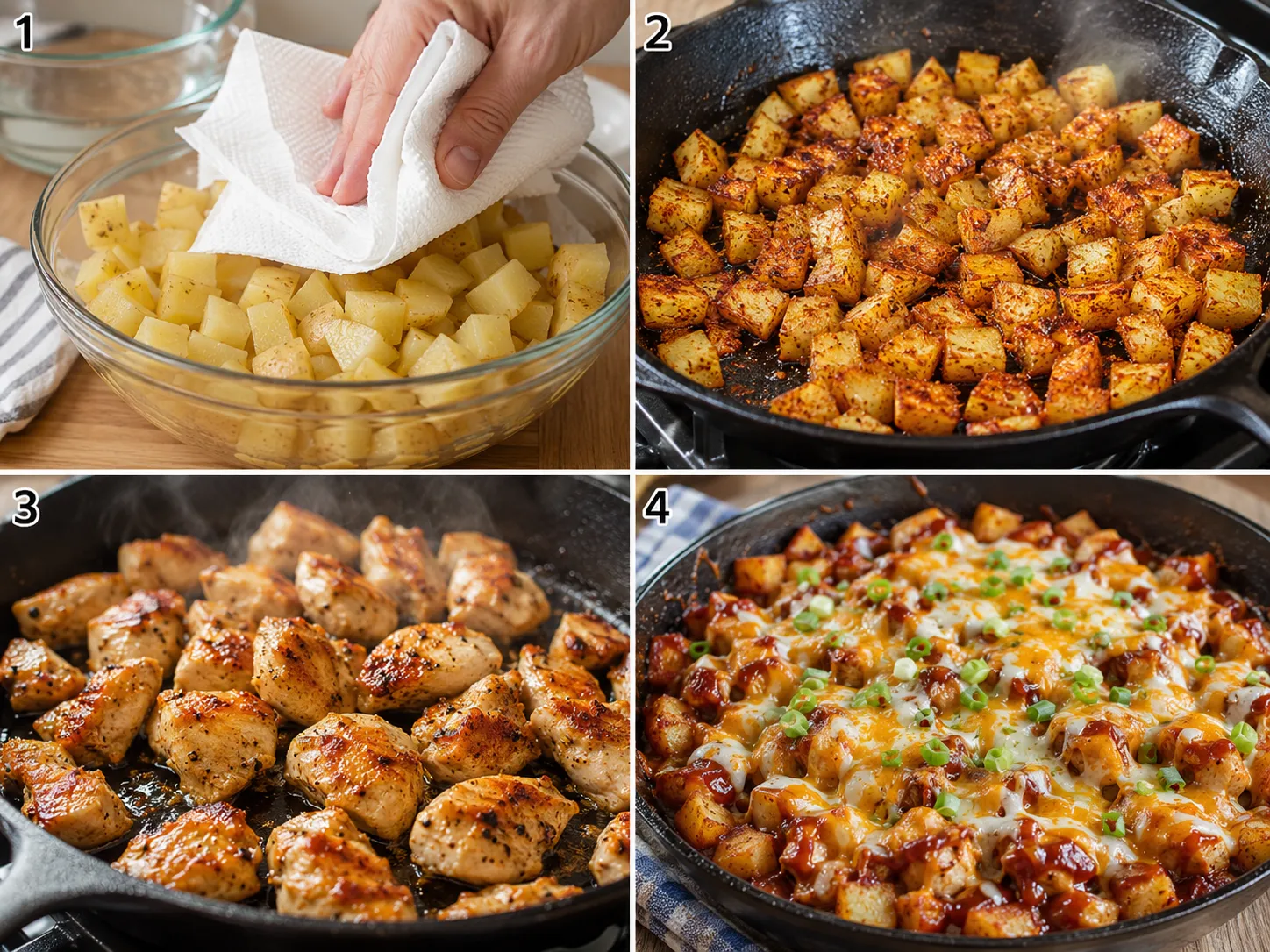
- Start the potatoes. Microwave the diced potatoes until barely tender, then dry them well so they brown instead of steam.
- Brown the potatoes. Cook them in a hot oven-safe skillet until the edges are golden and crisp, then move them to a plate.
- Sear the chicken. Season the chicken and cook it in the same skillet until golden and cooked through.
- Glaze the skillet. Stir in BBQ sauce and a splash of apple cider vinegar, then simmer until the chicken looks shiny and coated.
- Bring it together. Fold the potatoes back into the pan and spoon some sauce over the top.
- Melt the cheese. Scatter cheese over the skillet and broil for a few minutes until bubbly and lightly browned.
Why The Potatoes Stay Crisp
Potatoes are the part that can make or break this skillet. If they go into the pan raw, the chicken will be done long before the centers soften. If they are too wet, they steam and taste pale. A short microwave start solves both problems. The pieces get tender enough to cook fast, then a clean towel removes surface moisture before they hit the skillet.
Use a wide skillet and give the potatoes a little room. Crowding traps steam, which softens the edges you worked to build. Once the potatoes are in the pan, let them sit for a minute before stirring. That quiet contact with the hot surface is what gives you the browned sides. When they look crisp and golden, take them out before cooking the chicken. They will return later and catch the BBQ sauce without turning mushy.
Chicken That Stays Juicy
Chicken breast works well in this BBQ Chicken and Potato Skillet, but it needs a hot pan and a short cook time. Cut it into even pieces and season before it goes in. Let the first side brown before stirring. That little bit of color gives the sauce something savory to cling to.
Chicken thighs are more forgiving if your family likes darker meat. Either way, cook the chicken until it reaches 165°F. The safe minimum internal temperature chart from FoodSafety.gov is a useful reference for poultry. Once the chicken is done, lower the heat before adding BBQ sauce. Sugary sauce can scorch quickly in a screaming-hot pan, so a gentle simmer is better than a hard boil.
Sauce And Cheese Choices
The easiest way to change the whole skillet is to change the BBQ sauce. A smoky sauce makes it taste closer to grilled chicken. A honey-style sauce leans sweeter. A spicy sauce cuts through the potatoes and cheese. I like adding a teaspoon of apple cider vinegar because it brightens store-bought sauce without making it thin.
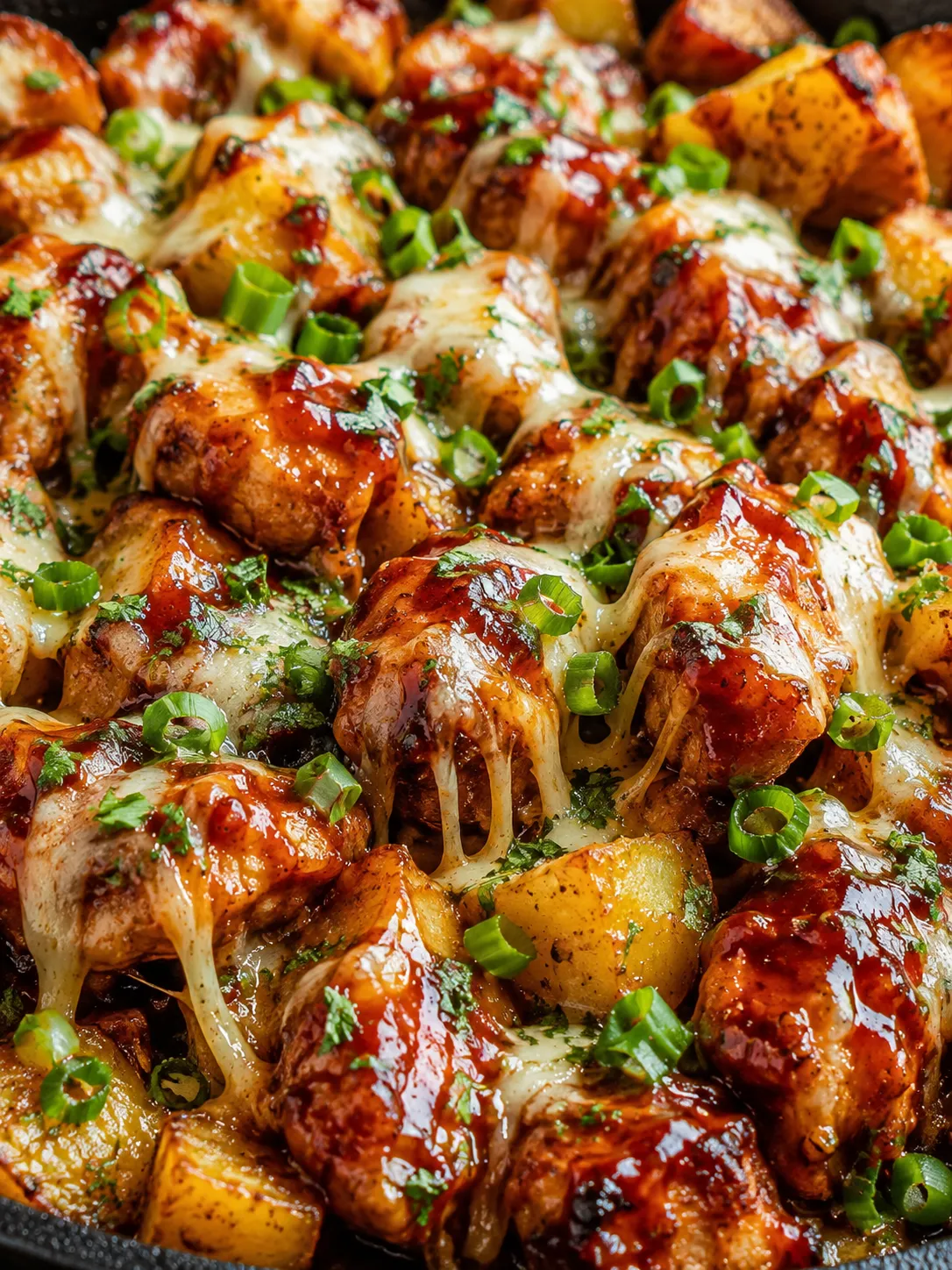
Monterey Jack melts into soft, stretchy pockets. Cheddar gives a sharper flavor and a little more color under the broiler. Pepper Jack is good if you want heat. Keep the cheese on top instead of stirring it through the sauce. That way you get browned spots and the potatoes keep more texture. If your skillet is not oven-safe, transfer everything to a small baking dish before broiling. It is one extra dish, but the melted top is worth it.
Storage Without Soggy Potatoes
Leftovers keep well, but the potatoes will soften in the fridge. Store the skillet in a shallow airtight container once it has cooled. USDA guidance on leftovers and food safety recommends refrigerating cooked food promptly and using leftovers within a few days.
For the best reheated texture, skip the microwave if you have time. Warm the leftovers in a skillet over medium-low heat with a spoonful of water or BBQ sauce. Cover for a minute to heat the chicken through, then uncover so the potatoes can dry out a bit. You can also reheat it in a 350°F oven until hot. Add a little fresh scallion at the end because the garnish from day one will lose its snap.
Summary
Serve this skillet hot from the broiler with a green salad, coleslaw, or roasted vegetables. Leftovers reheat best in a skillet so the potatoes do not go limp.
FAQs
- Can I make BBQ Chicken and Potato Skillet without broiling it?
Yes. Cover the skillet after adding the cheese and keep it over low heat until the cheese melts. You will miss the browned spots on top, but the dish will still be saucy and satisfying.
- Can I use chicken thighs instead of chicken breast?
Yes, boneless skinless chicken thighs work very well here. They stay juicy and handle the sweet barbecue sauce nicely. Cut them into bite-size pieces so they cook at the same pace as the recipe says.
- What potatoes are best for this skillet?
Yukon gold potatoes are my favorite because they brown well and stay creamy inside. Red potatoes also work. Russets can be used, but they may break down a little more once tossed with the sauce.
- How do I store leftovers?
Cool leftovers, then store them in an airtight container in the fridge for up to 3 days. Reheat in a skillet over medium-low heat with a small spoonful of water or extra BBQ sauce to loosen the glaze.
- Can I make this recipe gluten-free?
The recipe is gluten-free if you use a BBQ sauce that is labeled gluten-free. Check the bottle because some sauces use thickeners or flavorings that vary by brand.
- What should I serve with it?
This skillet is filling on its own, so I like something fresh next to it. Try a crisp green salad, vinegar coleslaw, steamed green beans, or sliced cucumbers with ranch.
