 Pin it
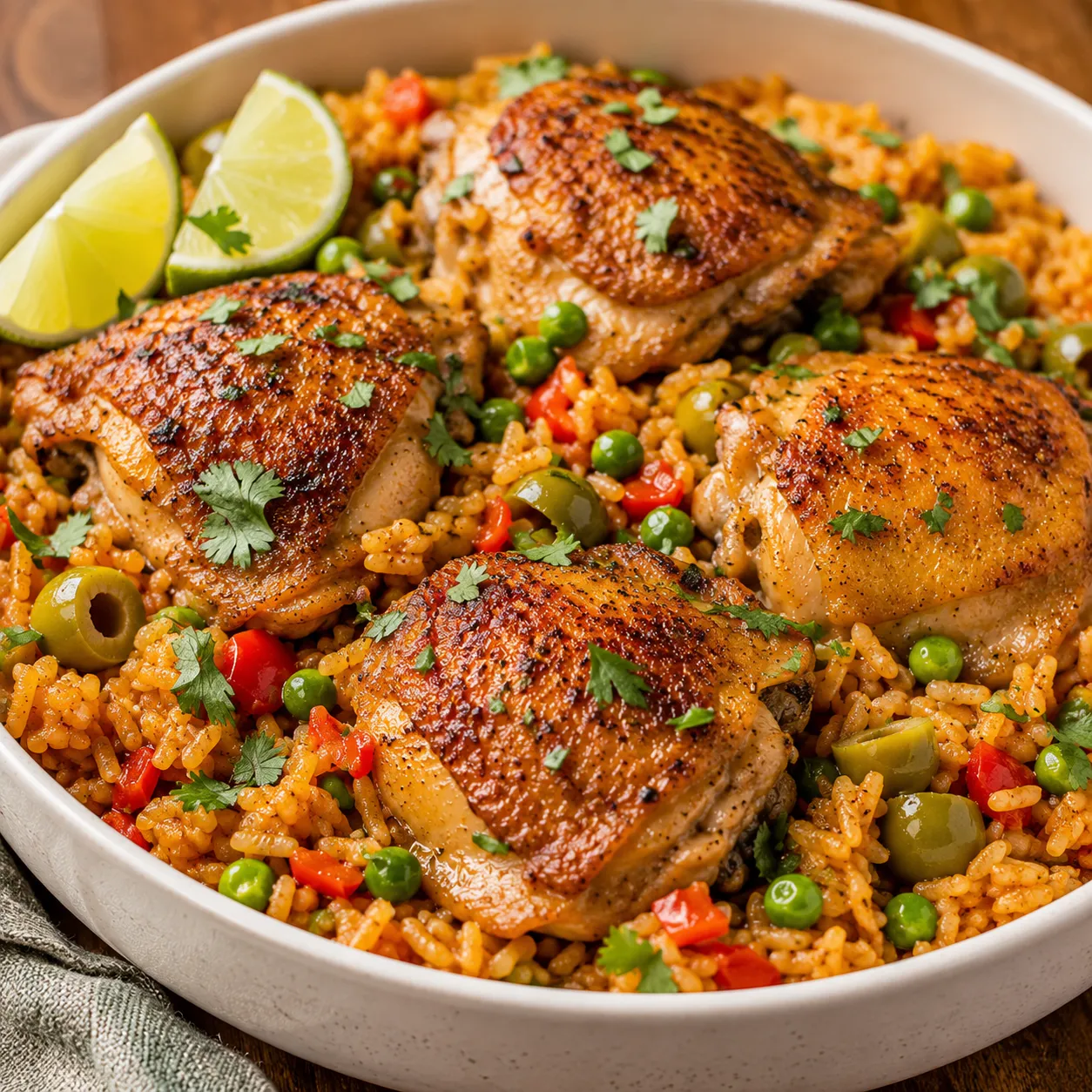
Arroz Con Pollo is the kind of dinner that makes the kitchen smell busy in the best way. The chicken browns first, then the rice cooks in the same pot with peppers, garlic, tomatoes, broth, and a little warm spice.
I like this version because it keeps the rice tender without turning it wet or heavy. The trick is simple. Rinse the rice, toast it for a minute, cover the pot tightly, and leave it alone while it finishes.
Arroz Con Pollo Building Blocks
Good Arroz Con Pollo starts with chicken that can handle a simmer and rice that cooks cleanly. Bone-in thighs give the broth more flavor, while long-grain rice keeps the finished pot light instead of sticky.
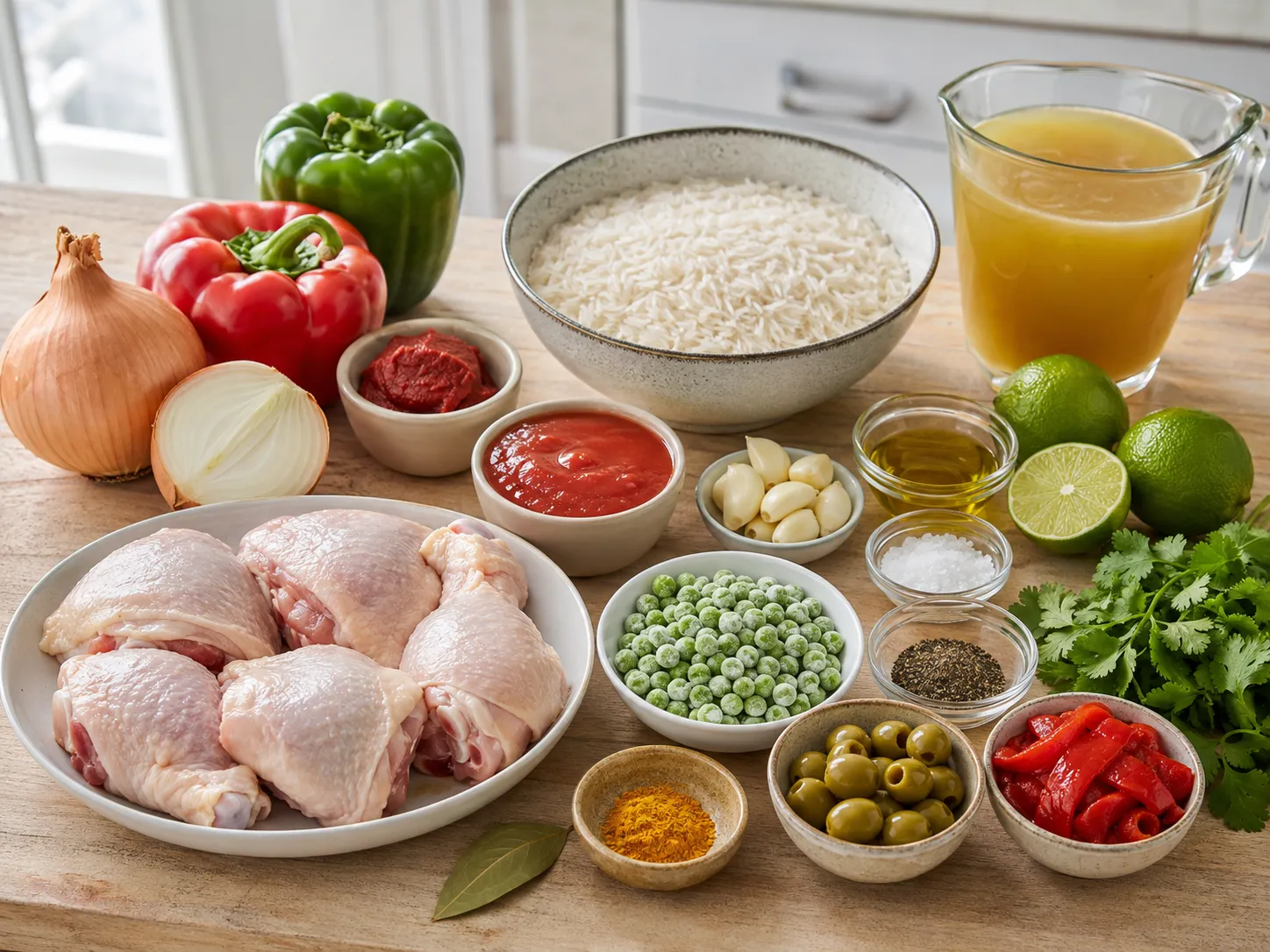
- Bone-in chicken thighs. They brown well and stay juicy while the rice cooks.
- Long-grain white rice. Rinsed grains cook up tender and separate.
- Onion and bell peppers. They make the sofrito sweet and savory.
- Garlic. It gives the rice its deep, home-cooked aroma.
- Tomato paste and tomato sauce. They add color, body, and gentle acidity.
- Chicken broth. It seasons the rice from the inside as it simmers.
- Cumin, paprika, oregano, and turmeric. These give the pot warmth and golden color.
- Peas, olives, and pimientos. They add briny, sweet, and fresh bites at the end.
The One-Pot Method
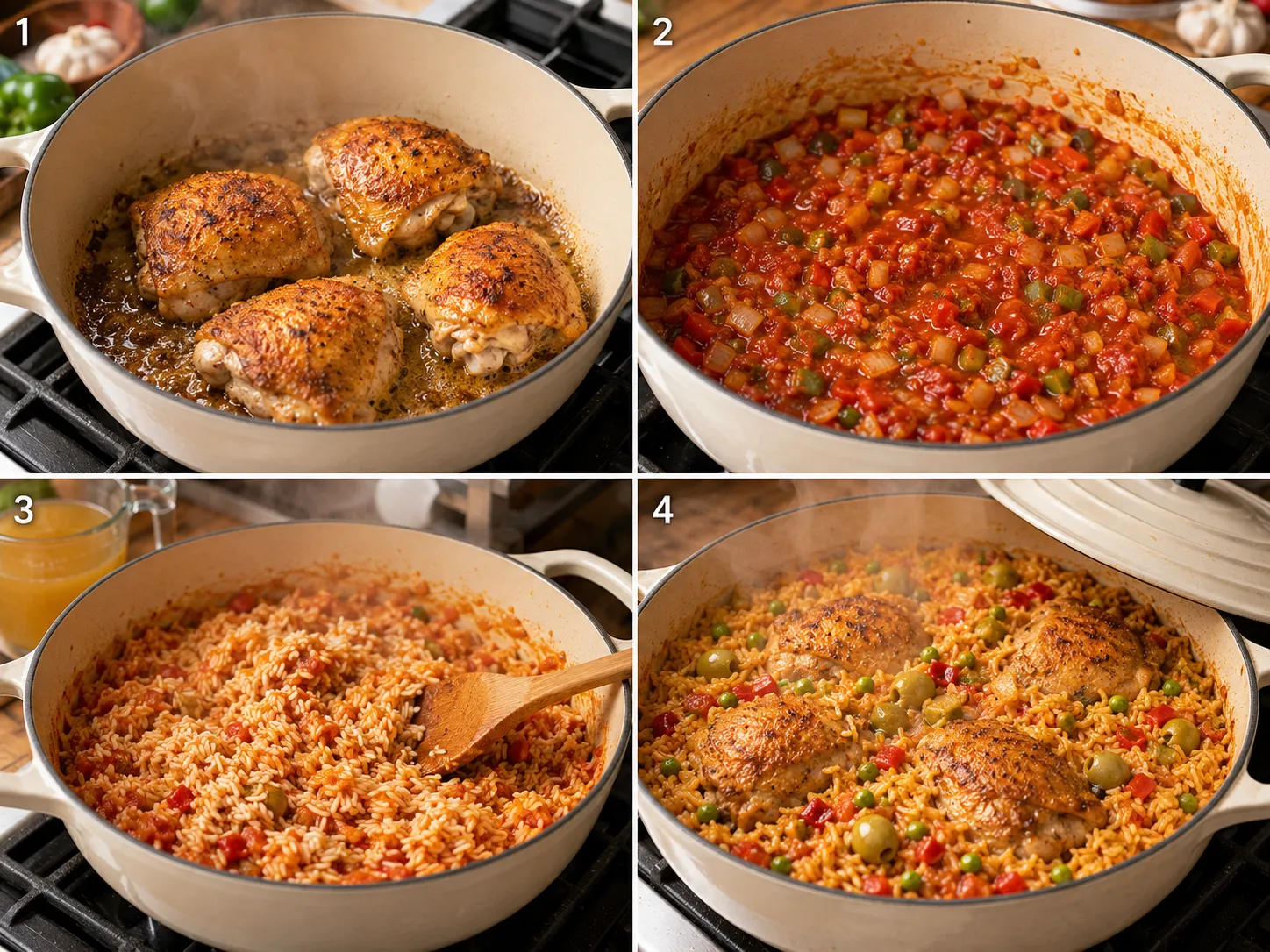
- Season the chicken. Pat the chicken dry, then rub it with salt, pepper, cumin, paprika, and oregano so the skin browns instead of steaming.
- Brown it well. Sear the chicken skin-side down until golden, then move it to a plate. It will finish cooking later with the rice.
- Cook the sofrito. Soften the onion and peppers in the same pot, then stir in garlic, tomato paste, and tomato sauce until the mixture smells rich.
- Toast the rice. Add the rinsed rice and stir for a minute so every grain gets coated in the seasoned oil.
- Simmer covered. Pour in broth, tuck the chicken on top, cover tightly, and cook gently until the rice is tender and the chicken is done.
- Rest and finish. Add peas, olives, and pimientos, then let the pot rest off the heat before fluffing with a fork.
Rice That Stays Separate
The rice is where this dish either lands or falls apart. Rinse it first. You are washing away loose surface starch that can make the pot gluey. After the sofrito is cooked, stir the rice through the oil and tomato mixture for about a minute. The grains should look glossy before the broth goes in.
Once the lid goes on, resist the urge to stir. Stirring breaks grains and releases more starch. Keep the heat low enough that you hear a quiet bubble, not a hard boil. When the timer is up, the rest matters as much as the simmer. Ten minutes off the heat lets the last bit of steam settle into the rice.
Browning Builds The Base
Do not rush the chicken browning. The darker bits stuck to the bottom of the pot dissolve into the sofrito and make the rice taste like it cooked longer than it did. Start skin-side down and leave the pieces alone until they release easily. If they tug, give them another minute.
The chicken finishes under the lid, so the first sear is about flavor more than full doneness. Use a thermometer at the end. The USDA safe temperature chart lists poultry at 165 F. Check the thickest part without touching bone.
Swaps That Still Cook Right
Arroz Con Pollo has plenty of regional versions, so there is room to adjust. If you do not keep annatto or saffron at home, turmeric is the easiest pantry swap for color. Green olives bring a salty pop, but you can leave them out if your table prefers a softer flavor.
Boneless thighs are fine. Cut the cook time a little and watch the rice, not just the chicken. Chicken breasts can work, but they dry out faster. Brown rice needs a different liquid ratio and a much longer cook time, so it is not a simple one-for-one change here.
What To Serve Alongside
This is already a full meal, so the best sides are fresh and crisp. I like sliced avocado with lime, a simple tomato salad, or quick cabbage slaw. Fried sweet plantains are good when you want the meal to feel a little more generous.
Set hot sauce on the table instead of loading the pot with heat. That keeps the rice friendly for kids and lets everyone season their own plate. A squeeze of lime at the end wakes up the chicken, especially if the olives are briny.
Leftovers Need Gentle Heat
Leftovers hold up well if you cool them quickly and store them shallow. The CDC advises keeping raw chicken and its juices away from ready-to-eat foods, and refrigerating leftover chicken within 2 hours, which is a useful habit for this kind of one-pot dinner. Their chicken food safety guide is worth following when you prep and store poultry.
Reheat portions in a covered skillet with a splash of broth or water. Low heat gives the rice time to steam back to life. The microwave works too, but cover the bowl and stop once to stir so the edges do not dry out.
FAQs
- Can I make Arroz Con Pollo with boneless chicken?
Yes. Boneless thighs work better than breasts because they stay juicier during the simmer. Brown them for less time, then check them near the end so they do not overcook.
- What rice is best for Arroz Con Pollo?
Long-grain white rice is the easiest choice. It cooks evenly in the broth and stays more separate than short-grain rice. Rinse it until the water looks mostly clear so the pot does not turn gummy.
- Can I skip saffron or annatto?
Yes. A little turmeric gives the rice a warm yellow color and mild earthiness. Saffron is lovely if you have it, but this dish still tastes full without it.
- Why did my rice turn mushy?
The usual causes are too much liquid, stirring during the covered simmer, or skipping the rest at the end. Keep the lid on, use a gentle simmer, and let the pot sit off the heat for 10 minutes before serving.
- How should I store leftovers?
Cool leftovers quickly and refrigerate them in a shallow airtight container. Reheat gently with a splash of broth or water so the rice loosens without drying out.
- Can I freeze Arroz Con Pollo?
You can freeze it, but the rice will be softer after thawing. Freeze portions in airtight containers, thaw overnight in the fridge, and reheat covered with a small splash of broth.
