 Pin it
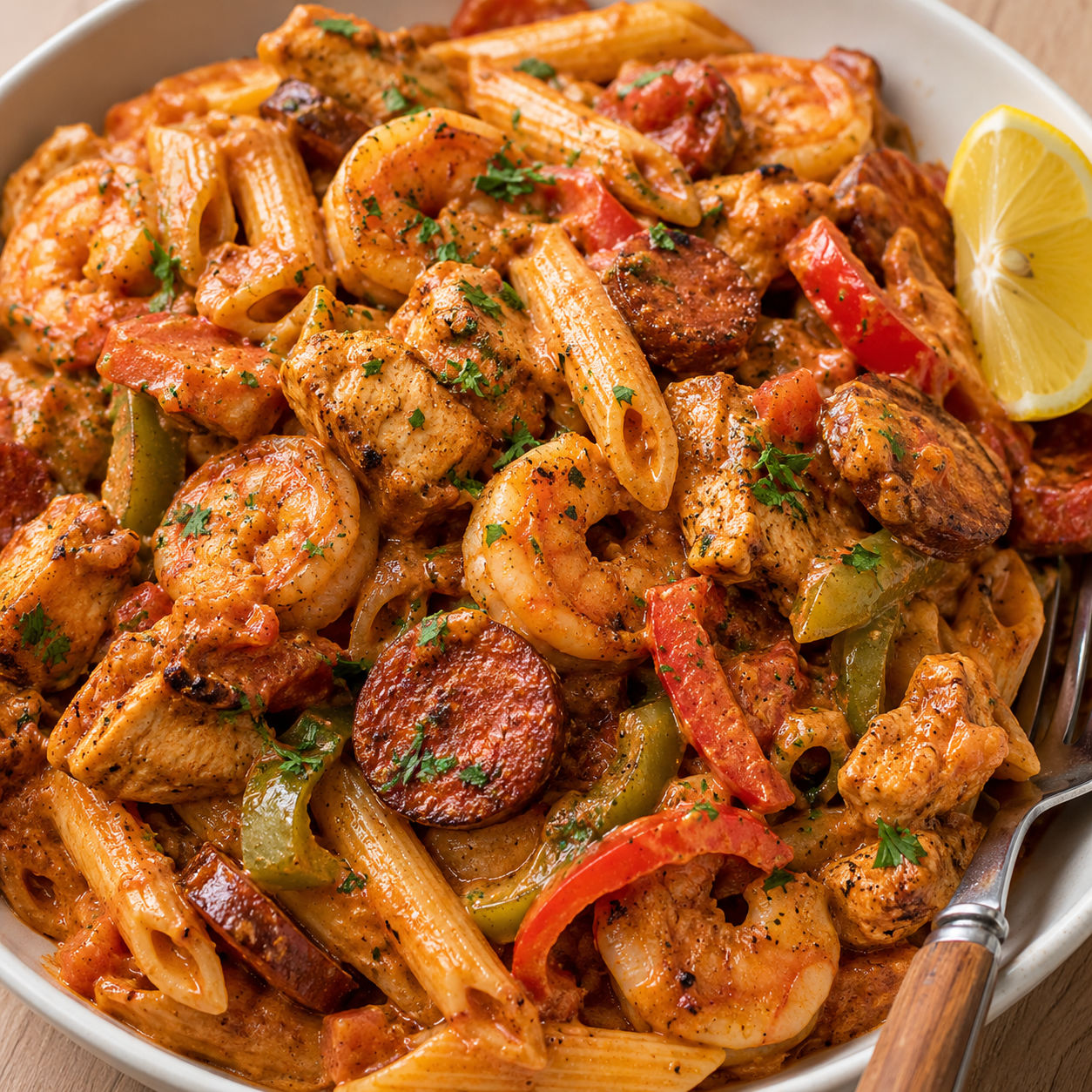
Delicious Jambalaya Pasta with Cajun Flavors is what I make when I want the taste of jambalaya but the comfort of a big bowl of pasta. It has smoky sausage, sweet peppers, juicy shrimp, and enough Cajun spice to warm the sauce without flattening everything else.
The trick is cooking the chicken, sausage, and shrimp in short rounds. That keeps the shrimp tender and gives the sauce those browned bits from the pan. It tastes like it took longer than it did.
Delicious Jambalaya Pasta with Cajun Flavors
This lineup is built around smoky sausage, quick-cooking seafood, and the Cajun trinity of onion, celery, and bell pepper. Use a Cajun seasoning you enjoy on its own because it seasons nearly every part of the pan.
- Penne pasta. Holds the chunky sauce and stands up to a final simmer without falling apart.
- Chicken breast or thighs. Adds hearty bites and soaks up the Cajun seasoning quickly.
- Large shrimp. Brings sweetness and a tender seafood finish when added near the end.
- Andouille sausage. Gives the sauce its smoky backbone and a little heat.
- Onion, celery, and bell peppers. Build the classic jambalaya base with sweetness and depth.
- Garlic. Rounds out the vegetables and wakes up the tomato sauce.
- Diced tomatoes and tomato paste. Make the sauce rich, tangy, and red without tasting thin.
- Chicken broth and pasta water. Loosen the sauce and help it cling to the pasta.
- Heavy cream. Softens the spice and gives the sauce a smooth finish.
- Parsley. Adds a fresh green finish to all that smoky richness.
Build the skillet in layers
- Boil the pasta. Cook the penne in salted water until 1 minute shy of al dente. Save some pasta water before draining.
- Season the proteins. Toss the chicken and shrimp separately with Cajun seasoning. Keep them apart because they cook at different speeds.
- Sear the shrimp. Cook the shrimp in a hot oiled skillet for 1-2 minutes per side until pink and just opaque, then move them to a plate.
- Brown chicken and sausage. Add the chicken and andouille to the same pan. Let them take on color before stirring too much.
- Cook the vegetables. Add onion, celery, and peppers. Cook until softened, then stir in garlic and tomato paste for a deeper sauce.
- Simmer the sauce. Add diced tomatoes, broth, herbs, and cream. Let it bubble until slightly thickened.
- Toss and finish. Add the pasta, chicken, sausage, and shrimp. Toss until glossy, using pasta water to loosen the sauce as needed.
Brown first, simmer later
The flavor starts before the sauce ever goes in. Let the sausage sit against the hot skillet long enough to brown at the edges. Do the same with the chicken. Those browned spots are what make the sauce taste smoky and cooked-in instead of flat.
Shrimp need the opposite treatment. They should hit the pan hot, cook fast, and leave early. The FDA seafood-safety guide notes that shrimp should be cooked until firm and pearly or opaque, and that happens quickly in a skillet. If you leave them in for the full sauce simmer, they tighten up. Pulling them out feels fussy, but it is the easiest way to keep the final bowl tender.
Tame the Cajun heat
Cajun seasoning blends vary a lot. Some are mostly paprika, garlic, and salt. Others bring real cayenne heat. Start with less if you are using a new jar, then taste the sauce after it simmers. You can always add another pinch near the end.
The cream in this recipe is small but useful. It rounds the tomato and spice without turning the dish into Alfredo. If you want a richer seafood version, try the site's creamy Cajun shrimp pasta. For a similar chicken and shrimp bowl with a different balance, Cajun shrimp chicken pasta is a good next stop.
Swaps for your skillet
Penne is sturdy, but rigatoni, rotini, and bow ties all work. Linguine gives a more restaurant-style bowl, though it needs more tossing to coat evenly. If you skip shrimp, add extra chicken or sausage. If you skip pork, use smoked turkey sausage or a spicy chicken sausage.
The vegetables can bend a little too. Green bell pepper is traditional, but red or yellow peppers make the sauce sweeter. Celery matters more than it looks because it adds that jambalaya base note. For a lighter take on the same flavor family, the Cajun cabbage jambalaya keeps the spice and sausage without the pasta.
Serve it hot and loose
This pasta is best right after the shrimp go back in. The sauce should look glossy and a little loose in the pan because pasta keeps drinking as it sits. If it tightens before serving, add a splash of pasta water or broth and toss again over low heat.
For food safety, the USDA temperature chart lists 165 F as the safe minimum internal temperature for poultry. I check the largest chicken piece if the pan is crowded or the pieces are uneven. Serve the pasta with parsley, lemon, or sliced green onion. A simple salad is enough, but a spoonful of Cajun rice on the side makes it a bigger meal.
Summary
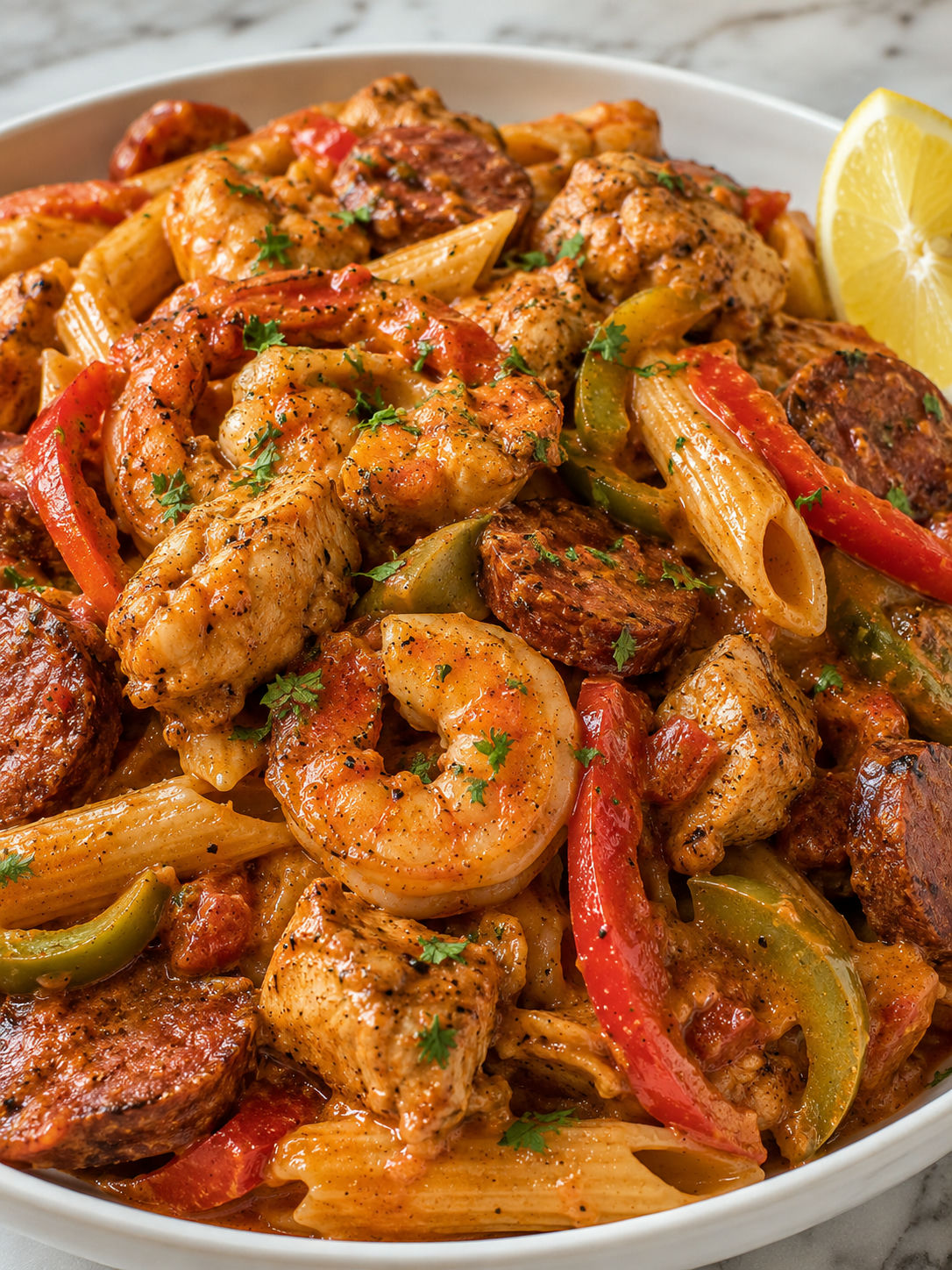
Serve this hot from the skillet with parsley and a squeeze of lemon if you like a brighter finish.
FAQs
- What is jambalaya pasta?
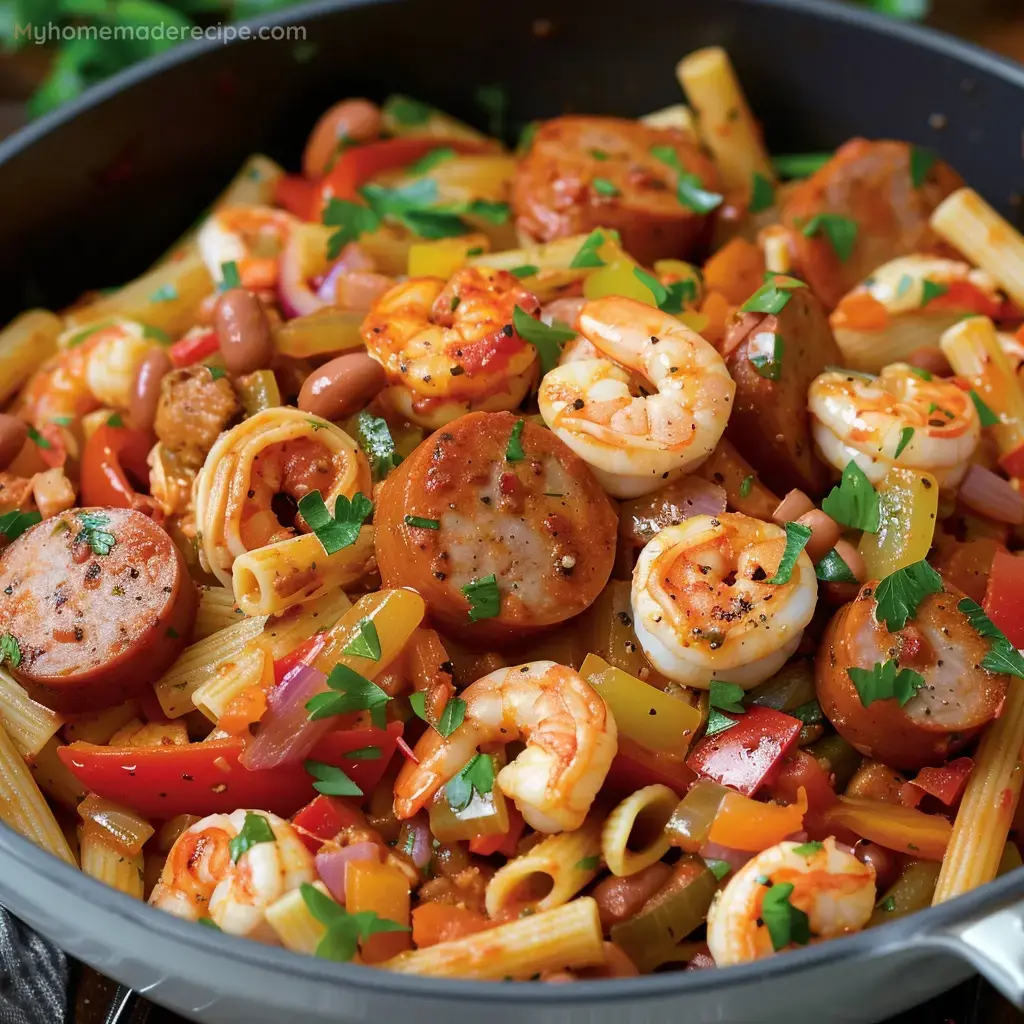
Jambalaya pasta is a pasta version of the Louisiana rice dish. It usually keeps the chicken, shrimp, sausage, peppers, onions, celery, tomatoes, and Cajun seasoning, then swaps rice for penne, linguine, or another sturdy pasta.
- Can I use frozen shrimp?
Yes. Thaw frozen shrimp under cold running water, drain well, and pat them dry before seasoning. Dry shrimp sear better and are less likely to turn watery in the skillet.
- What can I use instead of andouille sausage?
Smoked sausage is the easiest swap. Chicken sausage also works if you want something lighter, but choose a smoky or spicy one so the pasta still has that jambalaya flavor.
- How spicy is this jambalaya pasta?
It lands at a medium heat if your Cajun seasoning has cayenne. For a milder pan, start with half the seasoning and add more at the end. For more heat, add cayenne or hot sauce after the sauce simmers.
- Can I make it gluten-free?
Yes, use a sturdy gluten-free penne and check the andouille and Cajun seasoning labels. Gluten-free pasta can soften quickly, so cook it slightly underdone before tossing it into the sauce.
- How do I store and reheat leftovers?
Store leftovers in an airtight container in the fridge for up to 3 days. Reheat gently in a skillet with a splash of broth or water. The microwave works, but use short bursts so the shrimp does not get rubbery.
- Why cook the proteins separately?
Chicken, sausage, and shrimp all cook at different speeds. Browning them in stages gives better texture and keeps the pan from steaming. The browned bits left behind also deepen the sauce.
