 Pin it
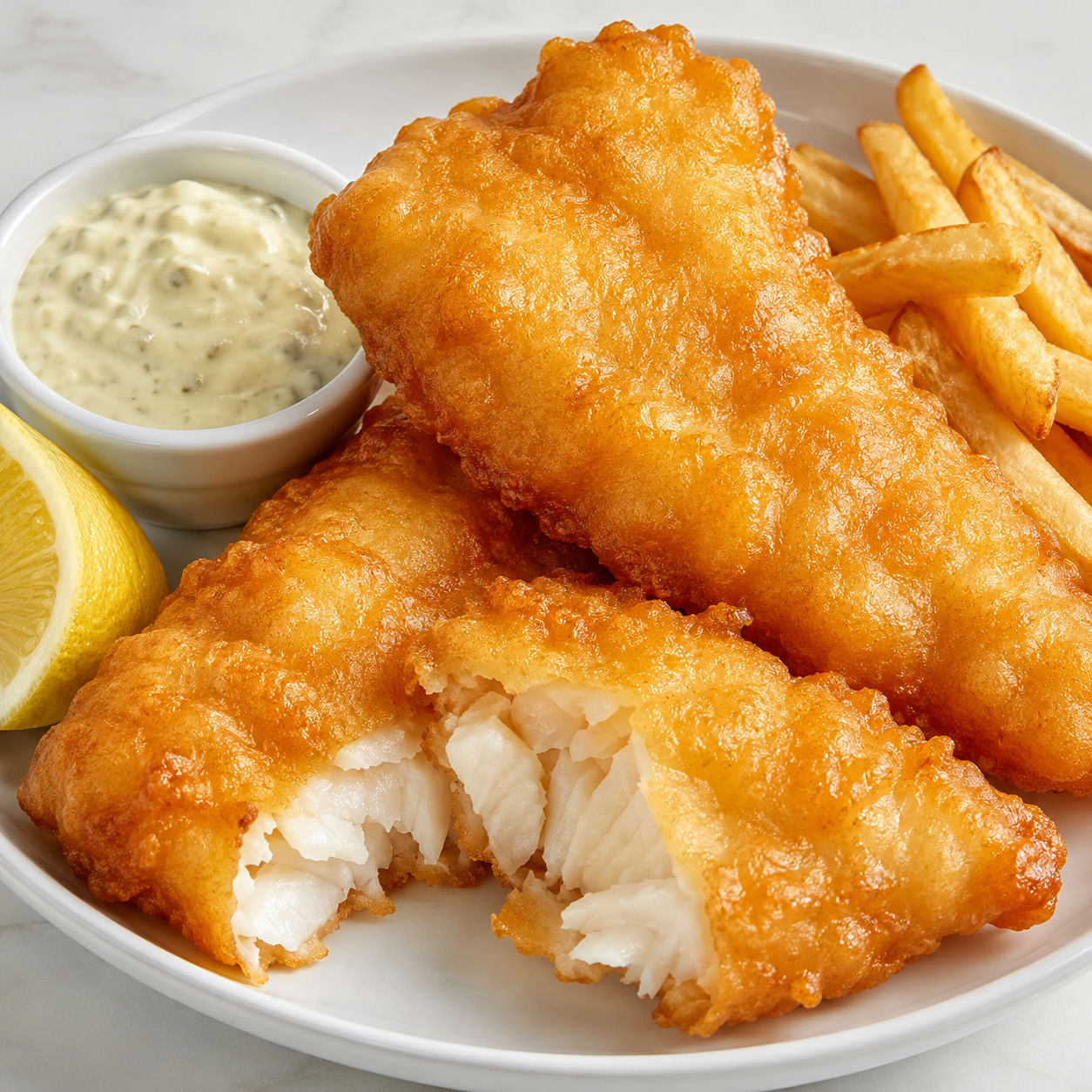
This is the fish dinner that brings back Friday night drive-through memories without leaving the house. A light batter with a crackly shell and soft white fish inside is easier to pull off than it looks, and the ingredient list is mostly pantry staples.
The real trick is the ratio of flour to cornstarch. It gives you that thin, shatteringly crisp coating instead of a thick doughy layer. Get your oil to the right temperature and you will have golden fillets in minutes.
The fish and the coating
The batter here is thin and tempura-like rather than heavy and bready. Cornstarch is the secret weapon that keeps it light. Use fresh or fully thawed white fish and pat it dry before it ever touches the batter.
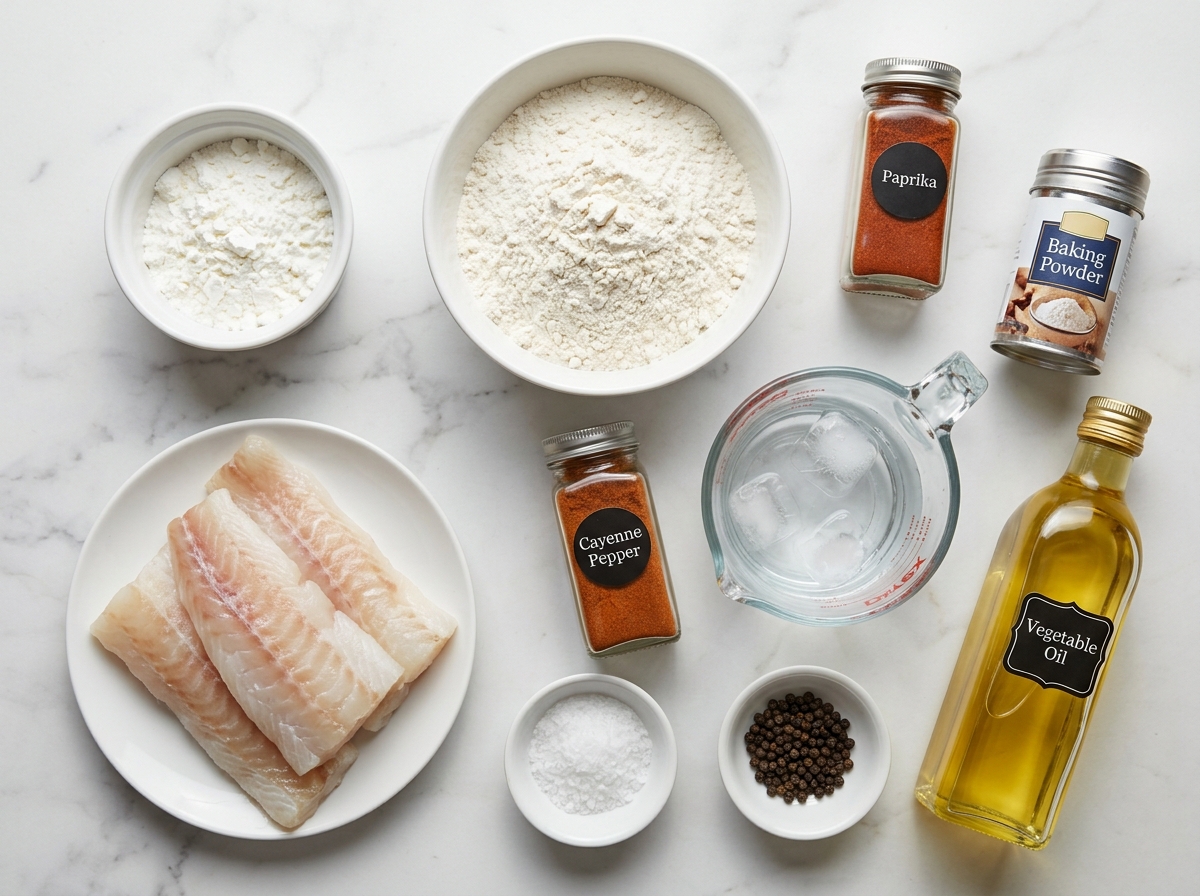
- Cod or pollock fillets. Mild, flaky, and easy to find. Cut them into strips so they cook evenly and fit nicely on a plate.
- All-purpose flour. The base of the batter. It gives structure without adding too much weight.
- Cornstarch. The crispiness booster. It keeps the coating delicate and helps it fry up golden instead of pale.
- Baking powder. Adds a little lift so the batter puffs slightly in the hot oil.
- Paprika and cayenne. Warm color and a faint heat that does not overpower the fish.
- Ice-cold water. Cold liquid slows gluten development and keeps the batter thin and shattery.
- Vegetable oil. A neutral high-heat oil for deep frying. Canola or peanut oil work just as well.
Fry like the pros
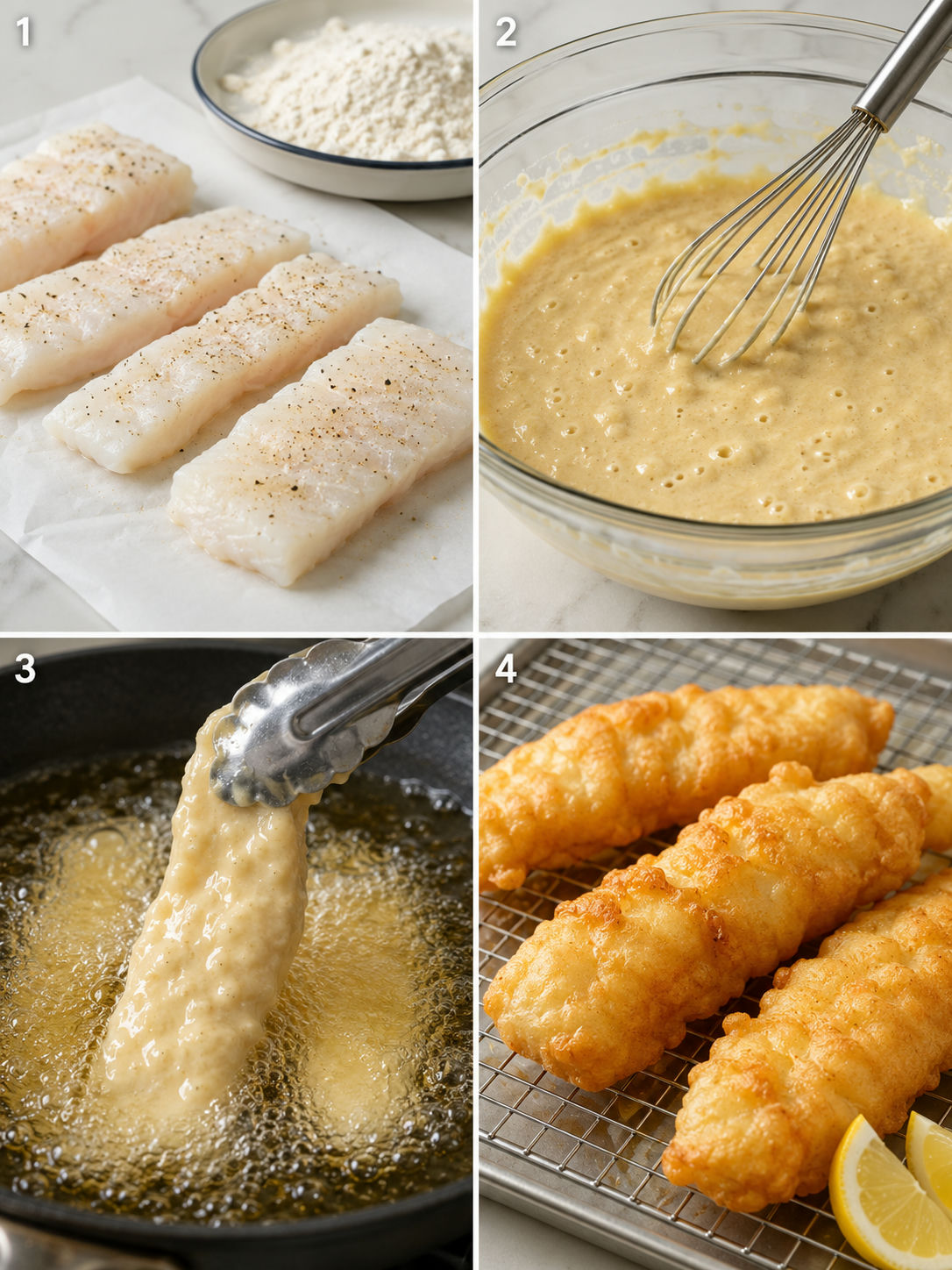
- Prep the fish. Cut the fillets into strips about one and a half inches wide. Pat them very dry with paper towels and season lightly with salt and pepper.
- Mix the dry batter. Whisk together the flour, cornstarch, baking powder, salt, paprika, and cayenne in a large bowl until evenly combined.
- Add the water. Pour in the ice-cold water and whisk until smooth. The batter should be thin, about the consistency of heavy cream. If it feels thick, add a splash more water.
- Heat the oil. Pour two to three inches of oil into a heavy pot or Dutch oven and heat to 350°F. Use a candy thermometer to stay accurate.
- Batter and fry. Working in batches, dip a few fish strips into the batter and let excess drip off. Carefully lower them into the oil and fry for three to four minutes, turning once, until deep golden brown.
- Drain and serve. Transfer the cooked fish to a wire rack set over a baking sheet. Sprinkle with a little salt while hot. Serve immediately with lemon wedges and tartar sauce.
Why cornstarch matters
All-purpose flour alone makes a perfectly acceptable fried fish, but it can turn soft within minutes of leaving the oil. Cornstarch mixed into the dry base changes the texture entirely. It fries up glassy and brittle rather than soft and bread-like, which is exactly what you want for a copycat of the Captain D's style.
The same idea shows up in other copycat batters. If you are curious about the chemistry, our Light and Crispy Tempura Batter uses a similar approach for a different chain favorite. Keep the batter cold and do not overmix. Overworking wakes up the gluten in the flour and turns a thin crisp shell into something chewy and tough.
Keep the oil steady
A swinging oil temperature is the main reason fried fish turns greasy or burnt. If the oil is too cool, the batter soaks up fat before it ever crisps. Too hot, and the outside burns while the fish inside stays raw. Three hundred and fifty degrees Fahrenheit is the sweet spot for this batter.
Fry in small batches so the temperature does not drop more than ten degrees. Let the oil recover back to 350°F between rounds. A heavy Dutch oven holds heat better than a thin skillet, so use one if you have it.
Best fish to use
Cod is the classic choice for this recipe because it is mild, thick, and holds its shape. Pollock and hake are excellent alternatives that cost less and taste nearly identical once battered. Look for fillets that smell like the ocean, not ammonia, and avoid anything sitting in a pool of liquid at the bottom of the package.
If you want a sandwich version of this same idea, our Crispy Fried Cod Sandwich uses a similar fillet with a crunchy breading instead of a wet batter. The U.S. FDA recommends cooking fish to an internal temperature of 145°F for food safety. You can read more on their seafood safety guide.
Serve it right
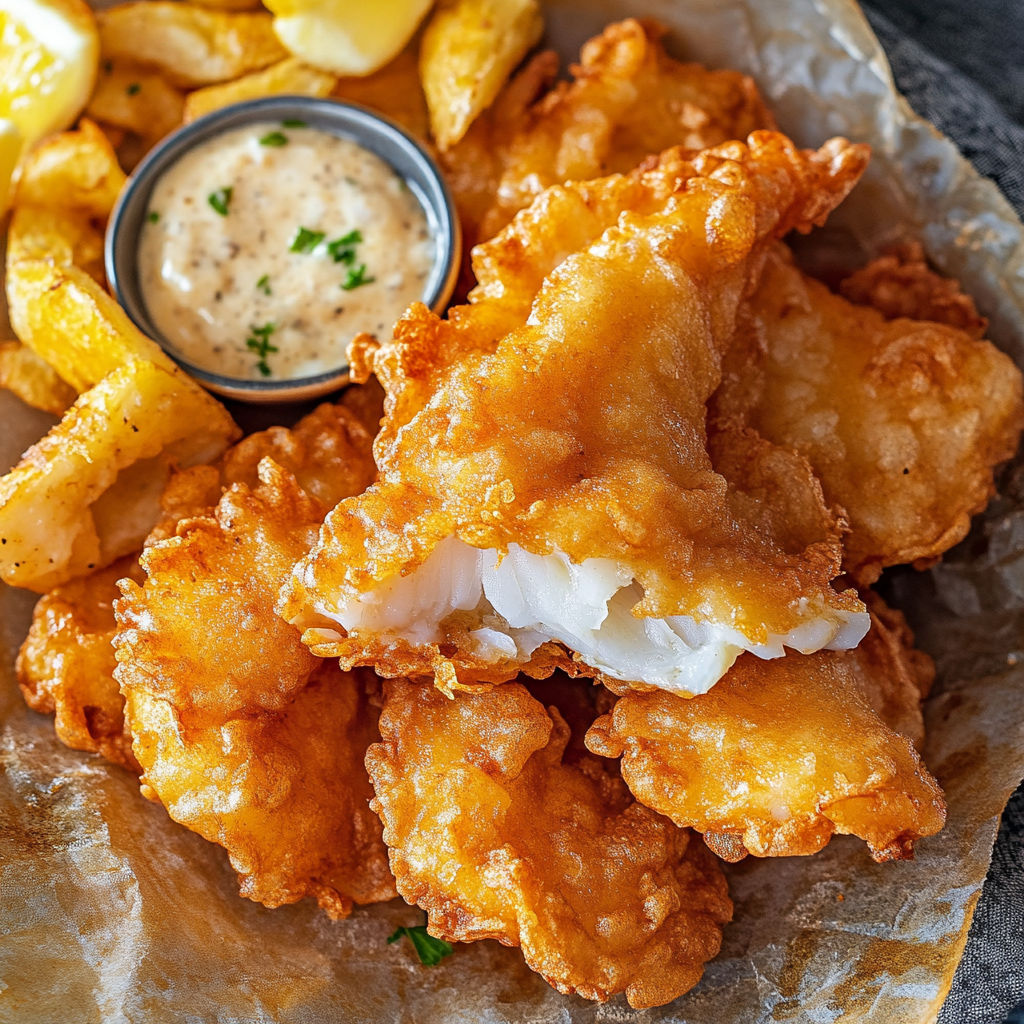
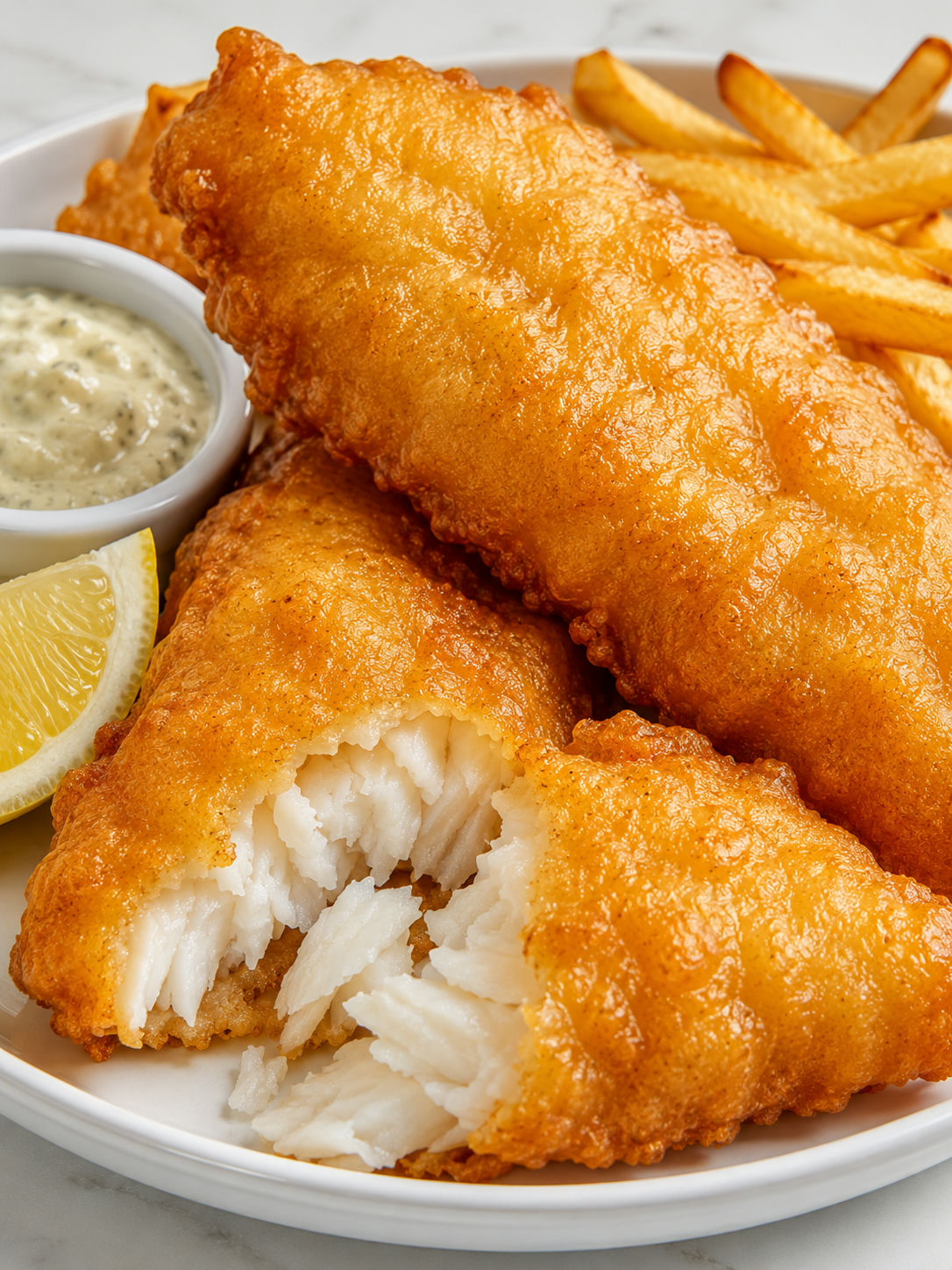
Hot battered fish needs simple companions. Tartar sauce is the obvious choice, but malt vinegar and lemon wedges are just as good. A pile of crinkle fries and a scoop of coleslaw round out the plate the way the restaurant does it.
If you want a homemade sauce to go with it, try our Crispy Fish With Dipping Sauce for a tangy variation that takes about five minutes to stir together. Serve everything the moment the fish comes out of the oil. The coating is at its peak for only a short window.
Reheating without sogginess
Leftover fried fish is rarely as good as fresh, but you can get close. Skip the microwave entirely. Instead, lay the cold fillets on a wire rack over a baking sheet and reheat in a 375°F oven for eight to ten minutes. The circulating dry heat revives the crust while the fish warms through.
Store leftovers in a single layer inside an airtight container in the refrigerator. Stacking fillets traps steam and softens the batter. They will keep for up to two days.
FAQs
- Can I use frozen fish fillets?
Yes, but thaw them completely first. Place the sealed fillets in a bowl of cold water for about thirty minutes, then pat them very dry. Any surface ice or moisture will make the batter slide right off in the oil.
- What oil is best for frying battered fish?
Use a neutral oil with a high smoke point. Vegetable, canola, and peanut oil all work well. Avoid olive oil or butter, which burn before the fish finishes cooking.
- Why did my batter fall off while frying?
The fish was probably too wet, or the oil was not hot enough. Make sure you pat the fillets completely dry and let excess batter drip off before the fish hits the oil. A good sizzle on contact means the batter sets instantly.
- Can I bake or air fry this instead?
Baking will not give you the same shattery crust because the batter needs to hit hot oil to set properly. An air fryer can work if you spray the battered fish generously with oil and cook at 400°F, but the texture will be slightly different.
- How do I store and reheat leftovers?
Refrigerate in a single layer for up to two days. Reheat on a wire rack in a 375°F oven for eight to ten minutes until hot and crisp again. The microwave makes the coating rubbery.
- What dipping sauces go well with this fish?
Tartar sauce and cocktail sauce are the classics. Malt vinegar, lemon aioli, and spicy remoulade are all excellent options. Serve the sauce cold so it contrasts with the hot fish.
