 Pin it
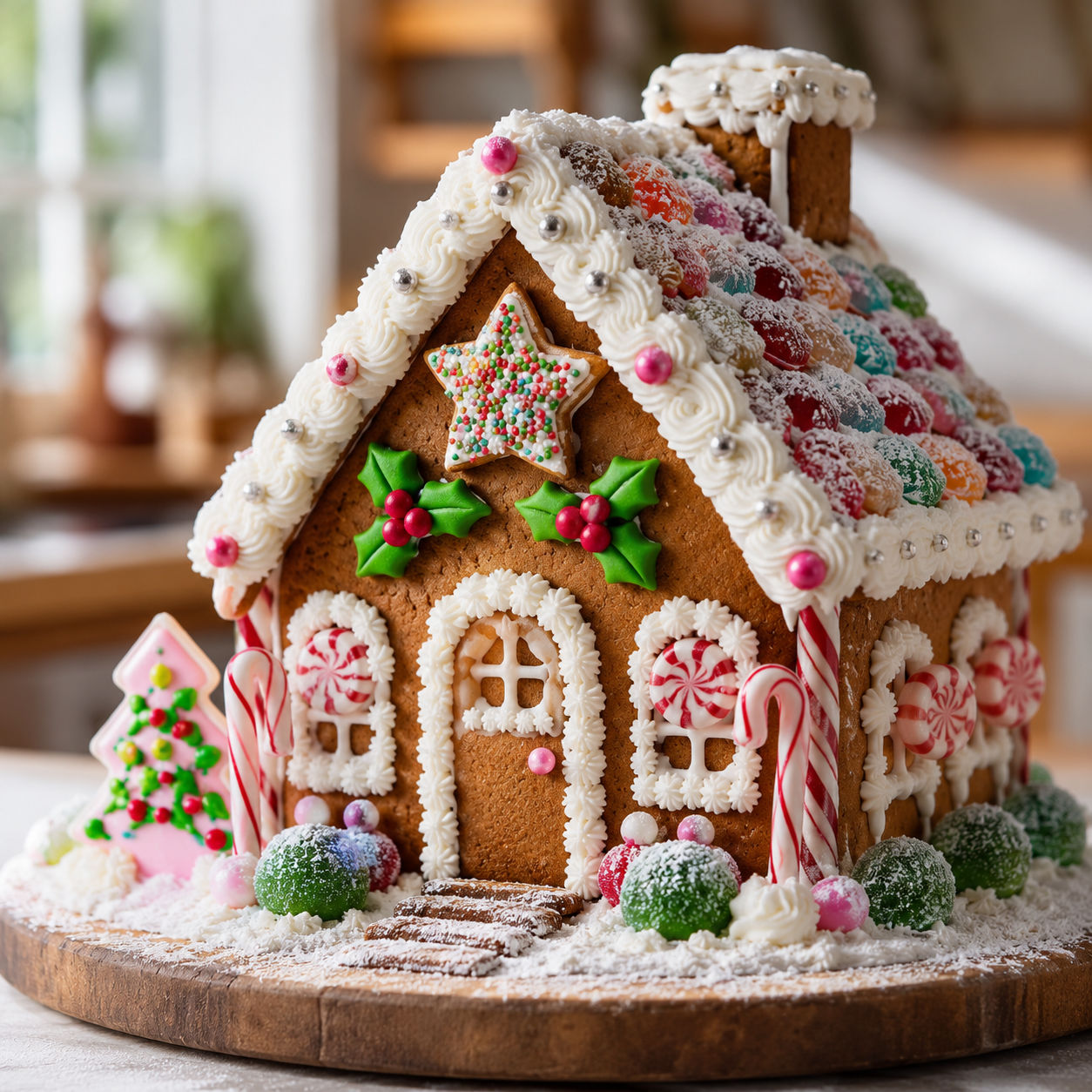
A gingerbread house is part baking project and part tiny construction job. This complete homemade gingerbread house recipe with templates gives you sturdy walls, a roof that stays put, and icing that works more like glue than frosting.
I like making the pieces one day and building the house the next. The cookie panels dry out just enough overnight, the edges firm up, and the whole project feels calmer when nobody is rushing warm gingerbread into place.
Template-ready dough lineup
Use regular unsulphured molasses for a deep color and a sturdy bite. Blackstrap is too harsh here and can make the dough taste bitter.
The icing matters as much as the cookie. Royal icing holds the structure, while crusting buttercream is better for roof trim, windows, and snowy details.
- All-purpose flour. Gives the panels enough strength to stand after baking.
- Baking soda. Adds a little lift without making the pieces puff too much.
- Ground ginger. Brings the warm bite that makes the house smell like Christmas.
- Cinnamon and allspice. Round out the spice so the dough tastes balanced.
- Unsalted butter. Adds flavor while keeping the dough firm enough for cutting.
- Brown sugar. Sweetens the dough and helps the edges bake crisp.
- Molasses. Gives color, chew, and that classic gingerbread flavor.
- Meringue powder. Makes a stiff royal icing that dries hard for assembly.
- Powdered sugar. Builds the royal icing and the crusting buttercream.
- Decorating candy. Adds color, roof texture, pathways, windows, and doors.
Cut, bake, and build
- Make the templates. Cut two front and back pieces, two side walls, two roof panels, and optional chimney pieces from cardstock before mixing the dough.
- Mix the dough. Whisk the dry ingredients, then beat the butter and sugar until creamy before adding egg, molasses, and water.
- Chill it well. Divide the dough into two discs and chill until firm. Sticky dough turns into warped walls.
- Roll and cut. Roll between parchment to 1/4 inch thick, lay the templates on top, and cut clean edges with a small knife or pizza wheel.
- Bake until firm. Bake the large panels until the centers feel set and the edges are dry. Trim edges while warm if they spread.
- Make royal icing. Beat powdered sugar, meringue powder, and warm water until thick peaks stand up straight.
- Assemble the walls. Pipe heavy lines of royal icing on the base and seams, then prop the walls until they hold.
- Add roof and decorate. Attach the roof after the walls set, then pipe buttercream trim and add candy once the structure feels solid.

Complete gingerbread house templates
For a small-medium house, use these cardstock pieces. Cut two front and back panels that are 5 inches wide and 4 inches tall at the side walls, with a centered roof peak rising to 6 1/2 inches. Cut two side walls that are 5 inches wide by 4 inches tall. Cut two roof panels that are 6 inches wide by 4 1/2 inches tall so they overhang slightly.
If you want a chimney, cut two pieces about 1 1/2 by 2 inches and two angled pieces that match your roof slope. Do not worry if the chimney needs a little trimming after baking. A microplane or small serrated knife can shave the edges once the pieces cool.
Why the dough stays sturdy
This dough uses less leavening than soft cookies, so the panels bake flatter and stronger. It also chills before rolling, which keeps the molasses and butter from making the dough slump in the oven. Roll between parchment instead of adding handfuls of flour. Too much flour makes the panels dull and tough, while parchment keeps the surfaces clean.
If you want extra treats for the decorating table, bake the scraps as small stars, trees, or gingerbread people. For a softer cookie plate, pair the project with chewy gingerbread man cookies or gingerbread Linzer cookies.
Assembly without sliding walls
Thick royal icing is the difference between a house that stands and a house that slowly leans. Beat the icing until it forms stiff peaks, then keep the bowl covered with a damp towel while you work. Pipe more icing than you think you need along the inside seams. It will dry white and look like snow.
Build the four walls first and let them set for at least one hour before the roof goes on. Cans, mugs, or small jars make good temporary supports. If using egg-based icing, review the FDA egg safety guidance and choose pasteurized egg whites or meringue powder for a safer edible project.
Decorating that dries clean
Royal icing is best for seams, icicles, roof snow, and anything that must dry hard. Crusting buttercream is softer to pipe and gives pretty ridges for roof trim, wreaths, window frames, and little snowbanks. Let a thin layer of royal icing dry on the roof before piping buttercream over it.
Use candy with different shapes instead of only different colors. Round peppermint candies make windows, cereal squares make shingles, pretzels make fences, and gumdrops make shrubs. For a full dessert table, the same holiday flavors sit nicely beside gingerbread cheesecake cups or gingerbread waffles for Christmas morning.
Make-ahead schedule
The easiest schedule is a two-day build. On day one, make the dough, chill it, cut the panels, bake them, and let everything cool overnight. On day two, make the royal icing, assemble the house, and decorate after the walls and roof have set.
You can also mix the dough up to three days ahead and keep it wrapped in the refrigerator. Let it sit at room temperature for 10-15 minutes before rolling so it does not crack at the edges. If the dough gets soft while you cut, slide the parchment onto a sheet pan and chill it for a few minutes.
Storage and serving notes
A finished gingerbread house keeps best uncovered in a cool, dry room. Covering it traps moisture and can soften the seams. If dust is a concern, tent it loosely with parchment or place it inside a large cake box with the lid slightly open.
This recipe is edible, but it is built for structure first. The pieces are crisp and firm, not soft like a cookie. If the house has been sitting out for a week, treat it as decoration. For more construction detail and inspiration, Sally's Baking Addiction has a helpful gingerbread house guide.

FAQs
- Can I make gingerbread house pieces ahead of time?
Yes. Bake the panels up to three days ahead and store them uncovered or loosely covered at room temperature so they stay dry. If your kitchen is humid, place them in a cool room rather than near the stove or dishwasher.
- Can I use this dough for gingerbread cookies too?
You can, but it bakes firm because it is made for building. For softer eating cookies, use a dedicated cookie recipe like soft gingerbread cookies and save this dough for walls, roofs, and trim pieces.
- What can I use instead of meringue powder?
You can make royal icing with pasteurized egg whites, powdered sugar, and cream of tartar. Avoid raw shell eggs if the house will be eaten by children, older adults, or anyone with a weaker immune system.
- Why did my gingerbread house collapse?
The pieces may have been too warm, too soft, or held together with icing that was too thin. Let panels cool fully, use stiff royal icing, and give the walls at least one hour to set before adding the roof.
- How thick should gingerbread house dough be?
Roll it about 1/4 inch thick. Thinner pieces can warp or crack, while very thick pieces get heavy and put more stress on the icing seams.
- How long does a homemade gingerbread house last?
As a decoration, it can look good for one to two weeks in a dry room. If you plan to eat it, enjoy it within a few days because the cookie hardens and the candy can pick up moisture.
