Pin it
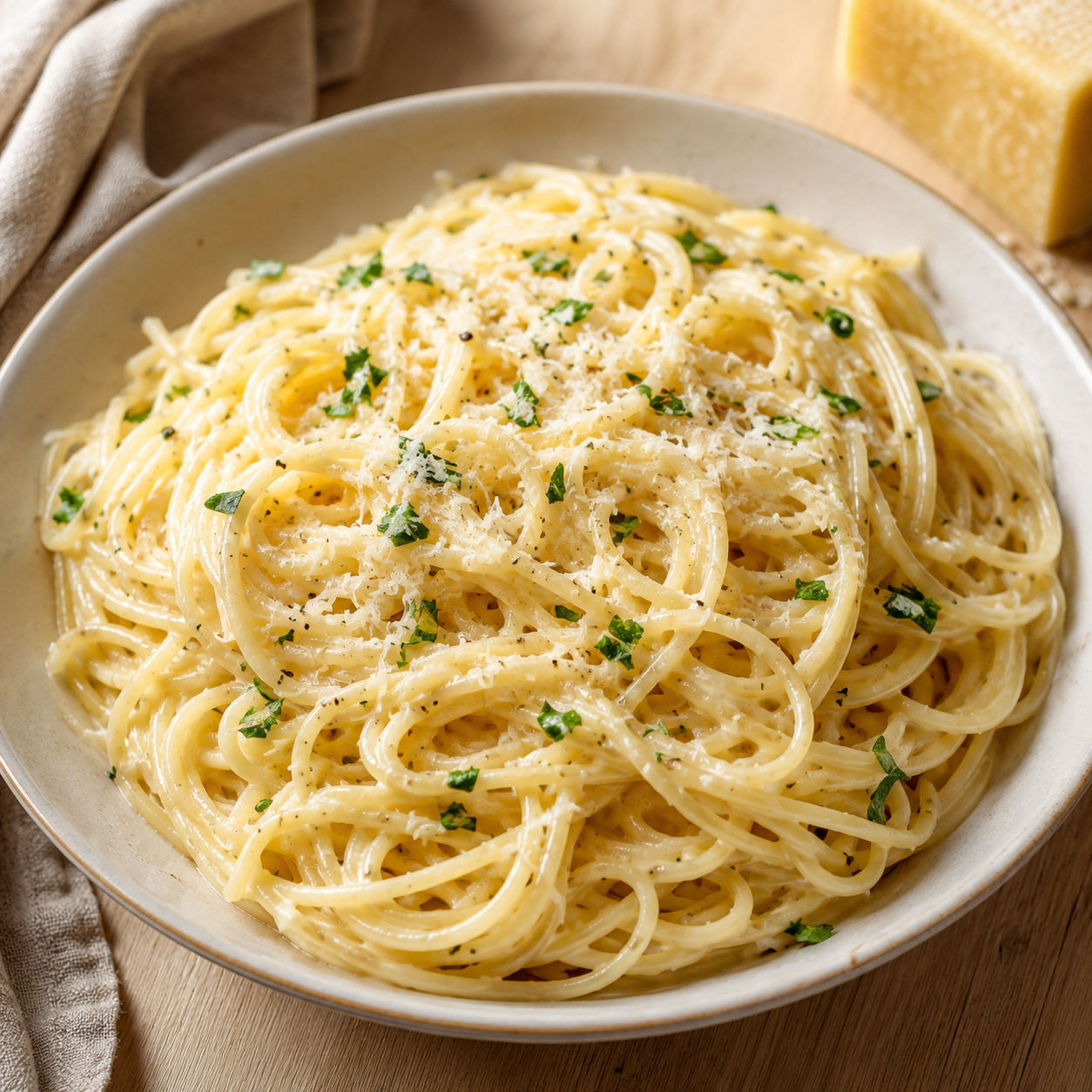
Garlic Parmesan Pasta is the kind of dinner that saves a quiet weeknight. It uses a short pantry list, but it still tastes like you paid attention.
The sauce is not heavy or fussy. Hot pasta water melts the Parmesan into the garlic butter and helps it cling to every strand.
I like it as a meatless main with a salad, or as a side next to chicken, shrimp, or roasted vegetables.
The Few Ingredients That Matter
This pasta is simple enough that each ingredient shows up. Use fresh garlic, a good block of Parmesan, and pasta water that is still hot and cloudy.
A microplane or the small holes on a box grater make the cheese fine enough to melt fast. That matters more than adding extra butter.
- Spaghetti. Long pasta gives the sauce plenty of surface area and keeps the dish light rather than thick.
- Unsalted butter. It carries the garlic and gives the sauce a soft, rich finish.
- Fresh garlic. Minced garlic flavors the butter quickly, but it needs gentle heat so it does not turn bitter.
- Parmesan cheese. Freshly grated Parmesan melts into the hot pasta water and adds salty, nutty depth.
- Reserved pasta water. The starchy liquid pulls the butter and cheese together into a glossy sauce.
- Black pepper. A few turns bring warmth without taking over the garlic.
- Parsley. Fresh parsley breaks up the richness and makes the bowl taste brighter.
- Lemon zest. This is optional, but a little zest wakes up the cheese and butter.
Make The Sauce In Minutes
- Boil the pasta. Cook spaghetti in well-salted water until just al dente. Save 1 cup of the pasta water before draining.
- Soften the garlic. Melt butter in the warm pot or a wide skillet. Add the garlic and cook for about 45 seconds, just until fragrant.
- Toss with pasta water. Add the drained spaghetti and 1/2 cup hot pasta water. Toss until the strands are coated and shiny.
- Add Parmesan off heat. Remove the pan from the burner. Sprinkle in Parmesan a handful at a time while tossing constantly.
- Adjust the sauce. Add more pasta water, a tablespoon or two at a time, until the sauce looks silky and clings to the pasta.
- Finish and serve. Season with black pepper, parsley, and lemon zest if using. Serve right away while the sauce is loose and glossy.
Why Garlic Parmesan Pasta Works
The sauce works because hot starch, fat, and finely grated cheese meet at the right moment. If the pan is screaming hot, the cheese tightens and clumps. If the pasta water is cold, the sauce never loosens properly.
Keep the heat gentle once the garlic goes in. Garlic only needs enough time to perfume the butter. When it turns dark brown, the pasta tastes harsh instead of mellow.
For a creamier route with a similar flavor, try Creamy Parmesan Garlic Pasta. This version stays lighter because it leans on pasta water rather than cream.
Choose Cheese That Melts
A real wedge makes a visible difference here. Parmesan should be grated fine and fluffy, not shredded into thick strips. Fine cheese disappears into the sauce faster, which means fewer clumps and a better coating on the pasta.
Parmigiano Reggiano has a deeper, nuttier flavor if you want the most classic result. You can read more about the cheese from the official Parmigiano Reggiano source. Domestic Parmesan still works well if it is freshly grated.
Avoid the shelf-stable grated powder for this recipe. It is useful in some places, but not when the whole sauce depends on smooth melting.
Swaps That Keep It Good
Linguine, fettuccine, bucatini, or angel hair can all stand in for spaghetti. Angel hair cooks fast, so keep an eye on it and toss gently. Whole wheat pasta brings a nuttier flavor and needs a little extra pasta water.
Add a pinch of red pepper flakes with the garlic if you like heat. For protein, fold in cooked chicken or shrimp at the end. The same garlic Parmesan mood shows up in Garlic Butter Sausage Parmesan Pasta if you want a heartier skillet dinner.
Serve It While Glossy
This pasta is best as soon as it leaves the pan. The sauce tightens as it sits, so plate it fast and pass extra Parmesan at the table.
For a meatless dinner, add a crisp salad or roasted broccoli. For a bigger meal, serve it beside garlic chicken, baked fish, or shrimp. If you want shrimp already built into the bowl, Garlic Shrimp Pasta with Butter and Herbs is a good next stop.
A squeeze of lemon at the end is not traditional for every garlic Parmesan pasta, but it helps if the dish tastes too rich. Add a little, toss, then taste again.
Store And Reheat Gently
Refrigerate leftovers in a sealed container for up to 3 days. The pasta will absorb sauce as it chills, so expect it to look tighter the next day.
Reheat it in a skillet over low heat with a splash of water or milk. Toss slowly until the sauce loosens. The microwave works in a pinch, but use short bursts and stir between them.
If you plan to make it ahead, cook the pasta and garlic butter separately. Reheat the butter, add hot pasta and pasta water, then finish with Parmesan right before serving.
Make It A Bigger Meal
Garlic Parmesan Pasta can stay simple, or it can become the base for a full dinner. Stir in peas, spinach, or sauteed mushrooms right before the cheese. They add color without changing the sauce too much.
For chicken, fold in 2 cups cooked shredded chicken after the Parmesan melts. If you want a baked version with more cheese and comfort, use Savory Baked Garlic Parmesan Chicken Pasta with Mozzarella as your guide.
Keep the garnish modest. Parsley, black pepper, and a little extra Parmesan are enough.
Summary
This easy Garlic Parmesan Pasta is rich, garlicky, and ready in about 25 minutes with no cream needed.
FAQs
- Can I make Garlic Parmesan Pasta without cream?
Yes. This version uses butter, Parmesan, and reserved pasta water instead of cream. The starch in the water helps the cheese and butter turn into a smooth sauce.
- Can I use pre-grated Parmesan?
Freshly grated Parmesan melts much better. Pre-grated cheese often has anti-caking ingredients, so it can clump or feel grainy in a simple sauce like this.
- What pasta shape works best?
Spaghetti, linguine, and fettuccine are best because long strands catch the garlic butter sauce. Short pasta works too, but choose a shape with ridges or curves.
- How do I stop the Parmesan from clumping?
Take the pan off the heat before adding the cheese. Add Parmesan in small handfuls and toss hard with hot pasta water until each addition melts.
- How long do leftovers keep?
Leftovers keep in an airtight container in the fridge for up to 3 days. Reheat gently in a skillet with a splash of water to loosen the sauce.
- Can I add protein to this pasta?
Yes. Rotisserie chicken, seared shrimp, crispy bacon, or sauteed mushrooms all fit well. Add cooked proteins at the end so the sauce stays smooth.
- Can I make it gluten-free?
Use your favorite gluten-free spaghetti and reserve the pasta water as usual. Some gluten-free pastas release less starch, so add the water slowly and stop once the sauce looks glossy.