 Pin it
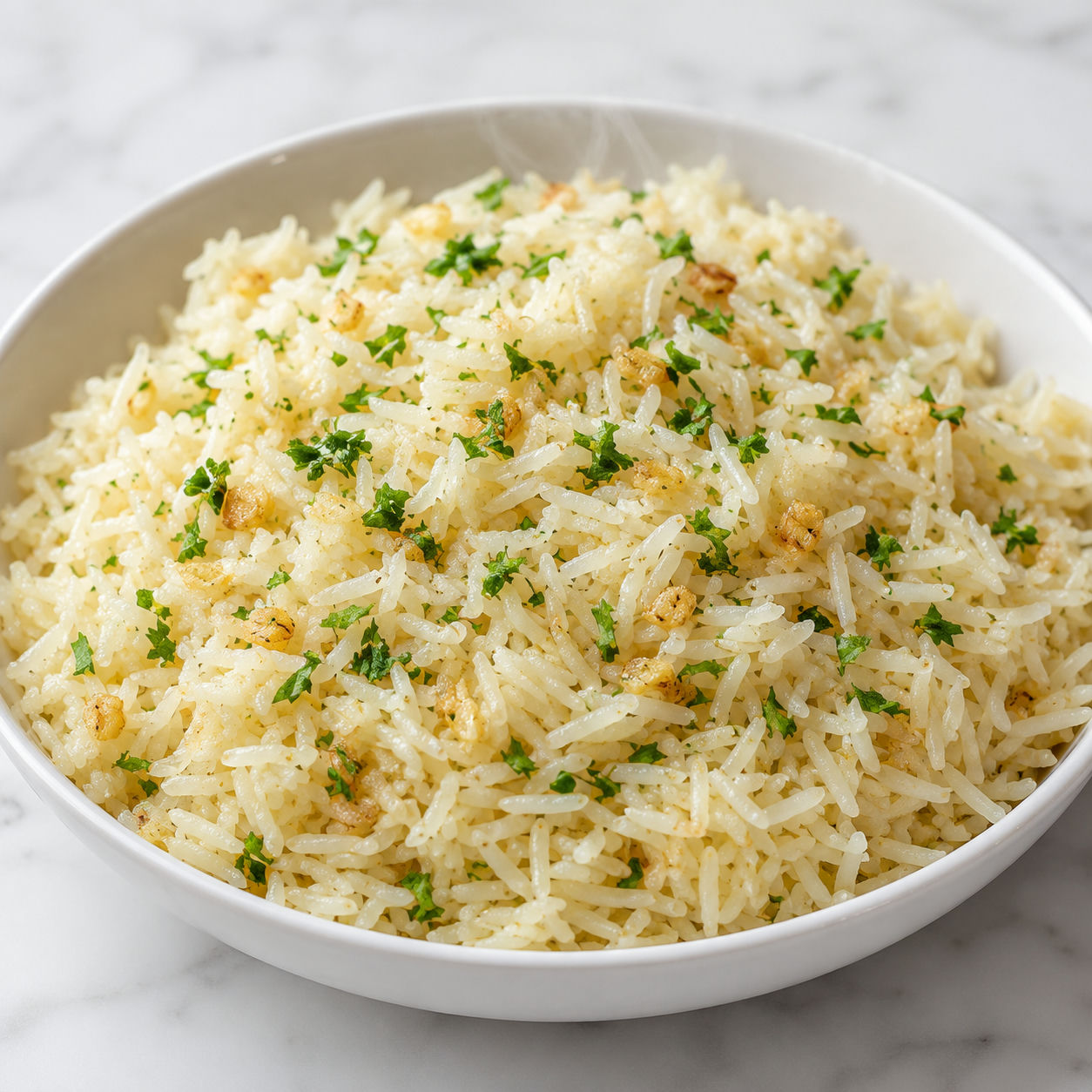
Garlic Butter Rice is the side dish I make when plain rice feels too quiet. It has the same comfort as buttered noodles, but the grains stay fluffy and the garlic gives every forkful a warm, savory smell.
The trick is not dumping garlic into cooked rice at the end. Cook it gently in butter first, toast the rice for a minute, then let broth do the rest. You get buttery rice without greasy puddles at the bottom of the pan.
Buttery Rice Basics
Use long-grain rice, fresh garlic, and a broth you like enough to sip. Since the ingredient list is short, each one shows up in the finished dish.
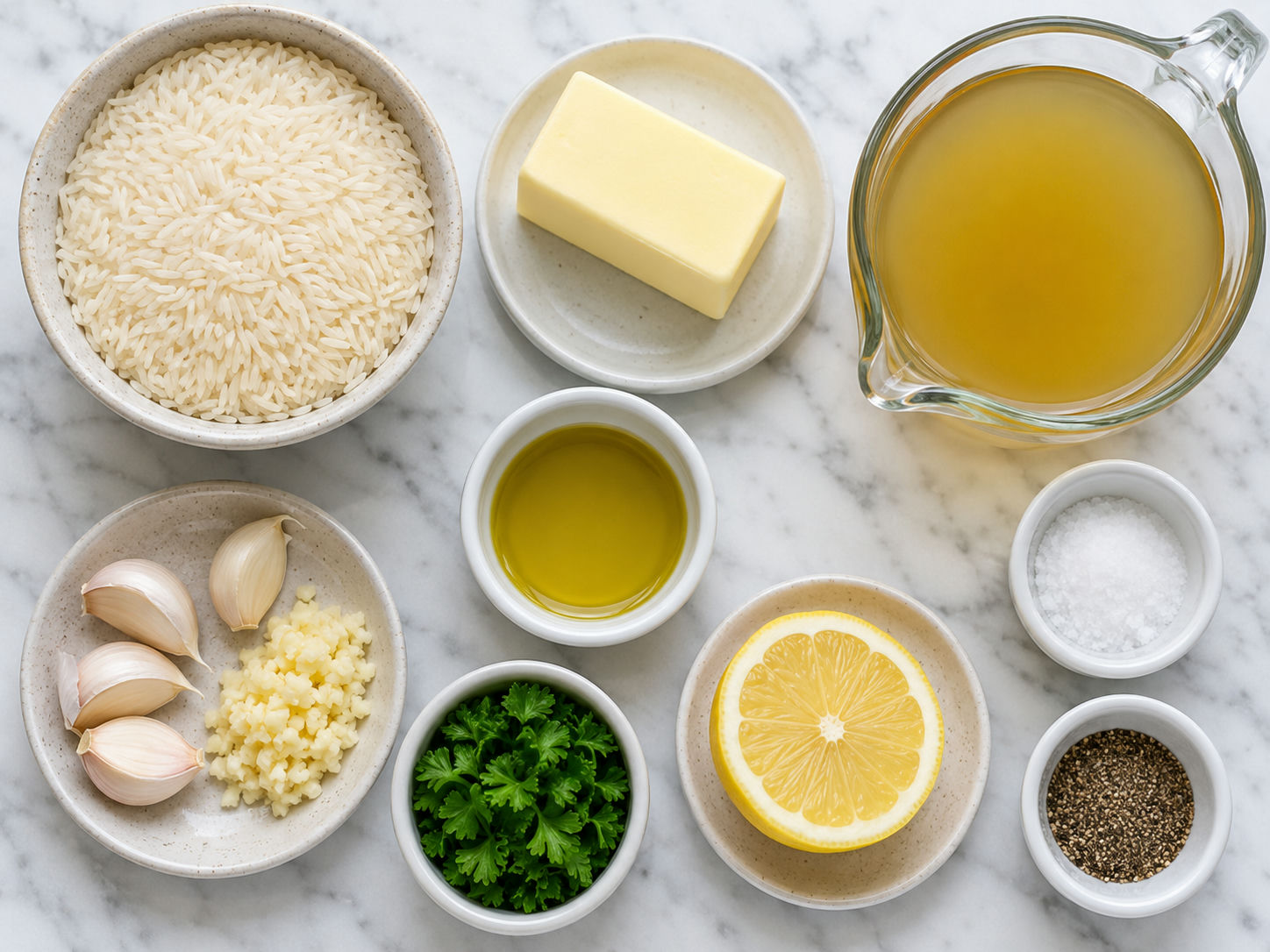
- Long-grain white rice. Gives the dish fluffy grains that separate instead of clumping.
- Unsalted butter. Carries the garlic flavor and gives the rice its soft, rich finish.
- Olive oil. Raises the heat tolerance a little so the butter does not brown too fast.
- Fresh garlic. The main flavor. Mince it fine so it spreads through the pot.
- Vegetable broth. Seasons the rice from the inside while it cooks.
- Parsley. Adds freshness and a little color at the end.
- Lemon juice. Wakes up the butter and keeps the rice from tasting flat.
- Salt and pepper. Bring the buttery garlic flavor into focus.
Cook Garlic Butter Rice
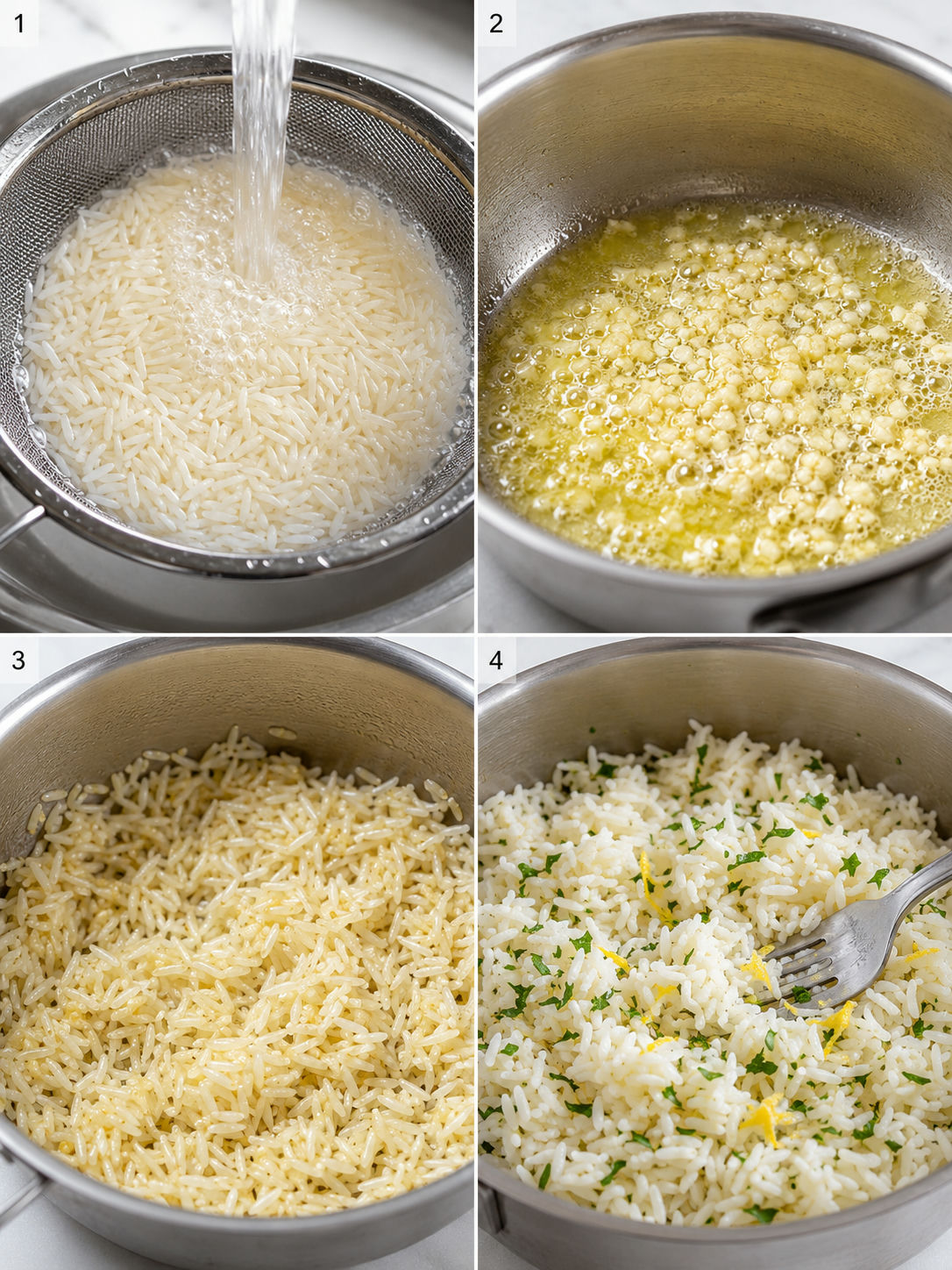
- Rinse the rice. Rinse in a fine-mesh sieve until the water runs mostly clear, then drain well so the grains toast instead of steaming.
- Soften the garlic. Melt butter with olive oil over medium-low heat, then stir in the garlic for about 45 seconds until fragrant and pale.
- Toast the grains. Add the rice and stir for 1-2 minutes so every grain gets coated in the garlic butter.
- Simmer gently. Add broth, salt, and pepper. Bring to a boil, cover, reduce to low, and cook until the liquid is absorbed.
- Rest and fluff. Keep the pot covered off the heat for 10 minutes, then fluff with a fork and fold in parsley and lemon juice.
Why Toasting Matters
Toasting the rice for just a minute changes the whole pot. The butter coats the outside of the grains, the garlic perfume moves through the rice, and the finished texture is less sticky. This is the same reason pilaf-style rice often starts with fat before liquid. Good Housekeeping also notes that rinsing rice helps remove surface starch for a fluffier result in its stovetop rice guide.
Keep the heat gentle. Brown butter can taste lovely, but browned garlic turns sharp and bitter fast. If your garlic starts to color before the rice goes in, lower the heat and stir in the rice right away.
Best Liquid For Flavor
Vegetable broth keeps this Garlic Butter Rice vegetarian and gives it more body than water. Low-sodium broth is easiest to control because butter and rice both need enough salt to taste full. If you only have regular broth, start with less added salt and fix the seasoning after the rice rests.
Chicken broth also works if you are serving it with meat. For a seafood dinner, this rice is an easy base for garlic butter shrimp and rice or a bowl like creamy garlic butter shrimp with herb rice. Keep the lemon at the end in those cases. It makes butter taste cleaner.
Fluffy, Not Mushy
Most mushy rice problems come from too much water, stirring during the simmer, or skipping the covered rest. Once the lid goes on, leave it alone. Stirring releases starch and can make the bottom gummy before the top grains finish cooking.
The rest is not optional. Those 10 minutes let steam finish the center of each grain while the bottom of the pot relaxes. After that, fluff with a fork instead of a spoon. A fork lifts and separates. A spoon presses the grains together.
Easy Swaps
Stir in grated parmesan after cooking if you want a richer finish, or add a pinch of red pepper flakes with the garlic for heat. Chopped chives can replace parsley. A little dill is good when you are serving the rice with fish.
For a bigger meal, spoon this beside garlic butter stir-fried vegetables or garlic butter beef rice skillet. If you like rice sides with a softer onion flavor, try golden onion butter jasmine rice another night.
Storage And Reheating
Rice needs quick cooling after dinner. Spread leftovers into a shallow container, cover, and refrigerate once the steam drops. FoodSafety.gov's FoodKeeper app is a useful reference for safe storage windows.
Reheat the rice in a covered skillet or microwave-safe bowl with 1-2 tablespoons of water or broth. The added moisture turns to steam and loosens the buttered grains. For fried rice texture, chill the leftovers first. Filipino sinangag is built around garlicky leftover rice, and the Associated Press has a good look at that style of garlic fried rice.
Summary
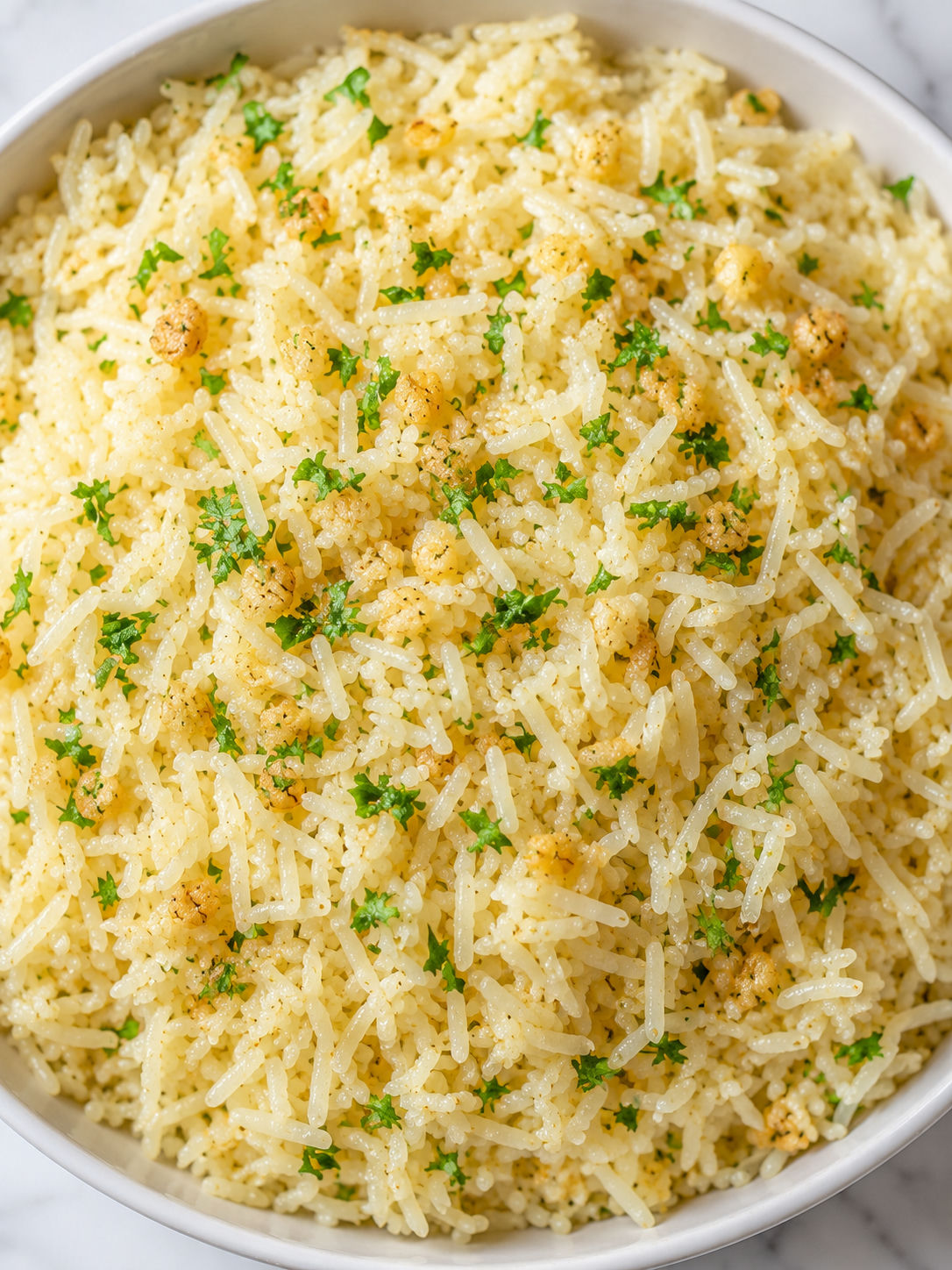
This rice is best hot from the pot, with the parsley and lemon added right before serving. Keep the garlic pale, rest the rice covered, and fluff with a fork.
FAQs
- What kind of rice is best for Garlic Butter Rice?
Long-grain white rice works best because it cooks up light and separate. Jasmine rice is also good if you want a softer, more fragrant bowl.
- Can I make this with brown rice?
Yes, but brown rice needs more liquid and a longer cook time. Follow the liquid and timing on your package, then use the same garlic butter method at the beginning.
- Can I use garlic powder instead of fresh garlic?
You can use 1 teaspoon garlic powder in a pinch. Add it with the rice after the butter melts so it blooms without burning, but fresh garlic gives a better aroma.
- How do I keep the garlic from burning?
Cook it over medium-low heat and stir often. The garlic should smell sweet and look pale gold, not brown. If it darkens fast, pull the pan off the heat for a moment.
- How should I store leftover garlic butter rice?
Cool it quickly, then refrigerate it in a shallow airtight container. Use it within 3-4 days and reheat with a splash of water or broth so it steams back to life.
- What goes well with Garlic Butter Rice?
It is good with shrimp, salmon, chicken, roasted vegetables, or saucy beef dishes. The rice is rich enough to stand alone but mild enough to sit beside bold mains.
