 Pin it
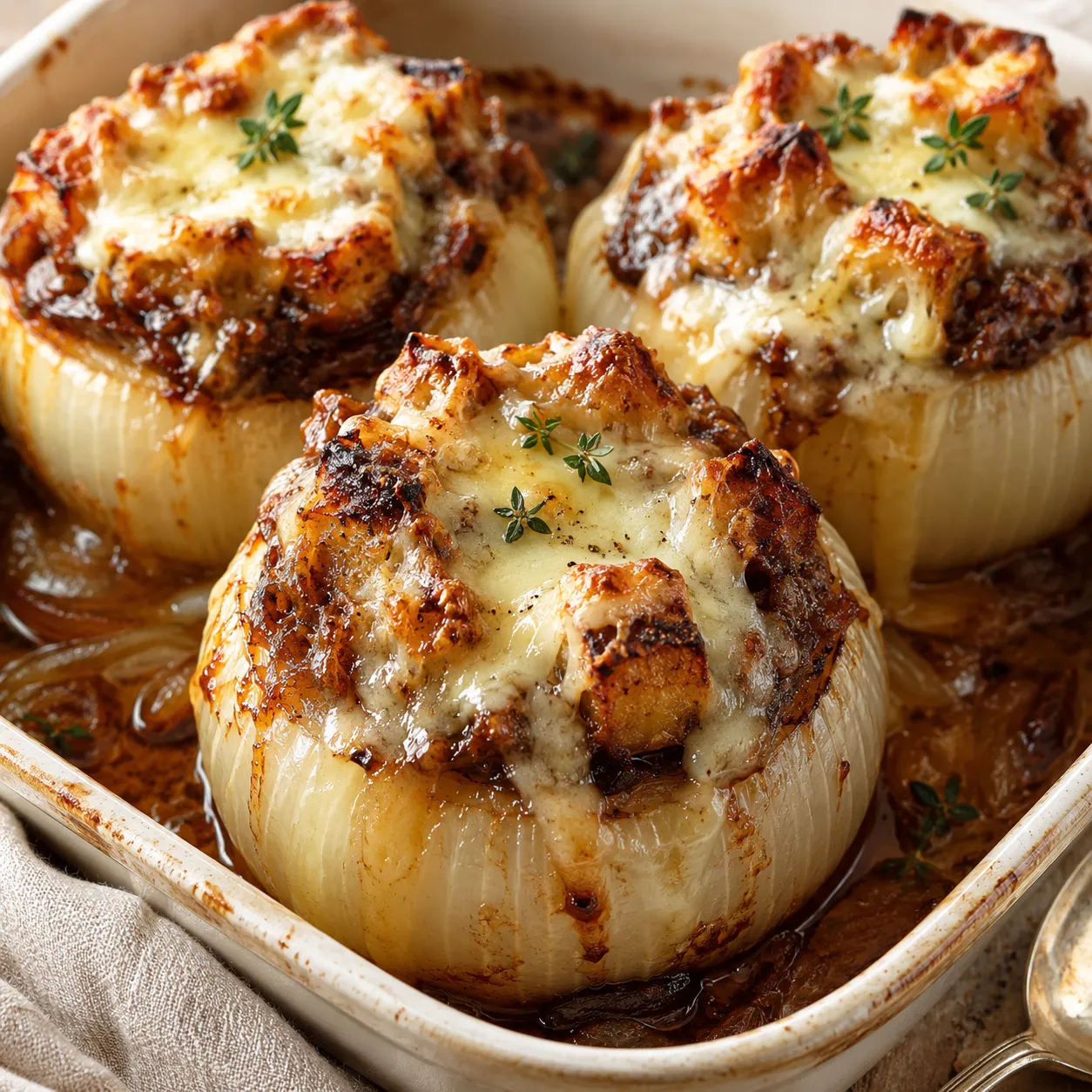
French Onion Stuffed Onions are what I make when I want French onion soup flavor without serving soup. The onion itself becomes the bowl, soft at the edges and filled with a deep, savory onion gravy.
The filling takes patience, not skill. Let the chopped onion cook down until it smells sweet and nutty, then give it broth, thyme, and a little flour so it sits neatly inside each onion shell.
They are rich enough for a holiday table and cozy enough for Sunday dinner. Serve one beside roast chicken, steak, or a simple green salad.
French Onion Stuffed Onions Lineup
Choose onions that feel heavy for their size and have tight, dry skins. The cheese, broth, and bread matter too because there are not many ingredients hiding in this dish.
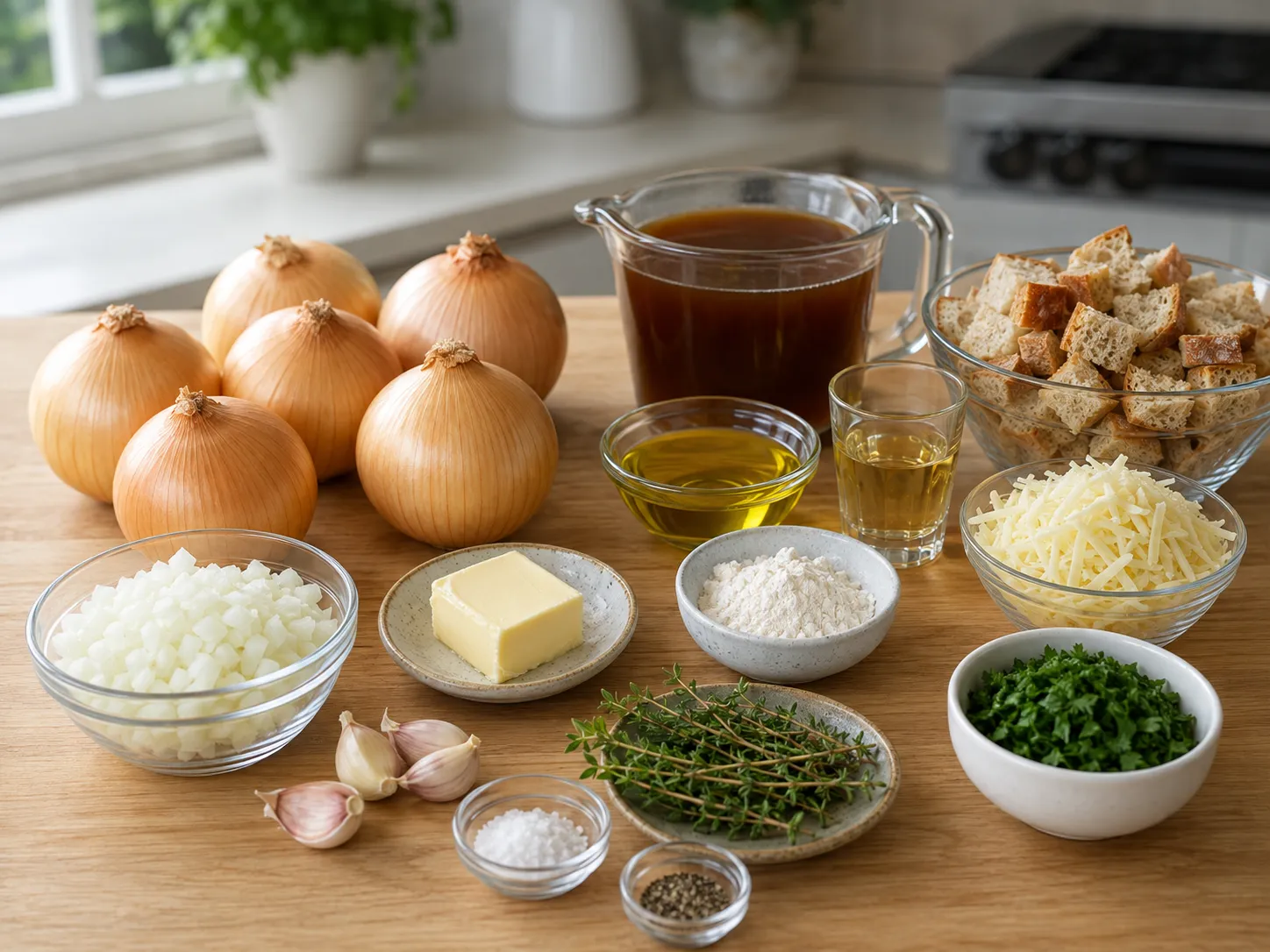
- Large yellow onions. They form the edible bowls and give you plenty of chopped onion for the filling.
- Butter and olive oil. Butter brings flavor, while oil helps keep the onion mixture from scorching.
- Garlic. A small amount adds warmth once the onions have already browned.
- Fresh thyme. It gives the filling the familiar French onion soup aroma.
- All-purpose flour. It thickens the broth so the filling stays spoonable, not soupy.
- Beef broth. It adds savory depth and keeps the baked onion shells moist.
- Dry sherry. It loosens the browned bits and adds a mellow, winey flavor.
- Sourdough bread. Toasted cubes give the top a crisp bite.
- Gruyere cheese. It melts into a nutty, bubbling cap over the onions.
Bake Them Until Spoon-Tender
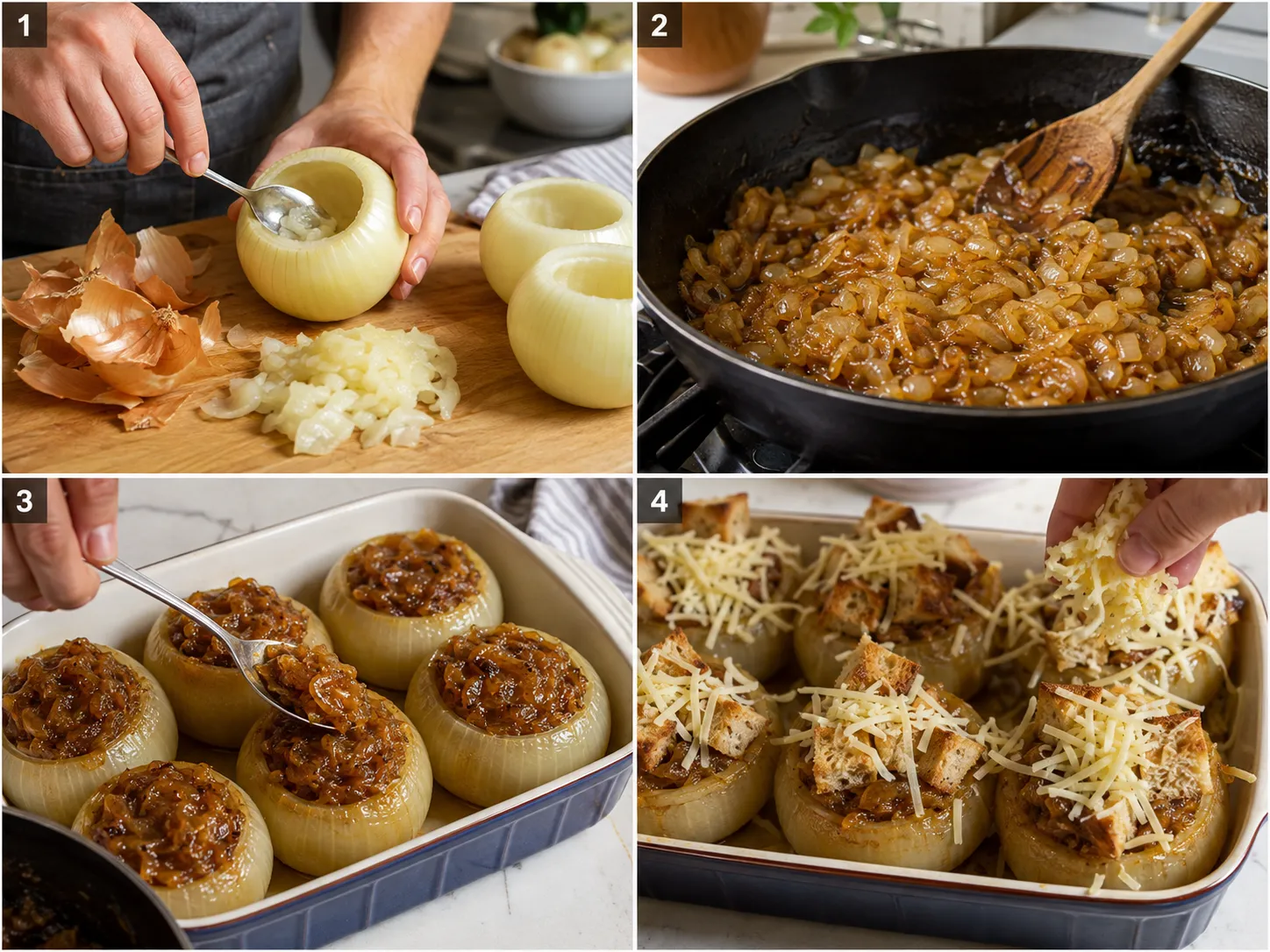
- Hollow the onions. Trim the tops and peel the onions, then scoop out the centers while leaving two sturdy outer layers. Chop the removed onion for the filling.
- Start the shells. Set the hollowed onions in a baking dish with a little broth. Cover and bake until they begin to soften.
- Caramelize the chopped onion. Cook the chopped onion slowly with butter, oil, and salt until deep golden and reduced. This is where the flavor is built.
- Make the filling. Stir in garlic and thyme, then add flour. Pour in sherry and broth, scraping the pan until the mixture turns thick and glossy.
- Fill and bake. Spoon the onion filling into the softened shells and bake until the onions are tender all the way through.
- Broil the topping. Add toasted sourdough and Gruyere, then broil briefly until the cheese bubbles and browns in spots.
Caramelization Takes The Time
The filling should look darker than you think before the broth goes in. Pale onions taste sweet but flat. Deep golden onions taste round, savory, and almost beefy. Keep the heat at medium or medium-low and stir more often near the end. If the pan dries out, add a tablespoon of water and scrape up the browned bits.
Do not rush this part with high heat. The onion pieces can blacken before their natural sugars have time to soften. You want jammy edges and a sticky pan, not bitter flakes. Once the garlic goes in, cook it for less than a minute. Garlic burns faster than onion and can make the whole filling taste harsh.
Choosing The Right Onions
Big yellow onions are the easiest choice because they have firm walls and a clean savory flavor. Pick onions with dry papery skins and no soft spots. If you buy them a few days early, store them somewhere cool and dry. The University of Minnesota Extension gives the same guidance for keeping onions in good shape before cooking in its onion storage advice.
When you hollow them, work slowly. A melon baller is helpful, but a small spoon works fine. If one shell tears, do not toss it. Set it in the center of the dish where other onions can help hold it upright.
Make It Suit Dinner
For a vegetarian version, use mushroom broth or a dark vegetable broth instead of beef broth. A teaspoon of balsamic vinegar can replace the sherry if you do not cook with alcohol. Swiss cheese melts nicely, though Gruyere gives the classic nutty finish.
You can also make the topping heartier. Tear the bread into rough pieces for craggy edges, or cut it into small cubes if you want a neater top. Keep the bread fairly dry before it goes on the onions. Soft bread sinks into the filling and turns chewy instead of crisp.
Storage And Reheating Notes
Leftovers keep well, but the topping softens after chilling. Store the onions in a covered container in the refrigerator and eat them within 3 to 4 days. That timing lines up with the USDA FSIS guidance for leftovers and food safety.
Reheat stuffed onions in a 350 F oven until hot in the center, about 15 to 20 minutes. Add a fresh sprinkle of cheese for the last few minutes if you want the top bubbly again. The microwave works for speed, but the bread will soften.
Summary
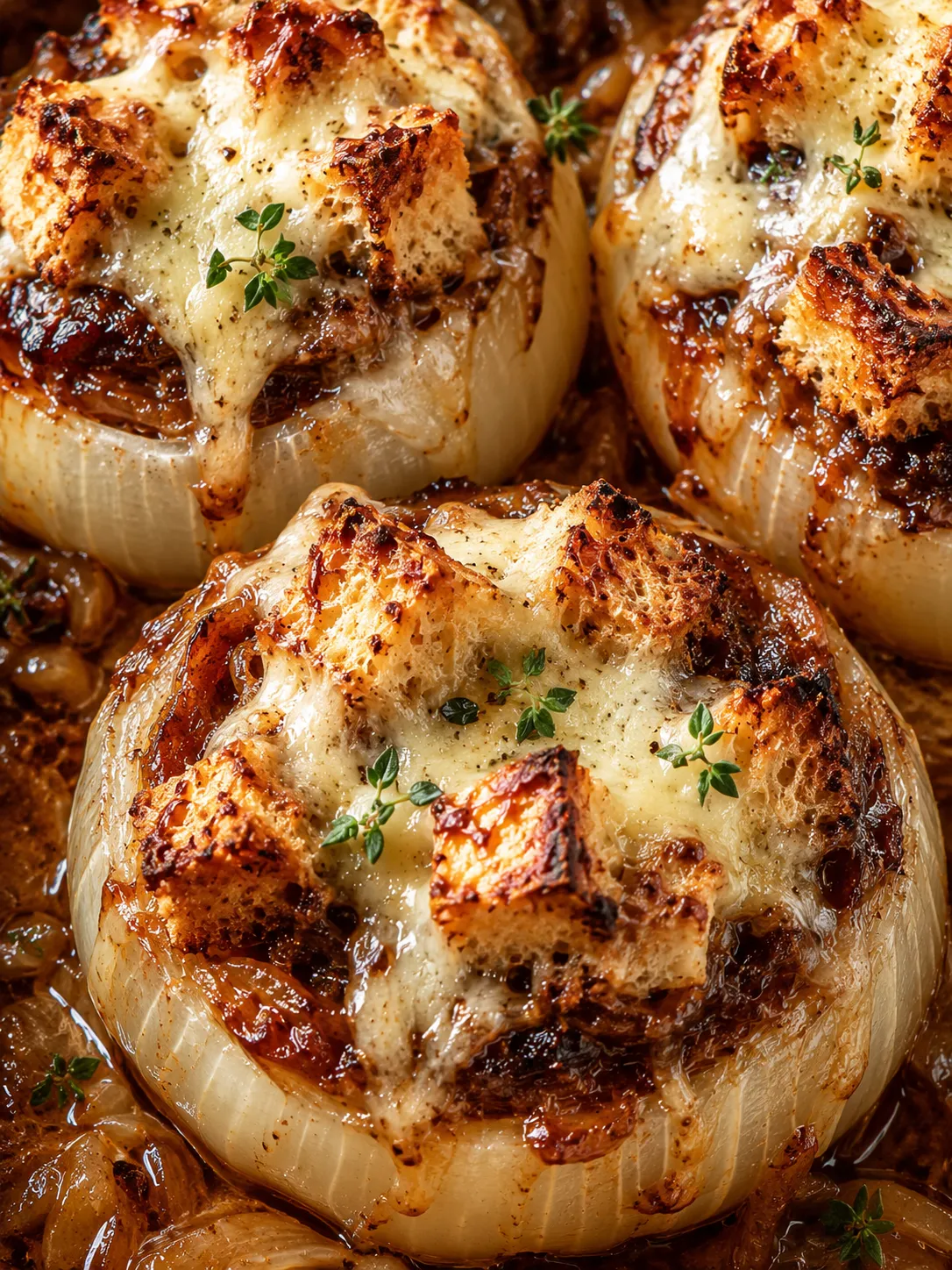
These stuffed onions are baked until tender, packed with caramelized onion filling, and broiled with sourdough croutons and Gruyere until golden.
FAQs
- Can I make French Onion Stuffed Onions ahead of time?
Yes. Bake the onion shells and make the filling up to one day ahead, then refrigerate them separately. Fill the onions and add the bread and cheese just before the final bake so the topping stays crisp.
- What onions work best for stuffed onions?
Large yellow onions are the easiest to hollow and have the right balance of sweetness and sharpness. Sweet onions work too, but the finished dish will taste a little softer and less savory.
- Can I make this vegetarian?
Yes. Use a strong vegetable broth or mushroom broth instead of beef broth. Add a splash of soy sauce or balsamic vinegar if the filling tastes too sweet.
- How do I hollow onions without breaking them?
Trim only enough from the bottom so each onion sits flat. Use a paring knife to loosen the center, then scoop gently with a small spoon. Leave at least two outer layers intact so the onion holds its shape.
- Can I use Swiss cheese instead of Gruyere?
Swiss cheese melts well and makes a good substitute. Gruyere has a nuttier flavor, so add a little Parmesan with Swiss if you want more depth.
- What should I serve with stuffed onions?
Serve them with roast beef, chicken, pork chops, or a crisp salad. They also work as a meatless main with mashed potatoes or roasted mushrooms.
